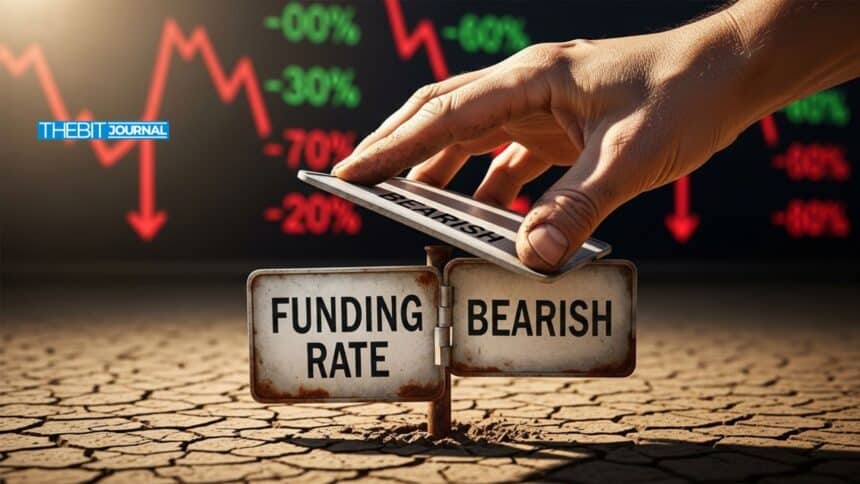

Bitcoin derivatives markets have taken a more defensive posture as traders reacted to stubborn signals of inflation; high energy prices and the Fed’s readiness to keep rates higher. Bitcoin has struggled to hold momentum above $77,000-$78,000; with repeated rejections showing fragile upside conviction across leveraged markets.
Recent data shows a mixed structure; funding rates on several exchanges remain negative while whales have not completely turned bearish. In other words; positioning is not conviction but caution; leverage is being reduced not reversed aggressively.
Meanwhile, macro pressure from energy-led inflation and weaker risk sentiment in equities has also kept crypto traders cautious especially after BTC briefly dipped below $75,000 during intraday volatility.
Bitcoin Price Rejection Near $78K Shows Weak Momentum
The price of Bitcoin rejected at $77,800 as buyers lost strength and it fell back toward the $75,000-$76,000 zone. This slide happened after a general selloff in risk assets with the S&P 500 pulling back; as geopolitical tensions and escalating prices of crude oil have weighed further on markets.
Rising crude oil prices have fueled inflation worries; causing concern over how much longer tighter financial conditions would persist. This has reduced the interest for leveraged long positions in Bitcoin.
Derivatives data confirms this hesitation. BTC has repeatedly failed to establish sustained momentum above the $78,000 level, showing similar resistance behavior in equities indices struggling near their own highs.
Negative Funding Rates Show Defensive Positioning in Futures Market
Perpetual futures funding rates are one of the most vivid indicators of caution. BTC funding flipped negative and remained so on several exchanges over the last few days of April. The analytics from derivatives platforms shows that:
Funding rates have stayed mostly negative the last two weeks; Tuesday saw a brief recovery back to neutral conditions which also quickly reversed and recent readings showed funding rate at or below -1.8% annualized on some exchanges.
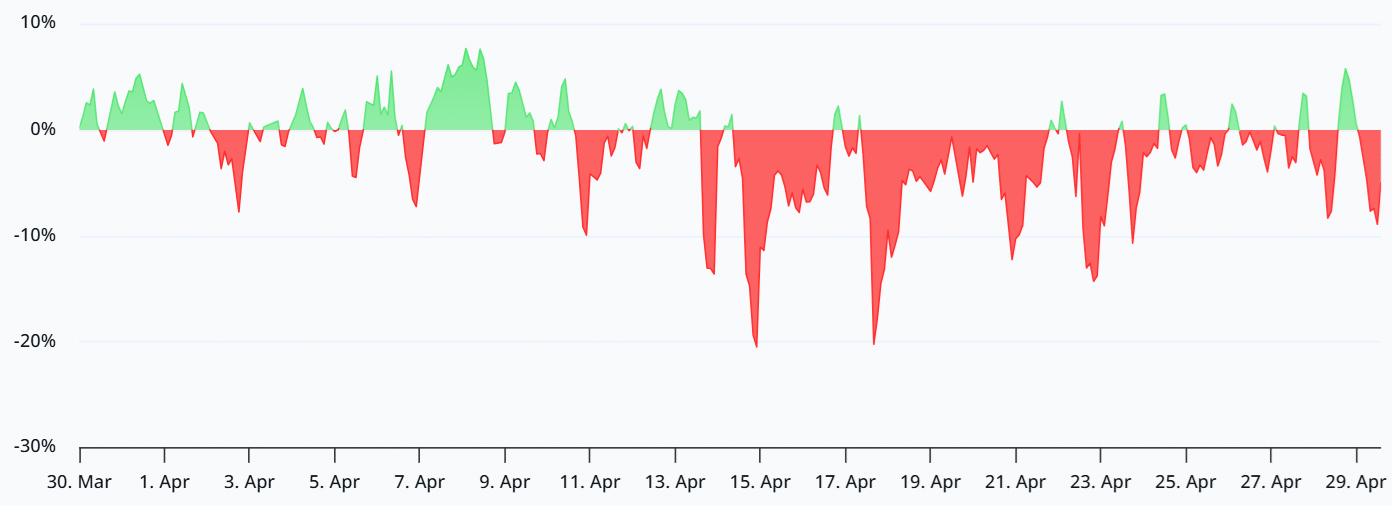
In a healthy market, this rate usually stays between 6% and 12% to cover capital costs, which means buyers typically pay a fee to maintain their positions.
Negative funding rate indicates that short traders are paying longs, indicating bearish or hedging pressure in leverage markets.
In previous cycles, extended negative funding periods have often aligned with local bottoms rather than prolonged declines. For example, similar conditions appeared during major stress phases in 2020 and 2022 before strong reversals occurred .
More recently, BTC did move from $60k towards $75 even while funding rate remained negative showing that derivatives sentiment and spot price action can diverge sharply .
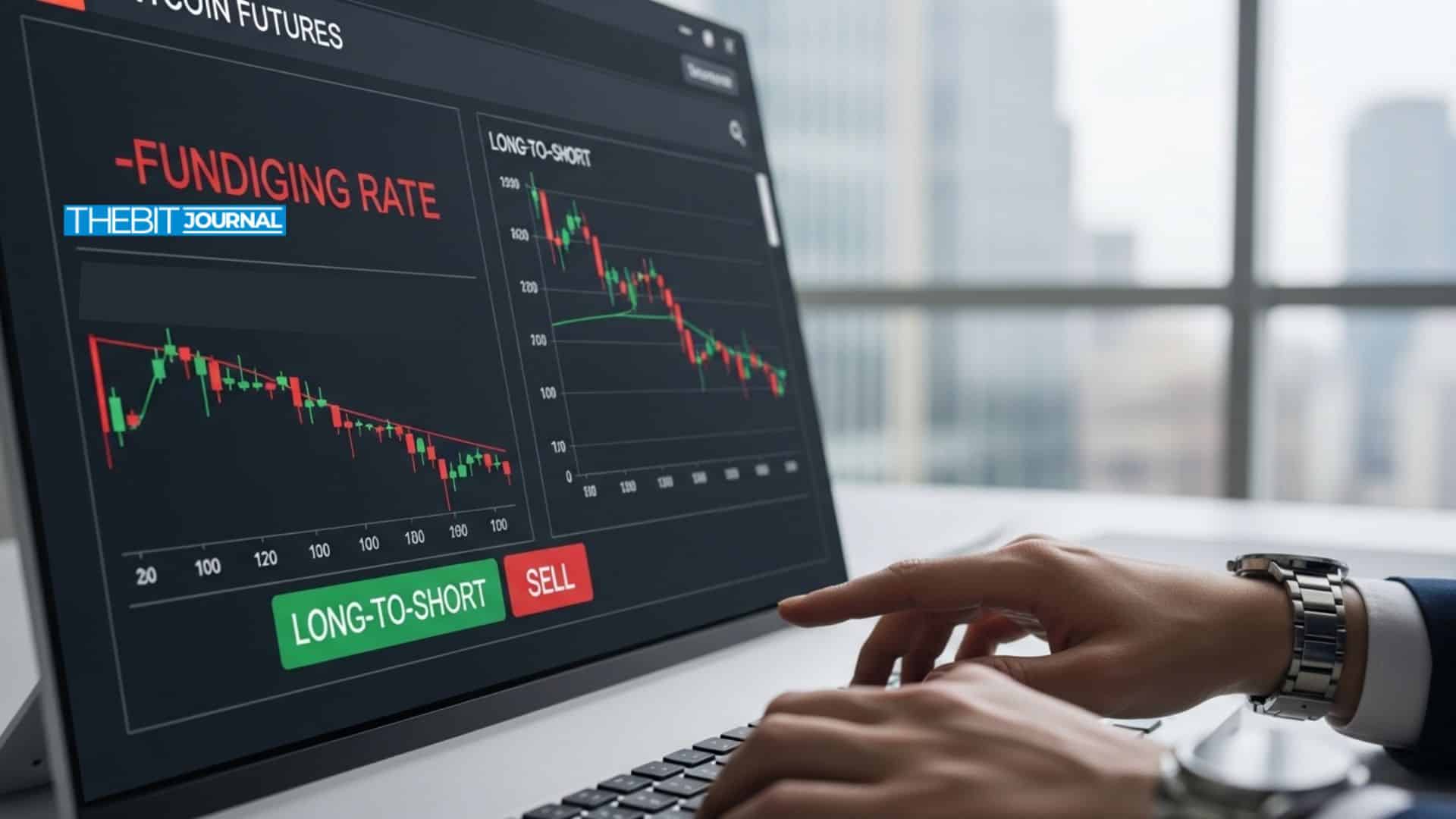
Whale Long-to-Short Ratios Show Stability Despite Retail Caution
Retail and leveraged futures traders are completely defensive, but whale activity says something different.
On major exchanges, Binance top trader ratio is close to 0.80, which has slightly changed from earlier readings of approximately 0.75.
OKX data shows short bursts of bullish positioning, but no sustained trend
Despite the instability in USD, overall whale positioning remains stable week over week.
This means that larger market players are not aggressively adding towards short exposure even as funding rates still indicate caution in leveraged markets.
More derivatives data shows liquidation flows and hedging activity have increased, indicating that traders are still actively adjusting exposure instead of committing strongly in either direction.
Macroeconomic Pressure Keeps Crypto Traders Defensive
The tone in risk assets have remained cautious based on the latest Fed statement. Key macro drivers include:
US inflation still above target as global energy prices hold up
Interest rates remained at levels consistent with a late-2025 outlook
Internal disagreement among FOMC members, with four voting for a 0.25% cut, the first of such split since1992.
The focus on energy-driven inflation remains strong; with rising logistics and production costs weighing on corporate earnings expectations; particularly in technology sectors heavily tied to AI investment.
This macro uncertainty continues to influence Bitcoin sentiment.
Conclusion
The state of Bitcoin’s derivatives structure as of late April 2026 has revealed a hesitant market rather than one with outright bearish conviction.
While negative funding rates, as well as a weakening of long-to-short positioning indicates caution among leveraged traders, whale positioning and historical patterns prevent a straightforward bearish interpretation.
Price rejection near $78,000, combined with macro pressure from inflation and energy costs, has brought on a defensive trading environment.
However, the lack of aggressive short accumulation from larger traders leaves room for rapid repositioning if macro conditions stabilize or liquidity returns.
Glossary
Funding Rate: The periodic payment between long and short positions in perpetual futures contracts used in anchoring futures prices to spot markets.
Long vs Short Ratio: The ratio of long positions to short positions in a specific financial instrument, indicating the overall balance between bullish and bearish traders.
Whales: Large BTC holders with high levels of BTC exposure or volume traded.
Perpetual Futures: A form of a derivative contract with no expiry date mostly used in leveraged crypto trading.
FOMC: The Federal Open Market Committee, makes decisions about U.S. monetary policy
Frequently Asked Questions About Bitcoin Funding Rates
Why are Bitcoin funding rates negative?
This is because more and more traders are holding onto short positions or hedging downside risk, therefore forcing shorts to pay longs in perps markets.
Does negative funding rate mean that BTC will drop?
Not necessarily. Extended negative funding rate has played out near local market bottoms in past cycles.
What does Low long-to-short ratio mean?
This means that traders are more positioned bearish yet whale data is suggesting that large players are not entirely in line with this sentiment.
Why is Bitcoin struggling near $78,000?
Resistances are from macro pressure, reduced liquidity appetite and cautious derivatives positioning.
References