






This article was first published on The Bit Journal.
The growth of tokenized stocks stood out from the wider real-world asset (RWA) tokenization market in 2025, gaining huge attention from both retail and institutional players alike.
Data shows that this year has been a breakout year for tokenized versions of publicly traded equities, which have seen a sudden surge in market cap jumping to multiples higher than seen before.
Ethereum is still the dominant destination for tokenized stocks, but some other blockchains are commanding a strong market share, including Solana, BNB Chain, Arbitrum, Base, and Polygon.
Unprecedented Market Expansion in 2025
The pace at which tokenized stocks have grown this year is remarkable. Based on analytics provided by Token Terminal and a number of market reports, the aggregate market cap of tokenized stocks had skyrocketed to over 2,695 percent year-to-date, outpacing performance in other token categories like commodities (225 percent), token funds (148 percent) and stablecoins (49 percent).
This expansion indicates not only increased investor activity but growing infrastructure support as well.
Projects like Backed Finance, Ondo Finance, Dinari and tokenized stock projects attached to the likes of Robinhood have been spearheading demand.
They have expanded access to buying and selling slices of traditional stocks as well, giving investors the ability to trade “fractional” shares of stocks like Tesla (TSLA) and Apple (AAPL) around the clock, which isn’t possible in traditional markets after-hours.
The magnitude of this growth also shows how blockchain tokenization is altering the investment world. In 2025, the tokenized stock is now a critical ingredient in many crypto native portfolios looking for exposure to traditional equities without any middlemen.
The change is due at least in part to investors who want frictionless settlement, global access and access to decentralized financial (DeFi) applications that can provide services like lending, collateralized positions and yield strategies unachievable on traditional brokerages.
Ethereum’s Role and the Promise of Multi-Chain Tokenization
Ethereum still has the highest tokenized stock issuance, with it now being about holding its status as a platform for RWA issuance. The network’s smart contract functionality and strong liquidity pools have laid the foundation for many issuers and liquidity providers to build upon.
However, the picture in late 2025 is that Ethereum’s hold on the throne is no longer a total one.
The action has largely moved to newer blockchains that are faster. Take Solana, for example, which has made quite the splash in the tokenized stocks space, including its robust adoption for algorithmic and retail trading products.
Solana-based tokenized stock ecosystems have seen billions of dollars in trading volume and help to make up a meaningful portion of overall trading, showcasing scalability and liquidity at minimal cost as a competitive edge for the chain, reports note.
Other networks like BNB Chain, Arbitrum, Base, and Polygon have also gained significant market share in the tokenized stocks market by leveraging unique value propositions such as lower fees to transact with and integrate via centralized exchange offerings or novel cross-chain liquidity solutions.
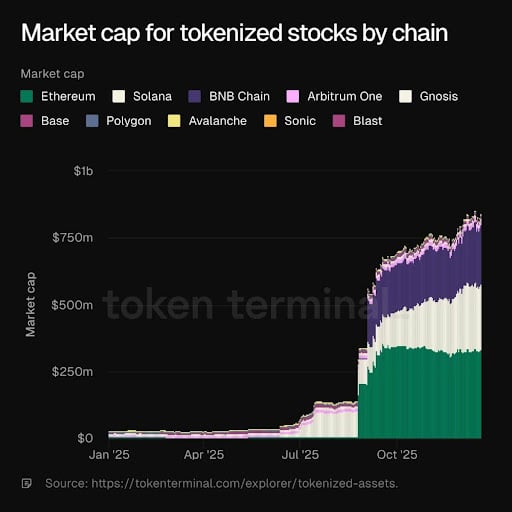
This multichain proliferation is representative of trends across DeFi, whereby asset issuance and trading no longer only lives on a single base layer, but rather is fragmented among a variety of blockchains focusing on distinct user use cases.
Institutional and Regulatory Momentum
Other than numbers, tokenized stocks has grown in 2025 due to more attention from institutional platforms and the rise of regulation.
Traditional banks and leading exchanges have revealed intentions to either enter the space or broaden services related to tokenized equities that will connect traditional and blockchain-based markets.
For instance, Coinbase and Kraken have publicly expressed their plans to offer access to trading tokenized stocks legitimizing the asset class in regulated territories.
Industry executives have been effusive with confidence that tokenized stocks may eventually be valued in the trillions, pointing to demand from a $100 trillion global equities market as one possible force boosting prices.
Other regulatory news has also contributed to the push toward adopting tokenized stocks. Certainty on how tokenized securities are evaluated by regulators has allowed market players to develop compliant offerings, access institutional capital and do business within defined legal parameters.
These have facilitated greater adoption of tokenized equities in traditional financial markets, and potentially alleviated some fears about custody, trading practices and investor safeguarding.
Market Infrastructure and Chain Competition
Competition between blockchain ecosystems to win market share has also been made more fierce by the emergence of tokenized stocks.
Ethereum, the industry leader in decentralized finance and the advancement of digital assets has faced growing competition from alternative networks that have been focusing on scalability, cost effectiveness, and exclusive asset release.
Solana’s network, which is prized for handling lots of activity at low prices, has turned into an increasingly popular forum to trade tokenized stocks with high market volume that regularly rivals Ethereum’s in some cases.
Similarly, chains like BNB Chain and Polygon saw value in utilizing their broad base of users and partnership ecosystems to offer tokenized equity products with integrated support on a centralized exchange while providing opportunities for decentralized trading.
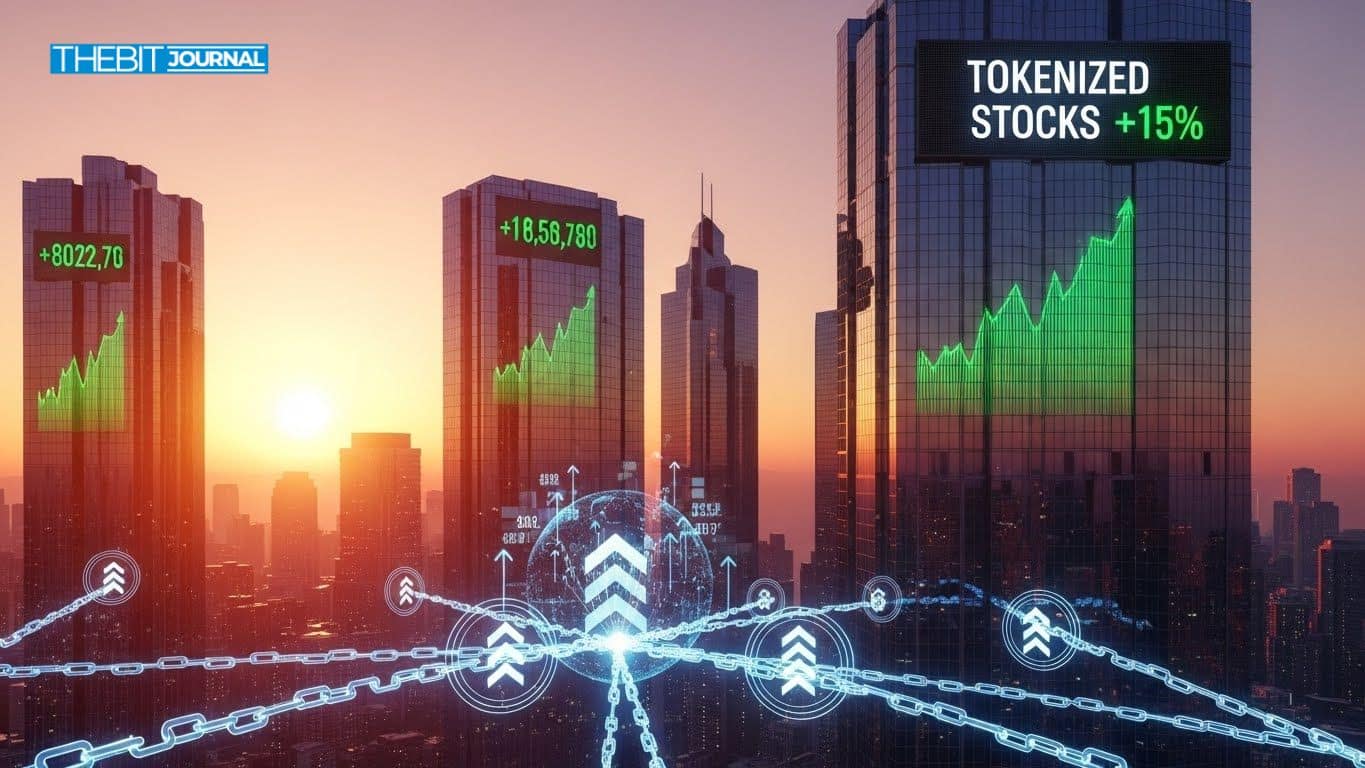
Layer-2 solutions such as Arbitrum and Base also offer improved scalability, with strong connections to Ethereum’s security model, drawing issuers who want to balance performance with safety.
This multi-chain competitive environment has fostered innovation, lowered barriers to entry and widened the base of investors and issuers for tokenized assets.
As each platform develops particular strengths in fees, speed or interoperability between chains, the overall market for tokenized stocks and RWAs becomes more competitive and robust, attracting capital and users from every part of the crypto economy.
Conclusion
The tale of the rise in tokenized stocks is a story of expansion, multi-chain competition and growing institutional resonance.
As a result, with market capitalization growth of over 2,600 percent YTD (year-to-date), tokenized equities have surpassed other asset categories and garnered attention from both DeFi natives and traditional financial institutions.
Despite Ethereum being the biggest blockchain for issuing, networks such as Solana, BNB Chain, Arbitrum, Base, or Polygon have established relevant market positions, opening the field to competitive and dynamic asset tokenization.
Glossary
Tokenized stocks: Digital versions of traditional equity shares on a blockchain that can trade 24/7.
Real-World Assets (RWAs): Classic financial instruments or tangible assets that are tokenized on a blockchain.
Market cap: The combined value of all the tokens in circulation in any given category.
Layer-1: A foundational blockchain protocol (like Ethereum or Solana).
Layer-2: An additional protocol sitting on top of a base blockchain to scale and lower costs.
Frequently Asked Questions About Tokenized Stocks
What are tokenized stocks?
Tokenized stocks are digital tokens on blockchains that stand in for traditional company shares and can be traded 24/7, as opposed to the hours stock markets are open.
Why is the tokenized stocks growth in 2025 so high?
The growth is attributed to wider access to tokens, better infrastructure, growing presence of institutions and multi-chain expansion beyond one platform.
Which blockchains are getting most of the tokenized stocks issuance going on now?
Ethereum continues to be the largest issuer, but Solana, BNB Chain, Arbitrum, Base and Polygon have captured significant shares due to speed, cost and ecosystem support.
Are tokenized stocks regulated?
Tokenized stocks most of the time are qualified as securities, and projects often times respect each and every law in the countries they operate by, making token issuance compliant with local laws.
References
Phemex
KuCoin
The Defiant
CoinGecko
AInvest