



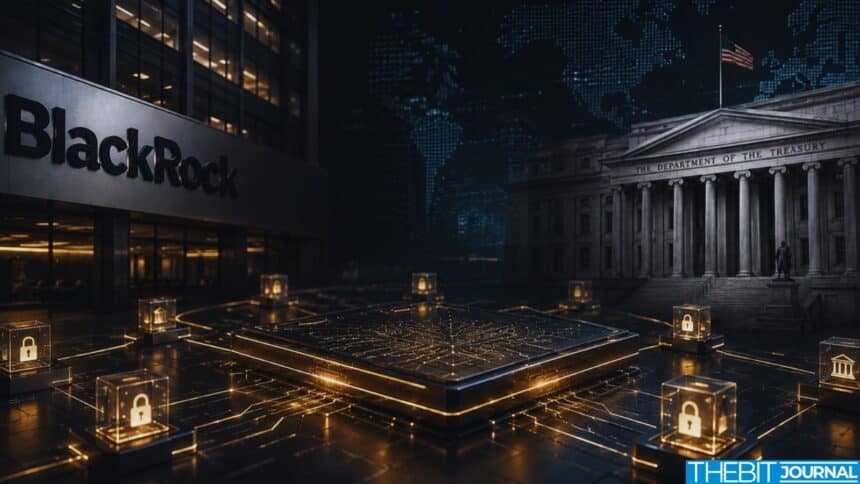

This article was first published on The Bit Journal. BlackRock is accelerating its BlackRock tokenization strategy with plans to launch two tokenized money market funds, marking another major step in the firm’s effort to merge traditional financial products with blockchain infrastructure.
BlackRock Tokenization Expands Institutional Blockchain Adoption
The world’s largest asset manager will launch a blockchain-based share linked to an existing treasury liquidity fund and is developing a new type of “crypto reserve product” specifically for the digital asset economy, according to recent filings with the U.S. Securities and Exchange Commission.
The move reflects the accelerated adoption of tokenized real-world assets (RWAs) by institutional players. The new products seem geared towards investors who are increasingly using stablecoins and digital wallets to hold capital, as opposed to traditional brokerage customers. The move further solidifies the tokenization trend, which is growing across the financial markets, according to analysts.
BlackRock Brings Treasury Funds To Ethereum
The products are expected to be a tokenisation of a slice of BlackRock’s Select Treasury-Based Liquidity Fund, a $6.1 billion money market fund that mostly holds cash, Treasury bills and repurchase agreements backed by the US government. The tokenized share class will run on the Ethereum network with the same conservative investment profile as the traditional fund.
The treasury focus structure aims to maintain liquidity and stability, and the portfolio will consist of short-term government securities and cash equivalent assets. This could interest institutional investors looking for yield-generating blockchain products without exposure to significant crypto market volatility, analysts believe. The development also underscores BlackRock tokenization initiatives to move Wall Street products onto the blockchain.
Stablecoin Reserve Product Targets DeFi Ecosystem
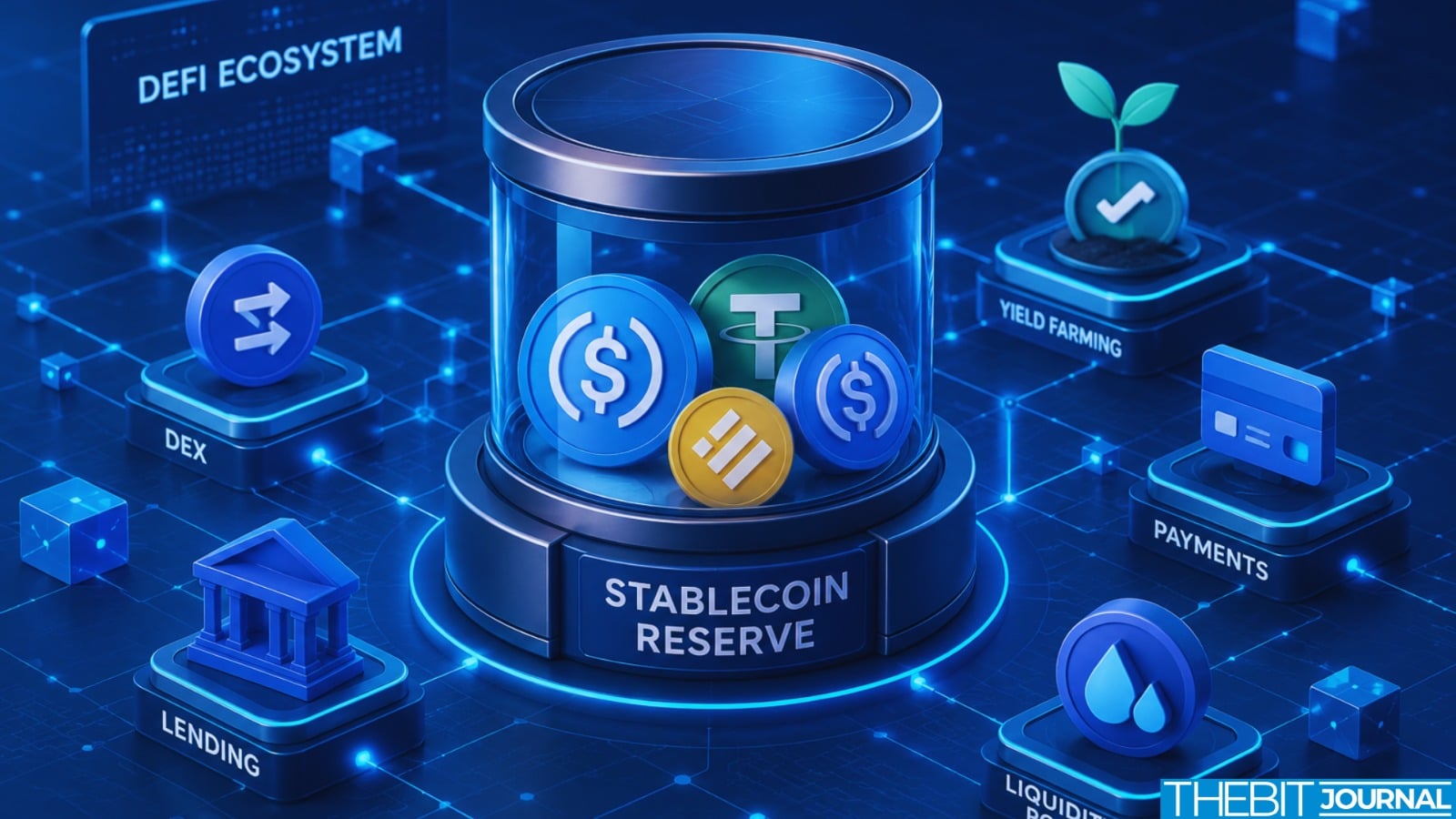
The second product, the BlackRock Daily Reinvestment Stablecoin Reserve Vehicle, is more crypto-native. The reserve vehicle is being developed to run on a variety of blockchain networks, in contrast to the Ethereum-only treasury fund shares, which could help pave the way for more widespread integration in decentralized finance ecosystems.
The timing of the filing is noteworthy, given ongoing discussions in the United States about stablecoin laws, industry observers have noted. According to several analysts, the new reserve vehicle is BlackRock’s attempt to build a compliant yield-generating alternative to reserves for the stablecoin issuers in the future. The filings are now being cited as a milestone in the burgeoning BlackRock tokenization strategy.
BlackRock Expands Influence In Blockchain Investment Space
The asset manager already has a significant stake in the stablecoin market, with a reported $65 billion of assets under management related to reserves. BlackRock has also been increasingly active in the regulatory dialogue, calling on the Office of the Comptroller of the Currency to be more flexible when it comes to reserve management for stablecoins.
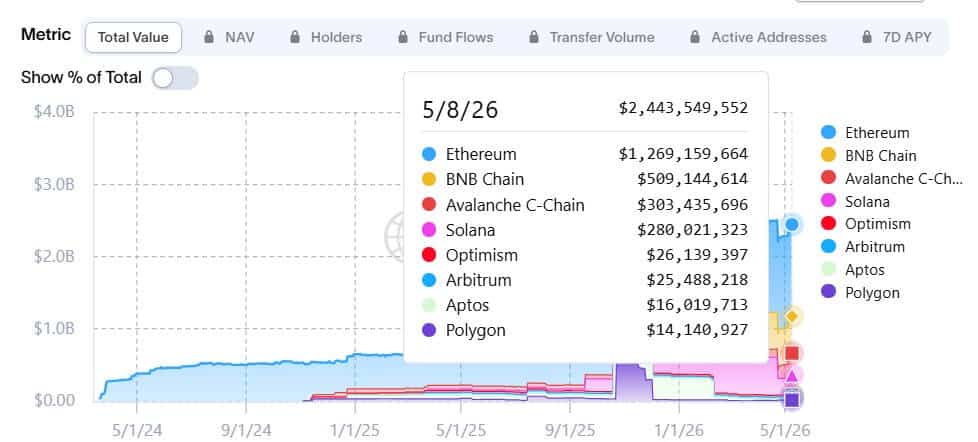
The company’s aggressive expansion is following the continued rapid growth of tokenized assets throughout the global markets. The data from rwa.xyz indicates that the tokenized asset space now accounts for more than $30 billion in value and has had hundreds of thousands of investors in blockchain-based financial products. Since the start of 2026, the market has contributed approximately $10 billion, which is favorable for the further development of BlackRock tokenization.
BlackRock holds an already significant stake in the market via its BUIDL fund, one of the world’s biggest tokenized investment products.
BlackRock Tokenization Could Reshape Global Investing
BlackRock Chairman and CEO Larry Fink has stated several times that he sees tokenization as a force that will change the world of finance. Fink said in last month’s shareholder letter that blockchain technology could modernize investing by streamlining settlement times, lowering transaction expenses and making financial markets more accessible to the average investor. He said:
“Half the world’s population carries a digital wallet on their phone. Imagine if that same digital wallet could also let you invest in a broad mix of companies for the long term as easily as sending a payment.”
Fink likened today’s situation to the early days of the internet, noting that blockchain technology is still in its infancy but could change the way assets are distributed and traded globally. According to market analysts, the latest BlackRock tokenization initiatives could become a blueprint for how traditional finance institutions transition into blockchain-powered markets.
Conclusion
BlackRock tokenization initiative may change the dynamics of traditional assets navigating digital markets as institutional interest in blockchain finance rises. The regulatory landscape is becoming clearer, and tokenized RWAs are emerging as a growing trend across the investment sector, so BlackRock’s recent filings could herald a new era of investment infrastructure and stablecoin-based financial products.
Follow us on Twitter and LinkedIn, and join our Telegram channel to be instantly informed about breaking news!
Summary
- BlackRock expands tokenization with new blockchain funds and reserve products.
- Targets institutional investors using stablecoins and digital wallets.
- Uses Ethereum and multi-chain systems with conservative asset structures.
- Builds on $65B stablecoin exposure and growing tokenized market adoption.
Glossary Of Key Terms
BlackRock: The world’s largest asset manager.
Tokenization: Turning real assets into blockchain-based digital tokens.
RWAs: Real-world assets represented on blockchain.
Ethereum: A blockchain network for digital assets.
Stablecoin: A crypto asset tied to stable value.
BUIDL Fund: BlackRock’s tokenized investment product.
Frequently Asked Questions about BlackRock Tokenization
1. What is BlackRock tokenization strategy?
BlackRock is launching blockchain-based funds and reserve products.
2. What assets are being tokenized?
Treasury-backed funds including cash and U.S. government securities.
3. Why is Ethereum used?
To issue secure, transparent tokenized fund shares.
4. How does it impact stablecoins?
It supports compliant reserves and DeFi integration.
References
Disclaimer
The article is purely informational and it is not a financial, investment, or a trading advice. Cryptocurrencies are extremely risky and volatile. Before investing, the readers are to conduct personal research and seek the advice of a qualified financial expert.