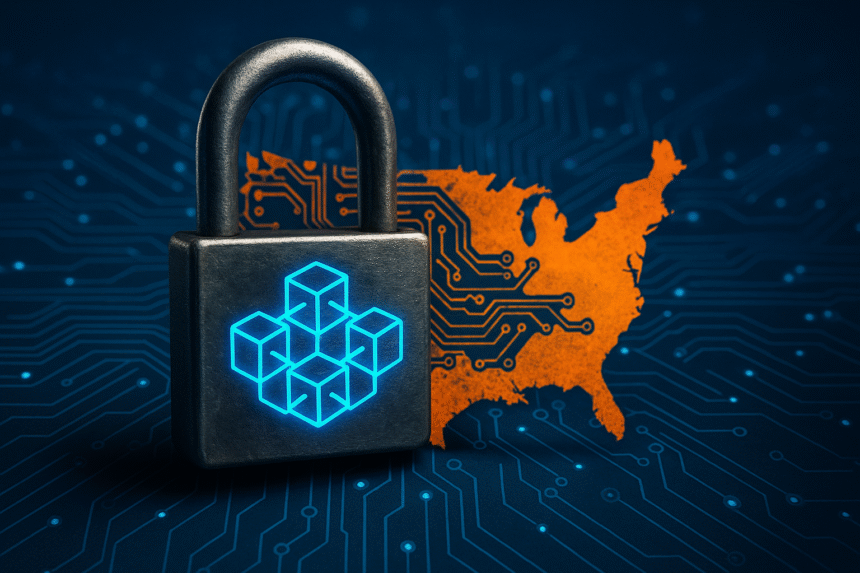

Blockchain started as a technology for digital money. Over time, it became a system that powers many industries, from banking to defense. It operates like a collective digital ledger, where every single transaction is recorded for good. The fact that it is decentralized implies that no one person or organization can direct it. This situation provides the users with liberty but at the same time creates a risk for national security.
All the governments of the world have a new dilemma now. What is the safest way to incorporate blockchain while avoiding its negative impacts on the country’s security? It is an issue of facilitating and at the same time pointing out the illegal movement of money. It is an issue of maintaining and at the same time exploiting the integrity of data. The flipside of using blockchain is what makes it both an excellent innovation and a national risk.
The United States, China, and Russia are among the nations that are already experimenting with blockchain in the defense and finance sectors. But in addition to that, they all have the same concern regarding the potential misuse of the technology by other countries. The issue is about striking a proper chord between creativity and security.
What Makes Blockchain a Concern for National Security
Blockchain’s power lies in its independence. It does not rely on central authorities, banks, or governments. But this same power is what makes it difficult to control. Once data is added, it stays forever. That can be a good thing for transparency, but dangerous if the data includes stolen information or fake records.
Decentralization and Lack of Control
Governments have always controlled banking systems and the internet. But blockchain operates on many computers in different countries. This is a reason why a government can’t ever spy on or stop blockchain. For example, if a hacker stores the stolen data using blockchain, even if the website is deleted, the data still remains in the network.
Decentralization is a reason for the creation of a national security gap. Law enforcement cannot use their usual methods on the decentralized networks. It takes time to trace criminals and sometimes it becomes even impossible to do.
Anonymous Transactions and Illicit Finance
One of the main security issues is anonymity. Some cryptocurrencies hide the sender and receiver details. This has made blockchain a tool for illegal trade, ransomware attacks, and money laundering.
International police agencies have discovered terrorist groups using crypto wallets to fund operations. In some cases, sanctioned countries use crypto to bypass restrictions. This creates serious tension in global diplomacy.
Smart Contracts and Cyber Vulnerabilities
Smart contracts are automatic agreements on the blockchain. They work without human involvement, which makes them fast but risky. If coded poorly, hackers can exploit them and drain millions of dollars in seconds.
These kinds of weaknesses not only cause financial loss but also can be used for national-level cyber warfare.
Blockchain and Financial Security Risks
The financial system is the first place where blockchain showed both promise and danger. Cryptocurrencies became a new form of money that governments cannot fully control.
Use in Money Laundering and Sanctions Evasion
Sanctioned nations such as North Korea and Iran have utilized digital currencies as a means of evading trade limitations. This has a negative effect on international monetary systems and also results in a decreased impact of sanctions as political instruments.
| Risk Type | Description | Example |
| Currency Competition | Weakens control over national money supply | Bitcoin adoption in El Salvador challenges USD influence |
| Sanction Evasion | Used to hide illegal international payments | North Korean Lazarus group using crypto |
| Fraud and Scams | Traps investors and citizens | Ponzi crypto schemes |
Impact on Monetary Policy and National Currencies
Central banks control the money supply as a means to regulate inflation, but this means when investors transfer their money to decentralized crypto, central banks eventually lose control. For instance, if many people start using Bitcoin or stablecoins instead, the local currency in that country will depreciate.
Governments view this as a significant risk to their economic independence, hence the measures taken. While some nations have outright banned cryptocurrencies to safeguard their fiat currency, others like the U.S.A. are actively developing Central Bank Digital Currencies (CBDCs) as a competitive strategy.
Blockchain and Cybersecurity Threats
While blockchain is known for its strong security, it is not immune to cyber threats.
State-Sponsored Cyber Attacks Using Blockchain
Some governments may use blockchain to finance cyberattacks. Because funds can move anonymously, it is difficult to trace who paid for what. Reports have linked several ransomware groups to state-sponsored operations that use crypto payments.
Blockchain Hacking Risks
Blockchains can be attacked through what’s called a 51% attack. This happens when a single group controls most of the computing power and can change transactions.
Table 2: Common Blockchain-Related Cybersecurity Threats
| Threat Type | Description | Security Level |
| 51% Attack | Majority of network taken over | High |
| Smart Contract Bug | Exploit due to weak code | Medium |
| Exchange Breach | Crypto stolen from exchanges | High |
Governments must now treat blockchain networks as possible cyberwar tools. Any attack on national crypto infrastructure could damage public trust or even disrupt financial systems.
Blockchain in Defense and Military Operations
Defense agencies also explore blockchain for its security features. The U.S. Department of Defense studies its use for supply chains, communication, and data verification. But if poorly managed, it could open new risks.
Data Integrity and Information Warfare
Blockchain records are permanent. This is useful for defense data tracking but dangerous if misinformation or false data gets added. Once wrong data enters the chain, it stays forever and can confuse intelligence operations.
Supply Chain Tracking in Defense
Blockchain helps monitor defense materials and prevent fraud. Yet, open ledgers can expose sensitive routes or information if not properly encrypted.
Privacy, Surveillance, and National Data Risks
The transparency of blockchain technology is primarily due to the fact that it allows everyone to see all transactions. This, however, also leads to the problem of revealing personal information and even state secrets.
If a public blockchain is adopted for securing sensitive data by government institutions or private enterprises, such data could be accessed by all users. Even if the identities are hidden, the data patterns can still reveal the individual’s or the locality’s identity or movement.
There are countries that moved toward blockchain technology that is surveillance-based. China is an example here with its digital yuan system, which enables the government to monitor and control all citizens’ financial transactions. Such a system offers great power while withdrawing privacy in the same measure. The discussion is now on how to achieve a proper balance between privacy and security.
Legal and Regulatory Challenges
One of the biggest national issues with blockchain is the law itself. There is no clear global rulebook. Each country builds its own set of laws, creating gaps that criminals exploit.
Regulatory Gaps and Enforcement Problems
Blockchain networks cross borders instantly. But legal systems are slow. This means illegal actions can move faster than enforcement. A scam that starts in one country can affect people worldwide before authorities react.
Efforts by Global Bodies
The Financial Action Task Force (FATF) and the United Nations have been promoting international cooperation by proposing the guidelines for recognizing illegal crypto flows and sanction evasion. These standards are not followed by all countries, thus, leading to an inconsistent enforcement.
The governments also have to make a decision on the level of privacy they are ready to offer in exchange for safety enhancement.
Conclusion
The distribution of power and problems comes along with the introduction of blockchain technology to the globe. On the one hand, it can facilitate the transparency of financial systems; on the other hand, it can cover up illegal activities. The technology can offer data protection but at the same time, it can empower the hackers more. Governments are struck with the difficulty of regulating a technology that never really allowed for control in the first place.
The only possible scenario is that of joining forces. World regulations, enhanced cybersecurity, and intelligent laws can transform blockchain from a liability to an asset of a country. However, if these dangers are not taken into account, the technology will turn out to be one of the major threats to the security of the future.
FAQ About Blockchain and Security Risks
What are the biggest national security risks of blockchain?
Blockchain can be used for money laundering, cyberattacks, and sanction evasion. It also weakens control over national currencies.
How does crypto affect international sanctions?
Crypto allows countries under sanctions to bypass traditional banking systems, making sanctions less effective.
Can blockchain be regulated by governments?
Governments can regulate crypto exchanges and wallets, but the technology itself is decentralized and cannot be fully controlled.
What role do CBDCs play in global security?
CBDCs give governments digital control over currency and can become tools for geopolitical competition.
Is blockchain a threat or opportunity for national defense?
It’s both. Blockchain can improve defense logistics but can also expose systems to new kinds of cyber risks.
Glossary
Blockchain:
A shared digital ledger where transactions are recorded across many computers. It cannot be easily changed once data is added.
Decentralization:
A system without one main authority or control center. Power is distributed among many users or nodes.
Smart Contract:
A self-running program stored on a blockchain that automatically carries out agreements when conditions are met.
51% Attack:
A situation where one group controls most of a blockchain’s computing power and can change transactions or block new ones.
Sanction Evasion:
The act of using cryptocurrency or other tools to bypass international trade or financial restrictions.
CBDC (Central Bank Digital Currency):
A digital form of national money issued by a country’s central bank.
Summary
Blockchain is revolutionizing the countries’ control over monetary and data resources and defense, while at the same time creating new security issues. The characteristic of the technology to decentralize its operation gives individuals greater freedom, but at the same time, it takes away government control over money movements. The privacy provided by crypto transactions encourages not only the movement of illicit money but also the transfer of funds by countries under sanctions. In addition, cyber-attacks, hacking of smart contracts, and the functioning of unregulated exchanges have converted blockchain into a new arena for security matters concerning nations.
Thus, the governments have rushed to impose regulations on blockchain technology with the hope of preventing further damage. On the one hand, the introduction of Central Bank Digital Currencies (CBDC) could make the control over the money supply from the official system more effective, but on the other hand, it would pose privacy issues. The future of national security will depend on the ability of the countries to innovate and protect at the same time.