

Anyone who has ever tried to send ETH, swap a token on a decentralized exchange, or mint an NFT on the Ethereum network has run into that familiar, sometimes frustrating moment when the wallet flashes a fee that seems disproportionate to the value being moved. Ethereum gas fees are not a glitch, nor a platform markup, and they certainly are not optional.
They are the price the network charges for computation, and understanding how they work is the difference between transacting confidently and getting caught off guard by a number that shows up right before the “confirm” button. This guide breaks down the mechanics behind Ethereum gas fees, explains what gwei actually represents, and walks through what drives fee changes so that anyone, beginner or intermediate user, can make informed decisions before signing a transaction.
What Ethereum Gas Fees Actually Are and Why They Exist
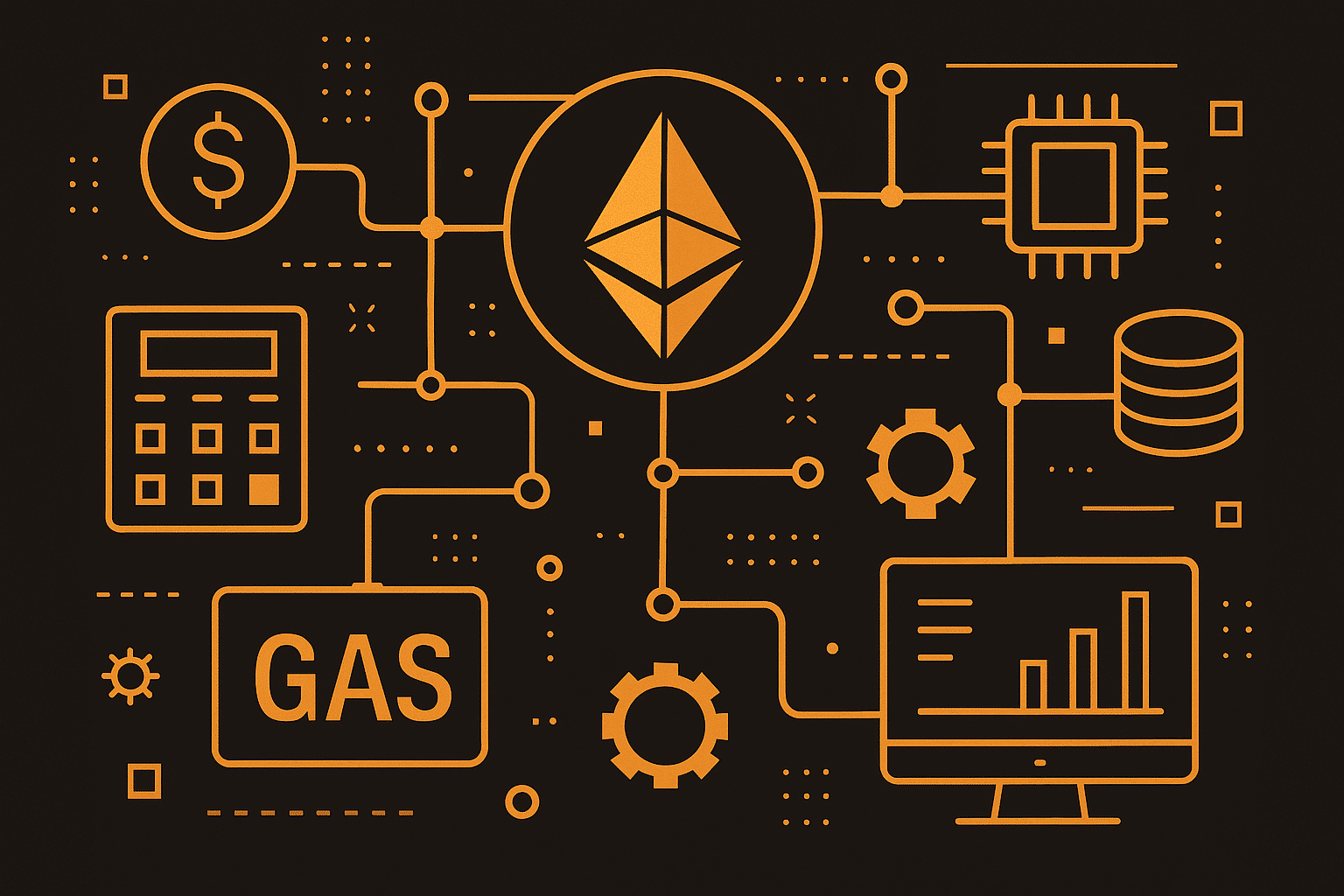
Ethereum gas fees are the costs paid in ETH to execute any action on the network. The word “gas” here is a deliberate metaphor: just like a car burns fuel to move, the Ethereum network burns computational resources to process transactions. Gas measures the amount of work involved in executing a specific action, and the fee is the cost of that work priced at whatever the current gas rate happens to be.
The reason the network charges for computation at all comes down to security and resource management. Without Ethereum gas fees, the network would be vulnerable to spam, and validators would have no incentive to prioritize legitimate transactions. Charging per unit of computation keeps the system honest and functional at scale.
It also explains why two wallet prompts involving the same asset can show wildly different fees: a plain ETH transfer from one wallet to another is a relatively lightweight operation that consumes around 21,000 gas units, while swapping tokens through a decentralized protocol can require hundreds of thousands of gas units because the underlying smart contract logic is far more involved.
The wallet itself plays no role in setting Ethereum gas fees. It estimates, displays, and passes along the fee to the network. That distinction matters because many users assume they can negotiate with the wallet or that switching apps might reduce costs. It cannot and does not work that way. The fee is a network-level reality, not a platform decision.
Gwei, Wei, and the Unit Structure Behind Ethereum Gas Fees
Understanding the denomination system is essential to reading any wallet fee prompt clearly. ETH is the asset, but expressing gas prices directly in ETH produces unwieldy decimals, so the network uses smaller units. Wei is the smallest possible unit of ETH, essentially the atomic building block. Gwei sits one billion wei above that, which makes it the practical unit for quoting gas prices. One gwei equals exactly 0.000000001 ETH, so when a wallet shows a gas price of 8 gwei, that number represents 0.000000008 ETH per unit of gas consumed.
The actual Ethereum gas fee paid depends on multiplying the gas price by the gas units used. A transaction requiring 21,000 gas units at 8 gwei per unit costs 168,000 gwei total, which converts to 0.000168 ETH. At a price of $3,000 per ETH, that amounts to roughly $0.50 for a simple transfer, though the math shifts significantly when the network is congested or the transaction is more complex.
Gwei is not a separate token as users do not buy gwei directly. They hold ETH, and gwei is simply how that ETH is measured when the wallet displays Ethereum gas fees. On Ethereum mainnet, mainnet ETH covers the fee. On Layer 2 networks like Arbitrum or Base, ETH on those respective networks handles the cost instead.
How EIP-1559 Changed the Way Ethereum Gas Fees Work
Before the EIP-1559 upgrade in August 2021, Ethereum used a simple auction model where users bid gas prices and validators picked the highest offers. It was unpredictable and often wasteful. The upgrade restructured Ethereum gas fees into a two-part system that brought more transparency to what users actually pay.
Under the current model, every transaction carries a base fee and an optional priority fee. The base fee is set algorithmically by the protocol itself, not by users or validators. It rises when blocks are consistently full and falls when block space is underutilized. The critical detail here is that the base fee is burned entirely, meaning it is removed from ETH circulation permanently rather than being paid to validators. This mechanism ties Ethereum gas fees directly to ETH supply dynamics, which has made fee activity a metric that on-chain analysts and investors track closely.
The priority fee, often called a “tip,” is what users add on top of the base fee to incentivize faster inclusion. A transaction with a higher tip is more attractive to validators because that portion goes directly to them. For non-urgent transfers during off-peak hours, skipping or minimizing the tip is a reasonable cost reduction. For time-sensitive operations, like capturing a token at launch or participating in a competitive NFT mint, the priority fee can make a meaningful difference in whether the transaction gets included in the next block or sits waiting.
Users also set a max fee, which acts as a ceiling on what they are willing to pay per gas unit. If the effective price lands below that ceiling when the transaction is processed, the difference is refunded.
Why Ethereum Gas Fees Spike Without Warning
Fee volatility is one of the most common complaints about Ethereum, and it stems directly from how block space demand fluctuates. The network processes a fixed number of blocks per unit of time, each with a capacity limit. When more users want transactions processed simultaneously, the base fee rises automatically to ration available space.
Several patterns tend to trigger sudden spikes in Ethereum gas fees. High-profile NFT drops are a classic example: thousands of users attempt to mint within the same narrow window, and competition pushes the base fee sharply upward. DeFi liquidation cascades have a similar effect, generating a burst of urgent on-chain activity as protocols rush to resolve undercollateralized positions. Token launches, airdrop claims, and governance voting deadlines all follow the same pattern.
The time of day also matters more than most users realize. Ethereum gas fees during peak North American and European market hours consistently run higher than fees in the early morning UTC window when network activity is naturally lighter. For non-urgent transactions, timing alone can reduce costs by 40% to 60% without adjusting any settings.
One important operational detail: wallet fee quotes go stale quickly. A quote captured five minutes before signing may no longer reflect what the network actually requires at the moment of confirmation. Refreshing the estimate immediately before approving is a habit worth building.
Reading a Wallet Fee Prompt Before Signing
The fee prompt a wallet displays before a transaction is confirmed contains several components that each carry specific meaning. The gas limit is the maximum number of gas units the transaction is authorized to consume. If the transaction finishes in fewer units, the unused portion is refunded. If it runs out of gas before completing, the transaction fails, but all gas consumed up to the failure point is still charged. This is why running out of gas is particularly costly: no state change, no refund, and a lost fee.
The base fee and priority fee together form the effective price per gas unit. The max fee is the user-authorized ceiling. The final cost is gas actually consumed multiplied by the effective price. Wallets like MetaMask display all of these fields in the advanced settings panel, and while most users leave them at the suggested values, understanding what each does helps avoid mistakes when something goes wrong.
A point that trips up many beginners: Ethereum gas fees come out of the ETH balance, not out of the token being transferred. Sending an ERC-20 stablecoin like USDT or USDC still requires ETH in the same wallet to cover the fee. If the wallet holds only the token with no ETH, the transaction will not proceed. The balance needs to cover both the amount being sent and the gas fee on top of it.
Layer 2 Networks and Their Impact on Ethereum Gas Fees
Ethereum mainnet Ethereum gas fees represent just one layer of a broader ecosystem. Layer 2 networks, including Arbitrum, Optimism, and Base, were built specifically to reduce the cost burden by executing transactions off-chain and settling compressed data back to Ethereum in batches. The result is that users performing the same swap or transfer on a Layer 2 often pay a fraction of what mainnet would charge.
The EIP-4844 upgrade introduced a dedicated data format called blob space for Layer 2 rollup data, keeping it separate from regular execution gas and pushing Layer 2 fees lower still. For many everyday use cases like small token transfers, routine DeFi activity, or frequent trading, Layer 2 networks have made Ethereum gas fees a minor consideration rather than a central obstacle.
How to Reduce Ethereum Gas Fees Without Creating Problems
Lowering costs on Ethereum is mostly a matter of timing, routing, and restraint rather than tinkering with fields that most users do not fully understand. The most reliable strategies are straightforward.
Checking a gas tracker before initiating non-urgent transactions lets users see whether the network is in a high, average, or low-demand period. Using a supported Layer 2 for routine activity eliminates the mainnet fee burden almost entirely for qualifying transactions. Batching multiple approvals into fewer contract calls reduces the total gas consumed across several related actions.
One firm rule that applies regardless of experience level: the gas limit should never be set below the wallet’s own estimate. That ceiling exists for a reason. Lowering it manually to save a small amount on an uneventful transaction risks a mid-execution failure where the fee is still charged but the intended action does not complete.
Conclusion
Ethereum gas fees are a foundational cost of interacting with the world’s most active smart contract platform, and understanding them is not optional for anyone who transacts regularly. Gwei is simply a unit for expressing what the network charges per computational step, and the total cost of any transaction is the product of those steps and the current price per step.
Fee levels shift constantly with network demand, and patterns like NFT launches and DeFi events create predictable spikes worth planning around. Layer 2 networks have changed the practical calculus significantly, making low-cost Ethereum activity accessible in a way that mainnet alone never fully delivered. The fundamentals, however, remain the same: hold enough ETH for gas, check the live quote before confirming, and understand what the wallet prompt is showing before signing.
Frequently Asked Questions
What are Ethereum gas fees in simple terms?
Ethereum gas fees are the cost users pay to have the Ethereum network process their transaction. The fee compensates for the computational work involved and is paid in ETH, regardless of what asset is being moved.
Why do Ethereum gas fees fluctuate so much?
Fees change because demand for block space changes. When more users compete for the same limited block capacity, the protocol-set base fee rises automatically. Quiet periods see the base fee drop. Complex contract interactions also consume more gas units, raising the cost independent of network congestion.
Does holding ETH on an exchange mean gas fees are handled automatically?
Exchanges handle gas internally during withdrawals and may bundle their own service fee into the withdrawal amount. Users transacting through a self-custody wallet must hold ETH separately in that wallet to cover gas on top of whatever is being sent.
Can a failed Ethereum transaction still charge gas?
Yes. If Ethereum executed any computation before the transaction failed, the gas consumed up to that point is charged. The failed transaction does not reverse gas costs.
What is the cheapest way to reduce Ethereum gas fees?
Timing transactions during off-peak hours and using supported Layer 2 networks for routine activity are the two most effective approaches. Manually lowering the gas limit below wallet estimates is not recommended.
Glossary of Key Terms
Gas: The unit measuring computational work required to execute a transaction or smart contract operation on Ethereum.
Gwei: A denomination of ETH equal to 0.000000001 ETH, commonly used to express gas prices in wallet interfaces.
Wei: The smallest unit of ETH. One gwei equals 1 billion wei.
Base Fee: The minimum protocol-set fee per gas unit for a given Ethereum block. It is burned upon payment rather than going to validators.
Priority Fee (Tip): An optional addition to the base fee paid directly to the block validator to incentivize faster transaction inclusion.
Gas Limit: The maximum number of gas units a user authorizes for a given transaction. Unused gas within the limit is refunded.
Max Fee: The highest price per gas unit a user is willing to pay, serving as a ceiling that protects against sudden base fee spikes.
EIP-1559: The Ethereum Improvement Proposal implemented in 2021 that replaced the simple gas auction model with the current base fee plus priority fee structure.
EIP-4844: An upgrade that introduced blob space for Layer 2 rollup data, significantly reducing Layer 2 transaction costs.
Layer 2: A secondary network built on top of Ethereum that processes transactions off-chain and settles data back to the mainnet, typically at a fraction of mainnet gas costs.
ERC-20: A token standard on Ethereum. Transferring ERC-20 tokens still requires ETH in the same wallet to cover gas.
Mempool: The pool of pending transactions waiting to be picked up and included in a block by validators.
Nonce: A sequential number assigned to each transaction from a given wallet address, ensuring transactions are processed in order. A stuck transaction can block subsequent ones with higher nonces.
Sources
Disclaimer:
This article is intended for informational and educational purposes only and does not constitute financial, investment, or legal advice.