



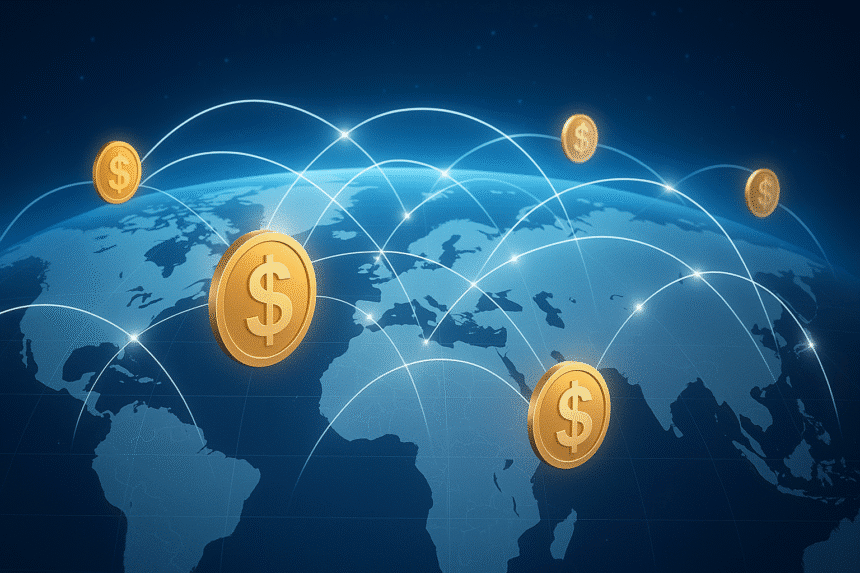

Global trade is changing in a very big way. Many countries have used the US dollar for international trade for a long time. The US dollar has been the main currency used for buying and selling goods between nations for more than 70 years. Today, a new trend is growing. It is called de dollarization. De dollarization means reducing the use of the US dollar in global payments. Countries want new options that are fast, easy, and cheaper.
At the same time, stablecoins are becoming popular. Stablecoins are digital currencies that keep a stable value. They use blockchain technology and work very fast. These stablecoins are finding their place in global trade payments. Many experts believe that stablecoins will be used more in future international business. Many governments and big trading partners are already testing digital settlement tools.
This blog explains how de dollarization is happening and how stablecoins can become new settlement tools for global trade. The content is kept very simple so everyone can understand how this shift affects the world economy.
What Is De Dollarization?
Dollarization means countries are trying to use fewer US dollars in trade. For many years, the US dollar has been called the world’s reserve currency. This means most global trade agreements and contracts are priced in US dollars. When a country buys oil or large goods from another nation, the payment is usually made in US dollars, even if both countries are from the United States.
The US dollar became powerful after World War II. The US had a strong economy and controlled a very large portion of global finance. In the 1940s, the Bretton Woods system made the US dollar the center of the global financial system. Many countries trusted the US economy so the dollar was considered safe for trade.
But today things are changing. New powers like China, Russia, India, and other fast-growing economies want more freedom in global finance. They do not want to depend only on the US dollar anymore. They want to use their own money or new digital currencies for international trade.
A report from the International Monetary Fund says the US dollar share in foreign exchange reserves has fallen from 70 percent in 1999 to around 59 percent in 2024. This number shows that the world is slowly moving toward de-dollarization.
Why Countries Want to Cut Reliance on the US Dollar
One major reason is sanctions. When the United States places financial restrictions on a country, it becomes very hard for that country to use dollars in international trade. For example, nations like Russia and Iran have been blocked from many US-based financial services. Because of this, they are searching for alternatives that do not depend on the US dollar.
Another reason is cost. When countries settle trade in dollars, they must convert their own currency into dollars. Exchange rates change every day. This creates extra cost and risk. Using local currencies or stablecoins can remove these conversion problems.
Geopolitical tensions are also important. Some nations believe that the US has too much control over global payments. They want a fairer system where no single country controls world trade. De dollarization gives them more control over their own economies.
US Dollar Share in Global Trade vs Other Currencies
| Currency | Global Share in Trade Payments 2024 | Trend Direction |
| US Dollar | 54 percent | Decreasing |
| Euro | 20 percent | Stable |
| Chinese Yuan | 4 percent | Increasing |
| Other Currencies | 22 percent | Mixed |
The table shows that the US dollar is still the top currency, but the gap is slowly shrinking. More countries want to reduce their risk by shifting to different settlement options.
What Are Stablecoins and How Do They Work
Stablecoins are a type of digital currency that holds a stable value. Most stablecoins are backed by real assets like the US dollar, gold, or government bonds. This makes them less risky than normal cryptocurrencies like Bitcoin because their prices do not change as fast.
Stablecoins utilize blockchain networks as their underlying technology. A blockchain guarantees that each transaction is recorded in a manner that is both secure and visible to all. Hence, stablecoins are very quick and very easy to move from one country to another. A digital wallet holder can make a stablecoin transfer within seconds.
Stablecoins come in a variety of types and varieties. Some examples are the dollar-pegged stablecoins like USDT and USDC. Others are supported by gold. Still, others apply algorithms or computer rules for supply and demand control. The real-money-backed stablecoins are the ones that are considered the most reliable today, particularly in trade and settlement activities.
Stablecoins are the preferred choice of many businesses due to their straightforwardness, speed, and safety. They also bypass most of the procedures and delays associated with international banking. Thus, they become an essential part of global trade.
How Stablecoins Help in Global Trade Settlement
When countries trade goods, they want payments to be fast and secure. Traditional cross-border transactions take two or three days to settle. There are bank fees and long approval steps from different banking systems. Stablecoins reduce all these problems.
Stablecoins move directly from buyer to seller using blockchain. There are no extra approval steps and no waiting for banks. The cost of sending stablecoins is much lower compared to wire transfers. This helps businesses save money.
Stablecoins also support real-time settlement. When payment is made, the seller receives money instantly. This improves trust and reduces delays in shipments. Every transaction is recorded on the blockchain, which improves transparency.
Major Countries Exploring Stablecoin Trade
China has been testing a digital currency called eCNY, also known as digital Yuan. It is already used in some cross-border trials. Russia and China are discussing ways to use digital currencies in trade to avoid US dollar restrictions. India has also launched a digital Rupee with early cases in international payments.
Countries in the Middle East that sell oil are also showing interest. For many years most oil was sold only in US dollars. Now nations like Saudi Arabia and the United Arab Emirates are talking about using local currencies or digital money for oil trade.
Latin American countries like Brazil and Argentina are exploring stablecoin settlements to support easier regional trade. They want fair exchange and better control over their financial systems.
How Stablecoins Support Lower-Cost Global Commerce
Stablecoins take away a lot of the costs associated with using traditional banking. In the case of an overseas payment from an importer to a supplier, banks would charge high fees. Through the use of stablecoins, many of those costs incurred by the banks are eliminated. The total savings for businesses could run into millions in large-scale trading deals.
Quick confirmation of transactions means that the companies can ship their products earlier. Therefore, the company can reduce storage costs and simultaneously increase the pace of business. Furthermore, small businesses are able to compete with big companies in the global market thanks to stablecoins. They do not have to rely on big banks or sophisticated financial systems to be a part of international trade.
The information stored on the blockchain protects the trading transactions from the risk of being untrue. Each payment is confirmed with the use of technology. That leads to an increase in the number of partners worldwide who would be willing to work with you. Countries that have less developed financial systems can become better integrated into the international market.
Risks and Challenges Before Stablecoins Replace the US Dollar
Stablecoins are growing fast, but there are still risks. Governments worry about illegal activity or a lack of control. Many countries do not have proper laws for digital payments. Large-scale adoption needs stricter regulatory rules.
Cybersecurity is another concern. Stablecoin platforms must protect users from hacks. If a digital currency platform gets attacked, money can be lost. Building secure systems takes time and careful planning.
Liquidity is also important. For very large trade volume, stablecoins must have enough real asset backing. Big global deals require strong financial reserves. Not all stablecoins today have enough trust to handle huge transactions.
This is why experts say de dollarization will not happen overnight. It will take many years for stablecoins to reach full trust on at global scale. The US dollar will remain important for a long time, even while new digital tools grow.
Future of De Dollarization and Global Payments
De dollarization will continue step by step. The world is trying to build a system where no country controls all world payments. Many new digital currency trials are showing success. This will shape the future of international finance.
Stablecoins are the first solution that is ready today. They are already used in crypto trading and are now moving into real global commerce. More governments are writing new rules to support safe and legal use of stablecoins in international trade.
Developing nations may benefit the most. Digital settlement gives them access to global business without needing large financial institutions. This creates fairer trade and more economic growth in smaller markets.
Over time, the world will look different. Trade will become faster, simpler, and more balanced. Digital currencies will play a major part in shaping this future.
Frequently Asked Questions
What is de dollarization
De dollarization means the world is slowly moving away from using the US dollar for international trade. Countries want more control over their money and fewer limits from global restrictions. They are exploring local currencies and digital options for payments between nations.
Why are stablecoins used in global trade?
Stablecoins move faster than bank payments. They cost less to send across borders. Their value does not move up and down too much because they are backed by real assets. This makes them very useful for companies that trade goods in different countries.
Can stablecoins replace the US dollar
Not fully in the near future. The US dollar still has strong trust around the world. Many banks and governments hold dollars as reserves. Stablecoins can help and grow, but the dollar will still be a major global currency for many years.
Are stablecoins safe to use in international payments
Stablecoins are safe when backed by real assets and supported by proper regulation. Blockchain technology records every transaction and protects against fraud. But countries need strict rules to prevent hacking and illegal use.
Why do some countries avoid US dollar payments?
Some nations want freedom from trade sanctions and fewer currency exchange fees. They also want direct control over their financial system. Using local money or digital currencies gives them more independence in global trade.
Summary
De dollarization means countries want to depend less on the US dollar. Many nations are searching for safe and fair alternatives. Stablecoins are digital assets that keep a stable value. They use blockchain to help businesses settle payments quickly and at a much lower cost.
Countries like China, Russia, and Saudi Arabia are exploring stability through digital payment networks. BRICS nations also want new ways to settle trade without the US dollar. Stablecoins help reduce conversion risks and improve trust in payments.
The US dollar will stay strong, but the world is changing. Stablecoins will become a normal part of global trade settlement. They bring a new system where every country can take part more fairly and easily in global markets.
The future of trade settlement will mix traditional and digital finance. This new balance shows how global trade can grow with modern technology.
References
https://www.jpmorgan.com/insights/global-research/currencies/de-dollarization
https://finance.yahoo.com/personal-finance/investing/article/what-is-a-stablecoin-130038254.html