





This article was first published on The Bit Journal.
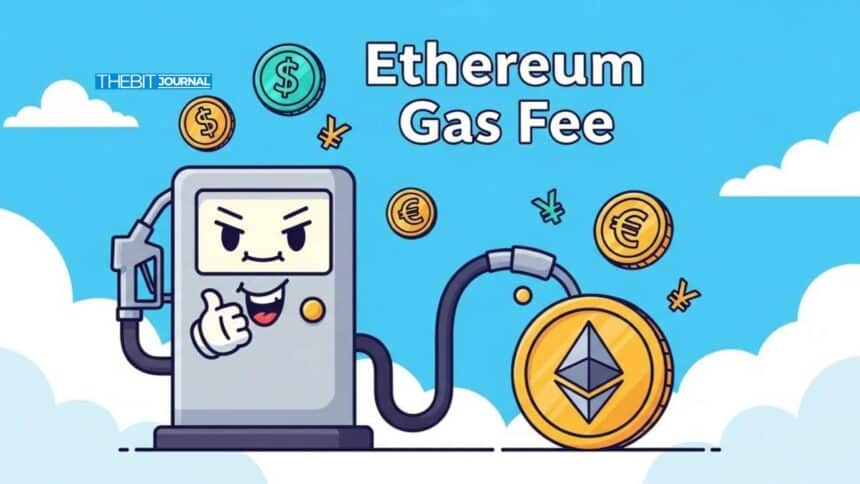
Ethereum’s network is undergoing a transformation with Ethereum gas fee approaching record lows and Ether (ETH) seeing relative strength in a bearish market.
After years of high fees pushing users out during peak congestion periods, protocol upgrades, more widespread Layer-2 utilization and expanded network capacity have all led to fees dropping.
Meanwhile, ETH price action has acted in sheer accordance with this technical progress thus far, remaining sturdy at key support levels.
Ethereum Gas Fee Hits Record Lows Despite Surging Activity
2026 has seen a reduction in the Ethereum Gas fee. According to reports, average fees fell to $0.01 per swap.
This drop and record on-chain activity coincide with one another. Ethereum’s seven-day moving average of daily transactions is approaching 2.5 million, almost double year-ago numbers. Stablecoin transfers are responsible for 35-40 percent of those transactions which shows that real financial flows and DeFi activity is a main driver of usage.
Analysts also are attributing this impressive growth to a mix of network upgrades and scale solutions that saw throughput grow massively but at almost no cost.

Protocol Improvements and Layer-2 Integration Drive Fee Lowering.
The Ethereum gas fee decline can be attributed to multiple highly-effective protocol upgrades implemented in late 2025 and early 2026 that addressed longstanding scalability limitations.
Fusaka upgrade brought Peer Data Availability Sampling (PeerDAS) which increases the data processing efficiency for Layer-2 rollups. These rollups bundle and post multiple off-chain transactions as a group, which posts an aggregate summary on base Ethereum to decrease congestion and cost per transaction.
In addition, changes to the mainnet, such as block gas limits and blob efficiencies, have allowed Ethereum to handle a higher number of transactions without seeing its fees skyrocket.
According to community feedback and developer reports, this architecture has essentially removed the “economic barrier to access” for many everyday users, allowing them easier entry into Ethereum for microtransactions as well as mass participation.
ETH Price Today: Mixed Signals Amid Low Fees
With the Ethereum gas fee relief, market observers have kept a close eye on ETH price movements.
$ETH has had a mixed time in January 2026 based on recent market pricing with slight volatility showing around the psychological levels.
Owing to current macroeconomic factors, ETH has plunged to the $3,200 levels. Traders now watch the $3,000 support and $3,500 resistance for directional cues
Reports indicate that some of the price pullbacks in late December could bring $ETH prices back down toward past support ranges near $3,150 before bouncing, indicating that buyers are defending technical floors even as volatility persists.
Actual Usage Growth: Wallet Creation and Mainnet Activity
Outside of gas fees and price action, Ethereum’s network fundamentals also indicate strong adoption. New data indicates that Ethereum is currently seeing unprecedented growth in the number of new addresses being created, with a daily average address creation rate of 327k addresses per day and likely driven by cheaper fees and more stablecoin usage.
This influx of new wallets, which increased by almost 400,000 at the height of single-day peaks, stresses that reduced transaction costs are opening doors for novices and injecting fresh liquidity into decentralized applications, DeFi protocols, and token activity.
Effect on Market Structure and Participation
With fees being low and usage high, the total value locked (TVL) in Ethereum’s ecosystem remains healthy, showing that money continues to pour into DeFi and other smart contract-based activity.
In the meantime, staking participation has been steadily increasing, with tens of millions of ETH locked in staking contracts as validators play an increasingly role in securing the network.
Conclusion
Powered by protocol adjustments, wider Layer-2 adoption and mainnet improvements, the Ethereum network has gone from being high-cost walled into low cost for usage.
This decrease in fees has also correlated with all-time high transaction volumes, new wallet growth and continued DeFi engagement.
While crypto markets are certainly still volatile, the interaction of technical scalability and user accessibility places Ethereum in a much stronger position than ever before.
As gas fees continue to trend near historic lows and participation rises, the network’s ability to support real-world usage without cost barriers suggests that Ethereum’s evolution is entering a new and more inclusive phase.
Glossary
Ethereum Gas fee: the price paid to send Ether or execute a contract on the Ethereum blockchain, the price is expressed in gwei, which depends on the load of the network.
Layer-2 rollups: Secondary protocols that handle transactions without them hitting the main chain, and they post aggregate data to Ethereum, which reduces both congestion and cost on the base layer.
Volume of transactions: The sum of all the transactions submitted to the network during a particular period; an important measure of activity.
TVL (Total Value Locked): The total value of assets locked in DeFi protocols on Ethereum; it serves as a health metric.
Staking: The act of locking one’s ETH to help secure the network and earn rewards.
Frequently Asked Questions About Ethereum Gas Fees
What are Ethereum gas fees right now?
The average transaction cost for Ethereum users has fallen to as low as $0.01.
Is falling demand behind the Ethereum gas fee collapse?
No, usage is at all time high, almost 2.5 million daily transactions which means even as fees have fallen network demand has increased.
What effect does the cheap gas price have on ETH price?
Low fees enhance usability and participation, supporting network fundamentals.
Are users still building and using Ethereum?
Yes. New wallet creations have spiked to a record level, which implies widespread user onboarding anchored by the lower cost and growth in DeFi activity.
References
FX Leaders
Cryptopress
cryptonews