












Ethereum Price Pressure Meets Derivatives Market Shifts
Ethereum is once again at the center of heated debate after open interest data from Binance suggested a potential local bottom may be forming. The sharp decline in derivatives positioning has caught the attention of analysts who argue that the unwinding of leveraged trades could lay the foundation for a recovery. The keyword Ethereum price prediction is surfacing widely, as market participants look for clear signs of direction.
Analyst Burak Kesmeci stated on X, “The current structure of open interest in Ethereum suggests we may already be in the local bottom zone.” His assessment stems from consistent patterns where large drops in open interest have historically preceded short-term rebounds.

Historical Patterns Support the Case for Recovery
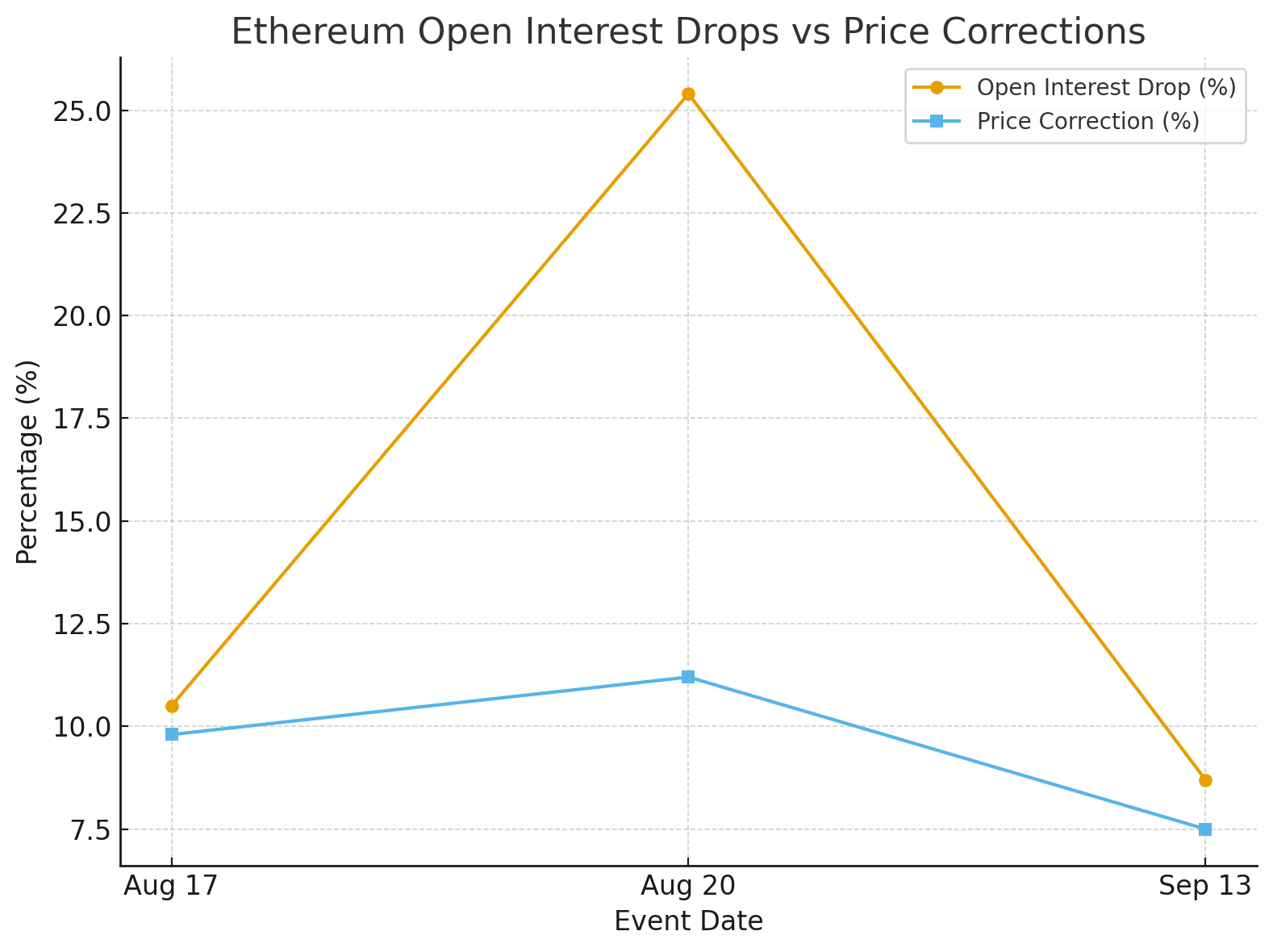
Over the past three months, Ethereum open interest on Binance has seen multiple corrections of more than 10 percent. Each pullback aligned with a drop in market price, often followed by a period of stabilization. The latest adjustment, where open interest fell from $11.39 billion to $10.4 billion, has revived discussions about whether the market is once again nearing a floor.
This correlation between declining leverage and spot price resilience has shaped the latest Ethereum price prediction narratives, positioning derivatives as a leading indicator of sentiment.
Institutional Demand Adds Fuel to Optimism
Beyond futures data, institutional activity continues to shape Ethereum’s trajectory. Fund Market Premium levels are showing neutrality or slight positivity, suggesting professional investors are still engaging. Exchange reserves, meanwhile, are declining, meaning fewer tokens are available for immediate sale.
These dynamics point to accumulation rather than distribution, a bullish signal that supports the broader Ethereum price prediction debate.
Market strategist Michael van de Poppe emphasized, “Ethereum has entered a critical accumulation phase. With consistent demand and dwindling exchange supply, the case for recovery remains strong.”
Risks Remain Despite Bottoming Signs
Not all indicators paint a purely bullish outlook. Estimated leverage ratios across major exchanges remain elevated, signaling that a large number of traders continue to hold risky positions. Should a sharp move occur, forced liquidations could still push Ethereum lower in the short term.
Analysts warn that the $4,000 support level remains critical. A break below could undermine bullish forecasts and reshape the near-term Ethereum price prediction outlook.
Trader Scott Melker noted, “If Ethereum loses $4K, the technical damage will be significant. Bulls need to defend this range with conviction.”
This blend of caution and optimism underscores the complexity of the current setup. Ethereum price remains tied to both macroeconomic trends and market microstructure within exchanges.
Conclusion
The combination of declining open interest, institutional accumulation, and reduced exchange reserves is fueling hope that Ethereum may be carving out a local bottom. However, high leverage and vulnerable support levels inject uncertainty.
The Ethereum price prediction continues to dominate discussions as investors weigh the balance between risk and opportunity. Whether Ethereum bounces from the $4,000 range or slips further will set the tone for the rest of 2025.
FAQs about Ethereum Price and Open Interest
What does a drop in open interest mean for Ethereum?
A decline in open interest often signals that leveraged traders are closing positions, which can reduce volatility and set the stage for a rebound.
Why is the $4,000 support level important?
This price range has repeatedly served as a psychological and technical floor. Losing it could trigger further declines in Ethereum.
How do exchange reserves impact Ethereum’s price?
Lower reserves mean fewer tokens available for sale, which typically indicates accumulation and reduces selling pressure on the market.
What role do institutions play in Ethereum’s price prediction?
Institutional inflows provide long-term stability, as professional investors often accumulate during corrections, reinforcing market support.
Glossary
Open Interest (OI): The total value of outstanding futures contracts that have not been settled.
Exchange Reserves: The amount of a cryptocurrency held on exchanges, often a measure of supply pressure.
Fund Market Premium (FMP): A metric reflecting whether institutional investors are buying at a premium or discount.
Leverage Ratio: The proportion of borrowed funds in a trader’s position, used to amplify potential gains or losses.
Accumulation Phase: A period when investors consistently buy an asset, usually before a major price move.
Support Level: A price range where buying interest is strong enough to prevent further declines.