





Crypto gambling culture is having a moment. Clips on TikTok tease big wins. Telegram groups drop promo codes and fast links. Streams show influencers spinning reels and rolling dice in real time. It all looks easy. It is not. The mix of social media and instant wallets changes how people play and how fast they lose or win.
In simple terms, crypto gambling runs on attention. Social feeds drive clicks. Bots handle bets. Tokens clear at speed. The result is a casino that never sleeps and lives in a phone. This guide explains how that machine works, why it spreads, and what to watch for. It keeps the focus on facts, risk, and rules that shape crypto gambling culture today.
What Is Crypto Gambling Culture
Crypto gambling culture is the set of habits, trends, and stories that form around wagering with digital coins. It blends meme coins, online casinos, streamers, and group chats. Players use Bitcoin, Ethereum, stablecoins, or casino tokens. They bet on slots, dice, sports, and games with provable code. It moves fast because wallets and sites are one tap away.
This culture is social by design. People follow tipsters on Telegram. They share wins on TikTok. They chase a promo code before it expires. The vibe is instant and public. That energy keeps new users flowing in and keeps regulars engaged.
The Social Funnel: From Scroll To Spin
Short videos make gambling feel simple. A 30-second clip shows a bet, a spin, and confetti. That is the hook. The link in bio or profile sends viewers to a casino or a referral page. Some creators also run private groups. Inside those chats, bots welcome new joiners, push bonuses, and track leaderboards.
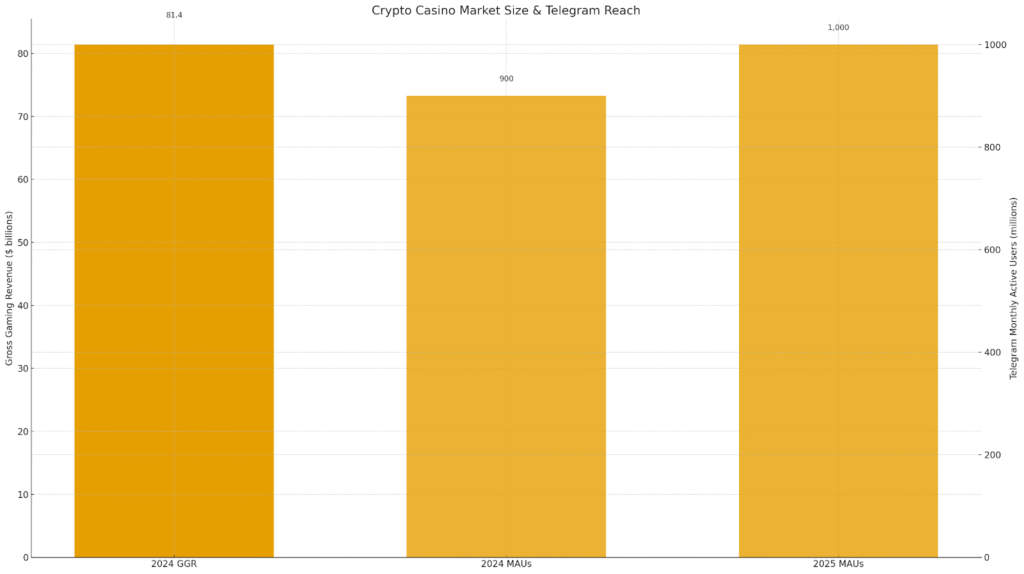
Telegram’s scale adds fuel. The app crossed 900 million monthly users in 2024 and hit 1 billion in 2025, turning niche casino groups into mass funnels. Many of these groups focus on crypto tools and quick payments, a fit for betting flows.
TikTok sets tight ad rules for gambling, yet organic clips and whitelisted campaigns still appear across regions. Policy pages spell out limits, but enforcement varies by country and age gate. That gap makes the platform a top source of casino traffic when creators follow local rules.
Why Players Choose Crypto Casinos
Speed matters. In many casinos, deposits and withdrawals clear in minutes. Fees can be low with the right network. For privacy, some offshore sites run light checks. That can be a draw for users who want fewer forms and faster play. It also adds risk, since light checks mean weak protections.
Rewards play a role. Crypto casinos push rakeback, reloads, and VIP tiers. Referral links and stream giveaways add more. The pitch is simple. Play, earn points, cash out. Social proof keeps the loop going.
How Big Is The Market
Reports point to sharp growth. Data shared by Yield Sec and reported in major outlets estimated crypto casino gross gaming revenue at about $81.4 billion in 2024. That number shows how much casinos kept after payouts, not total wagers. It marks rapid expansion even with blocks in big markets.
Telegram’s user base gives this system reach. With 900 million to 1 billion monthly users over 2024 to 2025, groups and bots can scale fast. This pool overlaps with traders, NFT fans, and sports bettors. That mix helps casinos trend beyond niche communities.
Social Platforms And Signals That Drive Crypto Gambling Culture
| Platform | User Scale Snapshot | Common Gambling Hooks | Policy Context |
| TikTok | Popular with 18–24s; high daily time on app | Short win clips, creator codes, live streams | Gambling ads restricted by policy with regional rules |
| Telegram | 900M users in 2024, 1B in 2025 | Casino groups, tip channels, betting bots | Fewer ad surfaces, heavy use of private groups |
| YouTube/Streams | Large creator economy | Long-form streams, sponsored segments | Age gates and ad policies vary |
| X/Reddit | High discussion density | Odds talk, arbitrage threads, promo hunts | Community-led moderation |
The Role Of Bots And Micro-Communities
Bots make betting feel like chat. In Telegram, a user taps a command, picks a game, and the bot processes the bet via a wallet link. Results posted in the thread. Friends chime in. The action becomes social. That format removes friction and makes small bets easy.
Micro-communities shape trends. A tipster calls a parlay. A whale drops a screenshot. People copy the bet. Fast loops like this can spin up in hours. They can also blow up bankrolls when odds turn.
Security And Regulatory Context
Licensing And Offshore Hubs
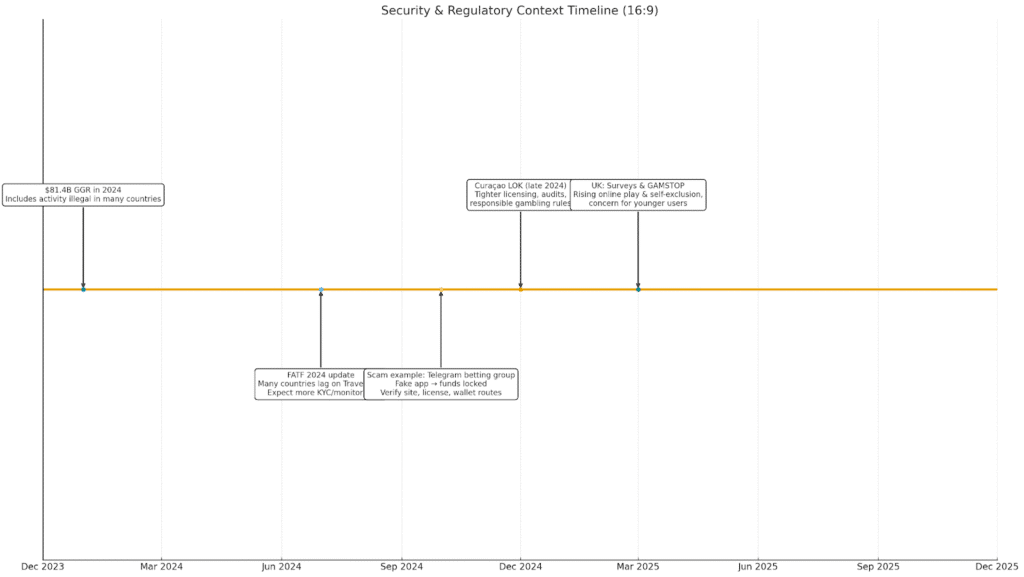
Crypto gambling culture crosses borders. Rules do not. Many casinos run from offshore hubs. Curaçao’s 2024 reform under the National Ordinance on Games of Chance (LOK) tightened licensing, introduced audits, and raised responsible gambling standards. Since many sites cite Curaçao licenses, these upgrades could lift standards across a large slice of the market.
AML And FATF Standards
Money laundering rules apply to crypto casinos. The FATF sets the global AML standard for virtual assets and service providers. Its 2024 update noted that many countries still lag on travel rule enforcement. That gap touches exchanges, wallets, and any casino that acts like a VASP. Players should expect more KYC checks, monitoring, and data sharing as regulators close those gaps.
Consumer Risk And Behavior Data
Consumer risk shows up in surveys and self-exclusion data. The UK regulator tracks participation, problem gambling signals, and digital gambling growth. Programs like GAMSTOP report rising sign-ups, with sharp increases among under-25s. These patterns highlight the human impact behind the industry’s rise.
Scams And Clone Platforms
Scams often use the same channels that fuel growth. One recent case involved a fake betting group on Telegram. Victims deposited into a cloned app and lost both funds and access. The lesson: always verify the brand, the license, and wallet routes before depositing.
Growth Versus Restrictions
The $81.4 billion GGR reported for 2024 includes activity regulators classify as illegal in many jurisdictions. Growth coexists with geo-blocks, stricter KYC, and legal risks for players who bypass controls. Users face a landscape of expansion alongside tighter oversight.
Simple Risk Ladder For Crypto Gambling Culture
- Low: Licensed site with strong KYC, on-chain proofs, and clear limits
- Medium: Offshore site with license in reform, light KYC, big bonuses
- High: Unlicensed site, no KYC, anonymous affiliate links
- Extreme: Telegram bot or clone app with no audit, no license, no support
How Social Hype Shapes Choices
Trends form fast on social media. A viral clip can push thousands to a site in hours. If that clip shows a big win, the effect grows. This is the core of crypto gambling culture. It rewards speed, noise, and novelty.
Creators earn from partnerships. Some get flat fees. Others get revenue shares or affiliate cuts. That setup can bias the content. A creator may highlight wins and hide losses. Users should treat all claims as ads unless proven otherwise.
Provably Fair, Explained Simply
Many crypto casinos market provably fair games. In short, the site and the player seed a random number. A hash locks the seed before the bet. After the bet, the player checks the hash to verify the roll. This process helps prevent rigging.
Provably fair does not remove house edge. It does not stop tilt. It only shows that the random draw was honest within the rules. Treat it as a transparency feature, not a profit engine.
Bankroll, Bonuses, And Breaks
A plan beats vibes. Set a fixed bankroll. Split it into small units. Never bet more than one unit on a single play. Withdraw often. Save a record of deposits and cashouts.
Bonuses can help, but they come with terms. Wagering rules can lock funds. Some sites void wins if rules are not met. Read the terms before a spin. If a site hides the rules, skip it.
Breaks matter. Use time-outs and self-exclusions. In the UK, tools like GAMSTOP help. In other regions, look for site-specific blocks and device-level limits. If none exist, that is a red flag.
Regional Reality Check
Rules depend on location. Some countries allow online gambling with strict licenses. Some block it. Crypto does not remove local law. A VPN can hide a location from a website. It does not change legal risk. If the site says “not available in your country,” respect that limit.
Curaçao’s shift shows the direction of travel. More audits. More responsible gambling gear. Better complaint routes. Users should favor sites that align with stronger rules and clear disclosures.
Red Flags And Quick Checks
Look for these signs before sending a coin:
- No license number or a stolen logo.
- Only Telegram support. No company address.
- Bonus terms that do not add up.
- Complaints about withdrawals in forums.
- Fresh domain with no history.
Editorial View: Culture Needs Guardrails
Crypto gambling culture is not a passing fad. It sits at the edge of finance, gaming, and social video. The draw is clear. Fast payouts. Public wins. Community. But culture without guardrails tilts toward harm. More transparent licensing and better ad rules can help. So can creators who show losses and set limits on streams.
Users should ask two questions before each bet. Is the house licensed and audited? Can the bettor afford to lose the stake? Simple rules beat hot tips.
Security And Regulatory Stats Snapshot
- Crypto casino GGR estimated at $81.4 billion in 2024. Source: Yield Sec data reported by major outlets.
- Telegram users: 900 million in 2024, 1 billion by 2025.
- UK gambling surveys show sustained online participation and a need for harm reduction.
- Curaçao’s LOK 2024 tightens licensing and audits.
- FATF highlights lagging global AML implementation for VASPs.
- Example of a Telegram betting scam reported to police.
Conclusion
Social media keeps crypto gambling culture in motion. TikTok clips and Telegram groups turn scrolls into spins. Bots remove friction. Bonuses add push. The market is large, with billions in annual GGR, and it grows in plain sight. Yet growth brings rules and risk. Curaçao is tightening oversight. FATF wants stronger AML controls. Surveys show rising harm signals among young users.
Smart players slow down. They seek licensed sites, clear terms, and provable games. They set limits and use breaks. Culture is not destiny. Good choices and better rules can shift the story. That is the real edge.
FAQs About Crypto Gambling Culture
What Is Crypto Gambling Culture
It is the habits and social trends around betting with digital coins. It lives on TikTok, Telegram, streams, and forums. It pushes fast play and fast payouts.
Are Crypto Casinos Legal Everywhere
No. Rules vary by country. Some places allow it with strict licenses. Others forbid it. Check local law. Respect geo-blocks.
How Do Provably Fair Games Work
The site and player seed a random number. A hash proves the draw was not altered. It helps with fairness checks. It does not remove house edge.
What Are The Biggest Risks
Scams, bad odds, and loss of funds. Unlicensed sites can block withdrawals. Fake apps and clone sites are common on social platforms.
What Signals Show A Safer Site
A clear license, full terms, provably fair proofs, strong KYC, and responsive support. Look for responsible gambling tools and clear dispute routes.
Glossary
- Gross Gaming Revenue (GGR): The amount a casino keeps after paying out wins.
- KYC: Know Your Customer checks. ID steps that verify users.
- FATF: Global body that sets AML rules. Guides how VASPs should comply. (FATF)
- Provably Fair: A cryptographic way to verify a game’s random draw.
- Rakeback: A reward that returns part of a player’s wagered amount.
- Self-Exclusion: A tool that blocks a user from gambling for set periods. (Gambling Commission)
- Telegram Bot: A chat app program that takes bets and posts results inside a group.
- Travel Rule: An AML rule that requires VASPs to pass sender and receiver data with transfers.
- Curaçao LOK: A 2024 law that reforms gambling licenses and oversight in Curaçao.
- On-Chain: Activity recorded on a blockchain ledger.
Summary
Crypto gambling culture blends social media hype, instant wallets, and offshore casinos. TikTok clips and Telegram groups drive fast funnels from views to bets. Bots handle wagers in chat, while promos and streamers fuel engagement. The market is large, with 2024 crypto casino GGR estimated at $81.4 billion, yet growth runs alongside risk and uneven rules. Curaçao has tightened licensing under the new LOK law. FATF warns that many countries still lag on AML rules for VASPs. UK survey data shows steady online play and rising self-exclusions among young users. Safer play starts with licensed sites, clear terms, provably fair tools, and strict limits. Crypto gambling culture will stay loud. Better guardrails and better choices can keep it safer.