





SOL is showing a familiar crypto-market gap: the network is busy, but the token is not yet moving with the same force. At the time of the latest market reading, SOL traded near $84.85, rising 1.90% in 24 hours, while Bitcoin gained 2.30% and Ethereum climbed 3.10%.
That difference matters because Solana is not short of ecosystem activity. DApp revenue, DEX volume, and capital inflows all point to healthy usage, yet price action remains trapped under technical resistance. This Solana price analysis explains why SOL is struggling, which indicators matter now, and what traders are watching next.
Solana Price Analysis: Why SOL Is Not Following the Network
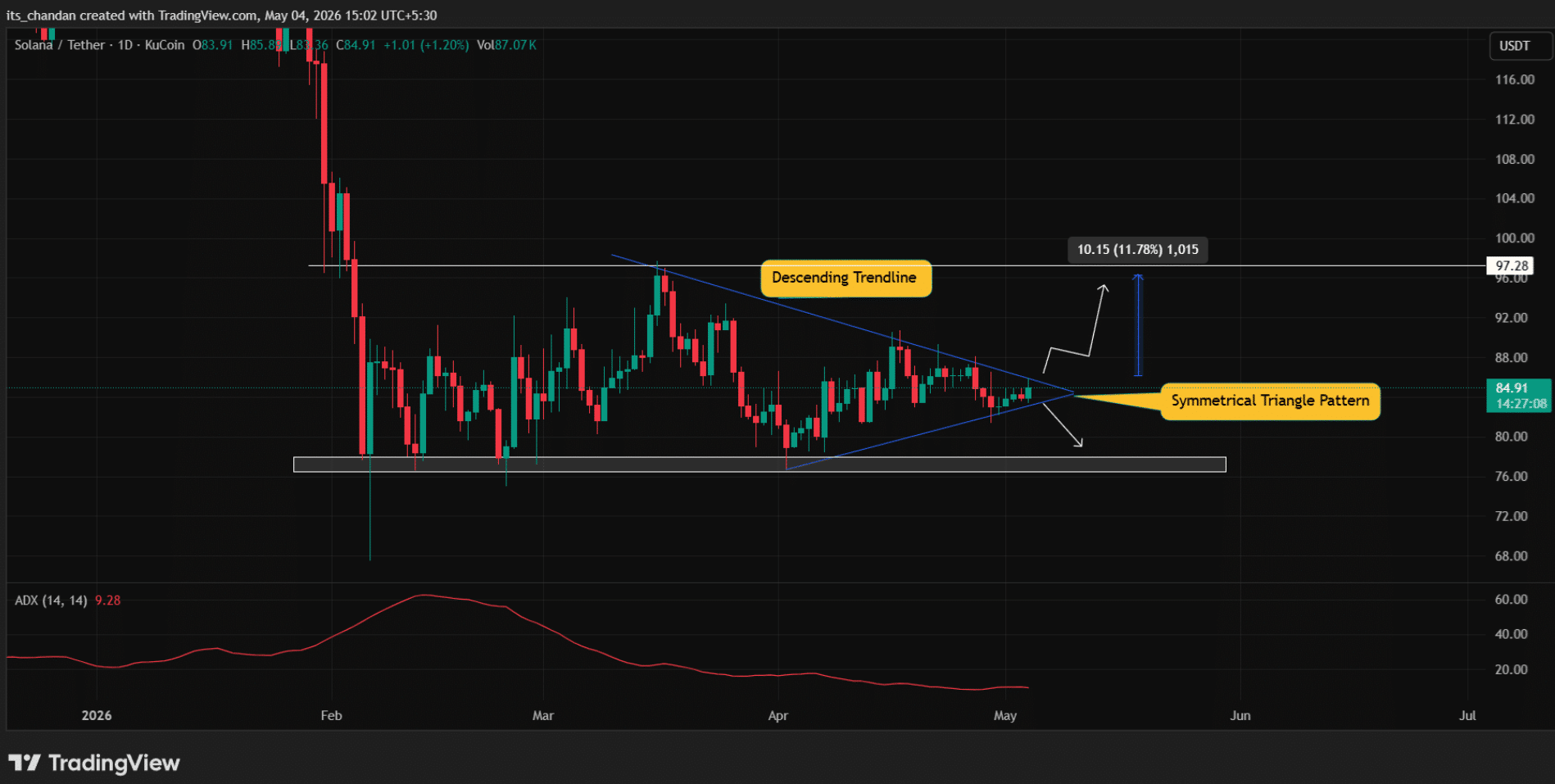
The main issue is simple enough: SOL has strong ecosystem signals, but weak price structure. Since March 16, the token has faced pressure from a descending trendline, while its chart has tightened inside a symmetrical triangle. That kind of setup often shows indecision. Buyers are active, sellers are still defending key zones, and the market waits for a clean break before choosing direction.
In this Solana price analysis, the key upside level is near $96. A breakout above the trendline could open room for an estimated 11.7% move, but the setup is not confirmed yet. Until SOL clears that barrier with stronger volume, traders may treat every bounce with caution. That is why the price can look firm for a day, then lose steam quickly.
Weak ADX Shows Momentum Has Not Arrived
One of the clearest indicators is the Average Directional Index, or ADX. It dropped to 9.28, which signals weak trend strength. ADX does not tell whether price is bullish or bearish. It measures the strength of the move itself. A low reading means the market lacks conviction, even if price is rising slightly.
For crypto traders, this matters because weak ADX often creates choppy conditions. Price may move inside a tight range, liquidations may hit both sides, and breakout signals can fail. SOL needs more than good headlines. It needs force behind the move.
Inflows Show Capital Is Still Moving Toward Solana
The stronger part of this Solana price analysis comes from ecosystem flows. Solana reportedly attracted around $381 million in inflows over 3 months, with about 69% coming from Ethereum. That suggests capital is not ignoring Solana. It is moving into the network, even while SOL itself remains stuck near resistance.
This is important because capital rotation often starts before price fully reacts. In traditional markets, money can move into a sector before the leading stock breaks out. Crypto works in a similar way, only faster and with more noise. The caution is that inflows are supportive, not a guarantee. They show interest, but price still needs confirmation.
DApp Revenue and DEX Volume Support the Bull Case
Solana also led major Layer 1 and Layer 2 networks in daily and weekly DApp revenue and DEX volume, according to the reported data. These indicators help measure real network use. DEX volume shows trading activity on decentralized exchanges, while DApp revenue reflects fees and demand from applications built on the chain.
That gives this Solana price analysis a more balanced view. SOL is not weak because the network is empty. It is weak because market structure has not caught up with activity. For investors, that difference is crucial. A token with weak usage and weak price is a deeper concern. A token with strong usage and weak price may be waiting for a trigger, although risk remains.
Adoption Adds Context, But Traders Want Confirmation
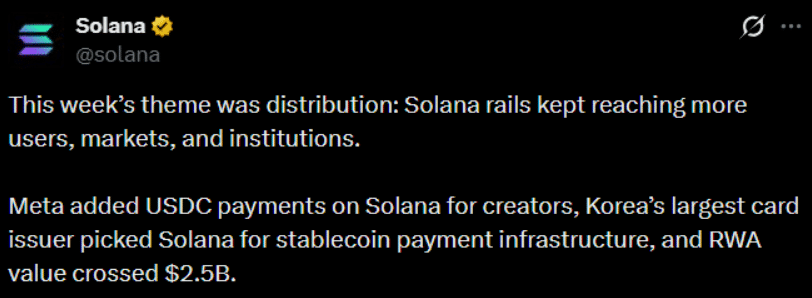
Recent adoption updates also improved the wider case for Solana. The network was linked to creator USDC payments in selected markets, while a large card issuer entered work with the Solana Foundation around stablecoin payment infrastructure. These developments support the idea that Solana is pushing beyond trading use cases into payments and settlement activity.
Still, the market is not handing SOL a free pass. This Solana price analysis shows that adoption can improve sentiment, but price responds only when buyers overpower resistance. Until that happens, SOL remains a high-activity asset with a muted chart.
Key Crypto Indicators Traders Should Watch
A useful Solana price analysis should not rely on one signal. Traders usually watch support and resistance first because they show where buyers and sellers are active. Trendlines help define direction, while ADX measures whether the trend has strength. DEX volume and DApp revenue reveal ecosystem demand. Inflows show where capital is moving. Relative performance against Bitcoin and Ethereum shows whether a token is leading or lagging the broader market.
For SOL, the mixed signal is clear. Network indicators are healthy, but technical indicators remain cautious. That is often where sharp moves begin, but it is also where impatient traders get trapped.
Conclusion
SOL’s current weakness does not erase Solana’s ecosystem growth. Instead, it shows the gap between usage and price momentum. The network is attracting capital, DApps are generating revenue, and DEX activity remains strong. Yet SOL still needs a decisive breakout above its descending trendline before bullish conviction improves. For now, this Solana price analysis points to a market waiting for proof, not promise.
Frequently Asked Questions
Why is SOL struggling despite Solana’s growth?
SOL is struggling because price remains under technical resistance, while ADX shows weak trend strength. Ecosystem growth is strong, but traders have not yet confirmed a breakout.
What price level matters most for SOL?
The key upside level is near $96, which could become the next target if SOL breaks above its descending trendline with stronger momentum.
Is Solana’s ecosystem still healthy?
Yes. Reported inflows, DApp revenue, and DEX volume show strong network activity, even though SOL price action remains cautious.
Glossary of Key Terms
ADX
ADX means Average Directional Index. It measures trend strength, not price direction.
DEX Volume
DEX volume is the value of trades processed on decentralized exchanges.
DApp Revenue
DApp revenue means fees or income generated by decentralized applications on a blockchain.
Symmetrical Triangle
A symmetrical triangle is a chart pattern where price tightens between support and resistance before a possible breakout.
Sources
tradingview
Solana/X