





Have you noticed how shopping in America is no longer what it used to be? E-commerce growth 2025 is transforming the way people buy, making speed, simplicity, and smart recommendations the new standard. Shoppers now move effortlessly between online and in store, checking prices on their phones before heading out or completing purchases in an app after browsing a store.
The growth is undeniable. Global e-commerce sales are set to rise 8.3% year over year, making up 20.5% of total retail in 2025, with projections reaching 23.7% by 2030. Mobile commerce in the U.S. alone is expected to account for 49.1% of all e-commerce sales by 2027, highlighting just how rapidly digital shopping is taking over.
E-commerce is not just expanding in volume but also in value. In October 2025, online prices increased 1.4% compared to the previous year, while total digital retail sales jumped 11%. Shoppers are spending more per order, with the average purchase value rising 5% and carts holding 31% more items than last year.
Analysts note that rising import tariffs contributed to these higher prices, showing how global trade and economic factors are directly shaping the online shopping landscape.Businesses are realizing the changes and are making efforts to stay in the competition.
They are modernizing mobile applications, producing offers that give a personal feeling and are paying more attention to being eco friendly. According to experts, it is very important to understand the trends that are driving e-commerce growth 2025. Those retailers and marketers who keep up with these changes will have a better chance of maintaining their position ahead.
What Is E-commerce and How Did It Evolve?
E-commerce, short for electronic commerce, is essentially the trading of goods and services via the internet. It started in the 1990s, when the first online shopping became possible through platforms like Amazon and eBay. Over the years, it has grown a lot as more people use phones to shop and payment systems got easier and safer.
Today, it is a huge part of business around the world. By 2025, e-commerce growth 2025 is driven not only by convenience but also by shoppers’ expectations for fast delivery, personalized recommendations, and smooth experiences across all shopping channels.
Analysts say that changes in consumer behavior, along with improvements in logistics, are helping the sector expand its influence across the wider retail market.
How Big Is the U.S. Online Retail Market in 2025?
Online retail market in the United States has been expanding and now makes up a bigger part of total retail sales. With the rise of numerous direct-to-consumer brands, a large number of people are bypassing physical stores and opting for online shopping.
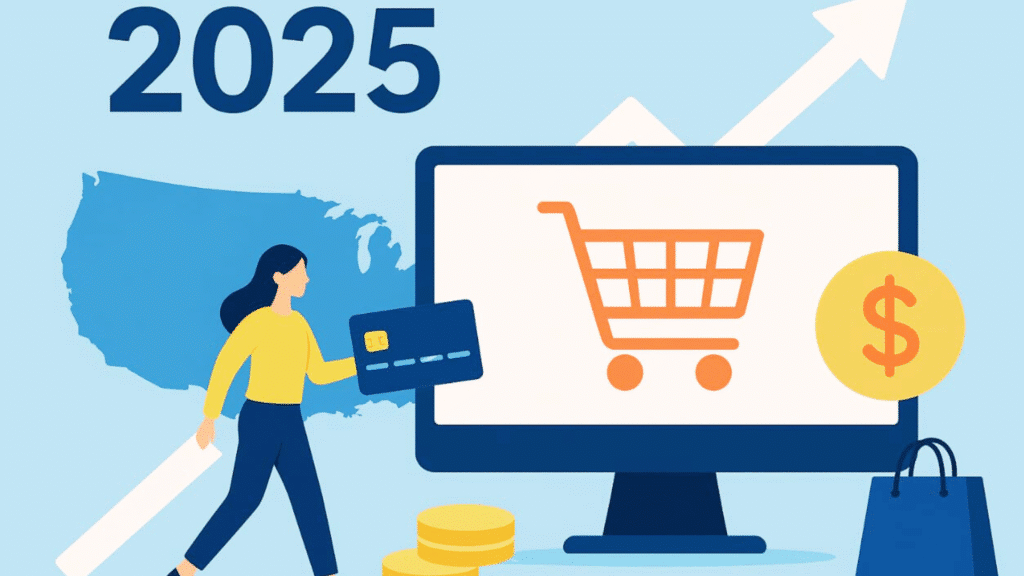
According to experts, e-commerce growth 2025 is expected to make online shopping bigger than ever, with safe payments, faster delivery, and easier ways to shop. Buying online now depends more on trust, speed, and convenience than just getting products, said Amelia Brooks, a senior retail analyst.
Price transparency matters. Shoppers today want clear prices and shipping costs they can trust. Brands that do this see more people buying from them and coming back again.
Why Is Mobile E-commerce Leading the Charge?
Mobile devices have become the main way people shop online. In 2025, smartphones are driving product discovery, price checks, and checkout. Retailers focus on app friendly designs, one click payments, and location based offers to reach more customers.
Industry reports point out that e-commerce growth 2025 is being driven by mobile optimization. Retailers who are making their sites easy to use on mobile and deliver useful notifications are seeing customers buying more and coming back.
Technology consultant Raj Patel said that, in 2025, consumers are looking for fast and easy experiences, and mobile makes that possible.
How Is Social Commerce Shaping Consumer Behavior?
Social media is turning into a place where people shop, not just see ads. Posts you can buy from, live selling events, and influencers showing products are making it easier for people to make purchases.
In 2025, social commerce is helping online shopping grow. Brands that put their products on social apps make it simple for people to find and buy things. Shoppers also pay more attention to recommendations and interactive posts when deciding what to get.
What Role Does Personalization Play in 2025?
Nowadays, personalization is more like a requirement for the digital market rather than a feature. By means of product suggestions, customer data, and personalized content, retailers are trying to make their offers more relevant and attractive to each customer individually.
Analysts say that hyper-personalization helps keep customers loyal and boosts sales. People now expect shopping experiences to feel personal, and brands that don’t risk being left behind, said Lila Martinez, a digital strategy expert.
By showing relevant products, sending useful emails, and timely notifications, retailers make customers happier and more likely to return, helping e-commerce growth 2025.
How Are Fulfilment and Delivery Innovating?
Getting your order quickly and without problems is still a big part of shopping online. People want their packages the same day or the next, want to see where they are, and don’t want returns to be a headache.
To maintain their position, stores are setting up warehouses close by, are quickly dispatching the orders, and are using automated systems to fasten the process. Such changes make shopping easier and give buyers a feeling of safety.
How quickly and reliably orders arrive will matter a lot for e-commerce growth 2025, because it can make or break a sale.
Are Consumers Prioritizing Ethical and Sustainable Shopping?
In 2025, the buyers pay more attention to sustainability when purchasing. They examine the origins of the products, the way they are packaged, and the impact they have on the planet. Brands that use eco friendly materials, recycle more, and are open about their supply chains are more likely to attract customers.
This trend is crucial for e-commerce growth 2025. Experts point out that eco friendly buying aligns with making a profit as well as gaining consumer trust, thereby resulting in long term loyalty and brand equity.
Those retailers who are not in a position to satisfy these requirements may be forced to cede their share of the market.
How Is Data Security and Regulation Impacting E-commerce?
The online trade has gradually turned into a complex network of rules and security risks. Data protection, secure payment, and consent transparency are necessary for trust building. It has become mandatory to comply with the latest regulations.
According to the specialists, the implementation of robust security measures is a source of customer trust that, in turn, is the main driver of the growth of e-commerce in 2025. Retailers that focus on good cybersecurity and clear data handling are more likely to succeed long term.
How Is AI Changing the Way Shoppers Browse and Buy Online?
Halloween helped boost October online sales, as shoppers added holiday décor to their carts. E-commerce sales of holiday décor jumped 130% compared to September, while hand tools and power tools also saw big gains.

U.S. consumers spent $88.7 billion online in October, up 8.2% from last year, and online prices rose for the first time in two years. Adobe also found that shoppers coming from AI sources spent more time on sites, viewed more pages, and were less likely to leave quickly.
What Is the Future Outlook for E-commerce Growth ?
E-commerce growth 2025 is expected to remain strong. Experts predict continued expansion in mobile commerce, social media shopping, and personalized experiences powered by AI.
Those sellers who meld marketplace appearance with DTC (direct to consumer) methods are probably going to make more money and get more customer loyalty. The factors that will continue to define the online sector are convenience, speed, and transparency.
Companies that allocate resources towards seamless digital experiences, moral practices, and attractive logistics will be the winners as online shopping becomes more and more competitive.
Conclusion
E-commerce growth 2025 shows a market that keeps changing. To remain relevant, retailers have to roll out new innovations via various digital channels, delivery methods, and personalized customer experiences. It is consumers who are driving this change as they require quicker service, good ethics, and customized shopping experiences.
E-commerce Growth 2025 is essentially the rebuilding of trust, the creation of great experiences and the meeting of the changing expectations of American shoppers rather than just being a technological advancement.
Experts agree that businesses that adapt proactively will gain stronger customer loyalty, higher revenues, and a lasting competitive advantage in the fast changing digital retail landscape.
Glossary
Social Commerce: Shopping directly through social apps.
Omnichannel Shopping: Blending online and in store buying.
Hyper Personalization: AI makes recommendations just for you.
Sustainable Shopping: Buying eco friendly and responsible products.
Direct to Consumer: Brands sell online straight to you.
Frequently Asked Questions About E-commerce Growth 2025
What is supporting e-commerce growth in 2025?
E-commerce growth 2025 is supported by fast delivery, mobile shopping, social commerce, and personalized experiences.
How big is the U.S. online retail market in 2025?
The U.S. online retail market is expanding and makes up a larger share of total retail sales than before.
How is social media changing shopping behaviour?
Social media allows people to buy directly from posts, live events, and influencer recommendations.
How are retailers adapting to e-commerce growth in 2025?
Retailers are improving mobile apps, providing personalized offers, and focusing on fast delivery and sustainability.
Will e-commerce continue to grow in the future?
Yes, experts predict that e-commerce will keep growing as technology, AI, and social commerce make online shopping easier.
Sources