



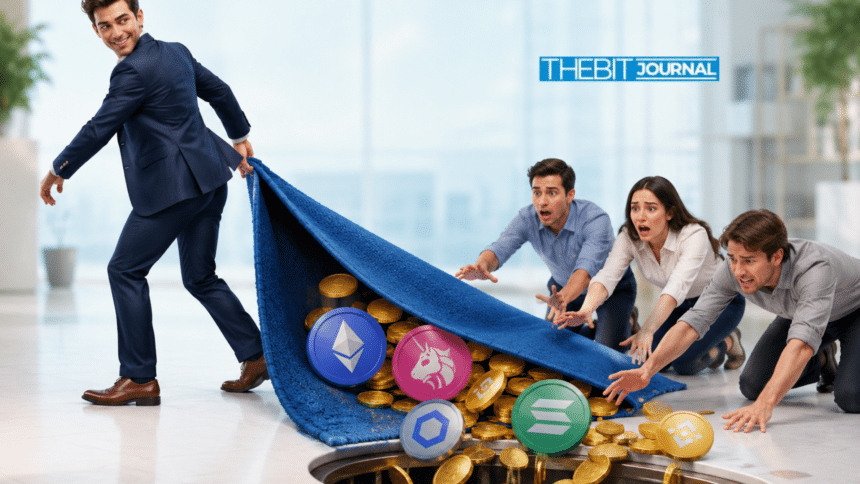

Rug pull remains a key discussion alongside improving security standards in decentralized finance, even as the ecosystem develops stronger investor protection tools and more structured auditing practices. In many cases, sudden liquidity removal after heavy investor participation still leads to sharp token collapses.
At the same time, the market has also matured, with a larger share of audited projects and advanced detection systems helping reduce exposure to fraudulent activity. This balance between risk and protection continues to define today’s crypto environment, where both innovation and caution evolve side by side.
What does rug pull mean in crypto markets?
Rug pull refers to a deceptive exit strategy where developers attract capital into a token project and then withdraw liquidity, leaving investors with devalued assets. It is typically seen in decentralized exchanges where token creation and listing can happen quickly. In simple terms, a rug pull removes the financial foundation of a token.
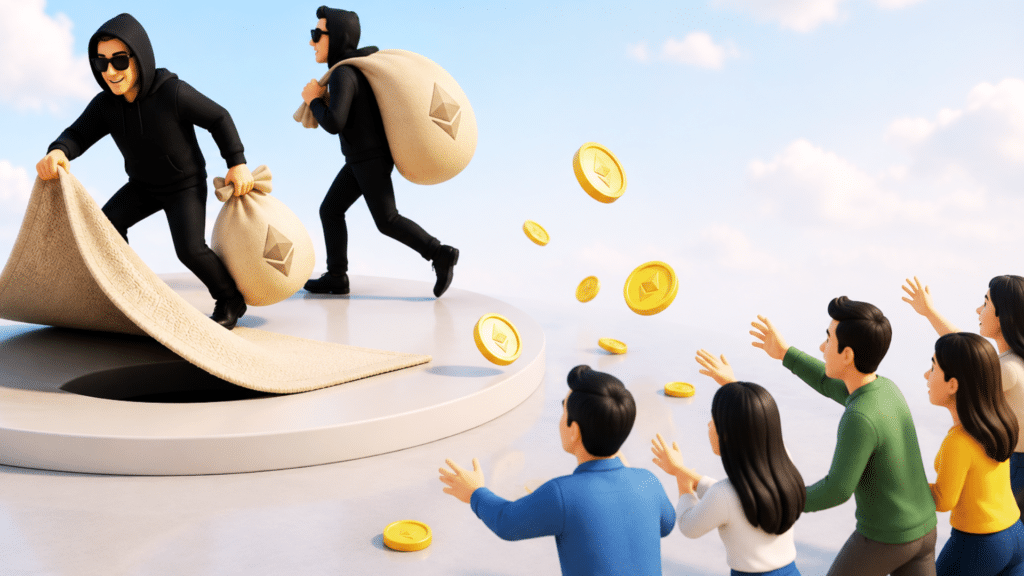
Once liquidity disappears, trading becomes nearly impossible and prices collapse. Unlike normal market downturns, this is intentional and executed by the project creators. Over time, awareness around this behavior has increased. Many investors now treat early-stage tokens with caution, especially when transparency is limited.
Why does rug pull happen in decentralized finance?
Rug pull happens mainly because decentralized systems allow fast and low-cost token creation without strict entry barriers. Developers can launch tokens, pair them with major assets like ETH or USDT, and immediately attract trading activity. The process often begins with aggressive marketing and social media hype. As investor interest grows, liquidity pools expand.
A rug pull typically occurs when developers withdraw liquidity or activate hidden contract functions after sufficient funds are collected. While this risk exists, the broader DeFi space has improved. Audited protocols and verified contracts are now more common, reducing exposure in well-established ecosystems.
How does Rug Pull unfold step by step?
A rug pull generally follows a predictable pattern. First, a token is created and liquidity is added to a decentralized exchange pool. Trading begins and early promotional efforts attract attention. As buying increases, liquidity grows and price activity intensifies. At this stage, control over the pool often remains with the developers.
A typical scenario occurs when liquidity is suddenly removed or smart contract functions are triggered to restrict trading. After execution, communication channels disappear. Websites go offline and social accounts become inactive. The sudden nature of this event makes response time extremely limited for investors.
What types exist in crypto and NFT markets?
Rug pull appears in multiple forms depending on the mechanism used. The most common type is liquidity removal, where developers drain the entire pool and exit. Another form involves large-scale token selling by insiders, which triggers rapid price crashes. Some cases involve smart contract manipulation, where hidden code prevents selling or enables unlimited token creation.
These structures can trap investors while value declines. NFT-based rug pull incidents have also increased. In these cases, developers promote NFT collections, often using whitelist campaigns and social hype, then abandon the project after minting. Investors are left holding illiquid digital assets with no roadmap or support. Each type targets different vulnerabilities but the outcome remains the same, leading to investor losses and project abandonment.
What warning signs can signal risk?
A rug pull often shows early indicators before execution. One major warning sign is anonymous development teams, where no verified identity is attached to the project. Another important factor is liquidity lock status, if liquidity is not locked, the probability of collapse increases significantly.
Unverified audits, vague project documentation, and unrealistic return promises stand out as additional red flags. Sudden price spikes without matching trading volume can also point to manipulation. These signals typically surface well before a rug pull hits.
What tools help detect risks?
Several tools are now widely used to identify risky contracts before investment. Platforms such as TokenSniffer, Honeypot.is, and RugDoc analyze smart contract behavior for hidden risks like sell restrictions, mint functions, or liquidity vulnerabilities.
These detection tools help investors identify suspicious patterns early and reduce exposure to potential rug pull scenarios. While not perfect, they provide an important layer of protection in fast-moving markets. Alongside tools, investors also rely on wallet tracking systems and liquidity monitoring dashboards to observe unusual fund movements.
What legal status surrounds Rug Pull incidents?
From a legal perspective, rug pull activities are generally classified as fraud or financial theft in many jurisdictions. The act of misleading investors and extracting funds aligns with established definitions of financial misconduct. However, enforcement remains difficult. Many cases involve anonymous teams and cross-border operations, making identification and prosecution challenging.
Blockchain pseudonymity adds another layer of complexity. Despite these challenges, regulators continue to expand oversight frameworks for digital assets. Reporting mechanisms through exchanges and blockchain explorers are increasingly used to track suspicious activity.
What happens after a Rug Pull and can recovery happen?
After such incidents, most projects collapse rapidly. Liquidity disappears, tokens lose value, and communication channels shut down. Recovery is rare but not entirely impossible in limited cases. Investors can report incidents to decentralized exchanges and blockchain tracking platforms. These reports may help identify wallet movements, although direct fund recovery is uncommon.
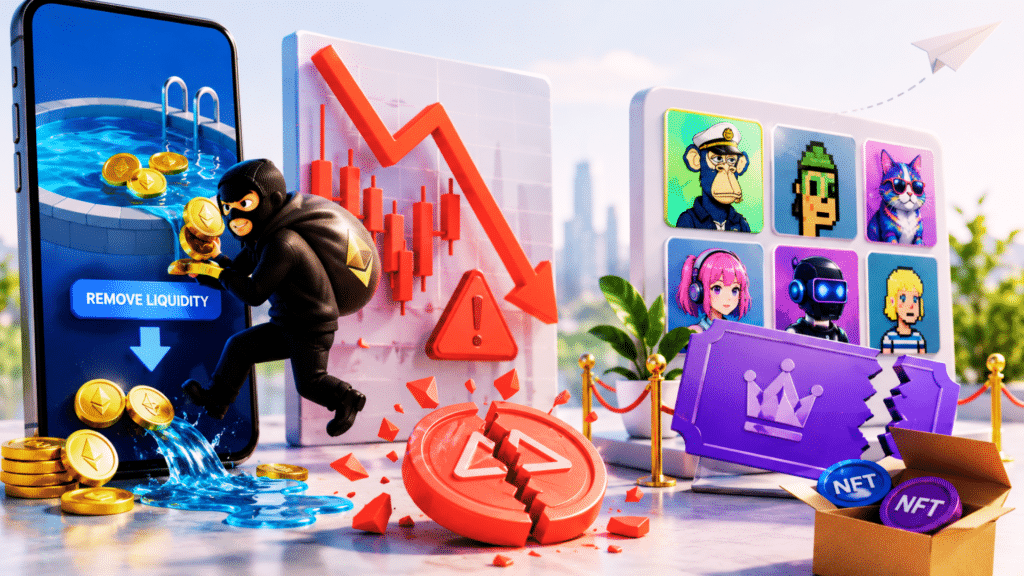
In some regions confirmed fraud losses may qualify for tax-related adjustments, depending on local financial regulations. This does not restore capital but can offer partial financial relief. The most effective strategy remains prevention through early verification and risk awareness rather than post-event recovery.
Conclusion
Rug pull remains a structural challenge in decentralized finance but the landscape is not static. Improved auditing systems, contract scanners, and transparency tools have strengthened early detection capabilities. At the same time investor education has become a key factor in reducing exposure. Risks still exist but the ecosystem is slowly getting stronger.
Today these cases are getting spotted earlier than before due to better analytics and active community tracking. They also underline the need for disciplined investing, careful contract checks, and use of verified tools. With stronger awareness and proper due diligence investors can move more safely in fast-changing crypto markets while avoiding common risks.
Glossary
Liquidity Pool: funds used for trading tokens on a DEX
Smart Contract: code that runs automatically on blockchain
Liquidity Removal: pulling funds that crashes token value
Honeypot: scam where users can buy but cannot sell
Rug Pull: scam where developers remove funds and abandon a crypto project
Frequently Asked Questions About Rug Pull in Crypto
How does a rug pull happen?
A rug pull happens when developers remove liquidity or stop trading suddenly.
Where do rug pulls usually occur?
Rug pulls usually occur in decentralized finance and new token launches.
What is a warning sign of a rug pull?
A warning sign is when a project has no real team or no clear information.
How can rug pulls be avoided?
Rug pulls can be avoided by checking audits, team details and liquidity locks.
Are all crypto projects risky?
No not all crypto projects are risky, but new ones should be checked carefully.
Sources –