





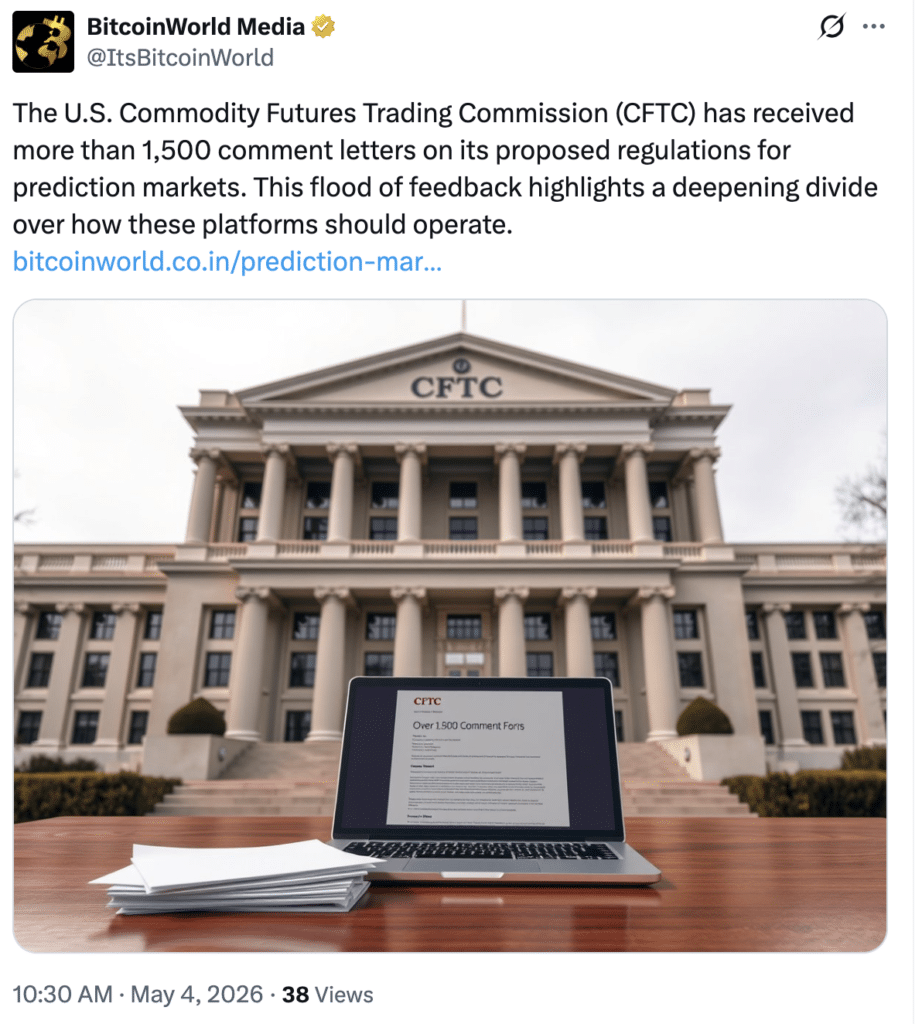
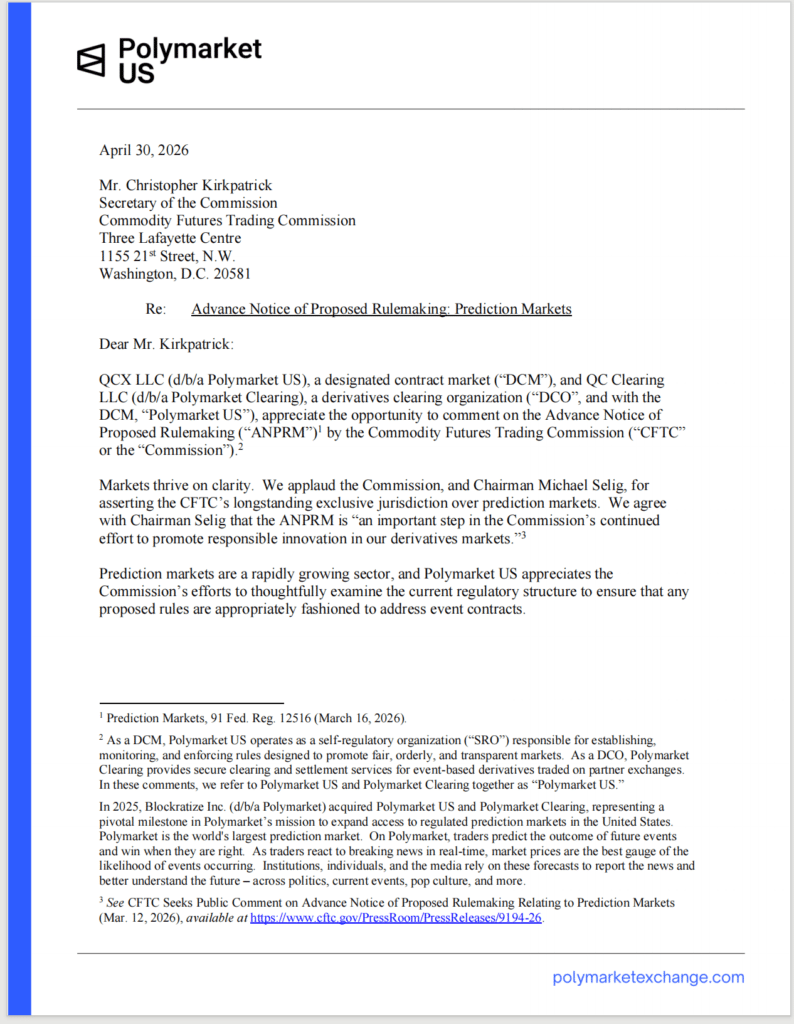
The debate about CFTC prediction market rules has grown into one of the financial policy wars to watch in 2026 here in the United States. More than 1,500 public comments were submitted to the Commodity Futures Trading Commission in response to proposals for a framework governing event contracts, reflecting industrywide cleavages.
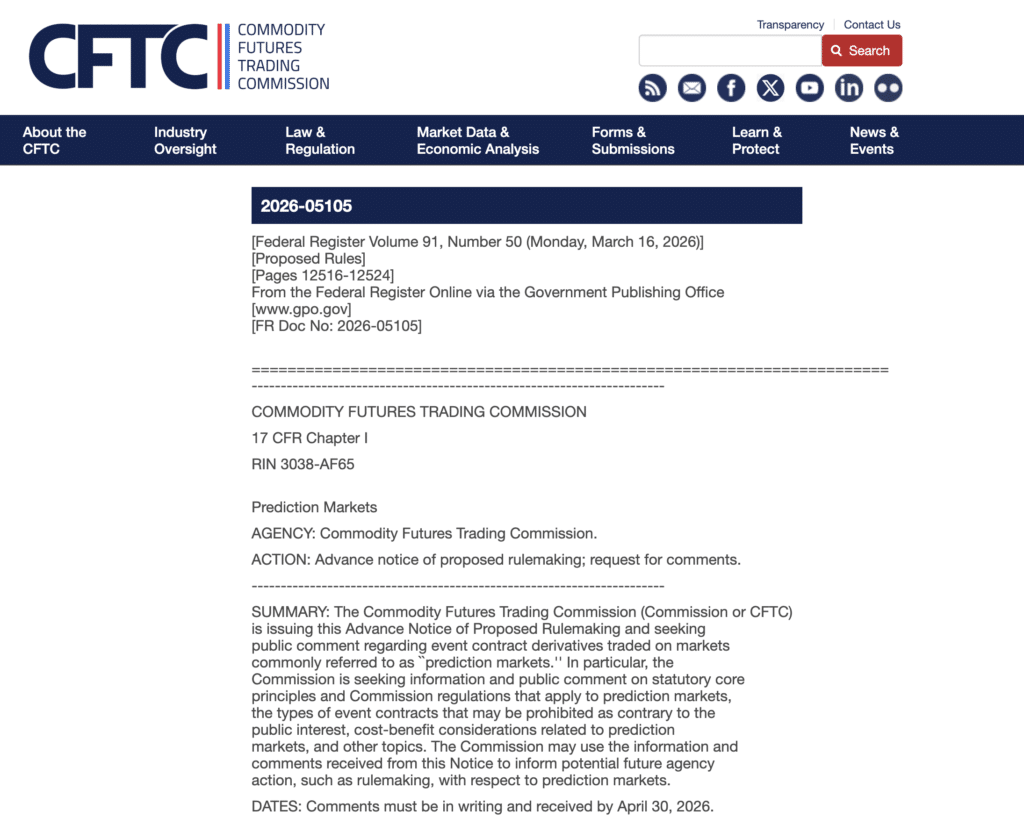
The CFTC prediction market rules are meant to clean up unclear oversight for predictions-based trading through a federal regulatory loophole but have instead led to conflicting interpretations about jurisdiction by federal authorities such as the CFTC and crypto firms, as well as state gaming regulators leading the wider US debate on which kinds of prediction-based markets should be regulated.
Industry Split Over Market Control and Authority
The ongoing regulatory dispute around CFTC candy corn futures reveals a deep divide in the appropriate governance of event contracts. Those backing the rules say that federal oversight ensures consistency, while critics argue only state authorities should be in charge. Now, this clash more broadly is a controversy around prediction market rules for state vs federal as platforms expand beyond the traditional crypto markets.
The CFTC prediction market rules have become a new symbolic front in the battles to define what constitutes a financial instrument versus gambling products under US prediction market legal framework discussions.
Kalshi, Polymarket, and Institutional Backing
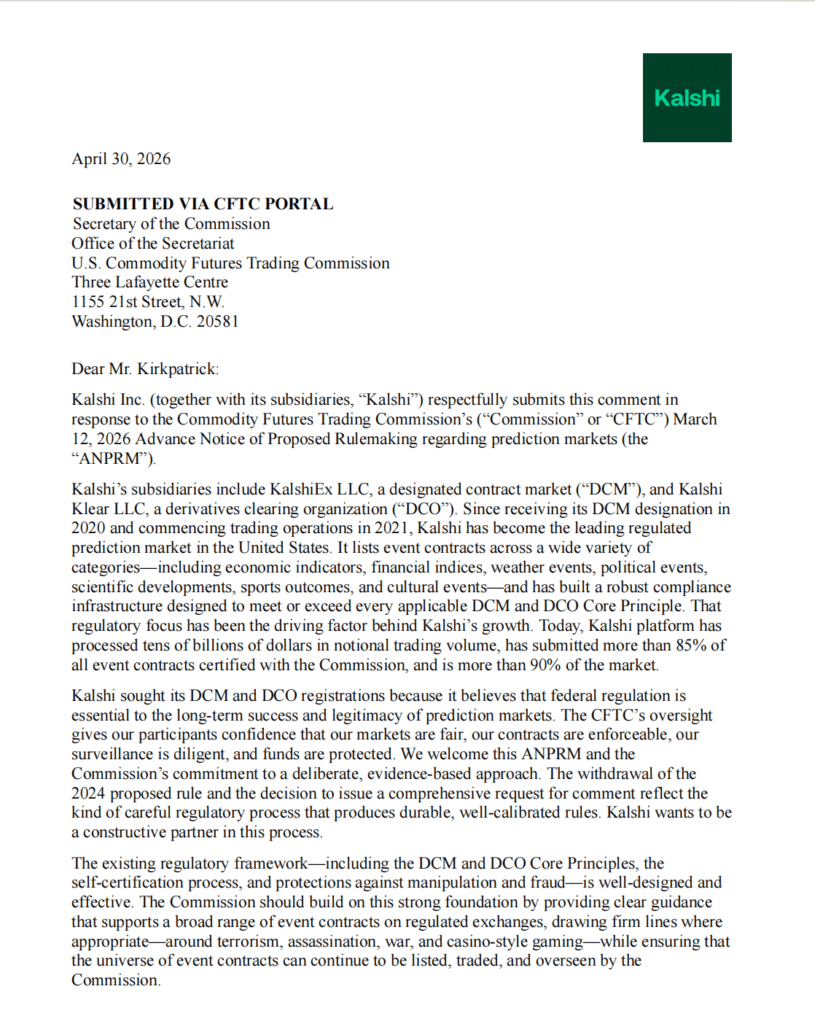
From Kalshi and Polymarket to Andreessen Horowitz, the big money bet is on public support for CFTC prediction market rules assuring the regulator’s colocation with event contracts. Executives at Kalshi contend that clear rules under the existing legal framework, via proven test case Sec. 440(b), promote innovation and public trust; Polymarket leadership expresses awareness of demonstrated jurisdictional reach over time.
All these positions further cement the news narrative surrounding Kalshi Polymarket regulation at play. Institutional backing is quickly advancing hopes that regulated markets could broaden considerably if guidelines don’t alter in the more extensive CFTC crypto prediction markets environment.
State Regulators Respond to Gambling Concerns
Pennsylvania, Tennessee and Missouri state gaming regulators, along with others, have contested the CFTC prediction market rules in that sports based contracts are no different than unregulated gambling. This is indicative of the state that we have gotten into with the prediction markets vs gambling law US debate, as various jurisdictions grapple over where the lines (if any) need to be drawn legally.
This type of prediction market, critics will say, is really a sports book that operates in the confines of state law. That tension illustrates perpetual friction in event contracts regulation CFTC between the states, which contend that they should be able to maintain jurisdiction over sport-related financial activity and the federal agency, who assumes that it can control.
Legal Disputes and Expanding Regulatory Frameworks
The legal ecosystem around the CFTC prediction market regulations has become more complicated, with lawsuits going up against Kalshi, Polymarket, and Coinbase. Those cases represent two different styles of how federal authority under the Commodity Exchange Act can be interpreted. Predictive Markets Regulatory Proposal by the CFTC The predictive markets framework from CFTC is an attempt to enforce Part 38 compliance for stricter oversight.
At the same time, courts are being called to rule on whether event contracts constitute gambling within the framework of gambling laws or financial derivatives, thus further constructing at that point in history the emerging US prediction market regime.
Strategy Compliance Expansion and Federal Oversight
The rules for prediction markets develop previous compliance guidance that calls on exchanges to establish surveillance, product reviews and other monitoring. The March advisory consisted of stricter regulatory principles related to Section 5(d) and Core Principle 3 that, designated markets must follow.
The exchange based regulate CFTC structure this way strengthens the event contracts regulation by making exchanges the frontline regulators. The wider goal of CFTC prediction market regulation is clear: to maintain transparency both in the new crypto prediction markets rule changes 2026, while lessening systemic risk.
Market risks related to politics, election and geopolitics
The CFTC prediction market rules are now facing increased scrutiny thanks to concerns over elections and geopolitical events in recent years, particularly about potential manipulation of the markets. On the other hand, advocacy groups contend that political event contracts can send a signal to decision-makers. Such a debate goes to the heart of the controversy surrounding current CFTC prediction market rules, as lawmakers pondered about trading activities related to global upheaval.
Critics of prediction markets also highlight the dangers associated with inside information, an argument that meshes well with those who want more stringent oversight under new CFTC crypto-prediction market guidelines.
Effect of Crypto Platforms and Market Proliferation
There are layers of nuance to the newly proposed CFTC prediction market rules, but they could arguably massively change the competitive landscape for crypto-native prediction platforms. Companies like Polymarket and Kalshi are preparing for regulatory clarity, while unsurety continues to stifle innovation.
How these rules shake out will have a direct impact on crypto prediction markets regulation 2026, particularly as trading volumes grow. Traders are paying attention to how importation of federal implications on liquidity, adoption and cross border play will evolve within the prediction market regulation US space.
Outlook: Regulatory equilibrium in 2026
Whether or not the CFTC prediction market rules survive is dependent on whether regulators can navigate the line between innovation and consumer protection. The question of whether prediction markets are legal in the United States remains a contentious one, with federal and state authorities disagreeing.
More legal clarity is expected throughout 2026, particularly as platforms grow, according to industry watchers. The future of prediction markets in finance is likely to be determined by the evolution of CFTC prediction market rules: whether prediction markets will ultimately comply with or withstand overregulation.
Conclusion
The debate over CFTC prediction market rules is a microcosm of the moment for U.S. financial and crypto regulation more broadly. You have some of the biggest names behind prediction markets in here with a lot of support and also state regulators who will push back on that as hard as they possibly can, so there’s no way around it, this is going to be decided one way or another and polish up your crystal balls because it may take years for a final outcome, which will set the industry tone here for years to come.
Legal battles will become more heated and policy frameworks continue to evolve, making clarity key for sustainable growth. Traders need to watch the CFTC prediction market guidelines into 2026 and adjust accordingly.
Appendix: Glossary of Key Terms
Prediction markets refer to platforms where users trade contracts based on the outcome of real-world events.
Event contracts are financial instruments tied to specific outcomes such as elections or sports results.
The Commodity Futures Trading Commission (CFTC) is the U.S. federal agency responsible for regulating derivatives markets.
Jurisdiction refers to legal authority over financial activity, while compliance describes adherence to regulatory requirements.
Frequently Asked Questions
What are CFTC prediction market rules?
The CFTC prediction market rules are proposed regulations designed to govern event-based trading contracts in the United States under federal oversight.
Why are CFTC prediction market rules controversial?
The controversy arises because states argue prediction markets resemble gambling, while the federal regulator treats them as financial derivatives.
Are prediction markets legal in the United States?
Prediction markets operate in a legal gray area, depending on whether they fall under federal commodity law or state gambling regulations.
How do Kalshi and Polymarket view the rules?
Both platforms support the CFTC prediction market rules, arguing that federal oversight ensures clarity and market stability.
What is the future of prediction market regulation US?
The future depends on court rulings and regulatory decisions that will determine whether federal or state authorities hold primary control.
References
CFTC (2026)Public Comment Submission