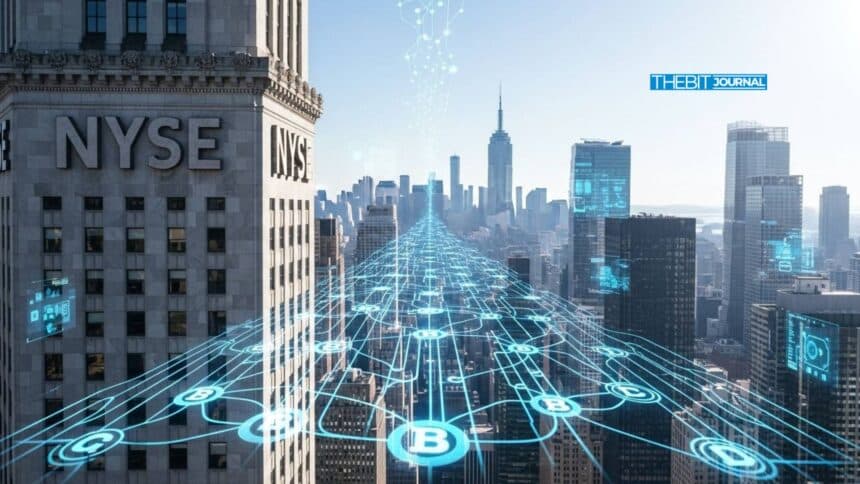

The NYSE blockchain settlement initiative is picking up and there are strong efforts from the New York Stock Exchange and its parent, the Intercontinental Exchange, to modernize core financial infrastructure.
This plan would leverage blockchain to settle tokenized stock and ETF trades, allowing real-time settlement of trading and continuous global trading.
It is essential to have a clear understanding that this is not about crypto as an asset class but about changing the way financial markets truly function. The NYSE blockchain settlement effort is designed to reduce such delays, minimize operational complexity and transfer settlement risk onto common digital rails.
Tokenized Securities, Blockchain and Trading 24/7
The use of on-chain settlement, stablecoins and tokenization have progressed from academic thought experiments to actual engineering by leading financial institutions.
The NYSE is preparing a platform that would employ the blockchain to enable tokenized securities meaning people could trade shares and ETFs 24 hours per day.
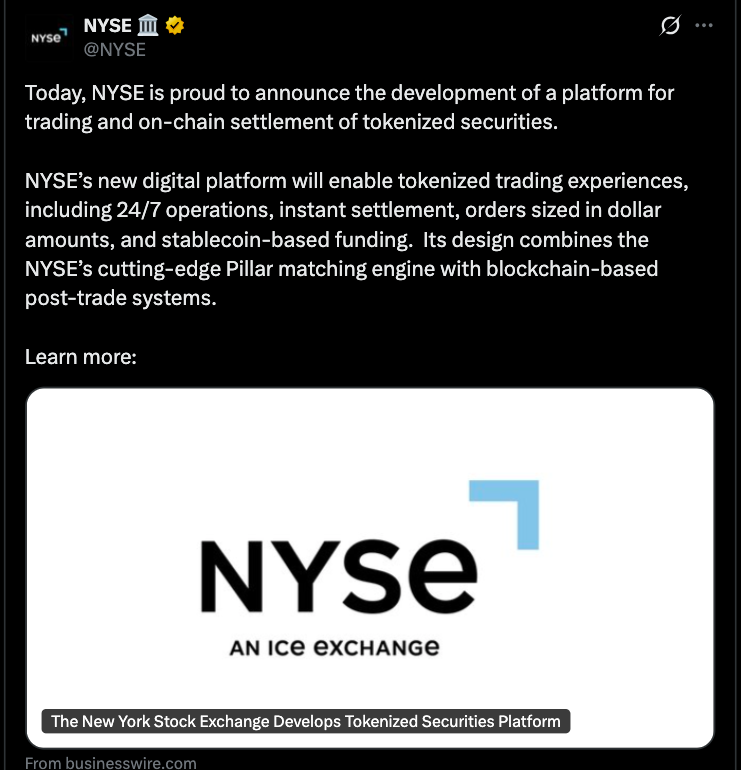
This design stacks a traditional price-matching engine on top of blockchain post-trade processes, which allow for instant settlement and stablecoin funding, pending regulatory approval.
The idea is to let trades clear and settle almost instantly in contrast with older systems in which settlement is done by batches (often one or two days later).
Applying blockchain in this manner could relieve liquidity pressures and minimize the period when capital is bound despite eventual settlement.
NYSE President Lynn Martin has publicly acknowledged the exchange’s role in exploring digitized marketplace technologies, saying the company feels a “responsibility to enter into the tokenization conversation” with respect to markets that may one day operate around the clock.
How the NYSE Blockchain Systems Will Work with Old Systems
The NYSE blockchain settlement won’t just scrap the old infrastructure. Instead, blockchain is being applied mostly to post-trade processes, settlement, reconciliation, record-keeping and the movement of collateral.
Execution which involves connecting buyers and sellers still runs through the NYSE’s current “Pillar” engine. The process around a trade would then transition to the blockchain, which settles the transaction on a shared digital ledger.
This hybrid approach is noteworthy. Market inefficiencies don’t tend to arise from trading itself but the layers of intermediaries that come after, these are custodians, clearinghouses, transfer agents and reconciliation teams.
A shared ledger for settlement would eliminate duplicate reconciliation and counterparty risk, enabling near-real-time finality once trades are executed.
Stablecoins as Institutional Settlement Rails
The other essential element driving the NYSE blockchain settlement vision is the use of stablecoins. In this model, stablecoins function as settlement rails as trades clear, enabling the instantaneous movement of funds on and off the blockchain.
Similar developments have already been seen in the wider ecosystem. U.S. regulators recently approved WisdomTree’s request for exemptive relief on its Treasury Money Market Digital Fund to trade and settle 24/7 using stablecoins under the U.S. Securities and Exchange Commission (SEC) and FINRA’s oversight.
Industry analyses find that in 2025, stablecoins processed more settlement volume than the year before.
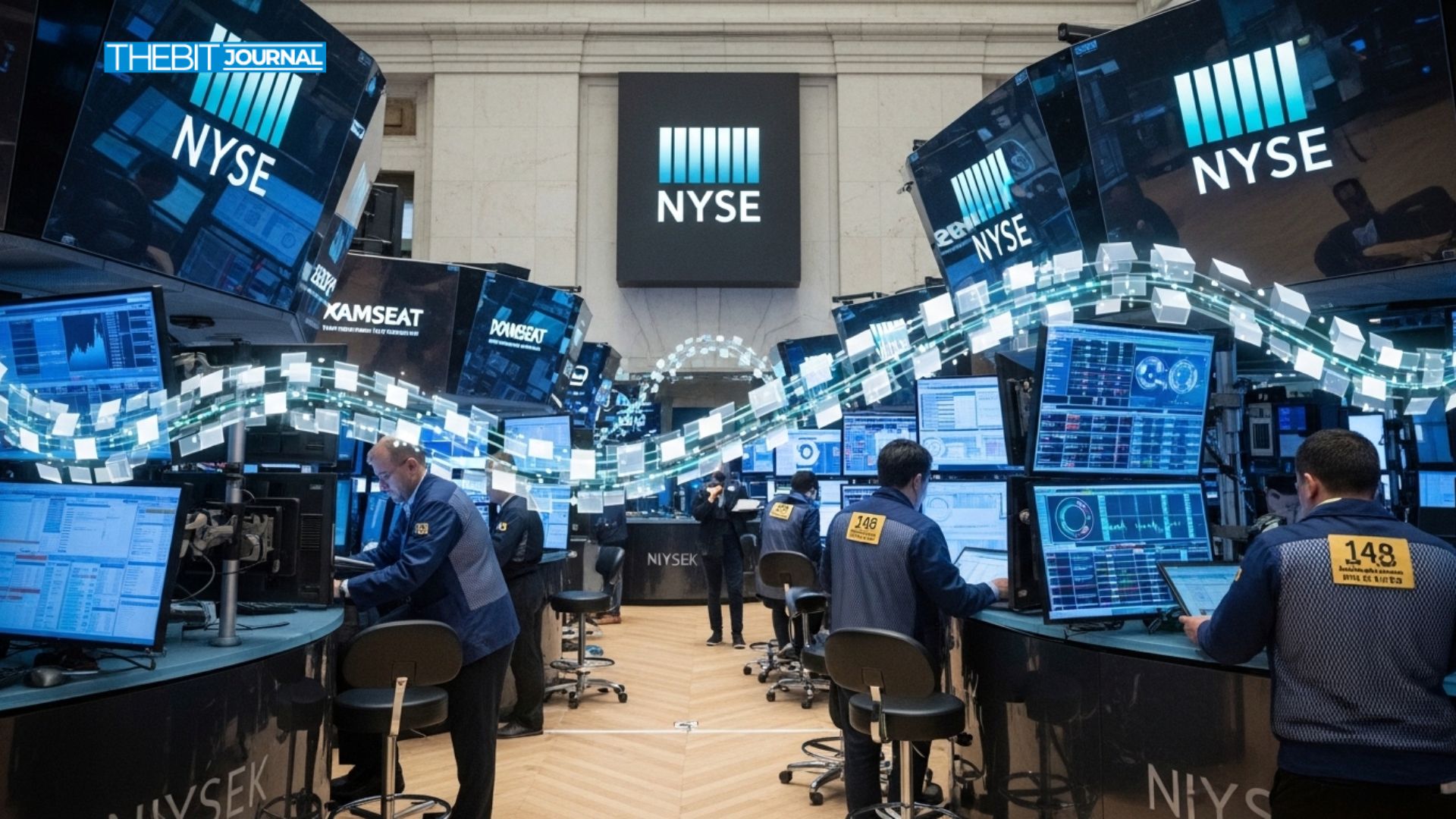
Tokenization’s Bigger Momentum in 2026
Across the markets; the tokenization of real-world assets, converting securities, funds and cash instruments into programmable digital tokens, is speeding up.
Shares of U.S. equities; ETFs and Treasuries custodied at the Depository Trust & Clearing Corporation (DTCC) are set for tokenization following a “no-action” letter issued by U.S. regulators, paving the way toward onchain settlement in mainstream finance.
Simultaneously, digital markets infrastructure is evolving. Earlier this month, companies such as BitGo and Figure executed the first regulated blockchain-native equity trades on an Alternative Trading System (ATS), proving that real equity settlement onchain is already happening under a regulated framework.
Additionally, tokenized government bonds have been settled in cross-border intraday repo transactions on the Canton network, taking central banks into the operationalization of blockchain for critical financial transactions.
Conclusion
NYSE blockchain settlement, being welcomed no,w is a deeper evolution in financial markets. Institutions and regulators are building systems in which blockchain will represent the foundational technology layer for settlement, custody and post-trade infrastructure.
This is not a replacement of existing markets, but an improvement that could eliminate decades-old frictions by reducing settlement times, freeing capital, and offering investors the opportunity for continuous trading and reconciliation.
Glossary
Onchain settlement: The process of settling a payment by directly transferring an asset on a distributed ledger in real time, thereby reducing the presence of intermediaries.
Tokenized securities: Classical assets such as stock and ETF converted into blockchain tokens with legal equivalence.
Stablecoins: Tokens residing on the Blockchain that are pegged to fiat currency or have uses as a settlement medium for financial transactions.
Post-trade processing: Actions taken after a trade is executed, including clearing and settlement, reconciliation and custody and collateral movement.
Frequently Asked Questions About NYSE Blockchain Settlement
What is the NYSE blockchain settlement project?
It is a New York Stock Exchange and its parent ICE project that serves up tokenized securities trading and instant settlement on blockchain, where old trading techniques meet with blockchain post-trade processes.
Does this replace the current settlement systems?
Not immediately. The approach is to build blockchain settlement on top of existing systems without disrupting them at all; an incremental strategy that both preserves regulatory protections and makes things more efficient.
Are stablecoins in the plan?
Yes. Stablecoins are imagined as an institutional settlement rail allowing round-the-clock movement and near instant settlement.
Does this require regulatory approval?
Yes. NYSE’s platform would still require review and approval from entities such as the SEC before it goes live.
Is tokenization reaching other markets?
Yes. Tokenization permeates more and more markets as regulators allow tokenization of conventional assets, while blockchain-native equity trades take place in regulated environments.
References