



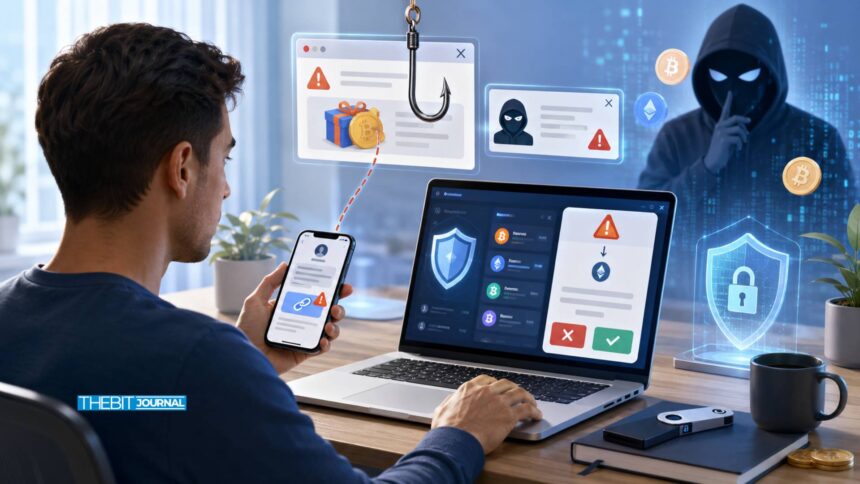

Crypto gives investors direct control over their money, but that control also removes many safety rails people expect from traditional finance. A bank transfer can sometimes be frozen, challenged, or reversed as a crypto transaction usually cannot. For phishing scams, attackers no longer need to break a blockchain when they can trick a wallet owner into signing away access through a fake approval, copied wallet address, seed phrase form, or rushed link.
Avoid Phishing Scams: Protect Your Crypto Investments
The first rule is simple, but it is often ignored: every link, message, pop-up, and wallet request deserves suspicion. phishing scams work because they copy normal crypto habits. An investor checks an airdrop, joins a token launch, opens a support message, or follows what looks like an urgent account alert. The page looks familiar, the logo appears clean, and the timing feels believable.
Recent data shows why caution matters as the FBI reported nearly $21 billion in U.S. cyber-enabled losses in 2025, with cryptocurrency and AI-related complaints among the costliest categories. Chainalysis estimated that crypto scams and fraud took $17 billion in 2025, while impersonation scams rose sharply and AI-enabled scams became far more profitable than older fraud models.
Why Crypto Phishing Feels Different
Traditional phishing usually tries to steal login details, crypto phishing often tries to make the victim authorize a transaction, approve a malicious smart contract, reveal a recovery phrase, or install a fake wallet app. Once that happens, the attacker may move funds within seconds.
This is why phishing scams are so damaging in Web3. The wallet is both the login and the vault. A fake page can ask for a wallet connection and then present a transaction that looks harmless. The user may think it is a reward claim or token swap, while the transaction may grant permission to move assets out of the wallet.
The Fake Link Problem
Fake links appear in social posts, ads, private messages, search results, community channels, emails, and comment sections. A link may use a spelling trick, a swapped letter, a strange domain ending, or a shortened URL that hides the final destination.
Investors should not treat search results as a safety filter. Criminals can buy ads, clone designs, and build pages that look polished enough to pass a quick glance. A safer routine is to type addresses manually, save verified bookmarks, and avoid links sent by strangers or rushed “support” accounts.
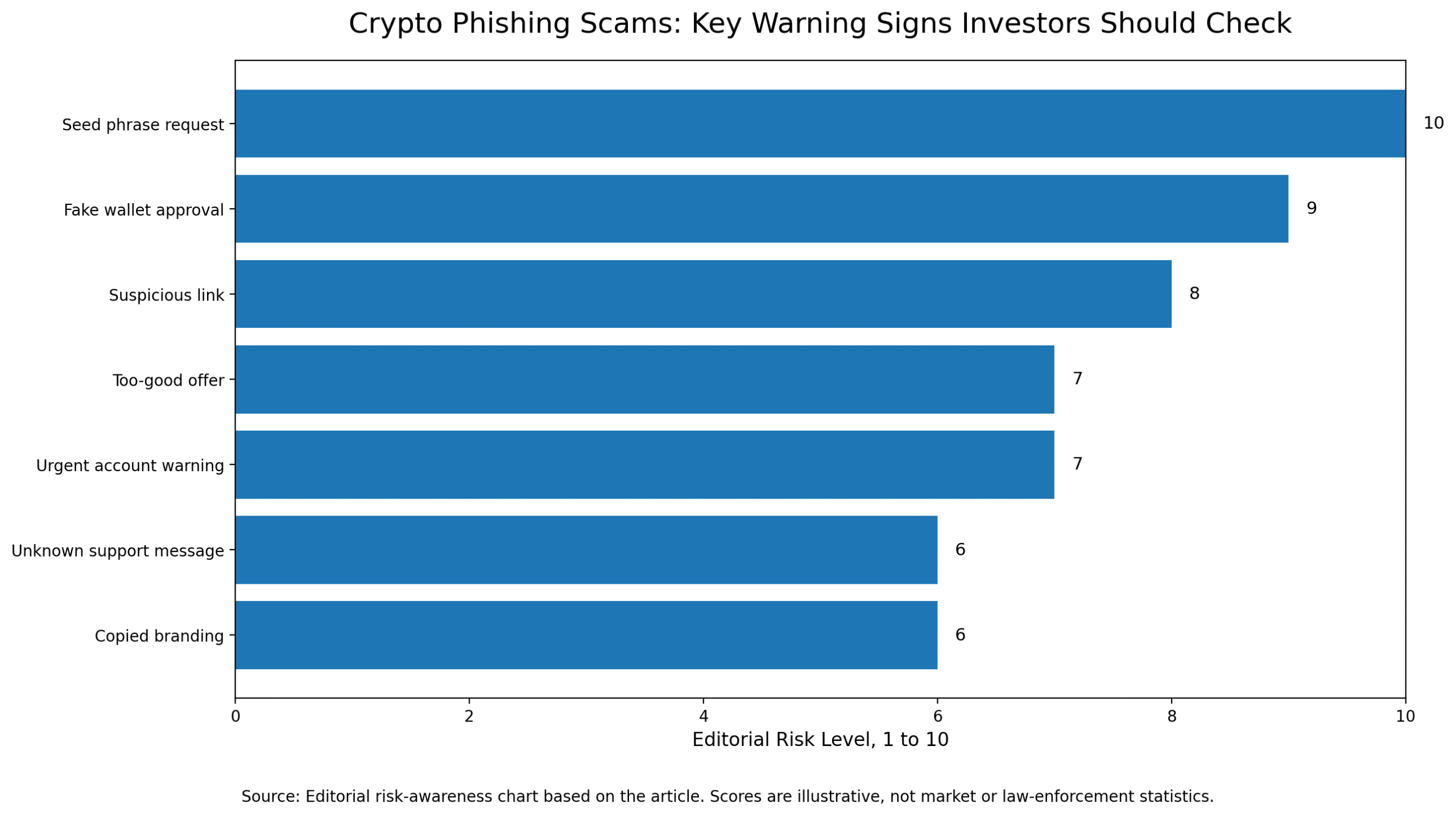
phishing scams also exploit urgency. Messages that say an account will be locked, a wallet must be verified, or a reward expires in 10 minutes are designed to rush thinking.
Seed Phrases Should Never Be Typed Online
A seed phrase is the master key to a wallet as no real support team, wallet update, token claim, giveaway, or security check needs it. If a page asks for a seed phrase, the investor is not being verified. The investor is being robbed.
Security guidance continues to stress the same point: recovery phrases should be protected offline and never shared through forms, screenshots, cloud notes, messages, or browser pop-ups. Even a hardware wallet cannot help if the owner gives the recovery phrase to a fake page.
Wallet Drainers and Dangerous Approvals
These tools are built for Web3 and often impersonate legitimate projects. Instead of asking for a password, they trick users into connecting a wallet and approving a transaction that gives the attacker control over tokens. Researchers describe drainers as phishing tools that make victims authorize fraudulent transactions through fake ads, mint pages, and claim portals.
phishing scams using wallet drainers can look routine because crypto users sign transactions all the time. That habit creates danger. Before signing, investors should read the request, check which asset is being approved, and avoid unlimited approvals unless there is a strong reason. A separate trading wallet with limited funds can reduce damage if a mistake happens.
Key Indicators That Something Is Wrong
A scam usually leaves clues as the message may contain a strange sender address, forced urgency, weak grammar, guaranteed profit, a request for secret keys, or a link that does not match the expected destination. The offer may be too neat, too fast, or too generous. Free tokens, surprise whitelist access, account warnings, and private investment deals all deserve careful review.
phishing scams also use social proof as a fake post may show comments, likes, profit screenshots, or copied branding. AI has made this worse because fake media is easier to produce. Investors should slow down when a message appears to come from a public figure, a project team, or a friend asking for urgent crypto action.
Safer Habits for Daily Crypto Use
Protection comes from routine, not luck. Investors should use separate wallets for long-term holdings, trading, testing new apps, and airdrops. Large holdings should not sit in the same wallet used to click new links every week. Hardware wallets can help, but they still require careful signing.
CISA encourages stronger multi-factor authentication, including phishing-resistant options where possible, because SMS codes can be targeted through social engineering or account takeover attempts.
Investors should also review token approvals, remove old permissions, keep wallet software updated, and avoid browser extensions from unknown sources. Many losses happen when markets are moving and people click faster than they think. These attacks punish speed, so a slower routine is not paranoia. It is risk control.
What to Do After a Suspicious Click
If a user clicks a bad link but does not sign anything, the risk may be limited, though the device and browser should still be checked. If a wallet was connected or a transaction was signed, action should be faster. The user should disconnect the wallet from the suspicious site, revoke risky approvals where possible, move remaining assets to a clean wallet, and document the transaction details.
phishing scams should also be reported to the relevant platform, wallet provider, exchange, or law enforcement channel in the user’s jurisdiction. Reporting does not guarantee recovery, but it can help investigators connect patterns and warn others.
Conclusion
The safest crypto investor is not the one who never takes risks. It is the one who separates market risk from security risk. Price swings are part of crypto. Losing funds to phishing scams does not have to be. The core habits are plain enough: verify links, protect the seed phrase, read wallet prompts, limit approvals, use separate wallets, and slow down when urgency appears. In crypto, patience can be a security tool. A few extra seconds before clicking may protect assets that took years to build.
Frequently Asked Questions
What are crypto phishing scams?
Crypto phishing scams are attempts to trick users into revealing wallet access, signing harmful transactions, visiting fake links, or approving malicious smart contracts. The attacker uses deception rather than breaking the blockchain itself.
Can a wallet be drained without sharing a seed phrase?
Yes. A wallet can be drained if the user signs a malicious transaction or grants token approval to a harmful contract. Users should review every wallet prompt before confirming it.
How can investors avoid phishing scams during token launches?
Investors should use verified bookmarks, avoid rushed links from social channels, use a small separate wallet, check contract approvals, and never enter a seed phrase.
Glossary of Key Terms
Seed Phrase
A set of recovery words that controls access to a crypto wallet. Whoever has it can usually control the funds.
Wallet Drainer
A malicious tool that tricks users into approving transactions or permissions that allow attackers to remove assets.
Smart Contract Approval
Permission given by a wallet owner that allows a contract to interact with specific tokens. Unlimited approvals can increase risk.
Address Poisoning
A trick where attackers send small transactions from similar-looking wallet addresses, hoping users copy the wrong address later.
Phishing-Resistant MFA
A stronger login method that uses cryptographic protection to reduce the risk of stolen codes or fake login pages.
Sources
Federal Bureau of Investigation
Disclaimer
This article is for educational purposes only and does not provide financial, investment, legal, or cybersecurity advice. Cryptocurrency involves risk, and users should conduct independent research, follow local regulations, and consult qualified professionals when needed.