

This article was first published on The Bit Journal.
The crypto market may be struggling to get back on its feet, but there’s a part of the industry that is really expanding.
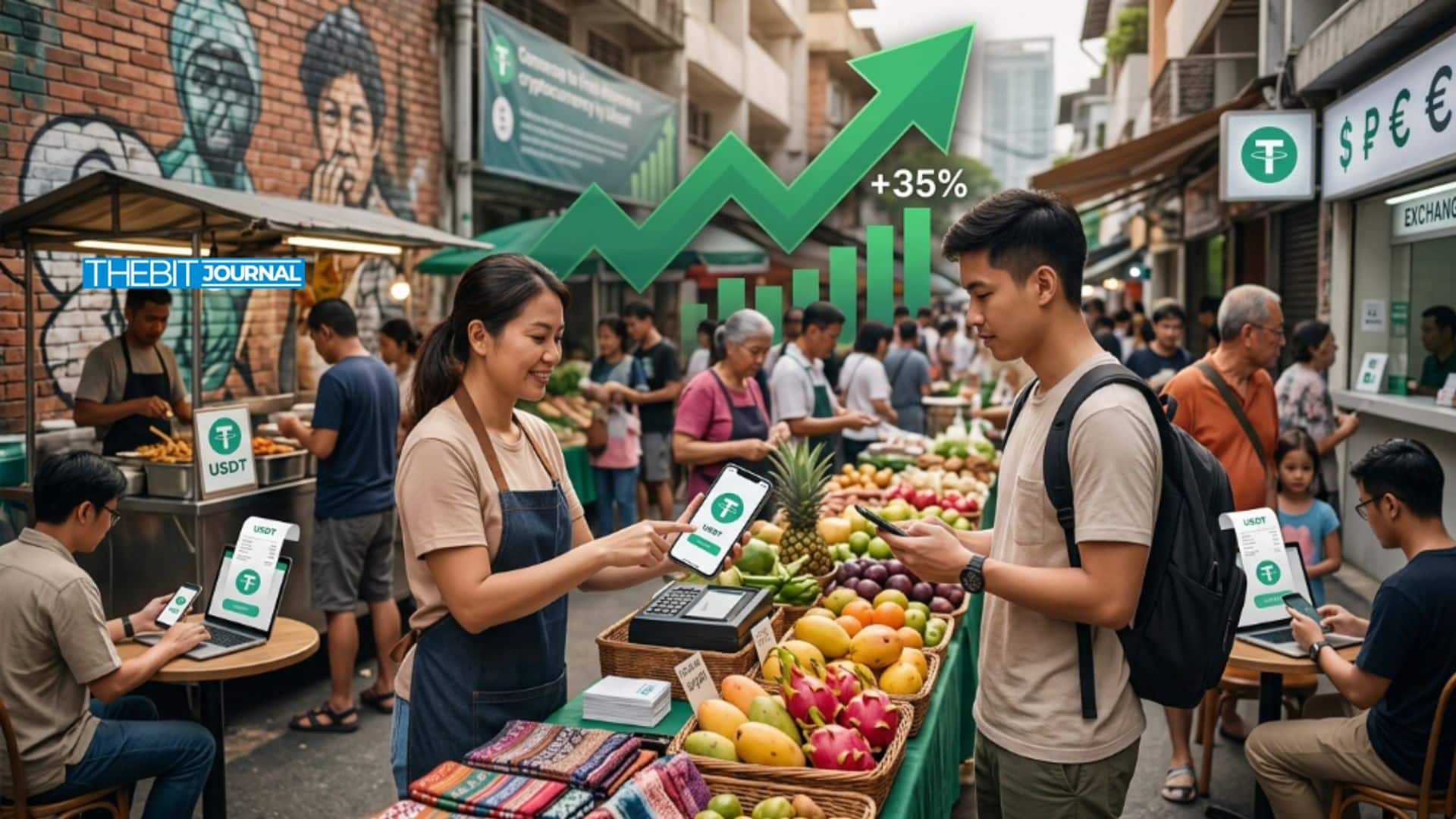
New figures show USDT usage has row reached 35.1% in July 2026, easily clearing the 29.0% figure it hit in the same period in 2021 and standing far above 2024 levels, when usage remained in negative territory.
The numbers are pointing to a change in investor behavior. More of both retail and institutional investors seem to be ditching volatility-chasing in favor of using stablecoins for everyday things like payments, settling trades and running treasuries.
Before, stablecoins were just a safe place for investors to store their cash during market downturns. Now, they’re one of the biggest real-world uses of blockchain.
Cross-Border Payments Are Suddenly Driving Stablecoin Demand
The growth in USDT usage is no longer being driven solely by traders waiting on the sidelines.
Businesses are now starting to use stablecoins to move money across borders faster and cheaper than the old payment rails.
This change has picked up pace as more payment companies are getting behind blockchain infrastructure. Visa, Mastercard, PayPal and Stripe have all upped their involvement in stablecoin settlement and payment services over the past year, and that has really helped get digital dollars into mainstream finance.
Visa just added more stablecoins and blockchain networks to their settlement platform, and Mastercard just kicked off regulated stablecoin options for its network, for issuers and acquirers too.
Cross-border business payments that used to take several intermediaries and business days can now get settled 24/7 with blockchain.
Research published this year found that stablecoins offer their strongest advantages in international transfers, treasury management and high-friction payment corridors where traditional banking systems remain expensive or inefficient.
Blockchain Activity is Accelerating Fast
The impact of this is happening right on the blockchain.
ERC-20 stablecoin activity has taken off, with active addresses consistently ranging between 400,000 and 700,000 per day since 2025.
That means the market is now using stablecoins for actual transactions, and not merely putting cash in and taking it back out again for the next trade.
The stablecoin market as a whole is now around $312 billion, although the exact figure is still batted around between $314 billion and $316 billion by the end of June and early July 2026.
US dollar-backed assets still dominate the sector, accounting for nearly all of the total stablecoin supply globally, about 97%. Tether’s USDT is still the most used payment asset as well.
Recent research found that USDT is now the go-to stablecoin for commercial payments and cross-border transfers while USDC is getting more use in decentralized finance.
Corporates Are Now Blockchain’s Growth Engine
Corporate adoption is now mostly driving the rise in USDT usage.
Companies first looked at stablecoins as a way to save on settlement costs and avoid expensive correspondent banking fees.
But now they’re taking it a step further. Today, they’re integrating blockchain payments into their treasury management, supplier settlements and even their payroll systems.
Mastercard is specifically zeroing in on treasury operations, liquidity management and cross-border settlement capabilities as use cases drivers behind its stablecoin expansion strategy.
Additionally, business-to-business stablecoin payments are exploding as finance departments look for faster, cheaper options. Research published earlier this year estimated B2B stablecoin volume surged 733% year-over-year to $226 billion.

Why Institutions Prefer Stablecoins Over Bitcoin
One thing stands out in the latest data. Institutional investors are still not throwing their money at Bitcoin or Ethereum. Many are now more interested in the cost savings and efficiency gains that stablecoins offer than in the potential for high returns.
The market is now valuing the speed and low costs of stablecoin transactions over the gamble of dealing with Bitcoin price swings.
This is why USDT usage continues to go up even when the bigger crypto market is going through a tough patch.
For a lot of institutions, the value of blockchain is now more about having better infrastructure.
Conclusion
USDT usage is now being driven by actual utility, like faster payments and treasury management not simply keeping it trying to avoid losing money.
With stablecoin market cap approaching $312 billion and major payment companies now integrating blockchain settlement into their operations, stablecoins are moving into global financial infrastructure.
If corporate adoption keeps going like it is, transaction efficiency may become the most important growth story in the blockchain world.
Glossary
USDT: Tether’s US dollar-pegged stablecoin
Stablecoin: A cryptocurrency that is designed to keep its value stable like the dollar.
ERC-20: A token standard used on the Ethereum blockchain.
Treasury Operations: What a company does to manage its money, cash flow and financial assets.
Cross-Border Payments: Financial transfers conducted between parties in different countries.
Frequently Asked Questions About USDT Usage
Why Has USDT Usage Increased In 2026?
It’s because businesses have started using it a lot more for cross-border payments, managing cash flow and corporate settlements.
How High Is USDT Usage In July 2026?
Seasonal market data places USDT usage at 35.1%, above the 29.0% recorded during the same period in 2021.
How Big Is The Stablecoin Market Today ?
The global stablecoin market is currently worth somewhere around $312 billion to $316 billion, depending on the dataset used.
Why Are Businesses Adopting Stablecoins ?
Businesses are doing it because stablecoins offer faster payments, lower costs and 24/7 access to financial infrastructure.
References