





HTX Delists USD1 is a significant step-up in the conflict that has been building up for some time now between the Justin Sun-backed cryptocurrency exchange platform and the issuer of the stablecoin that is backed by the Trump family. The incident has once again raised the question regarding the governance and management of stablecoins, sanctions compliance, and the right of the issuers of stablecoins to block blockchain addresses.
HTX Delists USD1 was carried out following an allegation from the exchange that the issuer had blocked a number of blockchain addresses controlled by the exchange without any proper communication, legal backing, or adequate process. It was claimed that this had restricted the circulation of some assets and affected the users adversely. The issue has become one of the most controversial events in the cryptocurrency community.
HTX Delists USD1 Over Address Freezing Issue
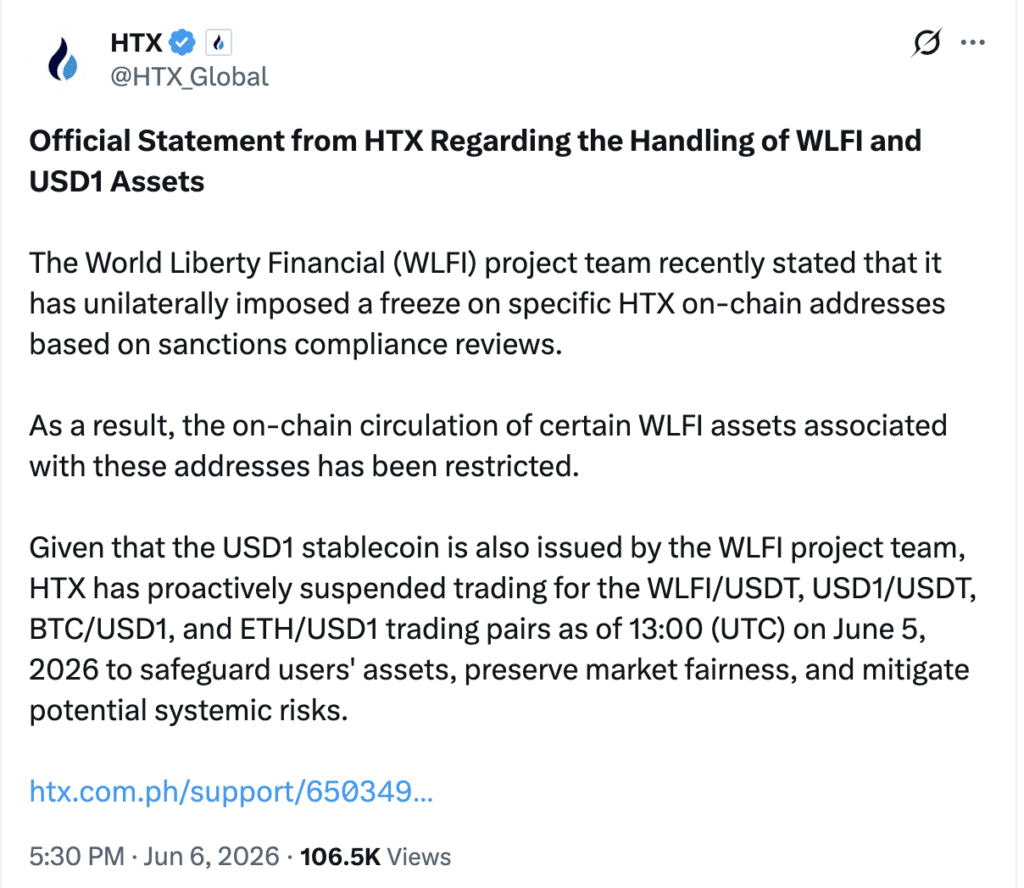
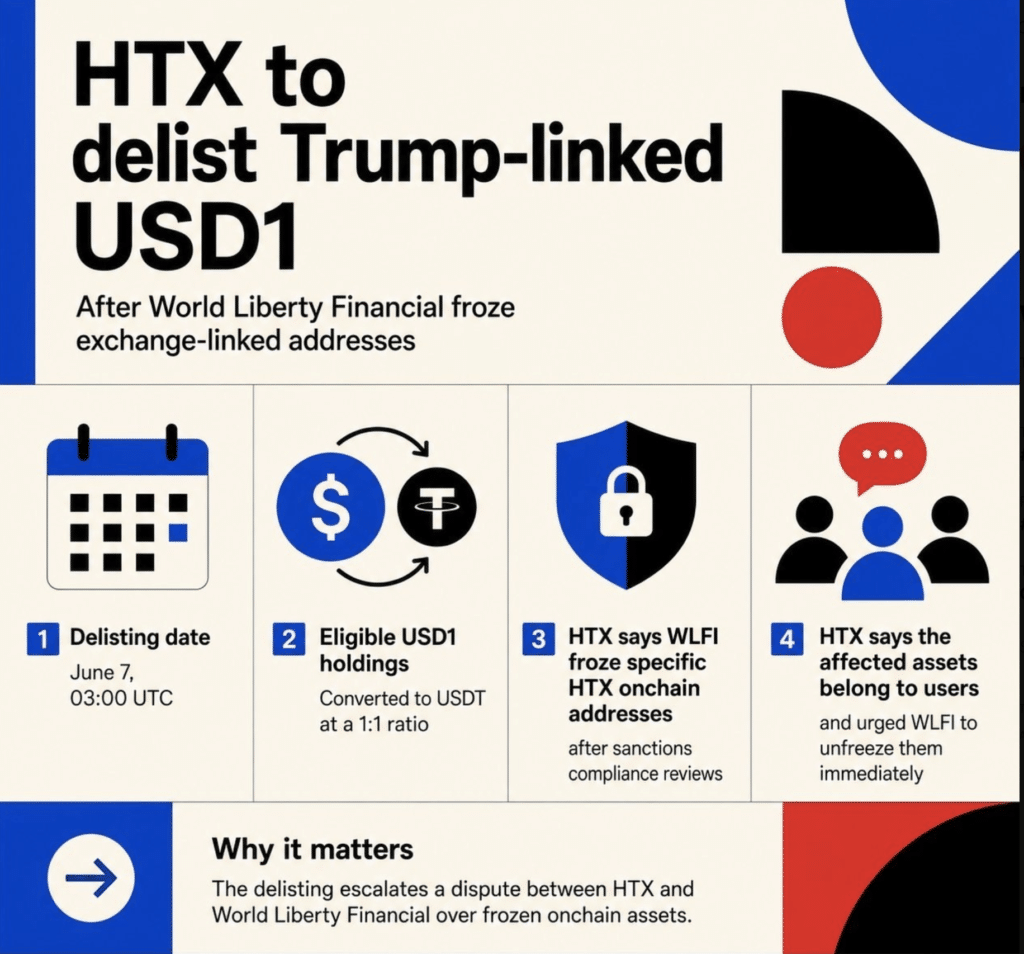
In the case of HTX Delists USD1, HTX says that user protection has been the top priority for them. HTX revealed that following the sanctions checks, World Liberty Financial has frozen the certain blockchain addresses on their platform. Due to the freezing of such addresses, circulation of certain assets related to WLFI has become restricted and adversely impacted the users.
HTX said that lack of transparency was another issue with this incident because the process was done without observing due process. It becomes evident from this incident that there is an ongoing problem of authority held by stablecoin providers over any assets on public blockchain networks. It is because of HTX Delists USD1.
Why Did HTX Delist Trump Family USD1 Stablecoin?
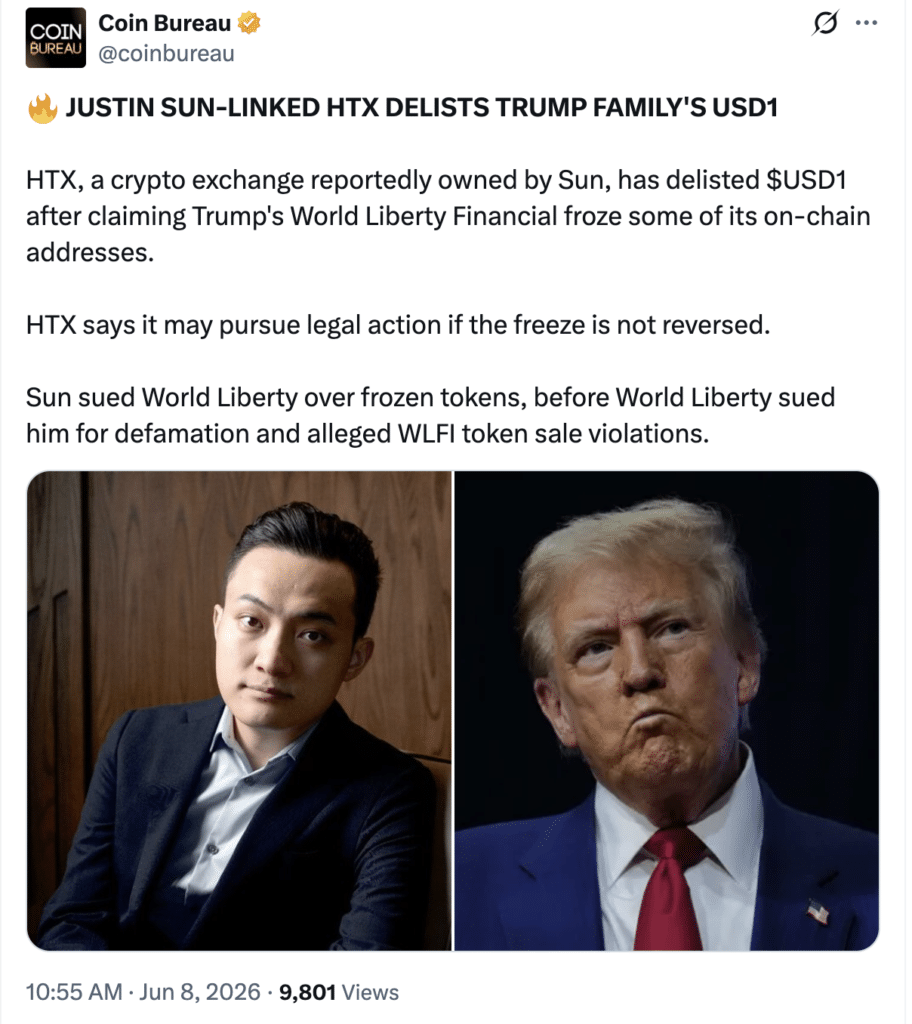
HTX Delists USD1 after rising concerns over a freeze action that the exchange claims directly interfered with user assets and disrupted normal platform operations. The question dominating industry discussions is simple: why did HTX delist Trump family USD1 stablecoin? HTX maintains that the issue stems from a stablecoin freeze dispute, where alleged unilateral address restrictions created operational risks for traders and liquidity flows. As HTX Delists USD1, the exchange moved to implement a full USD1 delisting, suspending deposits, halting conversions, and removing multiple trading pairs to safeguard user funds and maintain market stability.
Users holding USD1 on HTX will have their balances converted into Tether (USDT) at a one-to-one ratio. The decision demonstrates how quickly disputes between issuers and exchanges can impact liquidity, trading activity, and investor confidence across the broader market.
Justin Sun and World Liberty Financial Clash Intensifies
The current dispute did not emerge overnight. The relationship between Justin Sun HTX and World Liberty Financial has been deteriorating for months. Earlier this year, Sun reportedly filed legal action against WLFI, alleging that the platform froze tokens under his control and threatened to burn them without valid justification.
In response, World Liberty Financial launched its own legal challenge, accusing Sun of making defamatory statements and violating token sale agreements. As HTX Delists USD1, the conflict has moved beyond legal filings and into direct market consequences affecting traders and token holders.
Sanctions Concerns Add Another Layer of Complexity
The timing of the dispute is particularly significant. In May, UK authorities sanctioned Huobi Global S.A., citing concerns regarding alleged support for Russian governmental financial activities. HTX responded by emphasizing that the sanctioned entity is separate from the modern HTX exchange platform.
Nevertheless, sanctions-related developments appear to have influenced risk assessments across the industry. As HTX Delists USD1, many observers believe compliance considerations may have played an important role in shaping decisions on both sides of the dispute. This aspect continues to fuel debate among regulators, exchanges, and blockchain analysts.
Impact of HTX Delisting USD1 on Crypto Traders
The impact of HTX delisting USD1 on crypto traders could extend beyond immediate trading restrictions. Stablecoins rely heavily on market confidence, liquidity, and accessibility across exchanges. Whenever a major platform removes support for a stablecoin, concerns naturally emerge regarding liquidity fragmentation and redemption efficiency.
Although HTX has offered a conversion pathway through USDT, traders may still question the future accessibility of the token on other platforms. The situation also serves as a reminder that centralized stablecoins carry issuer-controlled mechanisms capable of freezing assets under certain circumstances.
HTX Removes USD1 Amid Freeze Dispute and Governance Questions
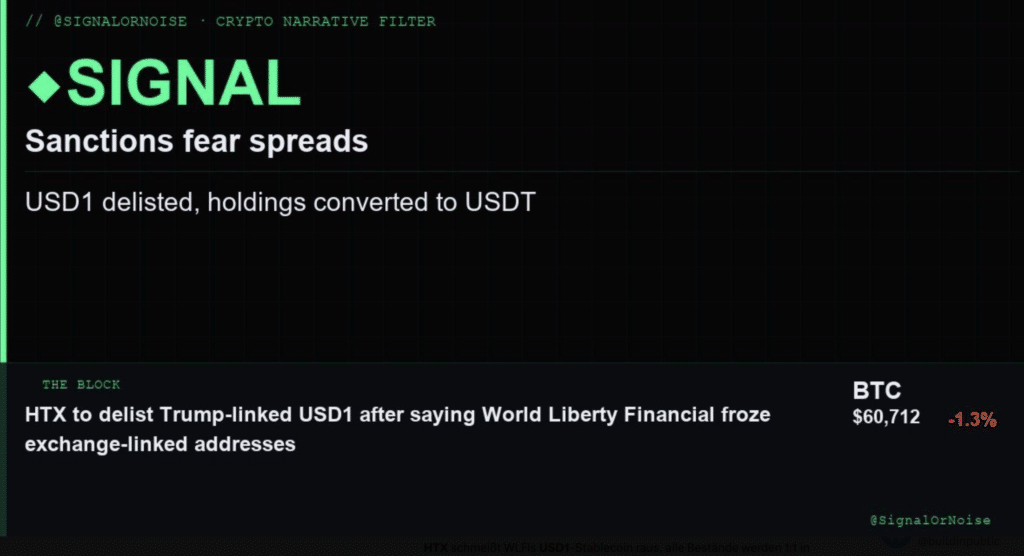
As HTX removes USD1 amid freeze dispute, broader questions regarding stablecoin governance are resurfacing. Many investors entered cryptocurrency markets seeking decentralized alternatives to traditional finance. However, centralized stablecoins often maintain significant authority over token circulation, blacklisting procedures, and compliance actions.
The current conflict demonstrates the delicate balance between regulatory compliance and user asset protection. Industry participants continue debating whether issuers should possess broad freezing authority or whether additional safeguards are necessary to protect exchanges and investors from unexpected disruptions.
What Happened Between HTX and USD1 Stablecoin?
For market participants asking, what happened between HTX and USD1 stablecoin, the answer involves a combination of sanctions concerns, frozen addresses, legal disputes, and competing narratives. HTX argues that the freeze lacked proper communication and harmed users. World Liberty Financial has publicly emphasized its commitment to risk-based sanctions compliance controls.
Until additional details emerge, both sides remain firmly committed to defending their positions. The outcome could influence how future exchange-issuer relationships are structured across the digital asset ecosystem.
Conclusion
The decision as HTX Delists USD1 represents more than a routine exchange listing change. It highlights the growing tension between compliance obligations, stablecoin issuer authority, and exchange responsibilities. The dispute involving Justin Sun, HTX, and World Liberty Financial may ultimately shape future standards for asset freezes, sanctions reviews, and user protections within the crypto industry.
Investors, analysts, and blockchain professionals should continue monitoring developments closely. As regulatory oversight expands and stablecoin adoption accelerates, disputes of this nature could become increasingly influential in defining the next phase of digital asset market evolution.
Appendix: Glossary of Key Terms
HTX: A global cryptocurrency exchange associated with entrepreneur Justin Sun.
USD1: A stablecoin issued by World Liberty Financial.
Stablecoin: A cryptocurrency designed to maintain a stable value, often pegged to the U.S. dollar.
WLFI: World Liberty Financial, the organization behind the USD1 stablecoin.
USDT: Tether’s dollar-pegged stablecoin and the largest stablecoin by market capitalization.
Address Freeze: A restriction preventing specific blockchain addresses from moving or accessing assets.
Frequently Asked Questions About HTX Delists USD1
Why did HTX delist USD1?
HTX claims World Liberty Financial froze exchange-related addresses without sufficient communication or legal justification.
What happens to USD1 holders on HTX?
HTX plans to convert eligible USD1 holdings into USDT at a 1:1 ratio.
Is USD1 still available outside HTX?
Availability depends on individual exchanges and platforms that continue supporting the token.
Has World Liberty Financial responded?
WLFI has publicly referenced sanctions compliance controls but has not directly addressed all allegations surrounding the freeze.
Could the dispute affect other stablecoins?
The situation may encourage broader discussions regarding stablecoin governance, blacklisting authority, and exchange protections.
References
HTX Official Announcement-X Post
Disclaimer
Cryptocurrency prices are highly volatile and can change rapidly. Information presented in this article is for informational purposes only and should not be considered financial, investment, or trading advice. Always conduct independent research before making investment decisions.