



South Korea cold storage requirements could tighten after the country’s financial regulator urged crypto exchanges to keep more customer assets in cold wallets following Binance’s reported $6.3 billion breach. At an emergency review on November 2, the Financial Services Commission (FSC) called for stronger reserves, closer transaction monitoring and better coordination when suspicious access is detected.
The information released so far does not set a new legal threshold. South Korean virtual-asset businesses already have to keep at least 80% of customer assets in cold wallets, and the FSC urged firms to raise that share further.
Why it matters
The Binance incident prompted South Korean officials to review exchange security and call for measures beyond the existing cold-wallet requirement. The FSC’s requests also address monitoring, incident response, information-sharing and reserves, rather than focusing on custody levels alone.
What we know
South Korea cold storage rules are under review
The FSC said it convened the Financial Supervisory Service, the Financial Security Institute, DAXA and major virtual-asset operators on November 2. Digital Finance Policy Director Yu Young-jun chaired the meeting, according to the regulator.
The FSC’s requests went beyond larger cold-wallet balances. It called for continuous monitoring of deposits and withdrawals, additional incident-response staff, reporting and information-sharing about abnormal access attempts, and stronger reserves. The regulator said it would keep coordinating with the industry to prevent incidents and limit harm. Its official statement described the review as a response to global hacking threats.
Yonhap reported that South Korean virtual-asset businesses must keep at least 80% of customer assets in cold wallets. The FSC wants a higher share, but the supplied announcement gives no revised percentage and does not specify whether the request will become a binding rule.
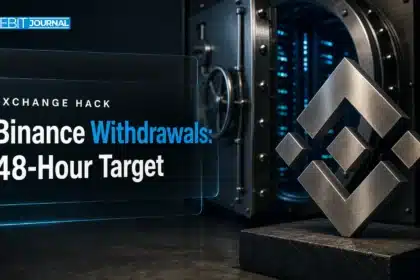
The review followed Binance’s disclosure that its hot wallets were compromised at about 20:05 UTC on October 29, resulting in unauthorized withdrawals of approximately $6.3 billion in token assets. Binance said it would cover the stolen funds through its SAFU fund and corporate treasury, had set aside more than $6.34 billion, and had helped freeze about $3 billion on-chain. Its incident update said its investigation found additional breach points beyond its initial compromised-laptop theory.
The FSC cited a compromised employee work laptop and possible unauthorized access to internal systems or withdrawal approval and signing processes as potential routes. It did not present these as a confirmed account of the attack. Separately, the FBI attributed the theft of more than $6 billion to North Korea on October 31, identified the activity as TraderTraitor, and said the stolen assets were being converted primarily into Ether.
In a November 2 recovery update, Binance said it had replenished about 95% of the impacted amount. It also said 10 named tokens, including BTC, ETH, USDT and BNB, were fully backed at 100%, and published a verifiable proof-of-reserves snapshot dated October 31. These are Binance’s reported figures and do not establish the status of every security control.
A prior Korean exchange incident occurred at Upbit on November 27, 2025. Its operator reported an unauthorized transfer of about 54 billion won ($36.9 million), said it would cover the loss in full, and temporarily suspended deposits and withdrawals while reviewing security.
What is still unclear
The FSC has not specified how much higher exchanges should take their cold-wallet share, when any change would take effect, or whether its request will become compulsory. The supplied information also does not explain how firms should balance larger offline reserves with the need to process legitimate withdrawals.
The technical path behind Binance’s incident remains unsettled in the available updates. The FSC cited possible employee-device and internal-access routes, while Binance reported additional breach points. The FBI’s attribution identifies who it holds responsible, but the supplied FBI statement does not provide a complete technical account of the intrusion.

What the available evidence says about market reaction
The supplied reports do not include named analyst commentary or market data tied to the FSC review. They therefore do not establish how the incident or South Korea’s response affected crypto prices. The incident and regulatory requests can be described, but a market move should not be attributed to them without supporting evidence.

What it means for investors
South Korea cold storage is one part of exchange risk
The Binance and Upbit reports illustrate that exchange incidents can involve unauthorized transfers and that platforms may respond with recovery efforts or temporary withdrawal suspensions. The FSC’s requests also show that its response is not limited to cold-wallet holdings: it called for monitoring, additional incident-response staff, reporting and information-sharing about abnormal access, and stronger reserves.
Binance’s reported replenishment and proof-of-reserves update are specific disclosures about its recovery and named-token backing. They do not resolve the questions the FSC raised about possible access routes or establish that future incidents or service disruptions will be avoided. The supplied reports likewise do not state that the FSC has adopted a new binding cold-storage threshold.
Key developments to watch in the supplied evidence are whether the FSC later sets a specific cold-storage target or formal rule, and whether it clarifies incident-reporting expectations. Exchange disclosures about reserve coverage, abnormal-access reports and withdrawal controls may show how firms respond to the regulator’s requests.
Bottom line
South Korea’s regulator is pressing exchanges to exceed the existing 80% cold-wallet requirement and strengthen monitoring, staffing, reserves and information-sharing after Binance’s breach. The next question is whether those requests become measurable standards. The available updates do not establish a final technical account of the incident or a completed recovery.
Sources
- Security Incident Update #2 (2026-10-30) (www.binance.com)
- South Korea urges exchanges to boost cold storage after Binance hack (Cointelegraph)
- 글로벌 해킹 위협에 대비한 국내 가상자산사업자의 사고대응력 제고를 위해 긴밀하고 신속하게 대응해 나가겠습니다. (www.fsc.go.kr)
This article is for informational purposes only and does not constitute financial or investment advice. Cryptocurrencies are highly volatile; always do your own research before investing.