






This article was first published on The Bit Journal.
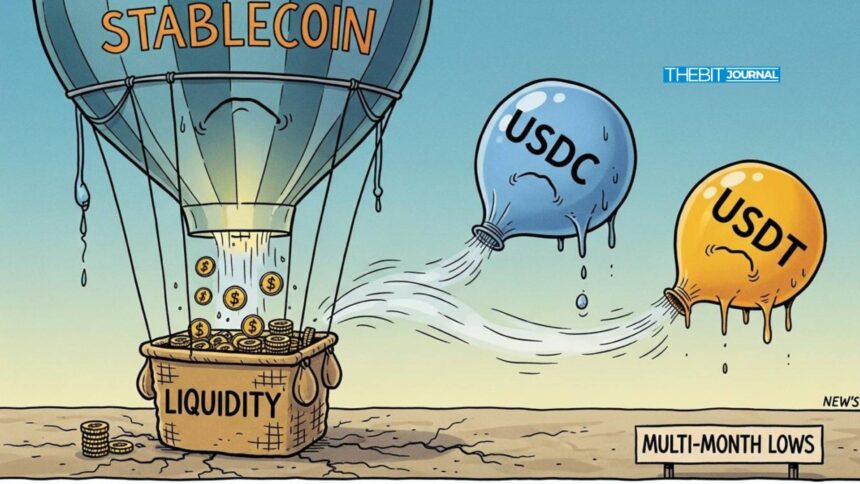
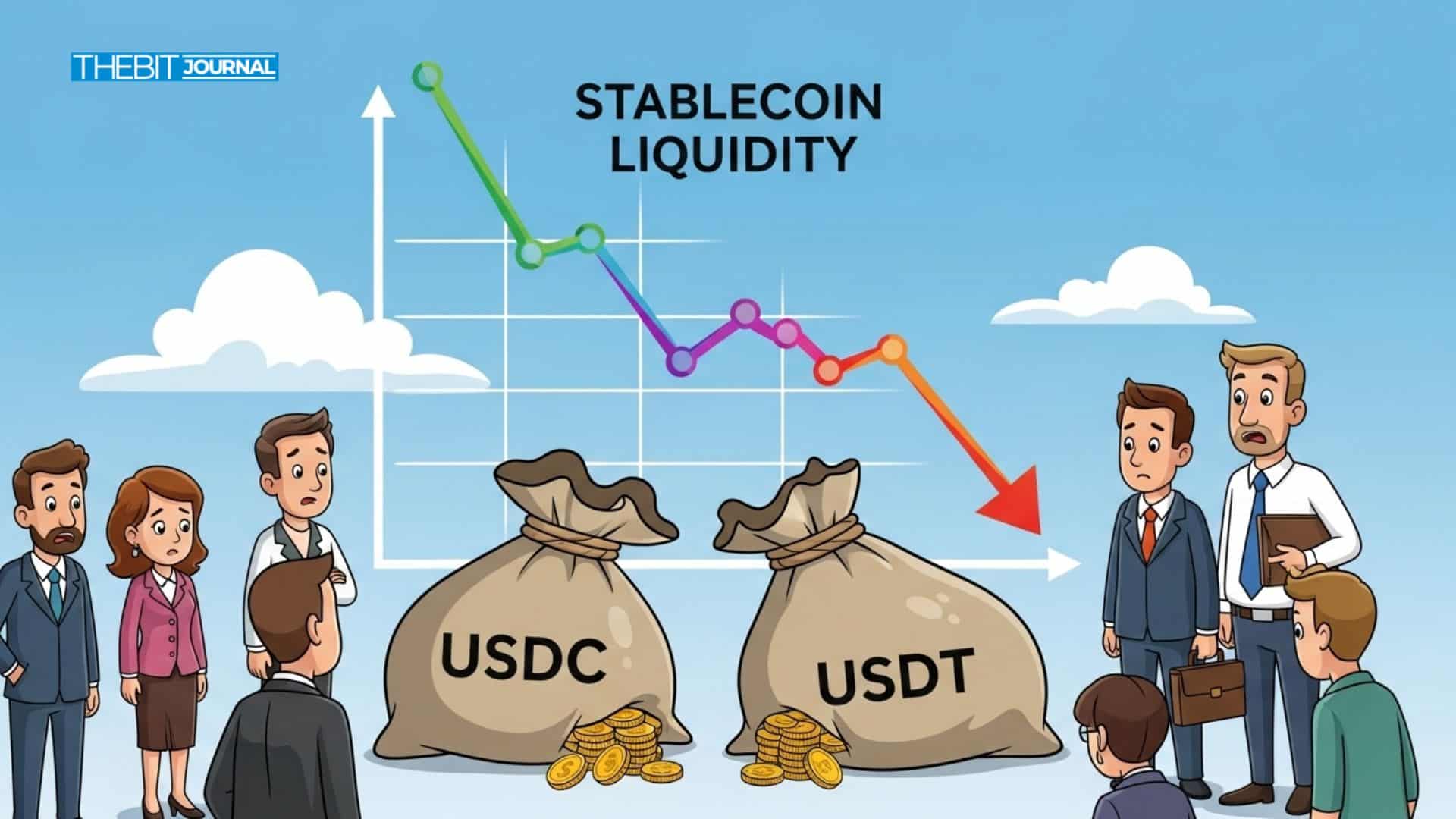
The cryptocurrency space is witnessing a rare stablecoin liquidity shrinkage where the market value of leading dollar-pegged tokens such as Tether (USDT) and USD Coin (USDC) is falling sharply. At the time of reporting, the aggregate market capitalization of these top stablecoins fell to about $257.9 billion, the lowest levels since late November.
How Stablecoin Liquidity Is Changing
Stablecoins were originally meant to act as the “cash layer” of the crypto economy, serving as temporary parking for funds when traders sell volatile assets or prepare to buy dips.
When the supply of stablecoins go up, it often indicates that traders are still within the crypto ecosystem and ready to actively trade. When it declines, that means money is leaving the system entirely.
Newer data reveals that the market cap of USDT and USDC combined has declined from around $265 billion in mid-December to about $257.9 billion. Most of those declines have come in the form of USDC, which has seen its supply drop by more than $4 billion in 10 days and $6 billion since mid-December. USDT’s supply dropped by just over $1 billion during the same period.
Blockchain analytics firm Santiment explained that the money seems to be coming out of crypto rather than sitting on the sidelines.

When traders sell Bitcoin or other altcoins, in many cases they first convert the balances into stablecoins and retain it inside this crypto system for trading.
A stablecoin market cap that’s dropping therefore means there’s an increasing number of investors exiting to fiat rather than stablecoins, which in turn diminishes the liquidity for faster reentry.
Bitcoin and Market Liquidities Implications
This matters because stablecoins are the major source of on-chain liquidity that facilitate trading and price rebounds. As stablecoin market caps decrease, there is less ready capital out there to absorb buying pressure as BTC pulls back.
Santiment noted that a drop in stablecoin liquidity typically weakens or slows recoveries, particularly for altcoins. When supplies of stablecoins shrink, traders have less collateral to post and market makers hold fewer inventories of the tokens that settle most trading pairs. This might result in weaker order books and more price volatility.
In the case of Bitcoin, the activity lines up with selling pressure and market-wide fear. Though Bitcoin had rebounded recently to around $89,000, the scaling back of stablecoin liquidity calls into question how strong any recovery is and if it’s even possible without new injections of fresh capital inside crypto.
Why Investors Are Redeeming Stablecoins
The reasons behind this reduction in stablecoin liquidity are complex. Analysts connect the outflows to investors’ frustrations around delays related to some of the U.S. crypto market’s most important legislation, namely, the CLARITY Act, which has failed to move forward, as many in the industry hoped that it would offer clarity and frameworks on stablecoins and digital assets.
According to Aurelie Barthere, the legislative halt in the Senate, where Republicans want to pass purchasing-power-focused bills before midterms, has slowed near-term regulatory momentum, making some investors second-guess their crypto holdings. She added that the CLARITY Act’s enactment could be a big market catalyst.
Macro pressures are also in play. Uncertainty in the wider market, with falling real-world yields and ongoing geopolitical concerns, has caused even risk-averse participants to allocate capital toward traditional safe havens or fiat itself.
This rotation means less on-chain dollar liquidity as traders abandon stablecoins in favor of what they believe are safer value stores.
Stablecoins Beyond USDT and USDC
USDT and USDC continue to lead the pack in terms of stablecoins, but the market has been changing. Recent report has revealed competition in the stablecoin market to be heating up, as it is with Ethena’s USDe and a handful of other bank-backed coins which might redistribute market share and drive liquidity dynamics. However, the drop in USDT and USDC market caps is still the closest indication of changing capital flows.
The larger stablecoin market itself sits above $300 billion when all chains and assets are considered, indicating that there’s still plenty of total liquidity in the ecosystem.
But the drawdown in the top two stablecoins which are most directly associated with crypto trading and DeFi activity, to under a dollar, puts pressure on the on-chain settlement layer.
Conclusion
There is a stablecoin liquidity shrinkage going on in the crypto markets. As the market cap of top stablecoins dropped to around $257.9 billion, USDC is leading the decline, which suggests traders and investors are taking their money out of the crypto ecosystem and transferring it into fiat or assets.
This shrinks the pool of on-chain liquidity that cushions price recoveries and rapid dip buying.
Increased regulatory uncertainty, including around the stalled CLARITY Act and more macro pressure are also believed to be behind this shrinkage.
Even though the crypto ecosystem has billions of dollars worth of total stablecoin value across all coins, contraction among the major liquidity providers spells out caution and a change in focus towards where investors put their capital as 2026 continues.
Glossary
Stablecoin market cap: the total value of all stablecoins in circulation, or how much fiat-pegged digital currency users have at their disposal on the blockchain.
USD Coin (USDC): a stablecoin pegged to the US dollar, and it ranks as one of the leading DeFi tokens today.
Tether USDT: the largest stablecoin by market cap and pegged to the USD, used globally as a settlement layer in crypto markets.
CLARITY Act: a proposed U.S. law that seeks to clarify the regulation of digital assets, which would encompass how stablecoins are regulated and policed.
Frequently Asked Questions About Stablecoin Liquidity Withdrawal
What causes stablecoin liquidity to shrink?
Normally stablecoin liquidity shrinks when holders exchange their stablecoins for actual fiats or other assets, thus lowering the overall on-chain supply. That can be because investors are risk-averse, feel macroeconomic pressure, or are uncertain about regulation.
What is the impact of stablecoin shrinkage hitting crypto markets?
Many stablecoins are the main providers of on-chain liquidity. When the supply shrinks, there is less capital available to quickly buy assets like Bitcoin during price dips, potentially weakening rebounds.
Does the shrinkage of stablecoins suggest bearish markets?
A decreasing issuance of stablecoins doesn’t necessarily mean that a bear market is imminent; for now, it means short-term liquidity and cautious investor sentiment as capital flows back into fiat or traditional safe havens.
Can stablecoin supply recover?
Yes. Should investors redeploy capital into crypto markets, stablecoin market caps could resume their expansion, adding liquidity and possibly re-igniting price recoveries.
How does regulation factor into stablecoin markets?
Regulatory clarity, including the enactment of the CLARITY Act, might regain trust and facilitate stablecoin issuance and adoption that in turn could stabilize liquidity movement.
References
CoinDesk
IndexBox
The Coin Republic
Blockchain News