

This article was first published on The Bit Journal.
A second high-level summit took place at the White House between leaders of big U.S. banks and crypto executives attempting to find middle ground on whether stablecoin yield should be allowed or not.
Two rounds of closed-door negotiations have so far, not produced any formal agreements despite both sides describing the conversations as more focused and “productive” than previous sessions.
Banks Urge Widespread Ban on Stablecoin Yields
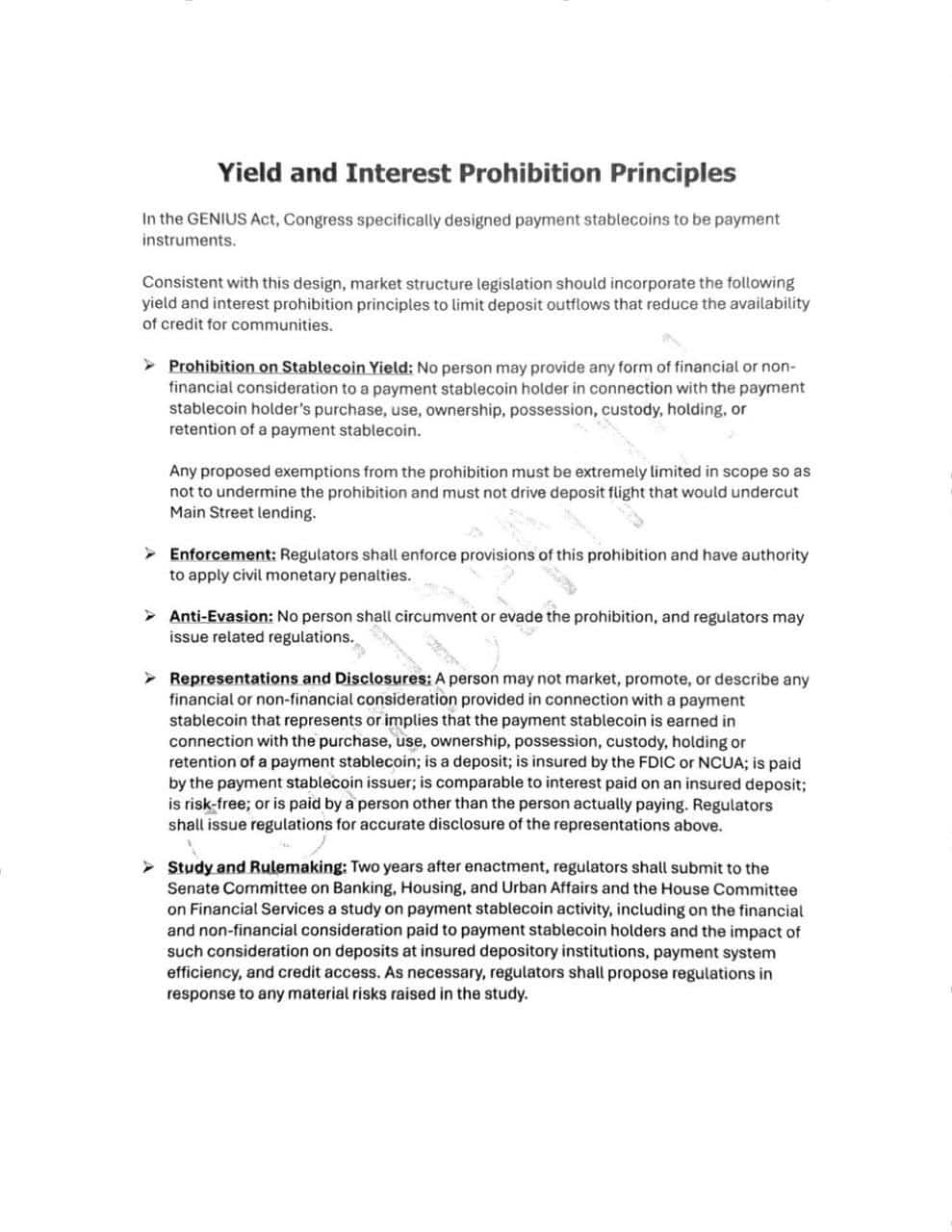
Executives from big banks like Goldman Sachs, JPMorgan Chase, Bank of America, Wells Fargo and Citi as well as PNC and U.S. Bank and trade groups such as the American Bankers Association and the Bank Policy Institute, submitted a formal document making their demand for a ban on stablecoin yield in public forums.
These “Yield and Interest Prohibition Principles” would prohibit any individual or entity from providing financial or non-financial considerations to holders of payment stablecoins in relation to their purchase, ownership, use, custody, or retention of such coins.
Bank representatives contend that permitting yield-like returns on deposits in stablecoins could cause large outflows from traditional bank deposits, destabilizing credit and finance.
A written provision submitted by the banking side stressed that “any proposed exemptions from the prohibition must be extremely limited in scope so as not to undermine the prohibition and must not drive deposit flight.”
This stance echoes wider fears among banks that digital assets with yield-paying properties could constitute a competitive threat to deposit products which domestic banks use to fund household and small business loans.
Flexibility in “Permissible Activities” Sought by Crypto Advocates
On the crypto side, companies such as Coinbase, Ripple, Paxos and the Blockchain Association said stablecoins should to be allowed to offer some types of rewards beyond just interest on traditional deposits; these firms were joined by representatives from venture firm a16z and the Crypto Council for Innovation.
These rewards, like transaction-based incentives, are seen by the industry as important in encouraging wider use of digital dollar-pegged coins in payments and in decentralized finance.
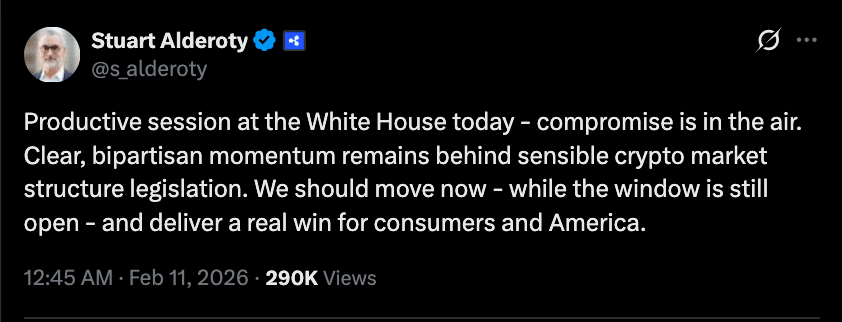
No deal has been reached on this case, but a compromise is in the air, Stuart Alderoty, Ripple’s chief officer of legal, said to reporters after the session. More generally, Coinbase’s chief legal officer, Paul Grewal, also nodded to the progress being made on X, noting that there was “still more work to do for sure.”
Industry participants have been advocating for a broadened definition of “permissible activities,” which would be the legal threshold that would enable crypto firms to offer ecosystem rewards or transaction incentives, so long as they aren’t synonymous to traditional interest payments on bank accounts. Banks, however, fear that too wide a reach could blur the line between regulated savings products and crypto holdings.
White House Seeks a Resolution by March 1
The White House officials have pushed the banking and crypto negotiators to produce compromise language by March 1, 2026 in order to move the Clarity Act forward through the Senate Banking Committee.
Attendees said the Feb. 10 meeting was smaller and more targeted than previous ones, arranged to get notable figures in a room so they could discuss potential compromises around stablecoin yield limits and exemptions.
Yet by the end of the meeting, officials said that fundamental differences lingered, and further discussions were expected in the coming days.
Enforcement, Compliance and Future Rule-Making
The document of banking principles is beyond an outright ban. It includes enforcement provisions that would give regulators the power to assess civil monetary penalties on companies for violating yield restrictions.
The bill also contains anti-evasion language to prevent workarounds, and regulators would be required to write rules ensuring legitimate disclosure to consumers and limiting marketing that suggests stablecoins carry no risk or are the same as bank deposits.
On top of these negotiations, the principles detail a two-year post-enactment study that requires regulators to assess how stablecoins impact insured deposits, payment system efficiency and credit access.
That would include reporting to Senate and House committees to study if further rulemaking is necessary, given market behaviour after the initiatives are implemented.
The long-term oversight provision was included to persuade banking leaders that the regulatory framework would not only constrain risky behavior but also adjust as digital dollar products change over time and potentially impact traditional finance.
Conclusion
The most recent round of White House discussions over regulating stablecoin yields revealed both the extent of their disagreements and signs of where progress might emerge.
Banks, for their part, have offered to negotiate written principles that involve a wide prohibition on yield and stringent enforcement mechanisms because they are worried about deposit outflows and financial stability.
Crypto companies have submitted proposals focusing on permitted activities and tighter definitions that would safeguard innovation while accommodating concerns of regulators.
No final agreement has been made by February 2026, although the two sides had begun to focus on more serious negotiations.
With the March 1 deadline fast approaching, lawmakers, regulators and industry participants have an increasingly closing window in which to settle a dispute that may determine how stablecoins are regulated for years to come.
Glossary
Stablecoin Yield Regulation: regulation over whether stablecoin holders can get compensated in a manner similar to interest.
Payment Stablecoin: A digital currency created for everyday payments, generally pegged to a hard currency like the dollar.
Permissible Activities: Anything that within the policy, allows for account actions or functionalities that could result in some forms of rewards without actually violating a yield ban.
CLARITY Act: A U.S. federal law that intends to provide clarity on the regulatory framework surrounding digital currencies.
Civil Monetary Penalty: A fine imposed by a regulator for violating monetary laws.
Frequently Asked Questions About Stablecoin Yield Regulation
Why did the White House hold its recent stablecoin yield meeting?
U.S. officials, banks and crypto firms gathered for a meeting to discuss how regulators should oversee stablecoin yield under proposed federal law, including whether holders of stablecoins can earn rewards without eroding traditional bank deposits.
Was there any deal struck?
No compromise had been reached by the end of the meeting, but officials described their discussion as “productive.”
What does the banking industry want?
Banks circulated written principles that would call for a prohibition on stablecoin yields and rigorous enforcement to safeguard the stability of deposits.
What do cryptocurrency firms want?
Crypto groups are calling for definitions of acceptable activities and exemptions that would permit some stablecoin rewards that are linked to usage.
What’s next for these negotiations?
The White House has given both sides until March 1, 2026, to come up with compromise legislative language or risk stalling the CLARITY Act’s progress.
References
The Block
TradingView
FXStreet
Bingx Exchange
Blockonomi