



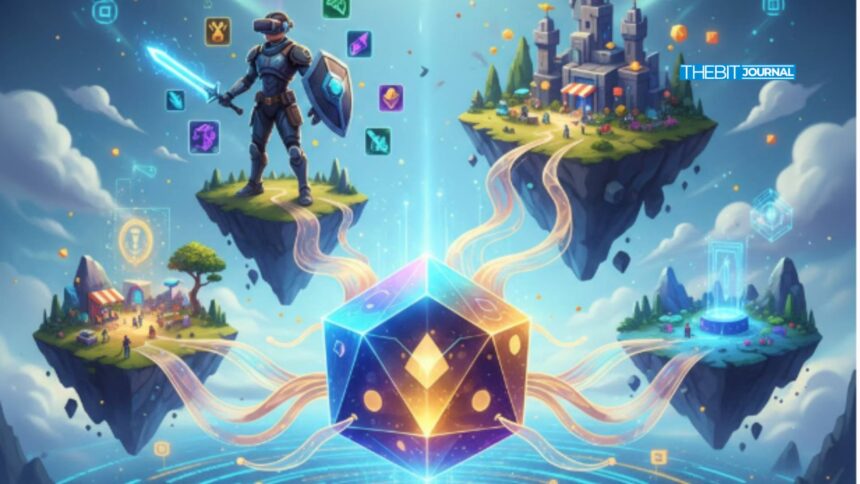

NFTs (Non-fungible tokens) no longer sit in a niche corner of crypto. They now sit inside game menus, VR headsets, and virtual land plots that sell for real money. As studios experiment with Web3 and major brands test metaverse ideas, the role of NFTs in gaming is turning into a serious part of the global entertainment business rather than a short-lived fad.
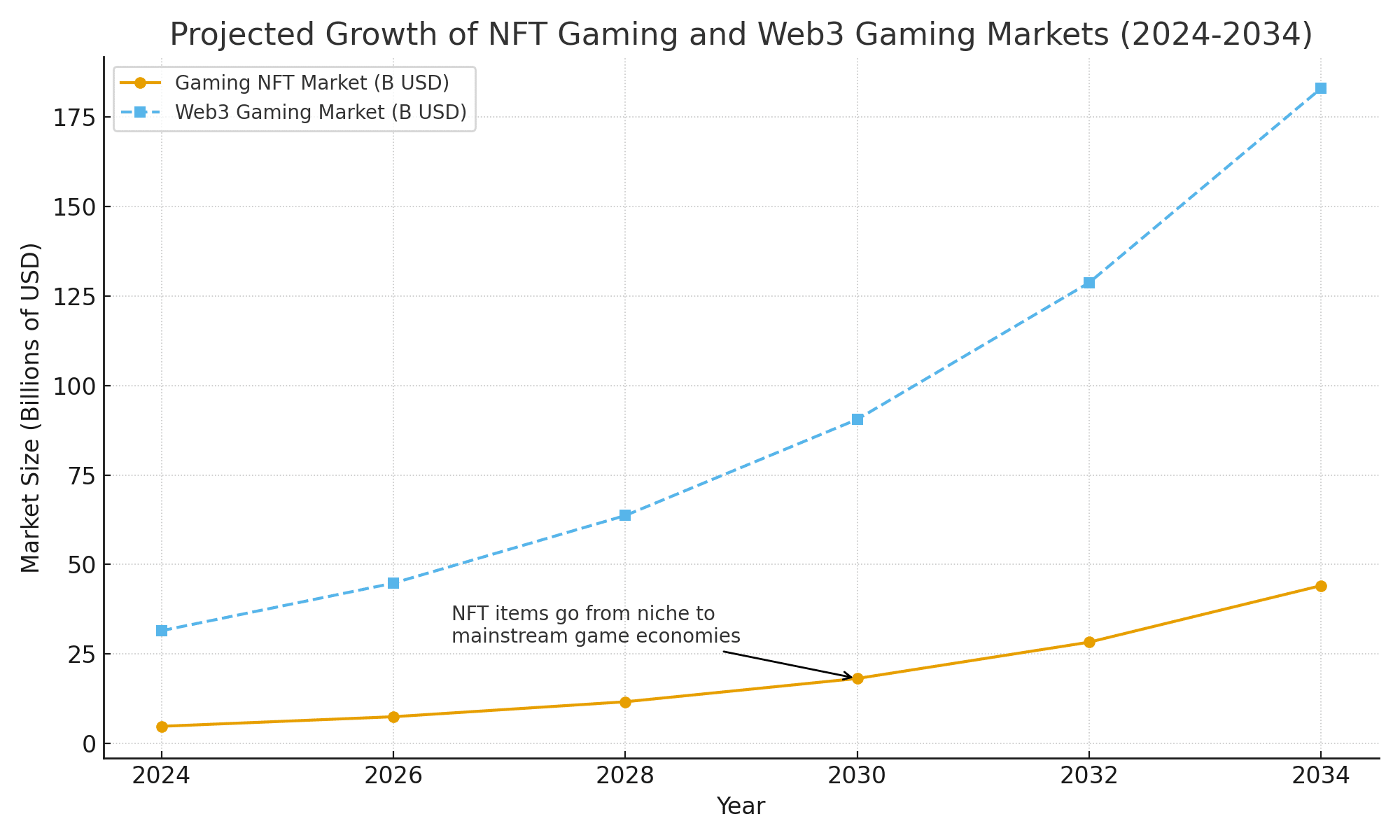
Analysts estimate that the gaming NFT market was worth around 4.8 billion dollars in 2024, with projections that it could grow more than nine times to about 44.1 billion dollars by 2034, supported by a compound annual growth rate close to 25 percent. Web3 gaming more broadly is expected to expand from roughly 31.5 billion dollars in 2024 to about 183 billion dollars by 2034, as more titles move to player owned economies. These numbers show how quickly blockchain-based gameplay is moving from experiment to infrastructure.
Why the role of NFTs in gaming matters in 2025
Traditional games treat items as rentals. Players can spend hundreds of hours and dollars on skins, weapons, or collectibles, but all of that value sits on a publisher’s servers. If a game shuts down, everything disappears.
By contrast, the role of NFTs in gaming is to turn these items into verifiable digital property. Ownership lives on a blockchain, not in a single company database. A rare sword, a stadium pass, or a VR avatar skin can sit in a wallet, move between marketplaces, and potentially appear in more than one virtual world.
For gamers, this opens the door to:
Real secondary markets, where items can be resold.
Transparent rarity, where supply is visible on chain.
Long term value, because assets can live beyond one title.
For developers, NFT infrastructure offers a new revenue mix: primary sales, royalties on secondary trades, and community driven content that can grow the universe of a game without every asset being built in house.
What NFTs actually do inside a game
At a technical level, an NFT is a unique token that points to a specific asset: a character, card, piece of land, or wearable. The blockchain records who owns it, when it was minted, and every transfer along the way. That adds provenance, which is a big part of the appeal for collectors.
In practical terms, the role of NFTs in gaming is to attach a secure, tradable token to an in game item so that ownership is not tied to a single user account. This allows the item to move between wallets and third party markets, as long as the game logic supports it.
Examples already exist across genres:
Strategy titles and trading card games where every card is an NFT.
Creature battlers, where each character is tokenized and can be bred or traded.
Open world experiences where cosmetic items and mounts are NFTs, not just cosmetic entries in a database.
These designs are still evolving, but the pattern is clear. Tokens let studios separate ownership from access, which is very different from classic free to play models.
A fast-growing market around NFT powered games
The macro data supports this shift. Research on the gaming NFT segment suggests that it already accounts for several billion dollars in value and could grow sharply over the next decade if adoption continues. At the same time, the broader NFT market is forecast to climb from about 37.6 billion dollars in 2024 to more than 800 billion dollars by 2035.
On the funding side, Web3 gaming projects secured close to 900 million dollars across more than 200 deals in 2024, even after the speculative boom of 2021 and 2022 cooled down. This shows that investors still back studios that can connect solid game design with on chain economies instead of pure token hype.
Investors now treat the role of NFTs in gaming as part of a wider Web3 entertainment thesis that covers collectibles, metaverse platforms, creator tools, and financial infrastructure.
How the role of NFTs in gaming is reshaping in-game economies
For many studios, the role of NFTs in gaming begins with cosmetic items. Skins, emotes, and special edition avatars are natural fits, because they signal identity and status but do not always affect game balance. When those items are NFTs, players can trade them without relying on grey markets.
Over time, more complex designs appear:
Season passes that mint unique rewards.
Crafting systems where players combine items into higher rarity NFTs.
Guild or clan assets that are collectively owned by a community treasury.
These mechanics introduce new economic indicators. Teams and analysts watch:
Daily active wallets and on chain player counts.
Transaction volume and marketplace liquidity.
Floor prices for key collections and their stability over time.
The share of fees going to developers versus community contributors.
Healthy projects balance fun and economics. If rewards dominate and gameplay feels secondary, the ecosystem often overheats and then collapses. When game design leads and NFTs work quietly in the background, retention and value creation tend to be more sustainable.
The role of NFTs in gaming and virtual reality worlds
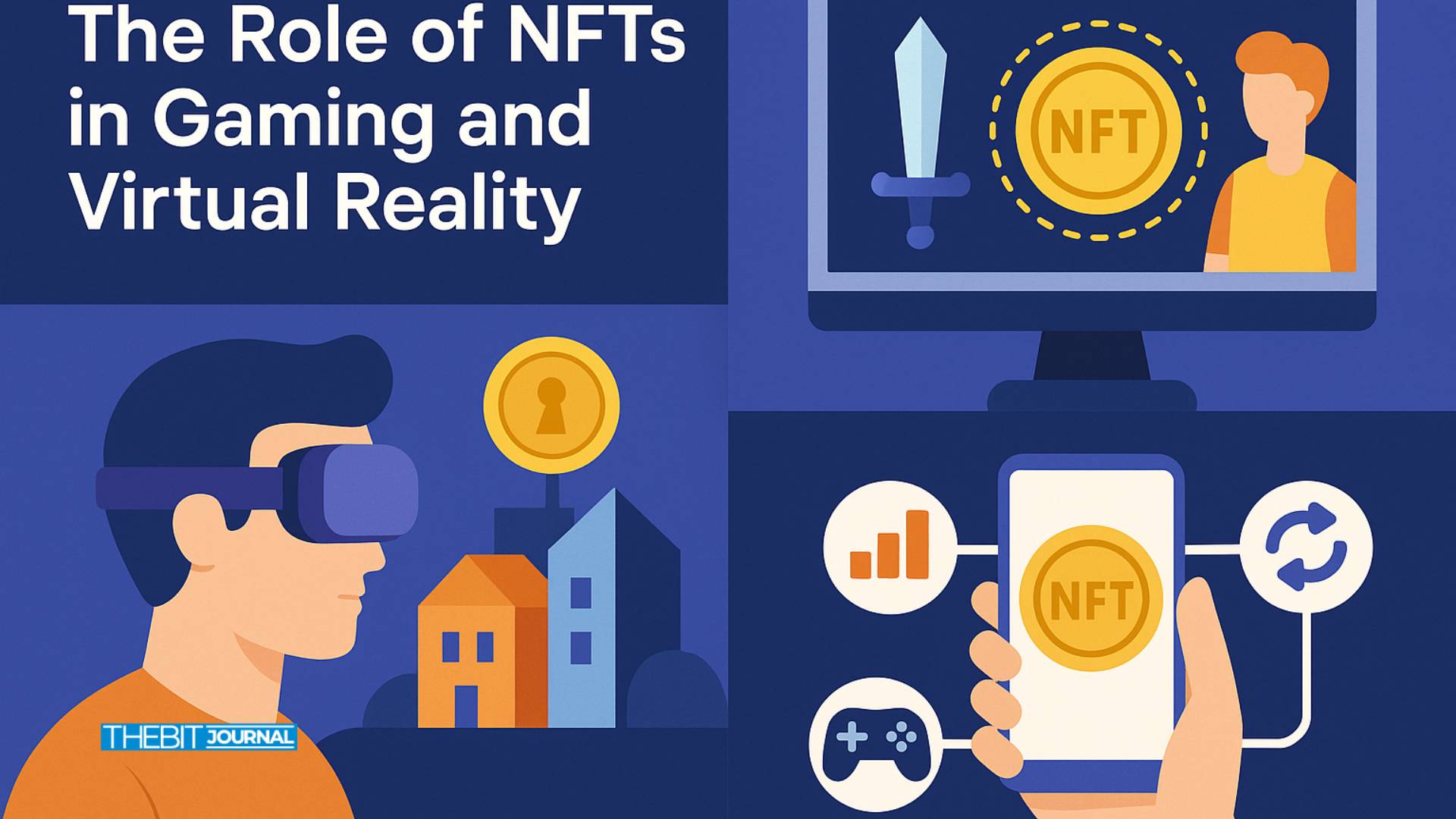
Virtual reality adds another layer. In a VR world, a player’s field of view is filled with objects that can be tokenized: land plots, billboards, apartments, clothes, tools, even access keys for private spaces. Several metaverse style platforms already treat parcels of virtual land as NFTs that can be bought, developed, and resold.
In virtual reality, the role of NFTs in gaming becomes more immersive, because the player is standing inside the asset. Owning a VR concert venue, gallery, or e sports arena feels closer to owning a small business than holding a static JPEG.
These VR worlds often include:
Spatial voice chat and social hubs.
Event systems for concerts, launches, and sports.
Building tools that let creators design experiences on top of their land.
Here, NFTs turn into digital commercial real estate. That raises serious questions about valuation, legal rights, and long term viability, but it also opens the door for creators who want to build persistent brands inside virtual spaces.
Key indicators to watch for NFT and VR projects
Because value is on chain, data for NFT gaming and VR is rich and public. Serious participants track several indicators before they commit time or capital:
Active users and retention across several months, not only at launch.
Volume, number of trades, and unique buyers for major collections.
Distribution of ownership, to see whether assets are in the hands of many players or a small group of speculators.
Gas or network fees, which affect how often smaller players are willing to trade or participate.
Cross platform integration, such as support for multiple chains or wallets.
These signals help separate projects that deliver real entertainment from short term speculation.
Regulation, risks, and player trust
The rapid growth of NFT economies also draws regulatory attention. Consumer agencies and securities regulators now examine token based game models, especially when they include cash like rewards, complex staking mechanics, or heavy marketing toward inexperienced players.
Regulators now study the role of NFTs in gaming when they assess consumer risk and speculative behavior. They focus on issues such as:
Transparency of odds and drop rates.
Clear disclosures for fees and royalties.
Age appropriate access, since some NFT designs resemble financial products.
For developers, the safest path is to design with compliance in mind, keep reward messaging honest, and avoid promising guaranteed returns. For players, basic risk management still applies, including careful wallet security, cautious spending, and skepticism toward unrealistic yields.
What comes next for NFT-powered games and VR
Over the next decade, the role of NFTs in gaming will depend on better game design, cheaper transactions, and easy to use wallets that hide complexity. Many of the largest Web3 games in development have not launched yet, and VR hardware continues to improve each cycle.
If studios manage to:
Make NFTs feel like a natural part of the game loop.
Offer clear value without predatory monetization.
Support open standards so that items can move across worlds.
then NFT and VR ecosystems can evolve into long lasting digital economies, not just speculation cycles that repeat every few years.
Conclusion
NFTs are changing how games and VR platforms treat ownership, value, and player identity. They turn in game items and virtual spaces into transferable assets that can survive beyond a single title. That shift is still young, and not every project will last, but the economic and creative logic behind it is strong.
For now, the most resilient experiments mix solid gameplay, fair token design, transparent data, and clear communication about risk. As more studios learn from early mistakes, the market will likely move toward experiences where the technology quietly powers the world and the story, rather than taking center stage.
Frequently Asked Questions
1. What is the basic idea behind NFTs in gaming and VR?
Non fungible tokens represent unique digital items, such as characters, skins, or land. The role of NFTs in gaming is to let players actually own these items, store them in wallets, and trade them in open markets instead of keeping them locked in a single game account.
2. How do NFTs benefit players compared with traditional in game items?
Traditional items are controlled by the publisher, and access can disappear at any time. With blockchain assets, the role of NFTs in gaming gives players more control, allows permission less resale, and makes rarity transparent, which can support both emotional and financial value.
3. Are NFT games only about speculation and earning money?
Some early projects focused too heavily on token rewards, which created bubbles. The healthier trend uses the role of NFTs in gaming to support ownership and community economies while keeping fun and balanced design at the center of the experience.
4. How do NFTs connect to virtual reality platforms?
In VR worlds, NFTs can represent land, buildings, wearables, or access keys. They act as proof that a specific wallet controls a space or object, which makes it easier to build persistent venues, businesses, or communities inside virtual environments.
Glossary of Key Terms
NFT (Non Fungible Token)
A unique digital token recorded on a blockchain that represents a specific asset, such as a game item, artwork, or parcel of virtual land.
Web3 Gaming
A category of games that use blockchain networks, crypto assets, and decentralized infrastructure to enable player ownership, open markets, and on chain logic.
Play to Earn
A model where players can receive tokens or NFTs as rewards for gameplay. The value of those rewards depends on market demand and project health.
Metaverse
A network of persistent virtual worlds, often in 3D, where users can socialize, work, play, and trade digital goods, sometimes across multiple platforms.
Virtual Land
Parcels of space in a virtual world that can be owned, developed, and traded, often represented as NFTs on a blockchain.
Gas Fees
Transaction fees paid to validators or miners on a blockchain network. These fees apply when minting, buying, or selling NFTs.
Interoperability
The ability for assets, wallets, and identities to move between different games, chains, or platforms without needing to start from scratch each time.
References/Sources