



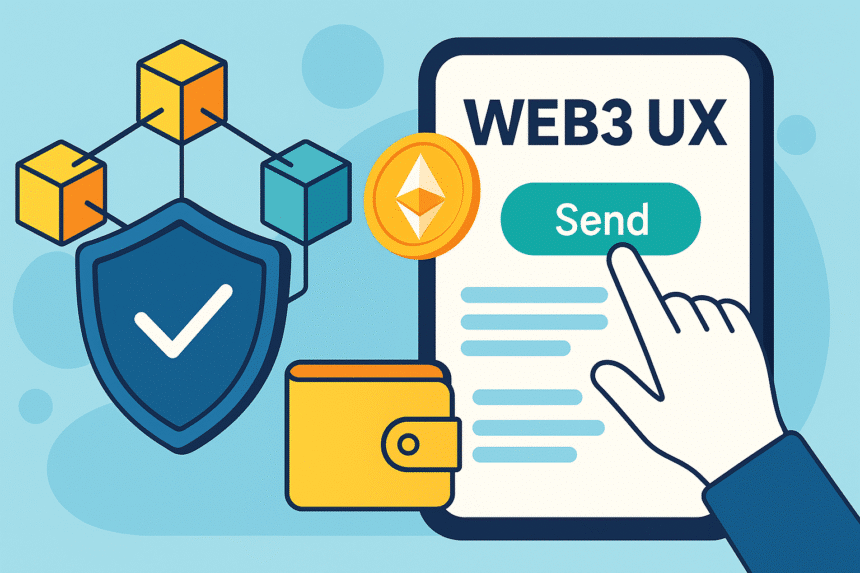

The internet is changing fast. What started as simple web pages has now become a world full of digital ownership, smart contracts, and crypto payments. This is the third generation of the internet, which is referred to as Web3. But there is one big problem. It is not easy to use.
There is a large number of individuals who wish to use blockchain applications, to them halted due to their lack of knowledge regarding how wallets, gas charges, and private keys function. It is even frightening to connect a wallet or authorize a purchase. That is why user experience, or UX, is so significant in Web3.
To put it in simple terms, UX refers to the ease or the difficulty of using a product. Poor UX causes users to abandon them, and good UX causes users to come back. Web3 UX is in the infancy stage, and everything is a bit complex. It must be simplified to access more users, like regular applications like Google Pay or Instagram.
In order to become something that people can bring into daily life, blockchain should become invisible. The user is not supposed to be aware that he or she is using it. The system should work smoothly in the background, and that is where the future of Web3 UX is heading.
What Makes Web3 Hard to Use Right Now
Even though Web3 is full of new ideas, it has one major weakness. It is still made for tech people, not for everyone. Many users find it too complex to even start.
There are three big reasons that make Web3 hard for most people today.
Complicated Wallet Systems
A crypto wallet is needed for almost every Web3 app. But for new users, setting it up can be confusing. There are seed phrases, passwords, private keys, and backup rules. One small mistake can make someone lose all their funds forever. In regular apps, people can reset their passwords easily. But in blockchain, once it’s gone, it’s gone.
This fear makes many people stop before even starting. A better UX will have to remove this fear by offering safe, easy recovery and clear steps.
Gas Fees and Transaction Confusion
Every blockchain transaction needs gas fees. These are small payments made to confirm the transaction. But users don’t always understand what gas is or why the price keeps changing. On busy days, the fees can go up suddenly, and that makes people angry or confused.
Future Web3 UX will need to make this automatic. The system should pick the right gas fee and show a simple message like “Your transaction will complete in 10 seconds.” That is how easy it should feel.
Lack of Clear Design and Instructions
Most Web3 sites are still built for developers. They often use tech words like “bridge,” “staking,” or “hash” that make no sense to regular users. Simple design, clear buttons, and easy words are what the next phase of Web3 UX needs.
Why Simplifying Blockchain UX Is Key for Mass Adoption
Blockchain will not go mainstream unless it becomes easy enough for anyone to use. Most people don’t want to think about how something works inside. They just want to use it and get results.
Simplifying Web3 UX means hiding the complicated parts and showing only what’s needed. When people can open an app, buy something, and sign a transaction without fear or confusion, that is when blockchain will really grow.
Better UX also means trust. When users feel safe and confident, they spend more time in the ecosystem. They explore NFTs, DeFi, and games. They bring friends too. That is how mass adoption starts. Here is an example of what before and after UX improvement can look like:
| Action | Before UX | After Simplified UX |
| Send crypto | Enter address manually | Choose contact name |
| Pay gas fees | Set manually | Auto-calculated in app |
| Sign transactions | Use long wallet popups | One-tap confirmation |
| View balance | Check explorer | Visible inside the app |
| Manage keys | Manual backups | Cloud + social recovery |
This table shows how simplification can make blockchain act more like normal apps. Small improvements like these can change everything for new users.
Once blockchain tools become simpler, more people will join. It is the same story as the early internet. At first, only developers used it. Then came browsers and search engines. The same will happen with Web3. When the UX becomes smooth, adoption will follow.
Major Projects and Platforms Leading UX Innovation in Web3
Some projects already understand how big UX is for the future. They are trying to fix problems and make blockchain easier to use for everyone.
MetaMask and Wallet Simplification
MetaMask used to feel complex for many new users, but over time, it improved. It added features like one-click token swaps, easy network switching, and now even mobile login. The app also shows warnings for risky websites, which helps protect beginners.
Coinbase and Easy Onboarding
Coinbase is known for making crypto easier for normal users. It hides complex actions behind simple buttons like “Buy,” “Send,” or “Receive.” The app also connects directly to Web3 dApps through its wallet extension, which removes many confusing steps.
Arbitrum, Polygon, and Low-Fee Layers
Another big improvement comes from networks like Arbitrum and Polygon. They help cut gas fees and make transactions faster. For users, this means cheaper actions and fewer failed transactions. That alone improves the overall experience.
Here’s a small table comparing some popular Web3 wallets and their UX features.
| Wallet Name | Speed | Design Simplicity | Recovery Option | Cross-Chain Support |
| MetaMask | Medium | Good | Seed phrase only | Yes |
| Coinbase Wallet | Fast | Very Easy | Cloud backup | Yes |
| Trust Wallet | Fast | Simple | Recovery phrase | Yes |
| Rainbow Wallet | Medium | Modern UI | Social login | Partial |
| Phantom (Solana) | Very Fast | Excellent | Recovery via seed | No |
This comparison shows that wallets are slowly moving toward simplicity. Future ones will likely combine the best of all: one-click recovery, low fees, and clean designs.
Role of AI and Automation in Web3 UX
Artificial intelligence is starting to play a big role in Web3 design. It helps remove small confusions and guide users better. AI can make blockchain easier in many ways, like automating gas fee selection, predicting user intent, and helping with lost keys.
Chat-Style Wallet Assistants
Some wallets now use chatbots that talk with the user. Instead of clicking through complex menus, users can just type what they want. For example, “Send 10 USDC to Alex,” and the AI assistant prepares the transaction.
Smart Transaction Tools
AI can also predict network congestion and suggest the best time to make a transaction. It can calculate the best fee for the fastest confirmation. This not only saves money but also makes blockchain use feel smooth and intelligent.
| AI Feature | Benefit to Users | Example in Web3 |
| Auto gas calculation | No manual setup | MetaMask AI plugin |
| Transaction prediction | Faster approvals | Arbitrum AI integration |
| Voice or chat commands | Easier to interact | AI wallet assistants |
| Fraud detection | Safer experience | Coinbase security AI |
AI takes away guesswork. It turns a complex blockchain task into something anyone can do without fear. This mix of AI and UX is the next big step for Web3 apps.
How Cross-Chain UX Makes Blockchain Feel Unified
One of the biggest issues in Web3 is how many blockchains exist. Ethereum, Solana, BNB Chain, Avalanche, and so many more. Each one works differently and uses its own tokens. For normal people, this can be confusing. They don’t understand why they can’t move coins easily from one to another.
Cross-chain UX is trying to fix this. It means building apps that work across different blockchains in a single interface. When users can do everything from one place, blockchain starts to feel like one connected internet, not a group of small islands.
Single Interface for Multiple Chains
A big trend now is multi-chain wallets. These wallets let users send or receive tokens on many blockchains without leaving the app. For example, Trust Wallet and OKX Wallet support dozens of networks on one screen. Users can switch between chains like Ethereum or BSC without even knowing what’s happening under the hood.
This kind of experience hides the complexity and makes blockchain feel like a normal digital app.
Importance of Unified User Flow
Cross-chain UX makes things smoother for developers and users both. It means people can buy an NFT on Polygon and then use it in a game built on Arbitrum. No need to worry about bridges or manual transfers. That’s what future apps will look like: simple, connected, and user-friendly.
| UX Feature | Old Way | New Cross-Chain UX |
| Token transfers | Bridge manually between chains | Done inside wallet |
| App access | One app per blockchain | One app for all chains |
| Fees | Pay in each network token | Unified gas token system |
| NFT use | Locked to one chain | Shared between multiple chains |
Cross-chain UX is what will make blockchain feel complete. It removes the feeling of walls between chains and helps new users see Web3 as one whole ecosystem.
UX Design Trends Shaping the Future of Web3 Apps
UX design in blockchain is not just about color or buttons. It’s about making something hard feel natural. The way users interact with wallets, tokens, and dApps is changing fast. Some design trends are now leading the next wave of Web3 UX.
Gasless Transactions
Some platforms now pay the gas fee for users or let them pay it in stablecoins. This removes a big confusion. Users don’t need to know about ETH or MATIC tokens to make transactions. It feels more like using an app that just works.
Human-Readable Wallet Names
Instead of long wallet addresses, some projects now let users use simple names like “john.eth” or “sara.crypto.” These are called ENS (Ethereum Name Service) domains. It makes sending tokens easier and safer because no one has to copy long codes.
Social Recovery Instead of Private Keys
Losing a seed phrase used to mean losing everything. Now, wallets are adding social recovery. It means friends or trusted contacts can help restore access if someone forgets their password. This feels more like normal internet apps.
| Trend | What It Fixes | How It Helps Users |
| Gasless payments | Removes gas confusion | Makes sending faster |
| Simple wallet names | Long codes are hard | Easier to share |
| Social recovery | Seed phrase loss | Safer access |
| Mobile-first design | Desktop-only use | Brings blockchain to phones |
These design trends show that Web3 is learning from Web2. The goal is to make blockchain tools work for everyone, not just developers.
Challenges Developers Face While Simplifying Web3 UX
Although UX is improving, developers continue to struggle a lot in their attempt to make Web3 easy. Blockchain is not just a normal database, and that complicates things.
One of them is the challenge of simplicity and decentralization. Developers would like to simplify things, but they also wish to have the users in control. One such example is to make apps centralized by adding password recovery. Then they have to strike a compromise.
Slow onboarding is another issue. Upon registration, new users must create wallets, keys, network connectivity, and even purchase crypto first. That’s a lot for a beginner. Making this process easier without violating the blockchain regulations is time and testing.
Scalability and Performance
Some apps become slow when the network is busy. That also hurts UX. Developers must design systems that stay fast even with millions of users.
| Developer Problem | Why It’s Hard | Example |
| Balancing control | Easy UX vs user ownership | Custodial vs non-custodial wallets |
| Complex onboarding | Too many steps for new users | Wallet setup confusion |
| Network limits | High gas and lag | Ethereum congestion |
| Security trade-offs | Simpler UX can mean risk | Auto-sign features |
These problems show why Web3 UX is not easy to fix overnight. But step by step, it’s getting better with new ideas and community testing.
Conclusion
The future of Web3 depends on how easy it becomes to use. If people can use blockchain without stress or fear, it will spread faster than ever. Simplicity is not just about good design; it’s about trust. When apps are clear, users trust them more.
Blockchain started as a tech project, but it will become part of normal internet life through better UX. AI, automation, and multi-chain support are already showing that direction. One day, people won’t even say they are using blockchain; they will just use it. That’s when Web3 truly becomes mainstream.
Frequently Asked Questions About UX and Web3
What does UX mean in Web3?
The abbreviation of user experience is UX. In Web3, it refers to the ease or the complexity of using a blockchain application. With a decent UX, users should be able to buy, send, or trade crypto without worrying or having to understand technical aspects.
Why is Web3 UX more complex than normal apps?
Web3 applications are more difficult as they require distinguishing such aspects as keys, wallets, and gases payments that are not regularly encountered by ordinary users. All these are concealed behind some casually placed buttons in normal apps, but Web3 still displays too much technical data in the first place.
How can better UX help blockchain adoption?
Once Web3 apps are easy and approachable, they will be used more by people. The UX should be smooth as this creates a feeling of trust and confidence so that users can navigate crypto without fear. It transforms blockchain into one of the baffling technologies into something that anybody can use in everyday life.
What are examples of simple Web3 apps today?
Coinbase Wallet, Trust Wallet, and Rainbow Wallet are some of the already-improving wallets. They are designed with intuitive designs, quick logins, and simple recoveries. Such minor additions allow amateurs to get into Web3 without being confused and intimidated.
Will AI make Web3 easier to use?
Yes, AI can make blockchain apps much simpler. It can explain what transactions mean, help pick gas fees, warn about risky websites, and even recover lost accounts. With AI guidance, Web3 apps will feel smarter and more user-friendly for everyone.
Glossary
Web3
The next generation of the internet that runs on blockchain technology. It allows users to own their data, use crypto, and interact directly with decentralized apps instead of big companies controlling everything.
UX (User Experience)
How a person feels when using a product or app. In Web3, it means how easy or hard it is to use wallets, trade crypto, or understand smart contracts.
Blockchain
A digital system that records information in a secure and transparent way. It stores data across many computers so no one person or company can control it.
Wallet
A digital tool used to store and send cryptocurrencies. It can be a mobile app, browser extension, or hardware device that helps people manage their blockchain assets.
Gas Fee
A small payment made to blockchain validators who confirm and record transactions. It is like a service charge for using the blockchain network.
Summary
The future of Web3 depends on how simple it becomes to use. Right now, many people stay away from blockchain because it feels too technical. Complicated wallet setups, seed phrases, and gas fees confuse users who just want easy tools.
But the new wave of UX improvements is changing this. Developers and designers are focusing on clean interfaces, automatic gas settings, human-readable wallet names, and better onboarding experiences. AI is also stepping in to help people understand what they are doing without getting lost in blockchain terms.
Cross-chain tools are making it possible to move tokens between networks easily, so users no longer feel stuck in one place. This new direction is what will make blockchain as normal as using social media or online banking.
A future Web3 app might let someone buy, trade, or store digital assets without even realizing they are using blockchain. That’s the goal, to make Web3 so smooth and natural that it just works. When that happens, blockchain will finally reach the mainstream world and become a part of daily life.