




Top 10 cryptos for long-term holding are increasingly evaluated based on how strong and secure their networks are, how well their token systems are designed to last, and how useful and durable their ecosystems remain over time. As the crypto market continues to grow and evolve, investors are moving away from focusing on short-term price swings and are instead looking at assets that can survive multiple market cycles and maintain real value.
Emerging trends such as tokenizing real-world assets and integrating AI-driven protocols are shaping the strategies that long-term investors are taking, while the expected growth of regulations and the inclusion of ETFs are adding more stability to the market environment.
The current market highlights networks that combine strong security measures, reliable governance, and well-developed ecosystems. Conservative investors are prioritizing assets with lasting structures, aiming to protect their value during periods of volatility while also benefiting from technological progress and ecosystem growth.
What Makes the Top 10 Cryptos Ideal for Long-Term Holding?
Long-term crypto investments are about more than just following price movements. To be considered for the long term, assets need to show they can survive challenges through strong security, reliable governance, and financial stability. Leading networks respond openly to past issues, use organized governance structures like DAOs, and maintain diverse funding that keeps development on track.
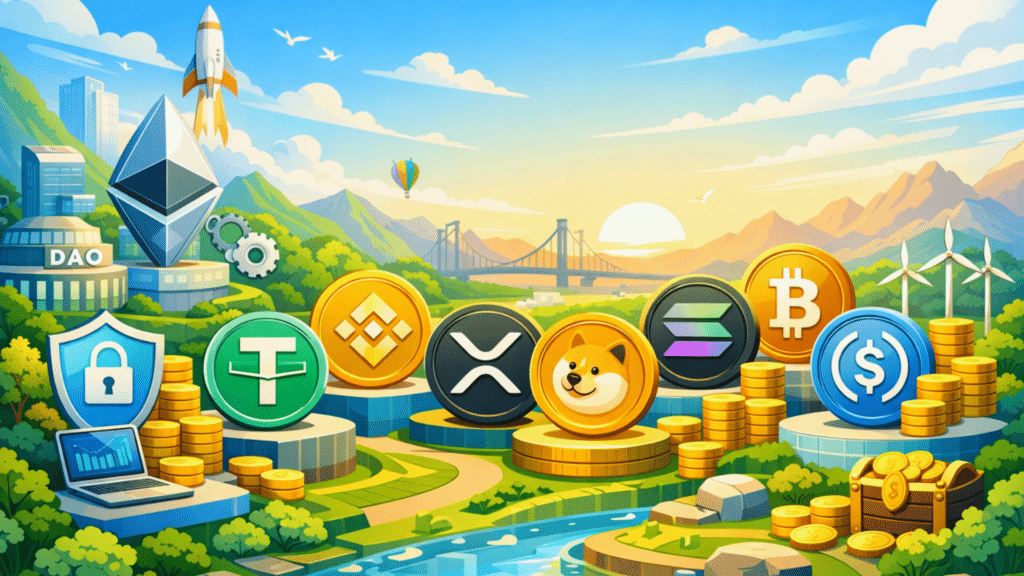
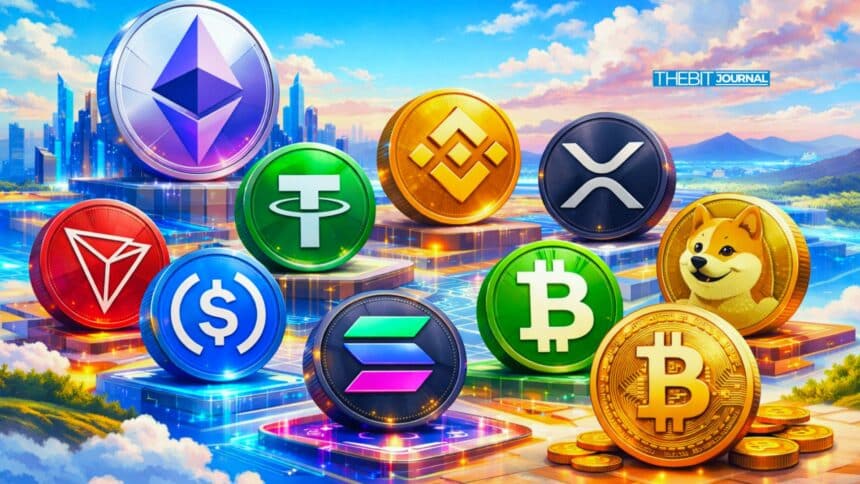
Ethereum, BNB, XRP, Solana, Tron, Dogecoin, Bitcoin Cash, Cardano, Hyperliquid, and Chainlink make up the conservative list for 2026. These cryptocurrencies combine network reliability, liquidity, and real-world usefulness, creating a solid foundation for investors who plan to hold over multiple market cycles.
Why Does the Investment Horizon Matter?
Long-term investing in crypto works differently from traditional markets. While in conventional markets a long-term horizon can span decades, crypto’s high volatility shortens these timelines. A cautious horizon of 4 to 8 years allows investors to capture a full market cycle and to tell the difference between temporary price drops and real, fundamental risks.
Being clear about investment horizons helps separate short-term market noise from strategic goals. A focus of 3 to 5 years typically favors large, liquid networks, while planning for 7 to 10 years requires choosing networks that can adapt to technological changes, maintain strong governance, and navigate evolving regulations.
How Do Survivability Factors Affect the Top 10 Cryptos?
Survivability is the foundation of conservative crypto strategies. Networks need to withstand bear markets, technical problems, and regulatory challenges. Strong security records, reliable governance, and sufficient development funding give these networks the resilience to last over time.
Any weakness in these areas can remove an asset from long-term consideration. Ethereum, BNB, and Cardano are examples of networks that combine these qualities, giving investors confidence in their ability to perform steadily across multiple market cycles.
Why Are Tokenomics Critical for Long-Term Value?
Tokenomics determines how value is created and shared among holders. Well-designed systems help limit inflation, control token emissions, and align incentives across the network. Gradual unlock schedules for teams and foundations prevent sudden market shocks, while features like staking, transaction fees, or revenue sharing keep tokens relevant over time.
Tokens without these structures often lose value, while networks with aligned incentives, such as Ethereum and BNB, offer strong support for long-term growth. These qualities reinforce their position among the top 10 cryptos for investors focused on holding over multiple cycles.
How Does Utility Influence Long-Term Demand?
Tokens stay valuable when they solve ongoing problems such as facilitating payments, supporting computation, or providing stability in decentralized finance. Their demand grows with increasing developer activity, higher transaction volumes, and the creation of new applications.
Networks that play essential roles like serving as collateral, enabling governance, or supporting payment systems maintain strong pricing power. Ethereum, XRP, and Solana show demand driven by real utility, while flexible ecosystems continue to grow by integrating real-world assets and AI-based protocols, ensuring these tokens remain relevant over the long term.
What Role Do Network Effects and Ecosystem Strength Play?
Network effects help protect a network from competition and increase its resilience. Strong networks rely on reliable validators, bridges, oracles, and a wide variety of applications. Exchange listings, ETF eligibility, and institutional adoption help secure steady capital flows.
A healthy ecosystem supports long-term growth and stability. Ethereum, Solana, and Tron are examples of networks with layered infrastructure that attracts developers and users over time, reinforcing their place among the top 10 cryptos.
How Should Investors Approach Custody and Security?
Effective custody protects crypto holdings from theft, loss, or regulatory risks. Investors should keep trading funds separate from long-term reserves, use hardware wallets or insured custodians, and have recovery plans for their seed phrases.
Professional custody solutions are especially important for large portfolios, providing security and compliance in a developing regulatory environment. These practices help build confidence in long-term holdings within the top 10 cryptos framework.
When Should Investors Rebalance or Exit Positions?
Discipline is essential in managing a crypto portfolio. Investors should reduce oversized positions, add to holdings during price dips when the fundamentals are still strong, and exit positions if key metrics show decline.
Following rebalancing rules based on investment horizons helps prevent emotional decisions. Networks like Cardano and Dogecoin show why measured adjustments are important, helping investors protect capital while maintaining long-term confidence in their holdings.
What Could Invalidate a Long-Term Crypto Thesis?
Having clear criteria for when to exit an investment helps protect investors’ capital. Events such as irrecoverable hacks, centralization of governance, regulatory restrictions, or falling network activity indicate that it may be time to exit.
By defining these invalidators in advance, investors can make confident and timely decisions. This approach allows them to focus on networks that continue to demonstrate strength and resilience over the long term.
Top 10 Cryptos for Long-Term Holding
Ethereum (ETH)
Ethereum is the most widely used smart contract blockchain, supporting decentralized finance, NFTs, and a wide range of enterprise use cases. A large developer community and frequent network upgrades help maintain its security and scalability over the long term. Ethereum has a market capitalization of about $236.41 billion, a 24-hour trading volume of $74.17 billion, and a circulating supply of around 120.69 million ETH.
BNB (BNB)
BNB serves as the core asset of the Binance ecosystem, powering trading activity, payments, and smart contracts on BNB Chain. Its broad use across multiple services helps support steady demand over time. BNB holds a market capitalization of approximately $87.96 billion, posts around $5.45 billion in 24-hour trading volume, and has a circulating supply near 136.35 million BNB.
XRP
XRP is built to enable fast and low-cost cross-border payments, with a primary focus on financial institutions. Its payments-oriented infrastructure supports its long-term relevance in global transfers. XRP has a market capitalization of about $87.30 billion, a 24-hour trading volume close to $14.17 billion, and a circulating supply of roughly 60.91 billion XRP.
Solana (SOL)
Solana is a high-speed blockchain designed to support scalable decentralized applications. Its fast transaction processing and expanding ecosystem contribute to its long-term potential. Solana has a market capitalization of around $46.93 billion, records about $13.57 billion in 24-hour trading volume, and has a circulating supply of approximately 566.66 million SOL.
Tron (TRX)
Tron focuses on efficient transactions and decentralized content sharing. Consistent network usage and stable activity support its continued role in the blockchain space. Tron’s market capitalization stands at roughly $25.52 billion, with a 24-hour trading volume of about $1.38 billion and a circulating supply near 94.71 billion TRX.
Dogecoin (DOGE)
Dogecoin remains supported by a strong community and high brand recognition. Its low transaction fees help sustain regular network activity. Dogecoin has a market capitalization of approximately $16.04 billion, a 24-hour trading volume near $3.99 billion, and a circulating supply of about 168.62 billion DOGE.
Bitcoin Cash (BCH)
Bitcoin Cash is designed for quick and low-cost peer-to-peer payments. Its focus on everyday transactions supports its long-term use as a payment network. Bitcoin Cash has a market capitalization of around $9.65 billion, records roughly $1.13 billion in 24-hour trading volume, and has a circulating supply close to 19.99 million BCH.
Cardano (ADA)
Cardano is a blockchain project built around academic research and peer-reviewed development, with a strong focus on security and long-term scalability. The network follows a structured upgrade process aimed at improving governance and sustainability over time. At present, Cardano carries a market capitalization of around $9.55 billion. Its 24-hour trading volume stands near $2.10 billion, with roughly 36.05 billion ADA in circulation.
Hyperliquid (HYPE)
Hyperliquid is a blockchain platform centered on decentralized derivatives trading. Rising liquidity levels and trading activity point to growing adoption. Hyperliquid has a market capitalization of around $8.82 billion, a 24-hour trading volume close to $1.24 billion, and a circulating supply of approximately 259.88 million HYPE.
Chainlink (LINK)
Chainlink provides the data layer that allows blockchain applications to interact with information outside their own networks. Its technology is widely used to connect smart contracts with pricing feeds, external systems, and real-world events. This role has made the network a core piece of infrastructure across decentralized finance and other on-chain use cases.
At current levels, Chainlink’s market capitalization stands near $5.94 billion. The token records around $2.03 billion in 24-hour trading volume, with approximately 241.93 million LINK in circulation and a total supply of about 708.09 million LINK.
Conclusion
Top 10 cryptos focus on lasting strength rather than short-term gains. Networks like Ethereum, BNB, XRP, Solana, Cardano, Tron, Dogecoin, Bitcoin Cash, Chainlink, and Hyperliquid offer security, real utility, and strong ecosystems that support long-term investment strategies. Following a disciplined approach with clear investment horizons, survivability checks, and rebalancing rules helps investors manage market cycles effectively.
Choosing these cryptocurrencies based on evidence and proven fundamentals allows portfolios to withstand volatility while benefiting from technological growth and evolving market trends. By prioritizing networks with reliable foundations, long-term holders can build portfolios that are resilient, relevant, and well-prepared for the changing crypto landscape.
Disclaimer: This article is for informational purposes only and does not constitute financial or investment advice. Cryptocurrency investments involve risk, and readers should conduct their own research or consult a qualified professional before making any investment decisions.
Glossary
Crypto Network: The infrastructure that keeps a cryptocurrency running.
Tokenomics: How a crypto manages supply, rewards, and incentives.
Survivability: A network’s ability to stay secure and functional under challenges.
Staking: Locking tokens to support the network and earn rewards.
Custody: Protecting crypto safely in wallets or secure services.
Frequently Asked Questions About Top 10 cryptos
Why are these Top 10 cryptos good for long-term holding?
They have strong security, stable token systems, real use, and durable networks that can survive market changes.
What makes a crypto network “survivable”?
A network is survivable if it can handle hacks, market drops, governance problems, and has enough funding to keep running.
Why is tokenomics important for long-term crypto value?
Good tokenomics controls supply, rewards holders, and keeps the token useful and valuable over time.
How should I store these cryptos safely?
Keep them in hardware wallets or insured custodians, separate from trading funds, and make backup plans for your keys.
What can make a long-term crypto investment fail?
Hacks, governance problems, regulatory bans, or declining usage can make a crypto unsuitable for long-term holding.
Sources