






Crypto moved from a niche experiment to a real part of household balance sheets in less than a decade. Many early traders believed that activity on chain sat outside traditional rules. Today, that belief is risky as tax authorities view digital assets as part of a normal portfolio, and they expect clear reporting of all relevant activity for crypto taxes.
This blog explains how tax treatment works, what can happen when investors ignore their obligations, and which practical steps help reduce long term damage. It also highlights key indicators that serious holders can track when planning around crypto assets.
How tax authorities classify crypto
In many major economies, digital assets are treated as property for tax purposes, not as simple cash. That means a disposal of a token can create a taxable event. A disposal usually includes:
Selling coins or tokens for fiat
Swapping one asset for another
Spending coins on goods or services
Giving assets away in specific circumstances
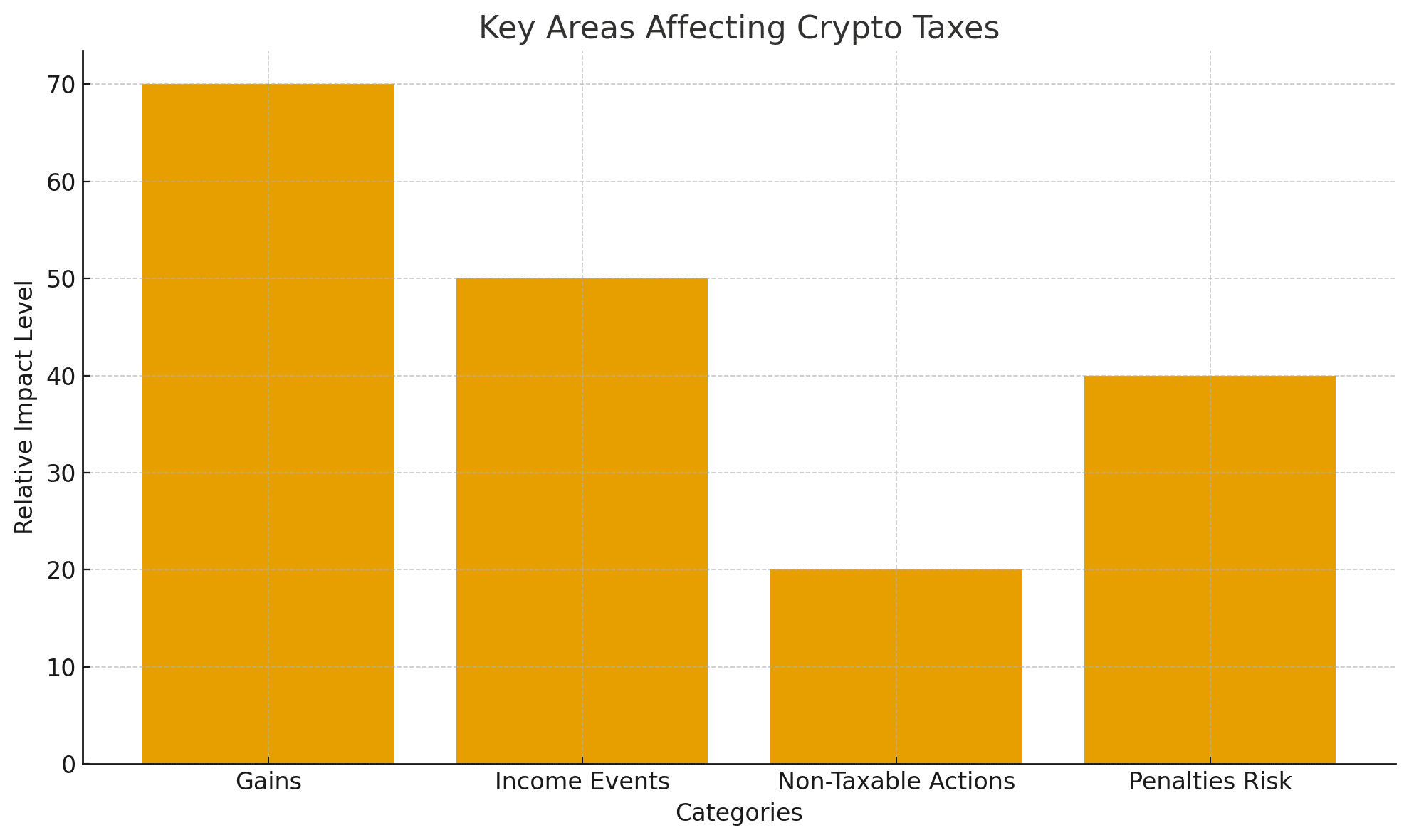
Tax agencies focus on economic gain. If an investor buys a coin at 5,000 and later sells at 9,000, the 4,000 difference is a capital gain that belongs in their crypto taxes calculation.
Some activities create income rather than gains. Staking rewards, mining payouts, airdrops, referral bonuses, play to earn tokens, and many yield strategies are often taxed as income at the time of receipt. That amount then becomes the cost basis when the investor later sells. Clean records are vital, because correct categorization lowers the risk of errors in crypto taxes and helps avoid double taxation.
When activity is usually not taxable
Not every blockchain action leads to a bill. Buying and holding coins without selling is generally not a taxable event. Transfers between wallets that belong to the same person usually are not, either. In both cases, there is no realized profit, only movement of assets.
Losses also matter. If a token falls from 3,000 to 800 and the investor sells, that realized loss can often offset gains from other trades. Smart planning around disposal dates, loss harvesting, and holding periods can soften the impact of crypto taxes over time.
What happens when investors do not report
Problems usually begin quietly as a trader might ignore a small airdrop, a few DeFi swaps, or a handful of NFT flips. After several years, the unreported activity can add up to a significant gap between real gains and declared income.
Modern tax agencies now use a mix of tools to close that gap, including data requests to exchanges, blockchain analytics that link wallet flows to real identities, and information-sharing frameworks between countries. When the numbers do not match, consequences can include late payment penalties, interest on unpaid amounts, and audits that demand wallet histories and bank records.
In more serious cases, repeated failure to report can trigger heavy civil penalties. In extreme situations that look like deliberate evasion, some authorities can open criminal investigations related to unpaid crypto taxes.
Why enforcement is getting tougher
For several years, many governments treated digital assets as a learning curve. Guidance notes and public campaigns focused on education. That tone is changing. As trading volumes grow and public data improves, enforcement becomes easier.
Some countries now require service providers to share standardized information about customer holdings. Others participate in global frameworks that mirror systems for traditional bank accounts. The trend is clear. Crypto sits inside the regulated financial system, and missing reports are treated in the same way as undeclared gains on stocks or rental property. Investors who treat tax rules on digital assets casually are out of step with this new reality.

How late filers can start to fix the problem
The most important step for an investor who realizes that previous reports were incomplete is to act before the tax office contacts them. A calm and structured plan is more effective than panic.
Key steps include:
Collecting transaction data
The investor gathers export files from exchanges, wallet histories, and DeFi dashboards to rebuild a timeline of buys, sells, swaps, income events, and transfers.Recalculating gains and income
Each disposal is matched with its original purchase to calculate capital gains or losses. Income events receive fair market values at the time of receipt. This creates an accurate base for updated crypto taxes across all relevant years.Filing amended or voluntary returns
Many systems allow late correction when an investor comes forward first. Penalties may still apply, but they are often lower than if the authority discovers the gap during an audit.Building better habits
Going forward, simple routines make a big difference. Regular exports or specialist tax software keep future crypto taxes under control and prevent the same issues from appearing again.
Key indicators for long-term planning
Several practical indicators help investors connect policy with portfolio decisions and understand how crypto taxes may evolve for them:
Holding period: Short term trades often face higher tax rates than assets held for more than one year.
Type of activity: Trading, staking, liquidity provision, lending, mining, and NFT flipping can each receive different tax treatment.
Scale of gains: Large realised profits can push an investor into higher tax brackets and attract more scrutiny.
Residency: Investors with similar portfolios can face very different rules depending on where they are resident for tax purposes.
Regulatory updates: New rules around reporting and classification can change how crypto taxes apply from one year to the next.
These indicators shape both day to day trading decisions and long term strategy, from when to take profits to how aggressively to rotate into higher risk assets.
Conclusion
Digital assets are no longer shadow finance as they sit beside stocks, bonds, and real estate as part of a modern investment mix. That status brings responsibility. Investors who understand the rules, keep comprehensive records, and address gaps early are more likely to protect both their wealth and their reputation.
Ignoring obligations might feel tempting when trades happen at high speed on a phone screen. In reality, unpaid tax, compound interest, and escalating penalties can quickly swallow any short term advantage. A thoughtful approach to record keeping, professional advice where needed, and a disciplined attitude toward crypto taxes allow investors to participate in this fast moving market without putting their future at unnecessary risk.
Frequently Asked Questions
Q1: Are all crypto trades taxed in the same way?
A1: No. Many disposals are taxable, but the rate and category can differ based on holding period, type of income, and local law.
Q2: Can an investor fix old mistakes in their reports?
A2: In many places, amended returns or voluntary disclosure programs allow investors to correct errors before strict enforcement begins.
Glossary of key terms
Capital gain:
The profit that appears when an asset is sold for more than its purchase price.
Cost basis:
The starting value of an asset for tax purposes, usually the purchase price plus certain fees.
Disposal:
Any event where an investor parts with an asset, such as a sale, swap, or purchase of goods and services.
Fair market value:
The price that an asset might reasonably fetch in an open market at a specific time.
Income event:
A situation where an investor receives value, such as staking rewards, mining revenue, or an airdrop.
Jurisdiction:
The country or region whose laws decide how a person is taxed on income and gains.
References