





This article was first published on The Bit Journal.
Bitcoin has once again reignited interest in what it can do beyond digital assets. Reports signify that Bitcoin has made its way to being in the top 8 assets by market capitalization, sitting alongside huge corporations and legacy asset classes.
This current Bitcoin global rank speaks to the strength of Bitcoin’s price, and also investor confidence in general, as well as uptake by institutions.
How Bitcoin’s Market Cap Shot Up in 2025
Bitcoin’s ascension in world rankings can be attributed directly to its growing market capitalization over the course of 2025. By mid-2025, Bitcoin’s market capitalization was $1.86-1.87 trillion exceeding those of corporations such as Alphabet (Google) and Amazon for a time.
On April 23, 2025, a ranking placed Bitcoin as the world’s fifth-most valuable asset according to market cap, after just a handful of legacy houses and commodities.
The surge was fueled by a number of factors, including resurgent price rallies, growing institutional interest and amid increasing adoption after major crypto news from around the world. The market’s renewed fervor at the time sent Bitcoin surging past the trillion-dollar mark, putting it in a league of heavyweight assets around the world.
Bitcoin’s Current Global Ranking
Bitcoin’s ranking changes depending on its price volatility, but recent figures have once again put it among the most valuable assets in the world:
As of this early December, Bitcoin (BTC) is the world’s eighth largest asset and has a total value of around $1.85 trillion, ranking just below Amazon and above Broadcom.
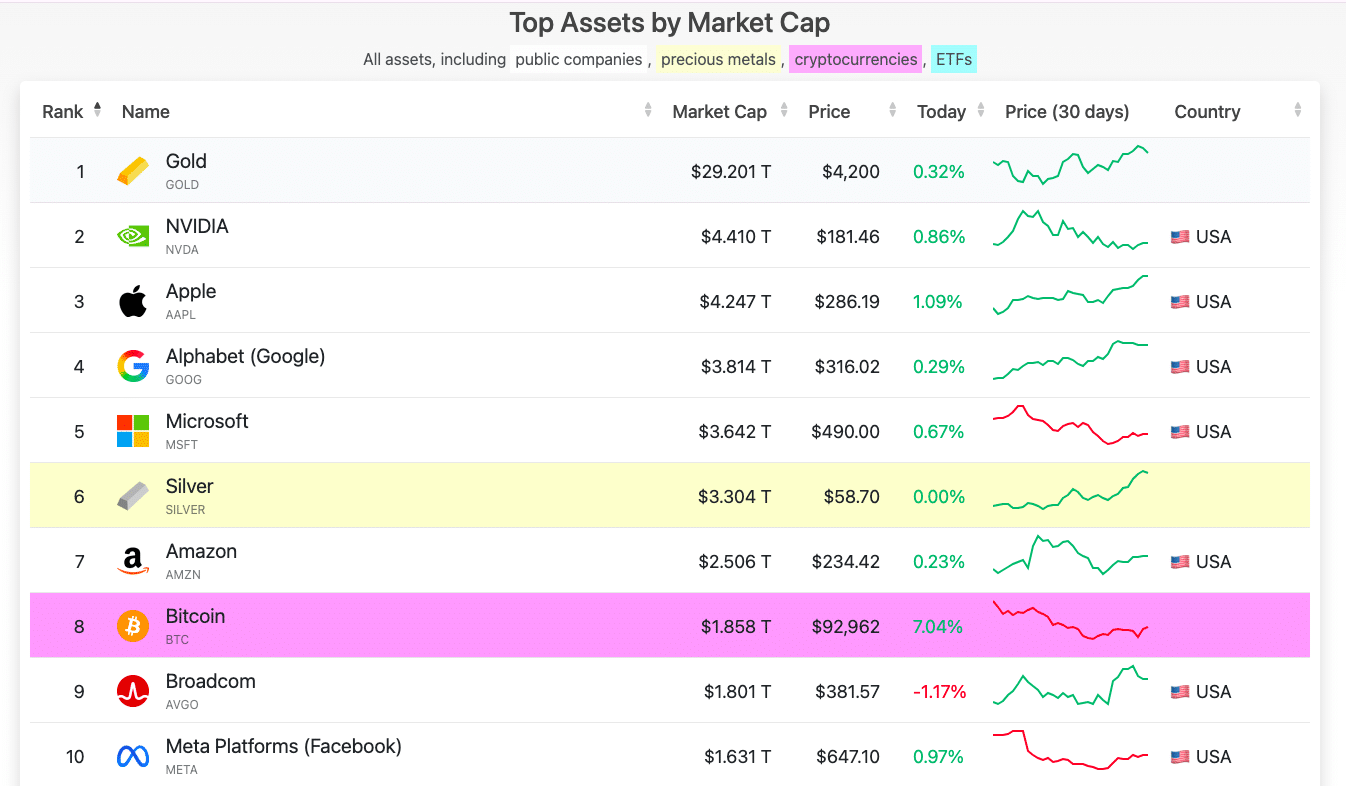
Compared to Companies and Commodities, Bitcoin has a larger market cap than companies such as Meta Platforms, Saudi Aramco, and Tesla.
Against Fiat Currencies, I May 2025, Bitcoin was also ranked as the world’s eighth most circulated currency, outperforming the Taiwan dollar.
What This Ranking Means for Investors: Institutional vs. Retail
For institutional investors, Bitcoin’s rise into the top worldwide assets contributes to the fact that crypto is a legitimate asset class on a larger scale. It strengthens the case for allocation and not simply exposure as a speculative crypto bet within a diversified portfolio.
For retail investors, the acknowledgment can also provide more confidence in Bitcoin’s provenance and future prospects. The psychological impact of $BTC alongside legacy monsters also serves to affirm their belief in the staying power of crypto.
From a market-structure standpoint at large, these rankings help attract attention from asset managers, funds and financial institutions, which could increase the speed at which crypto infiltrates traditional finance.
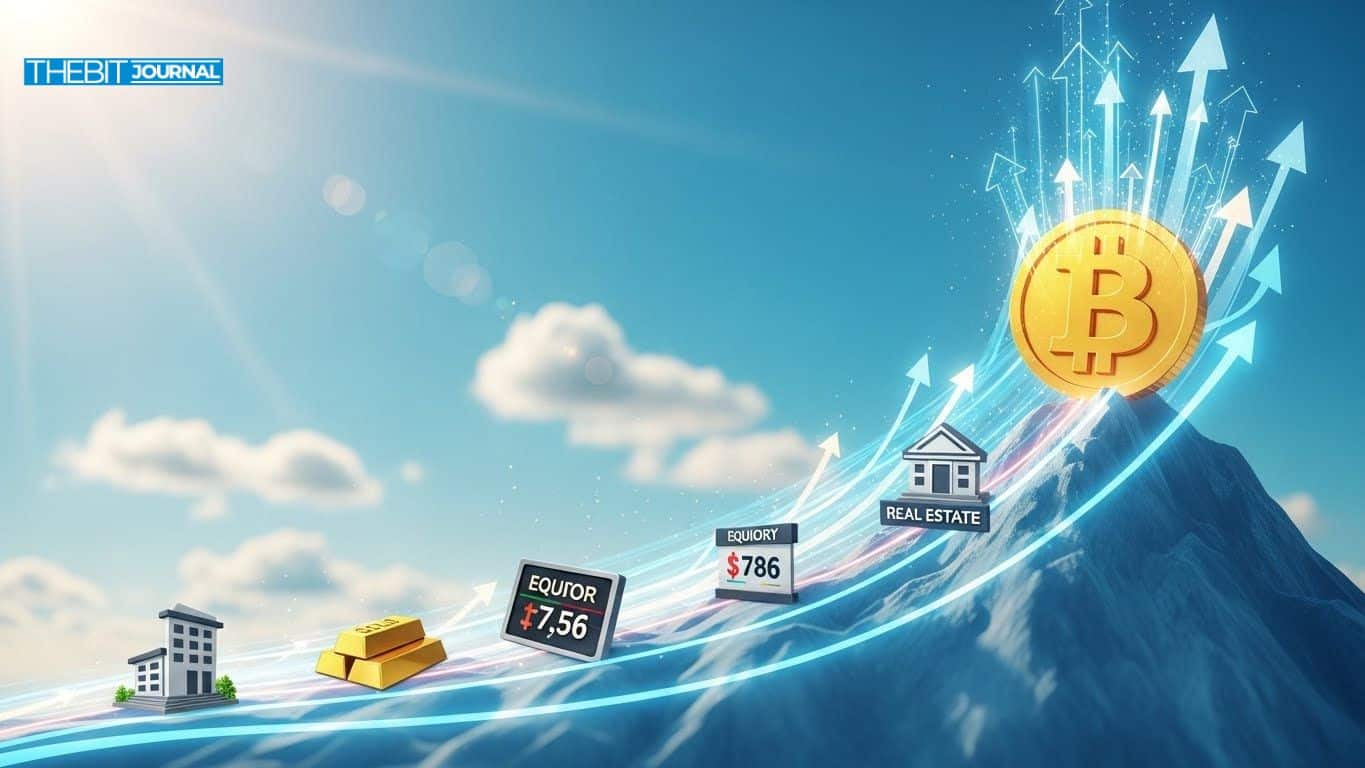
However, cryptocurrencies are also different from traditional assets in terms of their volatility and nature. Through that lens, Bitcoin’s standing is as much symbolic as financial, a sign of increasing acceptance, not stability.
Conclusion
Bitcoin’s global rank has recently been moving upwards as its price estimates become more competitive compared to the world’s most valuable stocks.
The resurgence of Bitcoin at this level is noteworthy. It suggests institutional acceptance of crypto and broadens its appeal among everyday investors.
Whether Bitcoin holds up as well in perpetuity after price cycles, on the other hand, is yet to be determined. For now, the simple fact of its presence among global giants is telling about how far the digital-asset narrative has evolved.
Glossary
Market cap – the overall value of an asset, calculated as price × supply (for cryptocurrencies) or share price × number of shares (for companies).
Volatility – the extent of a security’s price fluctuation over time; high volatility means higher risk and price swings.
Institutional adoption – when major financial institutions, funds or corporations decide to invest money into an asset.
Digital asset – any token or other digital representation of value that is on a blockchain or distributed ledger, and used among participants to facilitate the creation, storage, sale or purchase of rights to property.
Frequently Asked Questions About Bitcoin Global Ranking
What does “top global asset” suggest about Bitcoin?
That means that, by market capitalization, Bitcoin is among the largest investable assets in the world.
Does that make Bitcoin more like a company, such as Apple or Amazon?
Not exactly. Commercial valuations are based on operations, assets and future income. Bitcoin is valuable due to supply and demand, adoption and sentiment, so the risk and volatility are quite different.
Is Bitcoin’s high market cap here to stay?
Not always. The price of Bitcoin, and many other cryptocurrencies for that matter, can swing dramatically in short periods of time.
Should investors think of Bitcoin as a safe investment today?
The fact that Bitcoin is large and in use implies growing credibility, but it’s a volatile asset with fundamental differences from stocks or other currencies, and so far it remains a higher risk, reward investment, not a stable store of value.
References
TradingView
Yahoo Finance
Investing
The Block