

Bitcoin price found some breathing room after the ceasefire cooled fears around the Strait of Hormuz, and that shift helped risk assets steady after days of nerves. Yet the bigger macro picture still looks unsettled. The immediate panic faded, oil pulled back from extreme stress levels, and equities bounced, but the underlying supply shock has not fully cleared.
That matters because crypto rarely moves in a vacuum when energy markets, inflation expectations, and rate bets are all tangled together. For now, the Bitcoin price is trading less like an isolated digital asset story and more like a live read on whether the global macro scare is truly fading or merely pausing.
Why Bitcoin price still depends on oil, not just sentiment
The ceasefire changed the mood, but it did not instantly restore normal trade flows. Shipping, insurance, inventories, and infrastructure take time to normalize, and that is the crack in the bullish case. Market researchers and government energy forecasters still warn that full restoration through the Strait could take months, even if open conflict cools further. In plain terms, the Bitcoin price may enjoy relief rallies, but those moves can lose steam if fuel costs remain sticky and inflation keeps central banks cautious.
The Strait of Hormuz carried 20.9 million barrels per day in the first half of 2025, roughly 20% of global petroleum liquids consumption, along with more than 20% of global LNG trade. When a route that large stays partially impaired, the shock spreads far beyond crude traders. It reaches freight costs, factory inputs, airline fuel, and eventually consumer prices. Once that happens, the Bitcoin price stops being just a crypto chart and starts behaving like a pressure gauge for global liquidity.
The macro chain that can cap upside
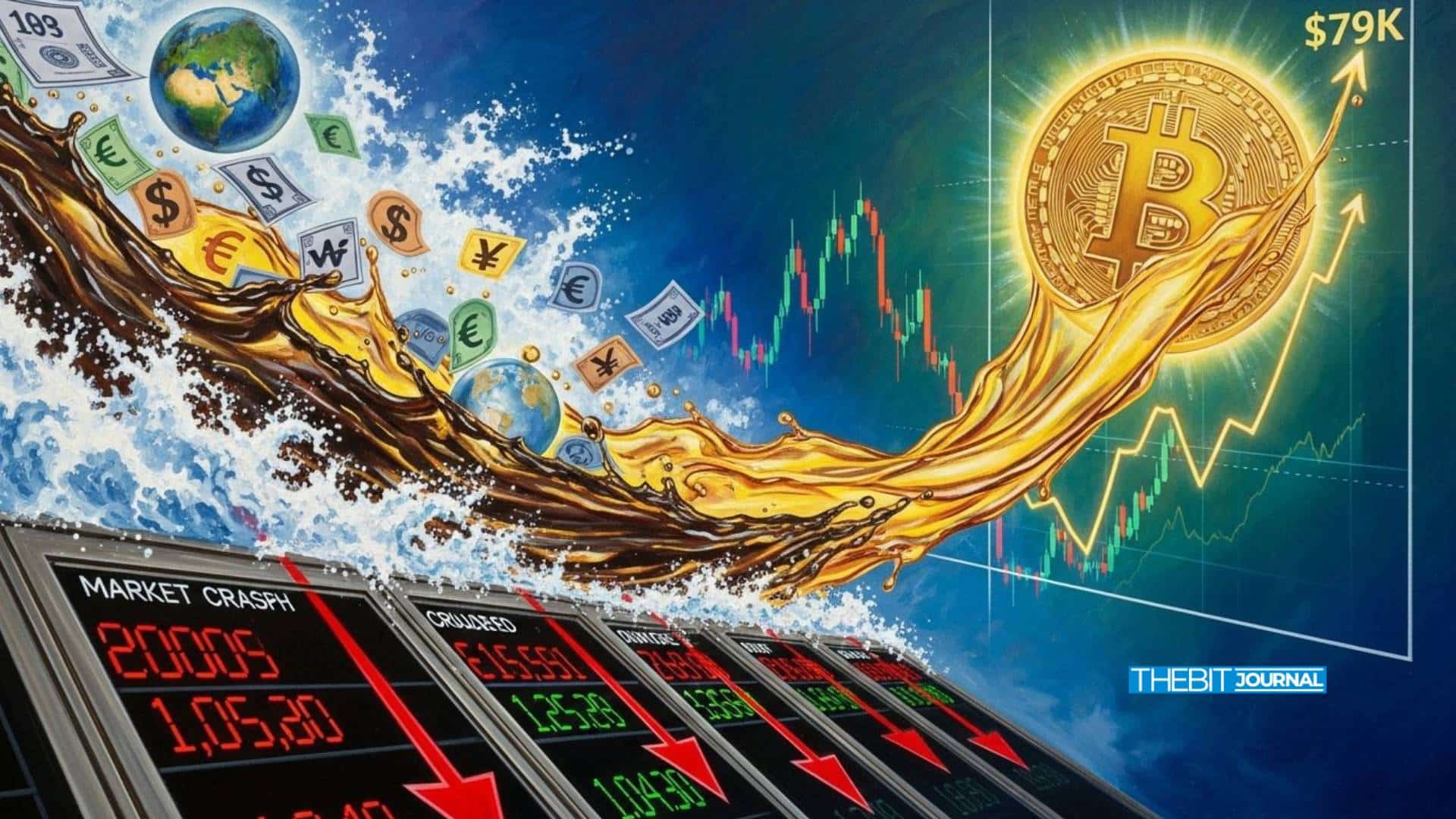
This is where the market gets tricky as lower oil is helpful, but only if it stays lower long enough to cool inflation pressure in a meaningful way. If gasoline and diesel costs remain elevated, the Federal Reserve has less room to ease, and risk assets usually lose some of their shine. That is why the recent rebound in the Bitcoin price feels real, but not fully trusted. Traders are not simply asking whether war risk has eased. They are asking whether the aftershock in energy markets will keep financial conditions tighter for longer.
Wall Street forecasts still point to that danger as one major bank warned crude could top $150 if disruption persists into mid-May, while another expects infrastructure damage to slow the return to pre-conflict output. Separately, U.S. energy forecasters say the repair path is measured in months, not days. That puts the Bitcoin price in an awkward middle ground. It can recover on calmer headlines, but its upside remains vulnerable if the oil market keeps carrying a geopolitical premium.
What traders should watch next
The next move will probably come from macro confirmation, not crypto optimism alone. If tanker traffic normalizes, insurance costs ease, and Brent slides closer to pre-shock ranges, the Bitcoin price could build on its rebound with stronger footing. If not, the market may start treating every rally as a temporary exhale.
There is also a broader economic warning in the background. Dallas Fed analysis showed that even a one quarter disruption could lift average WTI to $98 in the second quarter and cut annualized global real GDP growth by 2.9% in that period. That kind of stress does not need a fresh escalation to hurt sentiment. It just needs to linger. In that setting, the Bitcoin price could stay reactive, headline-driven, and more fragile than it appears on the surface.
Conclusion
The market has moved past pure panic, which is a meaningful change, but it has not reached clean normalization. That is the line that matters. Crypto bulls got relief, not resolution. As long as oil remains capable of feeding inflation and delaying easier policy, the Bitcoin price will keep trading under a macro shadow. That does not kill the upside, but it does make the path narrower, bumpier, and far more dependent on global energy stability than many traders would like.
FAQs
Why is the Bitcoin price reacting to oil?
Because higher oil can lift inflation, and higher inflation can delay interest-rate cuts. That tends to pressure risk assets, including Bitcoin.
Did the ceasefire remove the market risk?
No. It reduced immediate fear, but shipping friction, infrastructure damage, and supply uncertainty still matter for inflation and sentiment.
What would improve the outlook for crypto?
A clearer recovery in energy flows, lower fuel costs, and a stronger case for monetary easing would help support the Bitcoin price.
Glossary of Key Terms
Strait of Hormuz
A critical energy chokepoint that handles a large share of global oil and LNG shipments.
Risk premium
The extra price traders assign to an asset when uncertainty or danger remains elevated.
Fed easing
A shift toward lower interest rates or looser financial conditions that usually helps risk assets.
Sources
Federal Reserve Bank of Dallas
Disclaimer: This article is for informational purposes only and does not constitute financial or investment advice. Cryptocurrency markets are highly volatile, and readers should conduct their own research before making any investment decisions.