


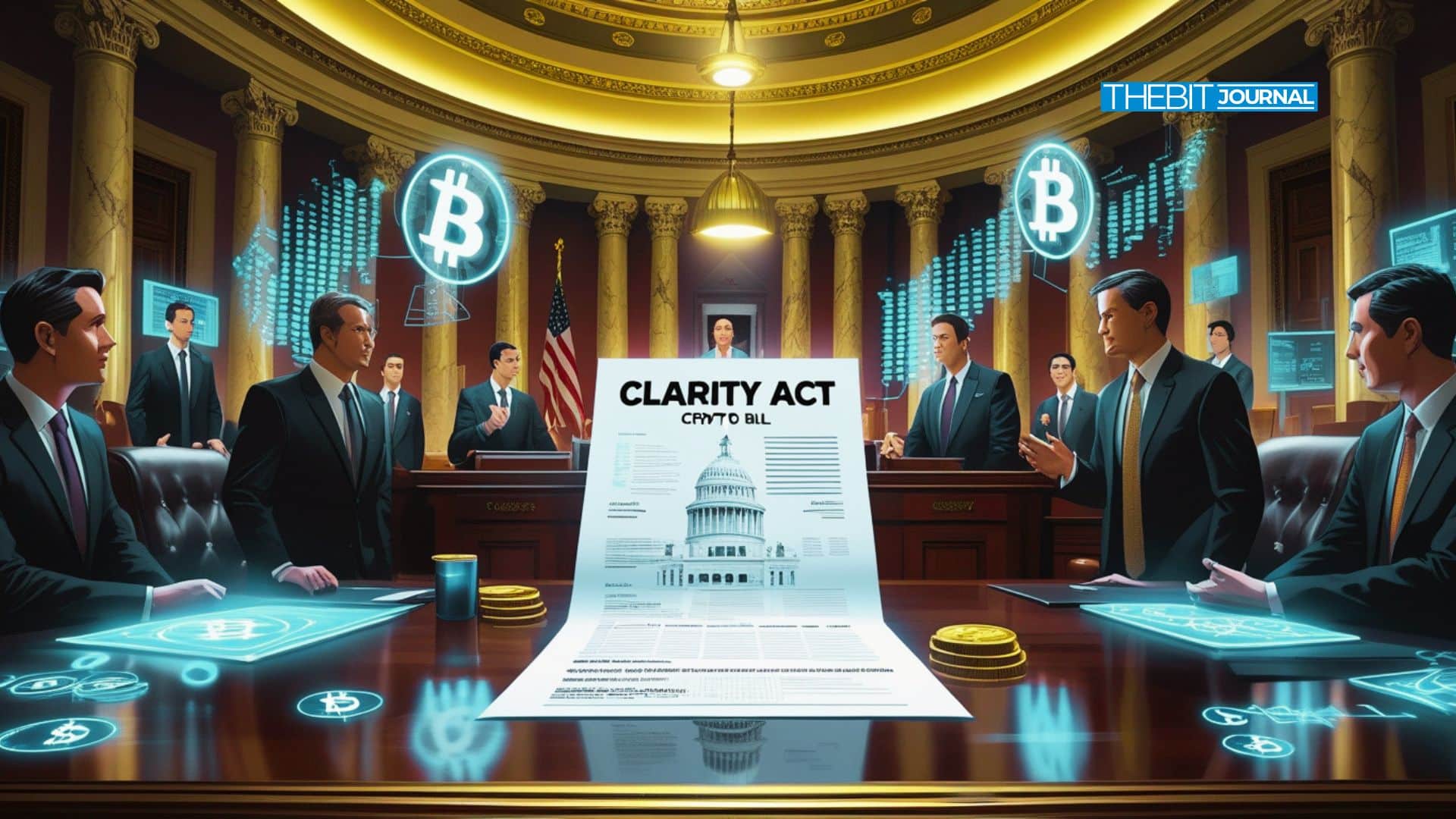
The CLARITY Act crypto bill is once again shaking the digital asset industry, and this time the pressure inside Washington appears stronger than ever. Crypto exchanges, blockchain developers, and institutional investors now see the legislation as a defining moment for the future of digital finance in America. As lawmakers prepare for a possible Senate markup next week, the wider market is watching closely for signs that clearer rules may finally arrive.
According to statements shared during Consensus 2026 in Miami, Coinbase executive Kara Calvert predicted that the Senate Banking Committee could begin reviewing the CLARITY Act crypto bill within days. Calvert stressed that bipartisan cooperation remains essential because the proposal needs at least 60 votes to pass the Senate. Her remarks immediately reignited discussions around US crypto regulation, which has remained fragmented for years.
Why the CLARITY Act Crypto Bill Has Become a Critical Turning Point
The renewed focus on the CLARITY Act crypto bill reflects growing concern that the United States risks losing its leadership in blockchain innovation. Lawmakers continue debating how agencies like the SEC and CFTC should supervise digital assets, while crypto firms argue that unclear policies create uncertainty for investors and developers.
Supporters believe the CLARITY Act crypto bill could finally establish a workable framework for US crypto regulation. The legislation aims to clarify whether certain digital assets should fall under securities laws or commodity oversight. That distinction matters because companies currently face conflicting interpretations from federal regulators.
The debate has become even more urgent after reports suggested a Senate crypto market structure vote could happen by August. Analysts say that timeline signals rising political urgency ahead of the 2026 election cycle.
Public Support for US Crypto Regulation Continues to Rise
Fresh polling data suggests lawmakers may now face stronger public pressure to act. A recent survey from HarrisX revealed that 70% of voters believe Congress should already have passed crypto legislation. Another 62% said America should lead global digital finance standards instead of allowing overseas markets to dominate innovation.
That support has strengthened momentum behind the CLARITY Act crypto bill, especially as institutional investors expand their crypto exposure. Financial analysts increasingly believe the absence of consistent US crypto regulation could push blockchain firms toward friendlier jurisdictions like Dubai, Singapore, and parts of Europe.
Market observers also argue that Wall Street participation may accelerate once the CLARITY Act crypto bill creates clearer operating rules for custodians, exchanges, and token issuers.
Coinbase Says Tax Rules Remain a Bigger Threat Than Regulation
While the CLARITY Act crypto bill dominates headlines, Coinbase executives believe tax compliance rules remain the industry’s biggest obstacle. Calvert criticized the IRS requirement forcing exchanges to issue 1099-DA forms for nearly every digital asset transaction, including transfers worth only a few dollars.
In comments reported during Consensus 2026, Calvert warned that exchanges are sending “millions” of forms for tiny transactions, creating costly administrative burdens. Industry leaders argue that current US crypto regulation often treats blockchain activity like traditional finance without recognizing the technology’s unique structure.
The criticism has also fueled interest in the Digital Asset PARITY Act introduced by Representatives Max Miller and Steven Horsford. Supporters believe the proposal could simplify crypto taxation and reduce compliance pressure on both users and exchanges.
Analysts Warn America Risks Falling Behind in the Global Crypto Race
Several policy analysts believe the CLARITY Act crypto bill may determine whether the United States remains competitive in digital finance. Experts following US crypto regulation say uncertainty has already slowed institutional adoption, despite growing investor demand for Bitcoin and tokenized assets.
Some analysts compare the current regulatory confusion to the early internet era, when innovation struggled until lawmakers introduced clearer legal standards. Others warn that blockchain developers could move overseas if Washington fails to modernize crypto laws soon.
Conclusion
The CLARITY Act crypto bill now stands at the center of America’s digital asset debate. If lawmakers move the proposal forward next week, the legislation could reshape US crypto regulation and redefine how blockchain businesses operate inside the world’s largest economy. Yet the bigger issue stretches beyond politics alone.
Global competition in digital finance is accelerating quickly. Countries across Europe, Asia, and the Middle East continue building crypto-friendly frameworks while Washington still debates basic rules.
If the CLARITY Act crypto bill stalls again, America risks losing talent, institutional capital, and blockchain innovation to overseas markets already moving at full speed.
Glossary of Key Terms
CLARITY Act crypto bill: Proposed US legislation designed to create clearer crypto market rules.
US crypto regulation: Federal oversight and legal rules governing digital assets and blockchain companies.
DeFi: Blockchain-based financial services operating without traditional banks.
Stablecoin: A cryptocurrency tied to stable assets like the US dollar.
1099-DA: IRS tax reporting form for digital asset transactions.
FAQs About CLARITY Act Crypto Bill
What is the CLARITY Act crypto bill?
It is proposed legislation focused on creating clearer rules for digital asset markets in America.
Why is US crypto regulation important?
Clear regulations help investors, institutions, and developers operate with lower legal uncertainty.
Why did Coinbase criticize current tax rules?
The company believes crypto exchanges face excessive reporting burdens under IRS regulations.
Could the Senate vote on crypto legislation soon?
Recent reports suggest a broader crypto market structure vote may happen by August.
Sources/References