



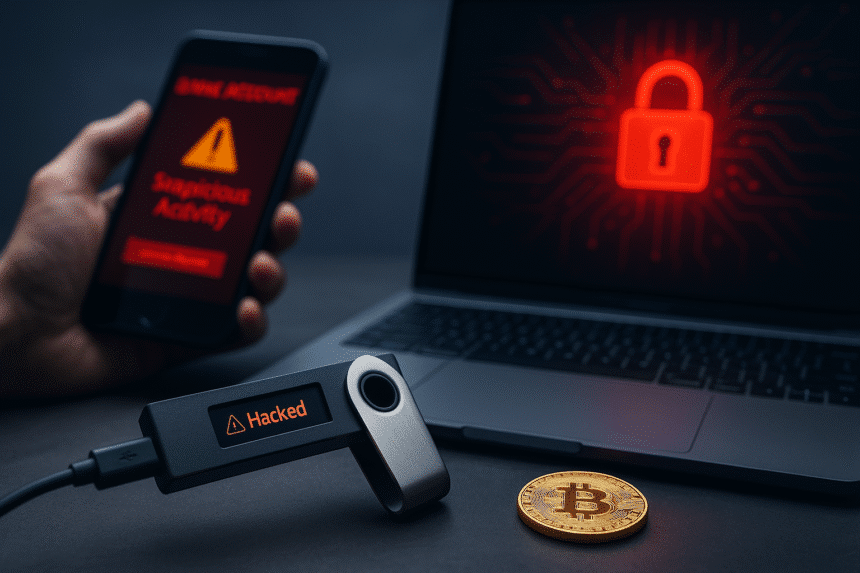

Your crypto wallet hacked again? A breach feels like a free fall. Funds move. Alerts pop. Fear rises. This guide explains what to do first, what to do next, and how to keep assets safe. It covers action steps, reporting paths, real numbers, and key rules. It also keeps the language plain. When a crypto wallet is hacked, speed and order decide outcomes.
A wallet hack spreads fast. Attackers script moves. They drain and hide tracks. The owner must break the chain. The first minutes matter. The goal is simple. Save what is left. Build a case. Then rebuild a safer setup. This guide gives a direct plan for that work. It also adds context from fresh data and policy.
First Five Minutes: Act On A Clean Device
- Go offline on the device that signed the last transaction. That breaks live sessions and stops clipboard swaps. Use a second device that is clean. If none is ready, borrow one that never held the seed or wallet.
- Create a new hardware wallet and a fresh seed. Sweep all remaining assets to new addresses. Do not reuse old paths. Move stablecoins first. Then move key tokens and NFTs. Repeat until the hot wallet is empty.
- Open an approval checker and remove token approvals on every chain used. Attackers rely on stale approvals to pull funds again. After revoking, clear, sweep again to the new wallet.
- Change passwords and turn on app-based 2FA for email, exchanges, and cloud accounts tied to the wallet. Do not use SMS codes. SIM swaps remain common in fraud cases.
- Save evidence as it appears. Record addresses, tx hashes, timestamps, device names, IP logs, and screenshots. This file becomes the core of reports and support tickets later.
First 24 Hours: Close Every Door
- Treat the old seed as burned. A leaked seed never returns to safety. Move all funds to the new seed. Store the new seed in two safe places. Add a passphrase if the device supports it.
- Assume malware if the signing device felt odd. Wipe it. Reinstall the OS. Update firmware. Create a fresh browser profile for Web3 only. Add no extra extensions. Reinstall the wallet from the official site.
- Tell exchanges and custodians right away. Include the attacker addresses and the tx hashes. Ask for flags on inbound deposits from those addresses. Some platforms can freeze or slow suspect flows when the funds hit. Provide short, clear notes. Avoid long emails that hide the key facts.
- File an official report. In the United States the FBI’s Internet Crime Complaint Center is the main portal. Only use ic3.gov. The FBI warned on 19 September 2025 that fake IC3 sites are live and harvest personal and banking data. Type the URL in the browser. Do not click ads or look alike links.
- If identity data leaked, add a plan at IdentityTheft.gov. The FTC guide explains fraud alerts and credit freezes, and when each helps.
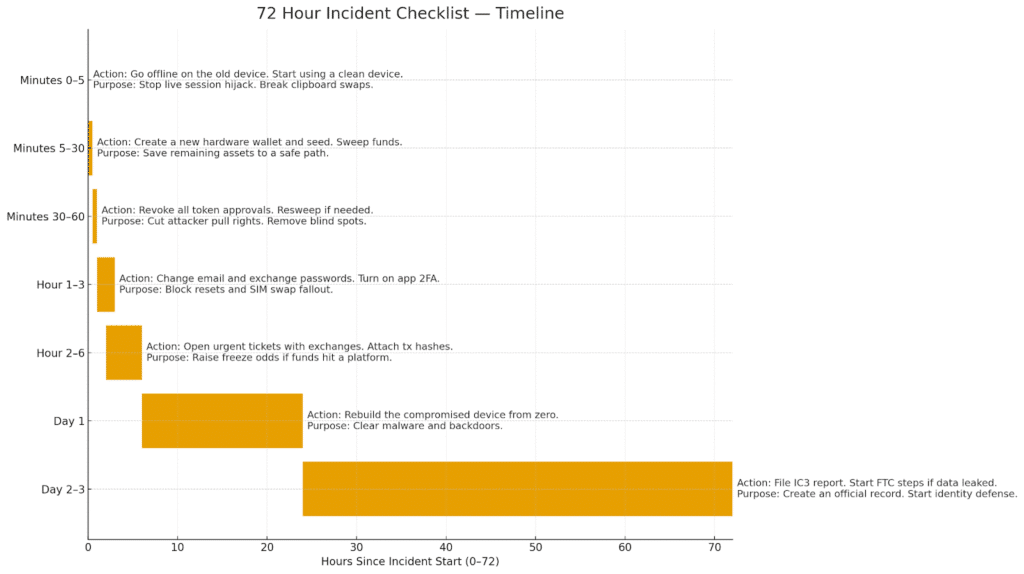
72 Hour Incident Checklist
| Time Window | Action | Purpose |
| Minutes 0–5 | Go offline on the old device. Start using a clean device. | Stop live session hijack. Break clipboard swaps. |
| Minutes 5–30 | Create a new hardware wallet and seed. Sweep funds. | Save remaining assets to a safe path. |
| Minutes 30–60 | Revoke all token approvals. Resweep if needed. | Cut attacker pull rights. Remove blind spots. |
| Hour 1–3 | Change email and exchange passwords. Turn on app 2FA. | Block resets and SIM swap fallout. |
| Hour 2–6 | Open urgent tickets with exchanges. Attach tx hashes. | Raise freeze odds if funds hit a platform. |
| Day 1 | Rebuild the compromised device from zero. | Clear malware and backdoors. |
| Day 2–3 | File IC3 report. Start FTC steps if data leaked. | Create an official record. Start identity defense. |
How A Crypto Wallet Gets Hacked
How the Trap Works
Phishing tricks users into signing something they never meant to authorize. A fake pop-up mimics a real wallet prompt. A “gasless” signature can hide a token approval that enables later drains. Approval abuse is common in DeFi and during NFT drops.
The Attack Paths
Malware swaps clipboard addresses so funds go to the attacker. Keyloggers capture seed phrases. SIM swaps hijack phone numbers to reset logins tied to wallets. Fake extensions and “seed tools” leak secrets at the source.
Early Warning Signs
Treat any of these as a smoke alarm:
- New approvals to unknown contracts
- Strange pop-ups on sites that never needed a wallet
- Surprise 2FA prompts
- New devices appearing on your email or exchange accounts
If you see one, stop, disconnect, and review recent approvals before you sign anything else.
Security And Regulatory Context: Why Speed Helps
Rising Hacks Break Records
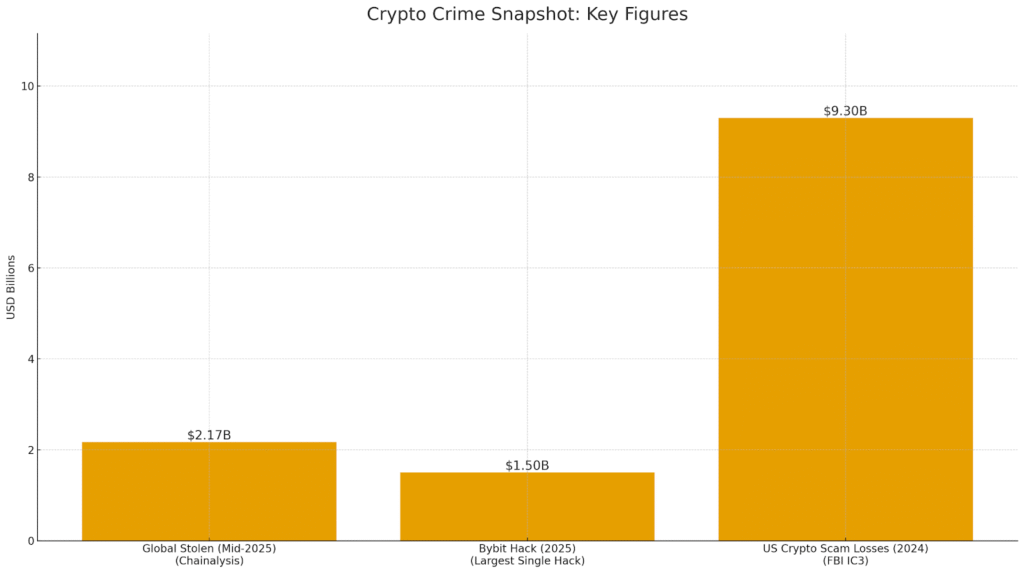
By mid-2025, Chainalysis reported over $2.17 billion stolen, already surpassing the full total of 2024. The $1.5 billion Bybit theft now ranks as the largest single hack to date. These numbers show how fast attackers can strike and how many routes they test to cash out.
Fraud Expands Across the U.S.
Hacks are not the only threat. The FBI’s Internet Crime Complaint Center (IC3) logged $9.3 billion in crypto scam losses in 2024, a sharp jump from 2023. Pig butchering schemes, romance fraud, and fake investments all played a role—each pushing victims into crypto transfers that are difficult to reverse.
Europe Brings Policy Clarity
To curb this wave, regulators are tightening rules. In Europe, the Markets in Crypto-Assets (MiCA) regime is now active. Stablecoin regulations took effect on 30 June 2024, followed by broader service-provider rules on 30 December 2024. Together, they set shared standards for conduct, consumer protection, and market integrity.
FATF Aligns Global Data Flows
At the international level, the Financial Action Task Force (FATF) updated Recommendation 16, the Travel Rule, in June 2025. The change standardizes sender and receiver data fields across payment rails, including virtual assets. This makes it easier to trace funds as they cross borders and move through different venues.
Law Enforcement Issues Fresh Warnings
Criminals also target victims at their most vulnerable. In September 2025, the FBI issued a PSA about spoofed IC3 reporting portals. Victims were told to type ic3.gov directly into their browser to avoid phishing traps. For those already under stress, this step prevents a second wave of fraud.
Reporting Still Matters
These changes cannot guarantee that stolen assets will be frozen or returned. But they raise the odds. Fast, accurate reports give exchanges and blockchain analytics teams the data they need to react quickly and block suspicious flows.
Exact Reporting Steps in the United States (One-Page Memo)
Goal: move fast, stay precise, create a single package you can reuse with police, exchanges, and insurers.
1) Prepare a One-Page Memo
- Keep it under one page. Precision beats volume.
- Include: wallet addresses, transaction hashes, amounts, token types, platforms, dates/times (with timezone), domain names, chat handles, and any screenshots that clearly add value.
- Attach: a short timeline and a list of TX links (block explorer URLs).
Timeline template:
- 09:42 — Connected wallet to <domain>
- 09:45 — Signed prompt “gasless”; unexpected approval
- 09:47 — Outflow TX <hash> (link) of <amount> <token> to <attacker address>
- 10:01 — Second outflow TX <hash> (link)
2) File at IC3 (FBI)
- Go to ic3.gov (type it yourself; avoid search ads).
- Submit your memo and TX links.
- Save the IC3 confirmation number and PDF receipt. You’ll reuse this in every follow-up.
- Beware spoofed portals. The FBI warns about fake sites that copy IC3’s look; always use ic3.gov.
3) Create a Local Police Report
- Bring the same memo, timeline, and IC3 confirmation.
- A case number helps with banks, insurers, and exchange escalations.
4) Protect Your Identity (If Any PII May Be Exposed)
- Visit IdentityTheft.gov for step-by-step guidance.
- Place a fraud alert or credit freeze if needed.
- Document ticket numbers and dates for your records.
5) Notify Exchanges and Custodians
- Send a short, direct note to each relevant platform’s abuse/compliance channel.
- Include: attacker addresses, TX hashes (links), amounts, timestamps, and your IC3 number and police case number.
- Ask them to flag deposits from those addresses and to acknowledge receipt.
Exchange notification template:
Subject: Urgent: Flag Stolen Funds — IC3 <number>
Body:
- Victim wallet: <address>
- Attacker wallet(s): <address(es)>
- TX hash(es) with links: <hashes>
- Amounts / tokens: <details>
- Date/time (timezone): <details>
- Police report #: <number> | IC3 #: <number>
Request: Please flag inbound deposits from the attacker addresses and advise on next steps.
6) Keep a Single Evidence Folder
- Store your memo, timeline, TX list, IC3 receipt, police report, and all outgoing emails.
Update the memo if new TXs appear, then resend only the delta.
Pro tip: short, consistent packets get faster responses than long stories.
Working With Forensics And Exchanges
- Do not chase thieves alone. Work with data that supports teams’ trust. Use a well-known block explorer. Add shareable links to each transaction. If a firm or a partner provides an analytics view, export a simple PDF page and include only what matters.
- Set on-chain alerts for the attacker addresses. If funds jump to a known exchange, send a second support note at once with the new tx links. Keep each follow-up short. Use dates and times in UTC.
- Watch for recovery scams. Bad actors target victims twice. The FBI warns that fake agents and fake recovery firms demand fees and then vanish. No official will ask for payment through gift cards or crypto.
Hardening After A Hack
Treat the incident as a turning point. The setup must change.
- Adopt a two-wallet model. Keep a small hot wallet for daily use. Keep a vault wallet on hardware for long-term funds. Use a multi-signature for the vault when possible. Set a withdrawal allowlist on any exchange account that holds funds. The allowlist should point to the vault.
- Air gap the seed. Write the seed on durable media. Store it in two safe places. Add a BIP39 passphrase to the hardware wallet. Memorize the passphrase or store it apart from the seed.
- Keep a single browser profile for Web3. Do not install extra extensions. Update the OS and the wallet firmware each month. Turn on anti-phishing features in the wallet if offered. Use a password manager to reduce typos and to guard against fake sites.
- Review approvals once a month. Revoke what you do not need. Prefer session keys or limited approvals when trusted tools support them. Set spending limits if a protocol allows it.
- Train the eye. Read each prompt in the wallet. Check the contract, the method, the amount, and the chain. If anything looks odd, stop and verify in a second tab.
Crypto Wallet Hacked? Here Are Some Practical Questions
Can Funds Be Recovered?
Recovery is hard. Theft is fast and cross-chain. Returns depend on exchange freezes, law enforcement, and luck. The odds improve with quick and complete reports. Keep hope measured and plans focused.
Should The Old Wallet Be Used Again
No. A wallet with a leaked seed is not safe. Move all assets to a new seed and addresses. Retire the old paths.
What About Tax Records
Keep a copy of all tx links and the IC3 report. Many tax tools can import on-chain data. Mark stolen funds as such in those tools if they support that tag. Consult a tax pro for local rules.
How To Tell If Malware Caused It
Strange pop-ups. New extensions. New processes that spike the CPU. Address swaps in the clipboard. A device that crashes during signing. If any of these appear, treat the device as infected and rebuild it.
Should Victims Pay “Recovery Fees”
No. Do not pay anyone who cold contacts the victim. Verify any firm through direct channels. Check public cases and references. The FBI has warned about fake agents and fake portals.
Costs And Odds: A Simple View
| Factor | What Helps | What Hurts |
| Time To Report | Reporting within hours. Clear evidence file. | Delay of days. Missing data. |
| Exchange Touchpoints | Funds hit a major exchange. Fast freeze request. | Funds stay in mixers and cross chain swaps. |
| Case Quality | IC3 filing, police report, consistent notes. | Conflicting timelines. Screenshots with no links. |
| Setup After Hack | New seed, hardware wallet, vault model. | Reuse of old seed or approvals. |
If A Crypto Wallet Gets Hacked On A Phone
Reduce Phone-Based Risk
- Drop SMS 2FA. SIM swaps can reset email and exchange logins. Use an authenticator app or a hardware security key instead.
- Remove your phone number from account recovery and 2FA for any service that touches funds.
- Rotate recovery options. Add backup codes and a secondary email stored offline.
If a Crypto Wallet Were Compromised on Your Phone
- Move funds immediately to a new hardware wallet with a fresh seed generated offline.
- Assume the phone is compromised. Back up photos and contacts, then factory reset.
- Rebuild only from a clean state. Prefer “set up as new.” If you must restore, use a known-clean backup and reinstall wallet apps fresh.
- Change passwords and re-enroll 2FA on email, exchanges, and wallets.
- Revoke risky approvals on-chain for affected addresses before using them again.
.
Conclusion: Plan For The Worst Day
A hack is the worst day in crypto. Yet a clear plan cuts loss and stress. Act on a clean device. Move funds to a new seed. Revoke approvals. Report with precision. Rebuild the device. Train for the next time. When a cypto wallet hacked, a calm and ordered plan limits damage and builds a stronger setup.
Keep the case file updated and keep sharing new tx links with exchanges and police. If a crypto wallet hacked again, the new setup should limit loss to a small, replaceable amount.
FAQs About Crypto Wallet Hacked
How fast should action start after a breach?
Within minutes. Use a clean device. Sweep funds. Revoke approvals. Save evidence.
Where should the crime be reported in the U.S.?
File at ic3.gov. The FBI warned about fake IC3 sites. Type the URL in the browser.
What is the most common first mistake after a hack?
Typing the seed into a website. No site needs a seed. A seed should only touch the hardware device.
Do stablecoins and exchanges face new EU rules?
Yes. MiCA stablecoin rules began on 30 June 2024. Wider service rules began on 30 December 2024.
What is the Travel Rule in 2025?
It is an AML rule that shares sender and receiver data across providers. FATF updated its standard in June 2025.
Glossary
- Approval: A permission that lets a contract move tokens from a wallet until revoked.
- BIP39 Passphrase: An extra secret that adds a new layer on top of the seed.
- Cross Chain Bridge: A tool that moves assets between chains. It is a common attack path.
- Hardware Wallet: A device that signs transactions offline and protects the seed.
- IC3: The FBI’s Internet Crime Complaint Center for reporting cyber crimes.
- Identity Theft Freeze: A block on new credit lines in a victim’s name. The FTC explains how to set it.
- MiCA: The EU rule set for crypto assets and service providers.
- Multi Sig: A wallet that needs two or more keys to move funds.
- Seed Phrase: A list of words that can recreate a wallet. Anyone with the seed can take the funds.
- Travel Rule: The standard that shares sender and receiver data for transfers. FATF updated it in 2025.
Summary
A wallet breach demands fast, ordered moves. Start on a clean device. Sweep assets into a new hardware wallet and fresh seed. Revoke all approvals on used chains. Rotate passwords and turn on app-based 2FA. Tell exchanges with tx hashes so they can flag suspect deposits. File at ic3.gov and beware spoofed sites, as the FBI warned in September 2025. Use IdentityTheft.gov if personal data is leaked. Expect low odds of full recovery, but fast reports help. Harden the setup with a two-wallet model, a passphrase, safe seed storage, and monthly approval reviews. MiCA and FATF Travel Rule updates push better tracing and compliance. Stay alert. Read each wallet prompt. If a crypto wallet hacked, speed and clarity protect what remains.