



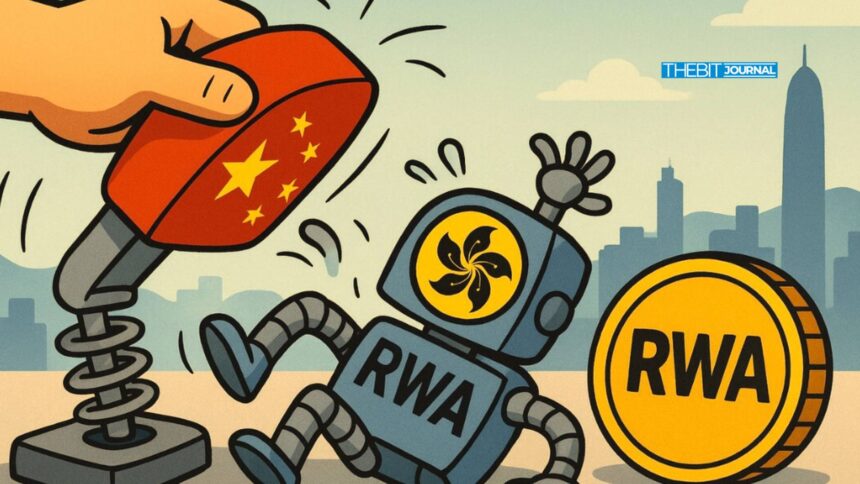

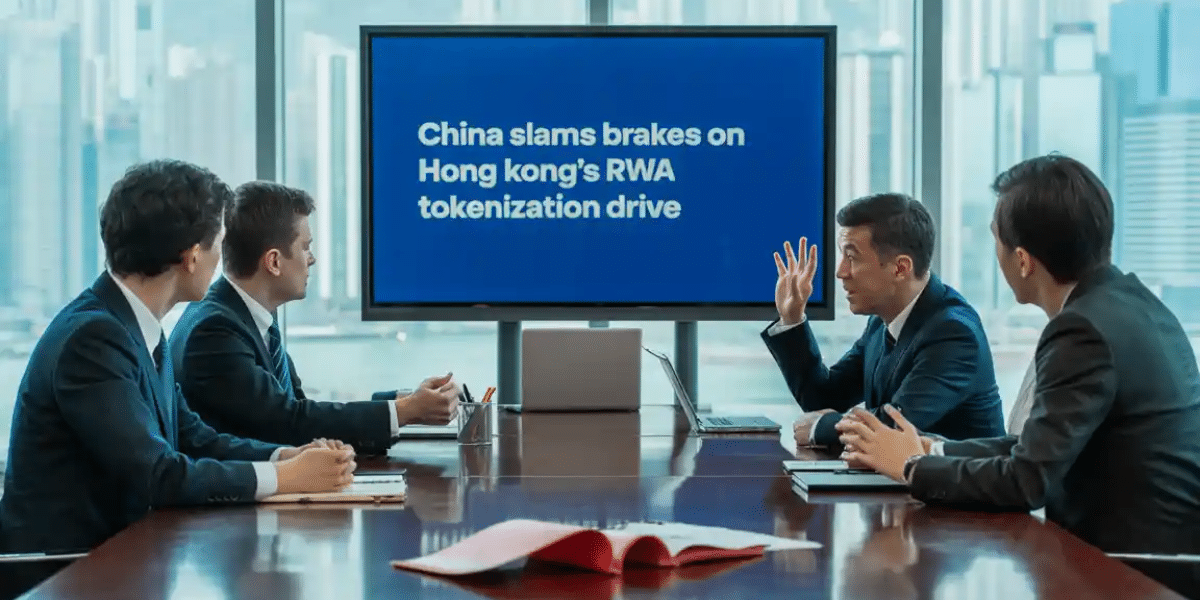
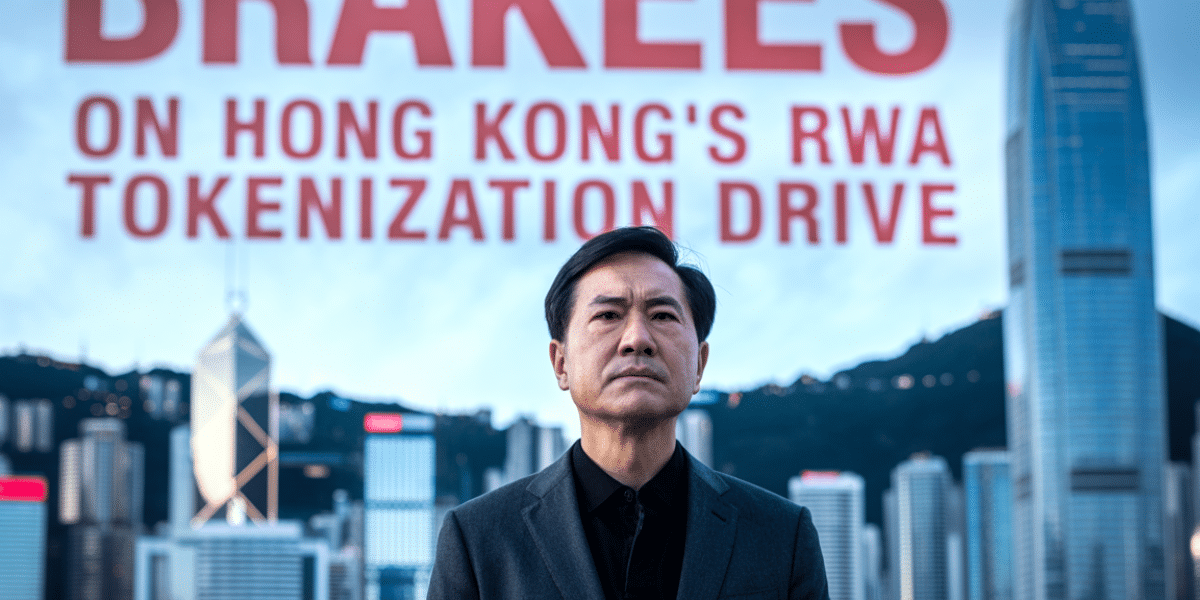
China’s securities regulator has urged several local brokerages to pause their RWA tokenization dealings with businesses in Hong Kong in a move that has raised red flags over the country’s digital asset sector.
According to a report on Reuters, the China Securities Regulatory Commission (CSRC) cited risk management concerns and the need to verify the legitimacy of the underlying assets in relation to RWA tokenization.
No Formal Restriction Issued
The move, according to observers, highlights growing concerns regarding China’s concerns about risk exposure and activities associated with tokenized products.
The timing of the advisory to pause activities associated with RWA tokenization happens at a time when Hong Kong is positioning itself as a leading digital asset hub in Asia. Several Chinese companies have also recently launched virtual asset trading platforms that deal with yield-generating token products and tokenized bonds.
Also read: Tokenization of Real-World Assets (RWAs) – From Real Estate to Fine Art
Hong Kong is actively involved in promoting its digital asset businesses. He has recently introduced stablecoin licensing and legal reviews of RWA tokenization practices by the city-state’s Financial Services and the Treasury Bureau (FSTB) and the Hong Kong Monetary Authority (HKMA).
Interestingly, while the CSRC is issuing informal restrictions surrounding virtual asset trading, Chinese firms such as GF Securities and Seazen are expanding their services to cover RWAs and stablecoin initiatives.
For example, GF Securities’ Hong Kong subsidiary recently launched “GF Tokens” as China Merchant Bank International facilitated a tokenized digital bond worth $70.29 million, even as CSRC pushes the move for local brokers to halt RWA tokenization in Hong Kong.
Market Projected to Grow
RWA tokenization is the process of converting traditional physical assets like real estate, bonds, and stocks into digital tokens that can be traded on blockchain networks. The current size of the global RWA tokenization market is valued at over $29 billion as of 2025 and is projected to continue growing, reaching over $2 trillion by 2030.
Also read: Could RWA Tokenization Hit $16T by 2030? Skynet Reveals Bold Data
Observers note that there’s a clear regulatory divergence between China and Hong Kong as far as virtual asset trading is concerned. While Hong Kong has openly embraced RWA tokenization and stablecoin innovation, Mainland China continues to place strict controls, such as the 2021 ban on crypto trading and mining.
Analysts therefore view CSRC’s action on RWA as part of the country’s regulatory framework that seeks to ensure sustainable business models for all tokenized products.
Conclusion
While China didn’t offer a formal order against tokenizing RWAs, experts believe the move could end up strengthening risk management initiatives within the dynamic industry. In the meantime, Hong Kong is advancing in the virtual asset trading field, with initiatives from the HKMA and SFC enhancing efficiency, liquidity, and investor protection. The country plans to license more crypto exchange licenses by the end of 2025, building on previous frameworks established in 2018 and 2020.
Read more about RWA tokenization on our Website.
Summary
- China’s securities regulator CSRC has informally halted RWA tokenization in Hong Kong due to risk management concerns.
- Hong Kong is advancing RWA tokenization initiatives with firms like GF Securities and Seazen expanding stablecoins and real-estate-linked NFTs.
- The RWA tokenization market is currently valued at $29B in 2025 and is projected to grow to $2T by 2030.
- Regulatory divergence highlights Beijing’s caution versus Hong Kong’s innovation drive.
Glossary to Key Terms
RWA: Real World Assets, which are physical or traditional financial assets that are tokenized on a blockchain to be traded and managed digitally.
Tokenization: The process of converting ownership rights to an asset into digital tokens on a blockchain.
Virtual assets: A digital representation of value that can be electronically traded, transferred, or used for payment or investment.
Stablecoins: A type of cryptocurrency designed to maintain a stable price by being pegged to a real-world asset, like the U.S. dollar, gold, or other financial instruments.
Frequently Asked Questions about RWA tokenization
How does RWA tokenization work?
The process uses blockchain technology to buy, sell, track, and hold digital versions of RWA – from real estate and works of art to financial instruments, including investment fund interests.
What are the limitations of tokenization?
Common pitfalls include high initial costs, as setting up a tokenization system requires significant investment in infrastructure and software.
What is the main advantage of tokenizing RWA?
Tokenizing real-world assets enables fractional ownership, allowing investors to purchase and sell smaller portions of the asset, thereby increasing accessibility and potentially enhancing overall liquidity.
What is a challenge for tokenization RWAs?
Tokenization of RWAs faces numerous regulatory hurdles, making it challenging to gain traction.