




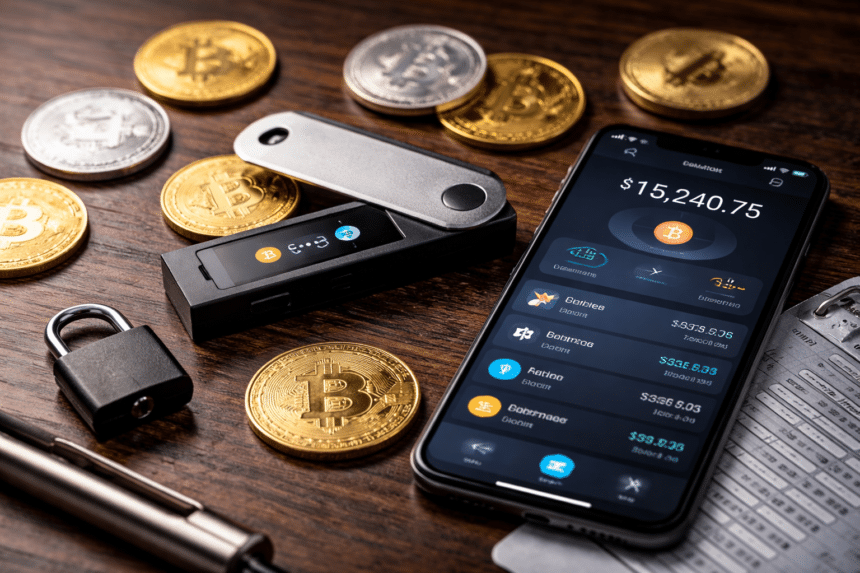

The use of cryptocurrency has expanded beyond its original trading communities because many people now use digital assets for payments, savings, and long-term investment. The current state of regulations is being discussed by governments while banks perform blockchain settlement tests and multinational companies enable digital payment methods in selected areas. The development of adoption needs one specific technical concept which gains major significance. The development of adoption needs one technical concept that has become essential for market growth. The crypto wallet represents that particular concept.
People use an exchange to make their first cryptocurrency purchase. Users can check their account balance on the exchange just like they would do with online banking. Users only own a fraction of their balance because they do not possess the actual assets. Users of the exchange will find their assets under the exchange’s direct management. Users learned about the exchange’s operational dangers when multiple exchanges failed during the previous years. The situation resulted in people needing to learn about self-custody.
A crypto wallet serves more than a function as a basic storage space for digital coins. The system operates as a blockchain-based ownership verification tool. Users can send and receive funds while they authorize their payment transactions. The blockchain system requires users to have a wallet in order to prove their ownership of digital assets. The holder’s wallet functions as their online identification system.
The article provides a basic overview of crypto wallets. It describes their operation together with their various types and security threats, plus the process for selecting the best one in 2026.
What Is a Crypto Wallet and What Does It Actually Store
A crypto wallet does not store coins in the traditional sense. The blockchain system maintains permanent control over coins that exist in digital form. The wallet stores cryptographic credentials that allow access to them. The credentials establish ownership rights that enable users to execute transactions.
The system generates a blockchain address for each wallet user. Users can use this address, which functions as an account number, to receive funds. The network records balances linked to this address permanently on the blockchain ledger. The private key serves as the mechanism that determines ownership rights. The private key functions as a hidden mathematical code that authenticates transaction requests. The blockchain verifies ownership approval for fund transfer through a transaction signature.
The private key serves as the only method to access digital assets. Decentralized networks do not provide any mechanism for users to reset their passwords.
The Role of Public Keys and Private Keys
The public key generates the wallet address. The public key can be safely shared. The private key must remain secret. Digital signature systems use both elements to establish authentication verification.
The wallet uses the private key to sign transactions when they are created. The network nodes use the public key to verify the signature. The transaction becomes part of the blockchain when it is found to be valid.
How Crypto Wallets Work Step by Step
The wallet creates a transaction message when users send cryptocurrency. The transaction message contains three components, which are the destination address, the amount, and the network fee. The wallet then signs it using the private key.
The network receives the transaction after the signing process. The nodes perform two tasks, which involve verifying the signature and checking the account balance. The transaction moves into the mempool waiting area after it passes the validation process.
Miners or validators confirm the transaction and add it to a block. The transaction receives permanent status after it gets added to the system. The receiving wallet balance updates automatically after confirmation.
The wallet itself never moves coins. It only communicates instructions to the blockchain network.
What Happens When Crypto Is Sent to the Wrong Address
The system prevents any alterations to blockchain transactions. The system does not permit recovery of funds that were sent to the wrong addresses. The networks operate without any systems that provide support to customers.
People continue to lose their money through two main methods, which include making human typing errors and using duplicate addresses. Many wallets now include checksum verification to reduce mistakes, but users need to stay cautious about possible errors.
Types of Crypto Wallets Explained Simply
The usage of the wallet is dictated by how it will be used. The fundamental types are hot wallets, cold wallets, and custody models.
Hot Wallets
Hot wallets need internet access to function as their design permits users to perform transactions multiple times throughout the day. This category includes both mobile applications and browser-based wallet systems.
The system enables users to make quick transfers while they can easily access decentralized applications. Hot wallets provide fast transaction processing, which makes them suitable for trading activities and payment transactions.
The internet connection creates a security risk because it enables hackers to attack systems. Hot wallets serve as primary targets for both malware attacks and phishing attacks.
Cold Wallets
Cold wallets operate in offline mode. The category includes hardware wallets and paper wallets as its two primary types.
The system enables transaction signing while maintaining private key security through its offline operation. Investors use cold storage for their extended investment periods. Remote attacks become highly challenging because the keys stay entirely offline.
The system requires users to connect their devices and complete verification before making transfers.
Custodial vs Non Custodial Wallets
Custodial wallets are controlled by third parties who operate exchanges. The service keeps all private keys that control access to their platform. The user needs to operate their platform account to access the system.
Non-custodial wallets give their users complete control of their assets. The holder manages private keys and recovery phrases directly.
Hardware Wallets vs Software Wallets Comparison
Hardware wallets store private keys inside a secure physical chip. They require physical confirmation to sign transactions. The system protects against remote malware attacks through this security measure.
Software wallets run on both phones and computers. Users benefit from fast transfers because software wallets provide them with easy access. Many decentralized finance applications rely on software wallets for interaction.
Long-term investors usually combine both. They store their savings in hardware wallets while maintaining small spending amounts in software wallets.
Security Risks of Crypto Wallets in 2026
Wallet technology has developed better protection systems, but attackers have developed new methods to breach security. The most dangerous security threats today emerge from social engineering attacks instead of direct hacking methods.
Phishing websites create fake wallet interfaces to obtain users’ recovery phrases. App stores display counterfeit applications that pretend to be legitimate wallet software. Malware programs track clipboard content to capture addresses that users send during transfer operations.
Customer support impersonation has become common. Through fake assistance messages, attackers convince holders to share their seed phrases with them.
Biggest Mistakes New Crypto Users Make
When seed phrases are saved through screenshots, they become vulnerable to cloud security breaches. The practice of storing keys in email accounts creates an elevated danger of theft.
The act of sharing private keys for troubleshooting purposes results in instant security breaches.
What Is a Seed Phrase and Why Is It the Most Important Thing
A seed phrase is a list of words generated during wallet creation. It acts as the master key for all addresses in that wallet. The solution permits fund restoration through any wallet software that supports it. Modern wallets produce address results through one seed phrase.
Multiple addresses are generated from a single seed phrase. The phrase backup protects all account balances. The seed phrase should be stored offline on paper or metal backup. Digital storage increases the risk of exposure.
What Happens If the Seed Phrase Is Lost
The only way to recover access to your account is to use your seed phrase. Users cannot restore their accounts through blockchain networks. The system permanently denies access to users who have lost their login credentials, even though their funds remain on the ledger.
How to Choose the Right Crypto Wallet
The usage pattern of a user determines which option should be chosen. Speed and application compatibility are the main demands of active traders. The main requirement of long-term holders is to have their assets secured with offline protection.
The support of a network also holds importance. Some wallets support multiple blockchains, while other wallets restrict their operation to a single network.
The decision-making process gets influenced by security experience. Beginners start with basic mobile wallets, which they later upgrade to hardware storage devices.
Are Crypto Wallets Safe Compared to Banks and Exchanges
The bank safeguards customer funds through two protective measures, which are regulation and insurance. The centralized security systems of exchanges create user-friendly access to their services.
Crypto wallets shift responsibility entirely to the owner. Self-custody removes counterparty risk but introduces personal security responsibility. Losses occur because people make errors instead of the network system experiencing breakdowns. Investors today divide their assets into different storage methods, which lets them maintain both accessibility and security.
The Future of Crypto Wallets
Wallet technology develops at a fast pace because of its ongoing advancements. Smart wallets introduce new features that allow users to create customized access controls and set maximum limits for their daily expenditures. The system protects against security breaches through its ability to block access to stolen keys.
Account abstraction enables users to pay gas fees using different methods, while it makes the registration process easier. Social recovery systems allow users to restore their accounts through assistance from trusted contacts who do not need access to their private keys.
Biometric authentication, together with hardware secure enclaves, has enhanced user experience through its usability benefits. Digital wallets now include identity verification functions together with payment processing capabilities, which makes them behave like digital passports.
Conclusion
Crypto wallets serve as the fundamental element that enables people to possess digital assets. The wallets do not keep digital coins stored inside them, yet they allow users to manage their access rights to blockchain assets. Investors need to learn about keys and recovery phrases because these components serve as critical security measures for their investments.
Hot wallets offer users easy access to their digital assets, while cold wallets provide advanced protection for their stored assets. Most holders should use this method because it combines two elements to create an effective protection system.
The most effective protection measure requires people to understand security threats. The technology helps reduce risks, yet the user must practice safe private key management to protect their information.
FAQs
What is the safest type of crypto wallet?
Hardware wallets are generally considered the safest because private keys remain offline and protected from internet attacks.
Can crypto be recovered if a wallet is deleted?
Yes, but only if the seed phrase exists. Without it, recovery is impossible.
Is keeping crypto on an exchange safe
It is convenient, but it depends on the platform’s security. Self-custody removes exchange risk but requires careful management.
Do crypto wallets hold actual coins?
No. Coins stay on the blockchain. The wallet only stores keys that prove ownership.
How many wallets should be used?
Many investors use at least two. One for transactions and another for long-term storage.
Summary
Crypto wallets provide access to blockchain funds through private keys. Hot wallets provide users with easy access to their digital assets, while cold wallets track their digital assets through secure storage methods.
Users must protect their seed phrases because these phrases function as their primary backup solution. Future wallets will provide users with easier security management through their advanced smart permission and recovery systems.