




Decentralized finance sits at a new peak of attention. Yields look stronger. New apps arrive every week. So do new threats. This guide explains DeFi risks and rewards in plain English. It shows where returns come from, what can go wrong, and how a simple plan can cut avoidable loss.
DeFi now touches traders, lenders, stakers, and tokenized assets. Activity spreads across many chains. Code sets the rules. Markets run all day. That speed can help returns. It can also magnify mistakes. A clear process makes the difference between luck and skill.
What DeFi Is In 2025
DeFi lets people trade, lend, borrow, and stake with smart contracts. Wallets connect to apps. Code moves funds when rules are met. Ethereum still leads by value and developer depth. Solana, Base, BNB Chain, and other networks post sharp growth in users and fees.
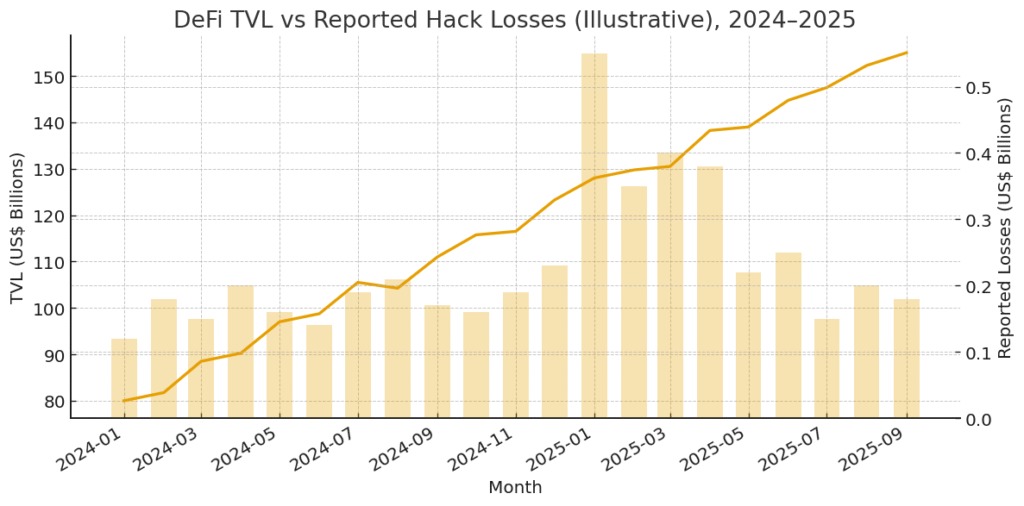
Total value locked climbed through 2025 as prices and on-chain cash flows improved. Restaking, real-world assets, and stablecoin money markets drew steady deposits. Liquidity thickened in top pools. That rise brings chance and risk in equal measure.
DeFi Risks and Rewards: The Core Tradeoff
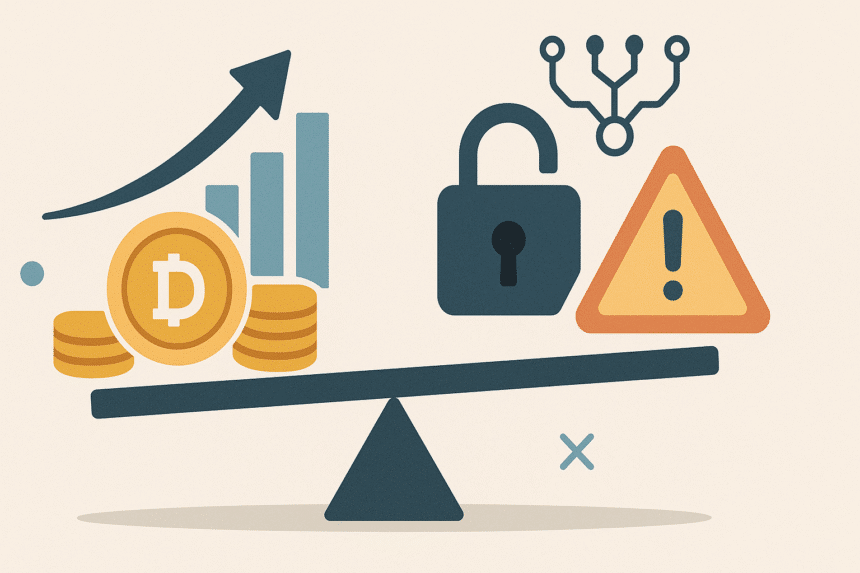
The heart of DeFi is a trade. Users take protocol and market risk to earn on-chain yield. Rewards flow from trading fees, borrow interest, staking rewards, and token incentives. Risks show up as code bugs, price shocks, oracle errors, weak admin controls, and legal shifts. The goal is not to chase the highest rate. The goal is to find returns that match risk, then size positions with care.
In good markets, rewards can look easy. Fees rise with volume. Borrow demand pulls rates higher. Points and incentives add a sweetener. In stress, risk arrives fast. A bad oracle print can trigger liquidations. A bug can drain a pool in minutes. A depeg can freeze exits. Planning entries and exits before moving funds keeps emotions out of the seat.
Security and Regulatory Context With Real-World Stats
Security data shows sharp swings. Reported crypto thefts topped billions of dollars in both 2024 and early 2025, with a few giant cases driving most losses. Attackers shifted tactics from pure code bugs to key theft, front-end tricks, and social engineering. DeFi contracts still face logic flaws and oracle games, but many incidents now start with compromised access or fake approvals. This means wallet hygiene and transaction review matter as much as audit badges.
Policy also shapes risk. In the United States, agencies continue to test how securities and commodities laws apply to tokens, DEXs, staking, and DAOs. The mix of court cases, settlements, and guidance gives signals that teams watch when they design products.
In the European Union, MiCA adds clearer rules for stablecoins and service providers. Stablecoin rules began to apply in mid-2024, with broader provisions live by late 2024.
The result is more disclosure, more oversight of reserves, and a path to licenses for firms that touch fiat and RWAs. These shifts do not end risk. They move it, and they change where and how venues operate.
Where the Rewards Come From
Rewards in DeFi come from simple places. AMMs and DEXs pay fees to liquidity providers when traders swap assets. Money markets pay interest to lenders when borrowers take funds against collateral. Staking pays network rewards, and liquid staking wraps those rewards in a token that can move across apps. Restaking layers service rewards on top of base staking. Real-world assets add off-chain yield, such as short-term treasuries or credit, to on-chain wrappers. Token incentives can boost any of these, but they fade. Real cash flow lasts longer.
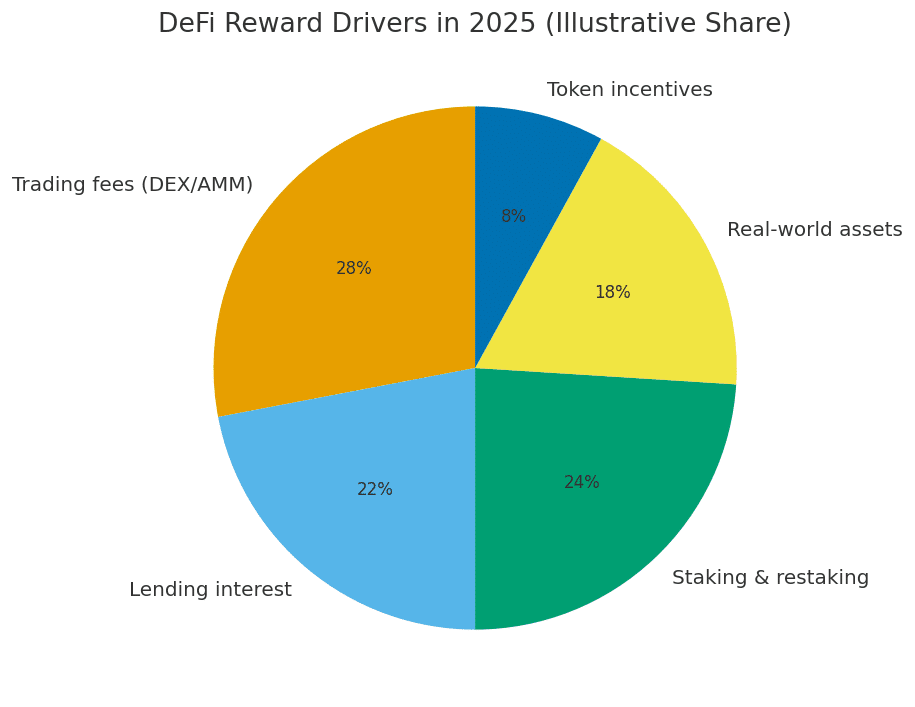
Rewards grow with volume, spreads, borrow demand, and the size of assets at work. Rewards fall when volumes drop, incentives end, or slippage eats fees. Simple tracking of fees, volumes, borrow rates, and incentive schedules helps set expectations. It also helps decide when to rotate positions.
Where The Risks Show Up
Technical risk starts in code. Bugs, upgrade mistakes, and unsafe admin keys can unlock funds for attackers. Price feeds can break or move too fast, which creates bad liquidations or lets attackers game prices. Operational risk comes from rug pulls, opaque governance, or front-end hijacks that trick wallets into broad approvals.
Market risk shows up as thin liquidity, depegs, and cascading liquidations that trap capital. Legal risk appears when a rule, a case, or a regulator blocks access or changes how a token or venue can operate.
The safest path treats each risk like a checklist. Know the contracts and roles. Understand the oracle design. Review governance. Test liquidity at size. Keep an exit plan. Small, consistent habits reduce the chance of a bad surprise.
Risk vs mitigation at a glance
| Risk type | What it looks like | Simple checks before deploying capital | Ongoing habits |
| Smart contract bug | Funds drain due to logic flaws or re-entrancy | Read recent audits, not just badges. Check bounty size and payout history. | Start small and split across protocols. |
| Oracle failure | Price feeds spike or lag and force bad liquidations | Confirm multi-source feeds, rate limits, and bounds. | Track feed updates and governance posts. |
| Admin key misuse | Privileged roles change rules or seize funds | Look for timelocks and multi-sig with known signers. | Watch contract changes on explorers. |
| Liquidity shock | Thin pools or depegs block exits | Test slippage. Review redemption rules and backstops. | Keep a cash buffer for gas and exits. |
| Front-end compromise | Fake sites ask for broad approvals | Bookmark verified URLs. Use hardware wallets. | Revoke approvals on a set schedule. |
| Governance capture | Whales push risky changes | Check token distribution and quorum. | Vote, delegate, and monitor proposals. |
| Legal shift | New rule restricts a product or token | Favor clear disclosures and licensed issuers. | Diversify by chain, venue, and asset. |
Position Sizing That Cuts Downside
Sizing makes or breaks outcomes. A simple rule set keeps the process clean. Set a fixed cap per protocol as a share of the total crypto stack. Give larger caps to blue-chip money markets and well-known DEXs.
Keep tighter caps for new systems and complex designs. Stagger entries over time to avoid bad timing. Hold a cash buffer to handle gas spikes and fast exits. Rebalance when incentives fade or when base yields drop. Take gains on incentive spikes and rotate into steadier yield.
A Fats Screening Process
- A short screen before any allocation saves time and stress. Check audits and their dates, then read the last two summaries.
- Review bug bounties and past payouts to see if white hats get paid.
- Look at TVL level and trend, plus pool concentration, to judge how exits might feel in stress.
- Confirm timelocks, multisig signers, and any emergency powers in contracts.
- Verify oracle design and limits. Scan docs, GitHub activity, and the pace of governance posts.
- For RWAs and stablecoins, read issuer disclosures and licenses, and verify custody and reserve reports.
Note red flags and either drop the idea or cut size.
Where Upside Concentrates in 2025
A few areas hold most of the upside in this cycle. Liquid staking and restaking pair base network rewards with extra points or service fees. Perp DEXs and options benefit when volatility rises and when traders seek leverage on-chain. RWA platforms bring stable off-chain yield on-chain, but they add issuer and legal risk that needs review. Stablecoin money markets deliver steady rates with lower price swings, yet still carry smart contract and counterparty risk. None of these buckets are set and forget. Each one needs checks, caps, and periodic exits.
DeFi Investment Opportunities: How to Spot Them Early
Early entries tend to appear before headlines. A simple playbook helps.
- Watch for TVL inflections that line up with new features, not just airdrop points.
- Track catalysts like major upgrades, chain expansions, or fee changes that can lift real cash flow.
- Match risk to edge. Take more risk only where research is deep, such as niche markets, strong teams, or clear moat in design.
- Avoid chasing every farm.
- Focus on a small set of venues that pass the screen and fit the plan.
Building a Basic DeFi Portfolio in 2025
Conservative Track
This track emphasizes safety and predictability. It relies on liquid staking and top money markets to generate a steady base yield. Capital protection, liquidity, and simple rules take priority. Position caps remain tight, and performance reviews are conducted frequently to ensure stability.
Balanced Track
The balanced approach holds a core allocation in blue-chip assets while adding smaller positions in perpetuals, options, and real-world assets. It adapts to changing conditions, rotating capital when incentive programs expire or when fees decline. The goal is to blend stability with measured opportunities for higher returns.
Aggressive Track
The aggressive strategy targets new primitives and point programs, managed under strict risk controls. It reacts quickly to contract alerts, oracle disruptions, and governance changes. Stop-losses are enforced tightly, and capital moves rapidly to capture short-lived opportunities while containing downside risks.
Common Principles
All three tracks rest on the same foundation: understand the product thoroughly, size positions with discipline, and plan exits in advance.
Security Habits That Pay
Start With the Wallet
Hardware wallets protect private keys from malware. Seed phrases stay offline in secure, physical storage.
Keep Access Tight
Trusted sites are bookmarked, and approvals are kept narrow. Old approvals are revoked on a regular schedule to limit exposure.
Reduce Single-Point Risk
Funds are distributed across multiple wallets and chains, lowering the chance of a single failure taking everything down.
Stay Alert
Monitoring tools flag large protocol changes, unusual oracle activity, and governance votes that affect core contracts.
Plan Exits in Advance
Each position comes with a written exit plan so the next step is always clear, even in fast-moving conditions.
Regulatory Watchlist For The Year Ahead
Regulation will keep evolving. In the United States, decisions from courts and agencies will shape how DEXs, staking, and token issuance work in practice. In the European Union, MiCA will continue to drive disclosures, licensing, and reserve rules for stablecoins and service providers.
Other regions will adapt those ideas in local ways. Clearer rules may open doors for RWAs and institutional users. Rules can also limit products in some markets. Diversification across chains and venues reduces reliance on any one path.
Strategy Fit by Reward and Risk
| Strategy | Typical reward driver | Main risk | Fit |
| Liquid staking | Network rewards plus incentives | Contract risk and validator slashing | Core |
| Lending stablecoins | Borrow demand and token boosts | Contract risk, depeg, and liquidity | Core to Balanced |
| Perp DEX LP | Fees from volume and spreads | Volatility, funding, and oracle issues | Balanced to Aggressive |
| New token farms | Emissions and points | Rug pulls and thin liquidity | Aggressive only |
| RWAs | Off-chain yield | Issuer and legal risk | Core to Balanced |
Case Notes From 2024 to 2025
Losses in DeFi have not been evenly spread. Most of the damage clustered around a handful of large events, which drove yearly totals higher even as the number of smaller hacks declined. At the same time, Total Value Locked (TVL) rose through 2025, boosting fee pools and yield opportunities. Yet more capital in the system did not reduce security risk.
Attackers adapted, combining on-chain exploits with social engineering and front-end attacks. In response, project teams strengthened their defenses, investing more in audits and bug-bounty programs. Users also raised their standards, paying closer attention to wallet hygiene and approval management.
The result has been a widening gap between careful operators who follow strict processes and careless ones who don’t. In today’s environment, process and discipline matter more than ever — not just to protect capital, but to sustain long-term participation in the market.
Conclusion
DeFi risks and rewards sit side by side. Strong fees, active markets, and new products create real upside. Bugs, bad oracles, thin liquidity, and legal change can erase gains in a day. A clear screen, smart sizing, and steady habits shift the odds. The aim is not zero risk. The aim is risk that matches the reward.
The next phase favors skill over hype. Simple rules beat bet size. Read the code notes, not just the banner. Track policy as closely as price. Treat exits like entries. With that mindset, investors can pursue return and protect capital at the same time.
Frequently Asked Questions For DeFi Risks And Rewards
What drives DeFi yields now?
Trading fees, borrow interest, staking rewards, and sometimes token incentives. RWAs add off-chain yield.
Are blue-chip protocols safe?
They carry lower risk, not zero risk. Old code and deep liquidity help, but checks still matter.
Which chains lead DeFi today?
Ethereum holds the lead in value and developers. Solana and several L2s grow fast.
What causes large losses?
A few big incidents often drive yearly totals. Key theft, bad approvals, and code bugs play major roles.
How do rules affect returns?
Clear rules can invite more capital and products. New rules can also limit access in some regions.
Glossary
- AMM (Automated Market Maker): A DEX design that uses pools and math to set prices without order books.
- Bug bounty: A reward program that pays security researchers who report flaws to teams.
- Depeg: A stablecoin drop away from its target price, such as 1 dollar per token.
- DEX: A decentralized exchange that runs on smart contracts and lets wallets trade directly.
- Governance: Token voting that sets or changes protocol rules and parameters.
- Oracle: A service that brings off-chain data, like prices, into smart contracts on-chain.
- Restaking: Using staked assets to secure extra services and earn more rewards.
- RWA (Real-World Asset): A token that represents a claim on an off-chain asset or cash flow.
- TVL (Total Value Locked): The value of assets that users deposit into a protocol.
- Timelock: A delay that slows contract changes and gives users time to react.
Summary
DeFi activity climbed through 2025 as fees, staking, and tokenized assets drew deposits. The article explains DeFi risks and rewards in clear terms for a general reader. Rewards come from trading fees, borrow interest, staking, restaking, and RWAs. Risks come from code bugs, oracle errors, thin liquidity, front-end tricks, weak admin keys, and legal change. The piece gives a short screening process, a sizing plan, and a simple security routine. It also covers the policy picture in the United States and the EU, where MiCA adds disclosure and licensing rules for stablecoins and providers. Two tables map risk controls and strategy fit. The conclusion urges process, sizing, and planned exits over rate chasing.