











The process of getting deprived of any digital asset might be devastating. Millions of individuals invest in cryptocurrencies and wallet recovery is a serious concern. Whether due to lost passwords, corrupted files, or misplaced private keys, the question remains the same: how to recover your lost crypto wallet securely.
As of early 2025, analysts estimate that between 2.3 million and 3.7 million BTC are permanently lost, representing approximately 11–18% of Bitcoin’s total supply. To a lot of people, it is not only a matter of money but peace of mind when it comes to the struggle of retrieving your bitcoin wallet.
This article gives a step-by-step guide on how to recover your lost crypto wallet, professional recovery techniques, case studies, and prevention techniques.
Why People Lose Access to Their Crypto Wallets
The incident of losing wallets is quite common than most would imagine. The most typical causes involve lost passwords, destroyed devices, lost wallet files, or seed phrases.
| Reason for Loss | Percentage of Cases (Estimated) | Example Scenario |
| Forgotten passwords | 39% | User forgets strong password used 3 years ago |
| Lost private keys | 27% | Seed phrase written on paper misplaced |
| Hardware damage | 18% | Laptop crashes with wallet file |
| Phishing scams | 9% | User tricked into giving seed phrase |
| Other reasons | 7% | Migration errors, accidental deletions |
Every type of loss requires a different recovery approach.
Steps to Recover Your Lost Crypto
Step 1 – Identify Wallet Type
Identify your wallet as software wallet, hardware wallet, custodial wallet or paper wallet before recovery. They are all different in terms of recovery.
- Software wallets (e.g. MetaMask, Electrum): Backup phrases or encrypted files can usually recover them.
- Hardware wallets (e.g. Ledger, Trezor): Recovered with the original seed phrase.
- Custodial wallets (e.g., Coinbase, Binance): Recovery is typically possible in case of customer support with KYC.
- Paper wallets: Would only be recoverable in case the QR code or the private key remain untouched.
Step 2 – Use Seed Phrase or Private Key
The master key is the seed phrase. This phrase can be reentered in most wallets in order to recover it. Professional tools could be required in case they are lost.
Pro Tip: Store your seed phrases offline in more than two places.
Step 3 – Check Backup Files
The wallets that keep the encrypted backup files on the local ones are many. In the event of remembering some of the details, tools such as Wallet Recovery Services or open-source programs can be used in the attempt to decrypt.
Step 4 – Recover Your Bitcoin Wallet via Professional Services
In the case of failure of DIY procedures, wallets are recovered by some professional recovery companies. Examples include:
- Wallet Recovery Services – focuses on brute-force password cracking.
- KeychainX– retrieves lost Bitcoin wallets whose passwords are forgotten.
But users should take care. There are a lot of scams, so do your homework before going with a firm.
Step 5 – Contact Exchange Support
In the case of centralized exchanges such as Coinbase, Binance or Kraken, the process of recovery is typically achieved by the KYC verification. Provide ID and account information to access again.
Step 6 – Use Blockchain Forensics
Blockchain forensics is used by advanced firms to recover lost funds or stolen funds. The tools monitor chain and exchange movements. They may not be successful, but they may point to avenues of recovering the assets.
Preventive Measures After Recovery
Once you recover your lost crypto, securing it for the future is essential.
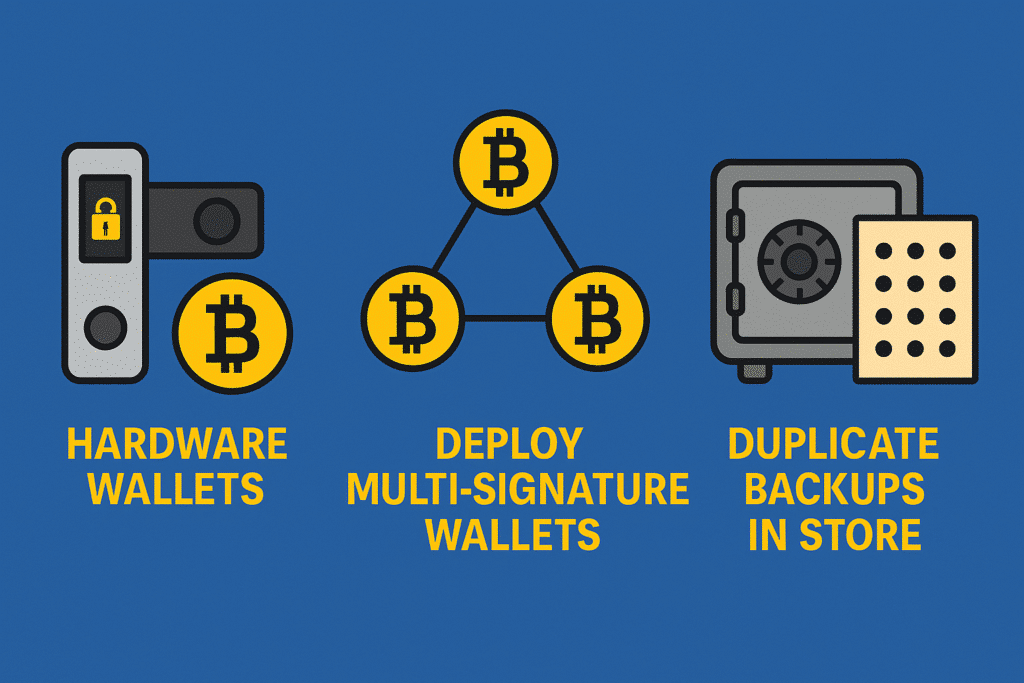
Hardware Wallets
Hardware wallets store keys offline and out of the reach of hackers. The most trusted are Ledger and Trezor.
Deploy Multi-Signature Wallets
The multiplicity of keys needed to make transactions lowers the possibility of loss.
Duplicate Backups in Store
Seed phrases must be kept in non-combustible safes or back-ups.
Real-World Case Studies
Case 1: The $240 Million Bitcoin Hard Drive
James Howells accidentally threw away a hard drive containing 8,000 BTC. Despite years of attempts, he has not recovered it due to missing private keys.
Case 2: The Successful Electrum Recovery
A user recovered an old Electrum wallet by recalling part of a password. With professional help, they retrieved 120 BTC.
These cases highlight both the risks and possibilities of recovery.
Common Scams in Wallet Recovery
Scammers prey on desperate users. Common scams include fake recovery tools, phishing emails, and fake support staff.
Warning signs:
- Requests for upfront payment without proof of service.
- Asking for your private key or seed phrase directly.
- Claims of “guaranteed recovery.”
Always verify credentials before trusting any service.
Final Words
The restoration of access to lost crypto is a time-consuming process that needs careful actions. Locate your wallet type, then resort to seed phrases, backups, and exchange assistance. In case of need, take into account professional recovery services. Once access is restored, use hardware wallets, backups, and security.
Keep in mind: prevention is the best cure. By securing wallets today, investors can avoid the stress of needing to recover your lost crypto wallets tomorrow.
Frequently Asked Questions (FAQs)
1. Can I recover my lost crypto if I lost my seed phrase?
Yes, but recovery is very difficult. Professional recovery services may help if you remember partial details.
2. How can I recover my bitcoin wallet if I forgot my password?
Tools like Wallet Recovery Services can attempt brute-force recovery.
3. Is it possible to recover stolen crypto?
Sometimes, through blockchain forensics and law enforcement, but results are not guaranteed.
4. Can exchanges help me recover my wallet?
Yes, custodial exchanges can restore access with identity verification.
5. Are wallet recovery services safe?
Some are reputable, but scams are common. Research carefully.
6. What should I do immediately after recovery?
Move funds to a hardware wallet, update backups, and enable extra security.
7. How much does professional recovery cost?
Most charge a percentage of recovered funds, usually between 10%–20%.
Glossary
- Seed Phrase: A set of 12–24 words used to restore a wallet.
- Private Key: A secret code allowing access to funds.
- Public Key: A wallet address visible on the blockchain.
- Hardware Wallet: A physical device storing private keys offline.
- Custodial Wallet: A wallet controlled by a third party like an exchange.
- Cold Storage: Offline storage of crypto assets.
- KYC (Know Your Customer): Verification process for exchanges.
- Blockchain Forensics: Analysis of blockchain data for fund tracing.
- Phishing: Fraud attempts to steal sensitive information.
- Multi-Signature Wallet: A wallet requiring multiple keys to authorize transactions.
Summary
This article describes how to recover your lost crypto wallet and the retrieval of wallets. It will contain the key factors of loss, a process to be followed in recovering the loss, forensics-based professional recovery services, support in trade, and forensics of the block chain. The case studies in the real world involve taking account of successful and unsuccessful recoveries. It places emphasis on such prevention tools as the use of a hardware wallet, multi-signature accounts and backup security. Not only readers learn how to recover your bitcoin wallet but save money for the future.