







One obstacle that has remained problematic for crypto companies over the years is usability. Wallets are still confusing to many users, seed phrases are nearly impossible not to lose, and the onboarding experience into DeFi still feels complicated for mainstream consumers.
Now, some industry builders think the answer may not be human adoption at all.
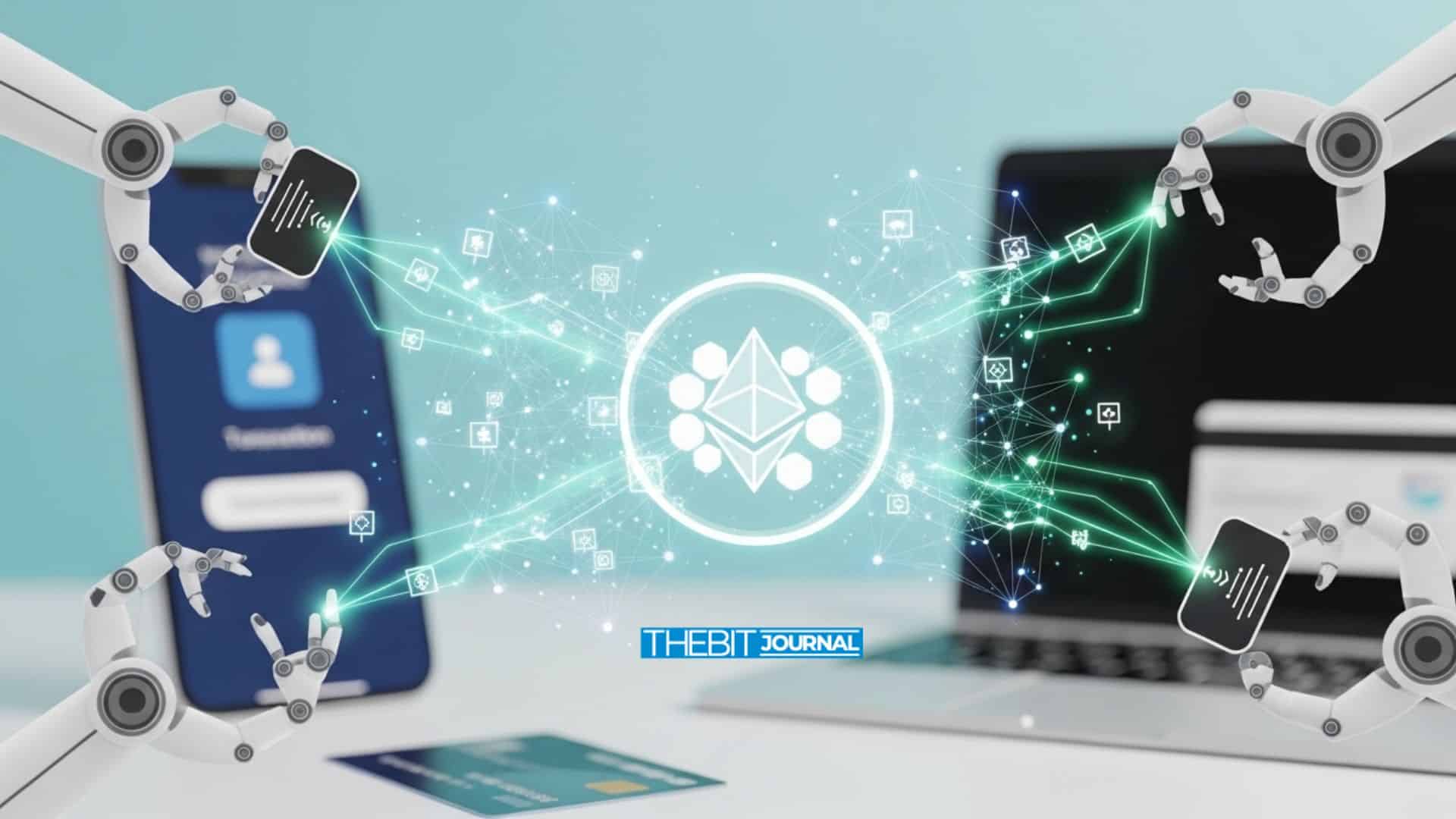
AI agentic payments may lead real growth in crypto going forward, where autonomous software agents use blockchain rails to transact with each other. Former Apple engineer and The AI Collective founder Chappy Asel argued at Consensus Miami 2026 that crypto’s role in artificial intelligence may actually center on programmable financial infrastructure for machines rather than consumer-facing chatbots.
Why AI Agents May Be Better Crypto Users Than Humans
Asel, speaking at Consensus Miami, said that truly autonomous AI systems will one day require financial rails capable of handling constant, low-latency transactions without relying on traditional banking infrastructure.
Asel believes that, unlike the payment architecture designed for human users, machine-to-machine commerce requires a different architecture.
“When agents make the majority of financial decisions, economic decisions, how do they transact with each other?” Asel said during the panel discussion.
He added that such systems would require “very small, micro transactions” executed with “very low latency.”
AI agents need zero tutoring to understand wallets unlike humans. They are not afraid of blockchain interfaces. They do not forget passwords or lose seed phrases. If AI systems do become active economic agents, crypto could finally find a use-case with an actor whose operations are native to programmed environments.
This has become one of the major themes emerging at Consensus Miami 2026.

Stablecoins and Smart Contracts Are Powering the Narrative
Most of the enthusiasm for AI agentic payments is around stablecoins and smart contracts.
Stablecoins have already been enabling 24/7 settlements without having to depend on banking hours. Smart contracts, on the other hand, automate execution rules via code.
Supporters of the sector believe that combining the two technologies could ultimately enable a financial system where autonomous software agents trade with one another, without humans involved.
That idea is already giving rise to industry initiatives.
OpenAI and Stripe recently launched the Agentic Commerce Protocol, while Coinbase has been pushing its x402 payment framework aimed at embedding crypto payments directly into internet infrastructure.
Google, Circle, and Coinbase are also backing interoperable payment protocols designed specifically for AI-driven transactions.
AI agents are unable to own bank accounts, but they can control smart wallets.
That distinction is becoming increasingly important as developers experiment with autonomous systems capable of purchasing compute resources, accessing APIs, paying for data, or executing microtransactions independently.
Legal experts at Fenwick recently predicted 2026 to be a year of major breakthroughs for agentic payments, claiming that companies have begun planning solutions to allow AI systems to transact securely across both fiat and crypto rails.
However, adoption is still slow.
Because large scale machine-to-machine commerce is still in early stages, most companies today are stuck with centralized APIs and cloud infrastructure supported by stacks of traditional payment systems.
Commercial activity involving fully autonomous crypto payments remains relatively small compared to the hype surrounding the sector.
The Bigger Opportunity May Be Infrastructure, Not Chatbots
Asel also argued that any overlap between crypto and AI will be more about infrastructure than consumer applications.
“A lot of people will tell you, oh, it’s the models aren’t good enough,” Asel said. “It’s literally compute, data centers, energy that is driving pretty much all decision-making in AI right now.”
Competition increasingly revolves around access to chips, electricity, data centers, and computing capacity rather than simply building larger language models.
Several Bitcoin mining companies have spent the past year repositioning toward AI hosting and high-performance computing services as mining profitability becomes more volatile after the latest halving cycle.
Infrastructure providers have also started to market directly into the AI economy. Companies attending Consensus Miami showcased products aimed at enabling “agent wallets,” autonomous transaction layers, and blockchain-based settlement systems for AI applications.
Adoption Is Still Early and Major Risks Remain
While the enthusiasm is there, many analysts warn that AI agentic payments are still in the experimental phase.
Real-world demand is still relatively limited, while big questions around regulation, liability, fraud prevention and authorization are still largely unresolved.
Legal analysts have warned that existing financial regulations are designed for human-managed transactions, not autonomous systems that can make their own economic choices. It is still unclear who should be held responsible when AI systems fail.
There are also competitive pressures from the traditional giants of finance. Both Visa and Mastercard have rolled out new, AI-centric payment services aimed at keeping pace with machine-to-machine commerce as it continues to evolve.
Industry onlookers speculate that with the scale and compliance infrastructure of traditional payment networks, as well as their consumer protections, they may remain dominant in the space for years to come.
Others claim that crypto rails are still ultimately better suited to compete in machine economies due to their programmability, borderless nature and around the clock settlement potential.
Community discussions around the topic now focus on trust, transparency, and interoperability rather than simply speed or decentralization.
Conclusion
Crypto’s long-standing usability problem may eventually find an unlikely solution through AI agents.
With autonomous software systems progressively able to engage in economic decisions, blockchain-based payment rails could likely be the infrastructure layer powering machine-to-machine commerce.
Many of the tools needed for that transition are already there, in full view and they are stablecoins, programmable wallets, and smart contracts.
But the industry is still in its infancy stage.
While regulation, security and interoperability issues remain to be solved, with most companies still stuck on centralized systems. So far, AI agentic payments have gotten ahead of themselves in hype but not adoption.
Glossary
AI agentic payments: Payments automatically being processed and received by AI systems without human (direct) involvement in the payment process.
Stablecoins: A class of cryptocurrencies that are designed to have a stable value, often pegged to fiat currency such as the US dollar.
Smart contracts: These are self-executing programs on the blockchain, which automatically enforce the execution of the terms of a transaction.
x402: A protocol for crypto payments to make programmable payments part of the internet infrastructure
Agentic commerce: Economic activity fulfilled by autonomous AI agents that can conduct transactions on their own.
Frequently Asked Questions About AI Agentic Payments
What are AI agentic payments?
With AI agentic payments, transactions occur autonomously by utilizing programmable payment infrastructure.
Why could crypto help AI Agents?
Crypto allows a more programmable, global and continuous settlement systems that better support machine-based commerce than existing banking rails.
Are AI agentic payments already common?
No. Many of the existing implementations are still in the prototype or even experimental phases, with large-scale commercial acceptance yet to be achieved.
Why are stablecoins important for AI payments?
Stablecoins provide 24/7 settlement and predictable value, making them useful for automated transactions between AI systems.
References