



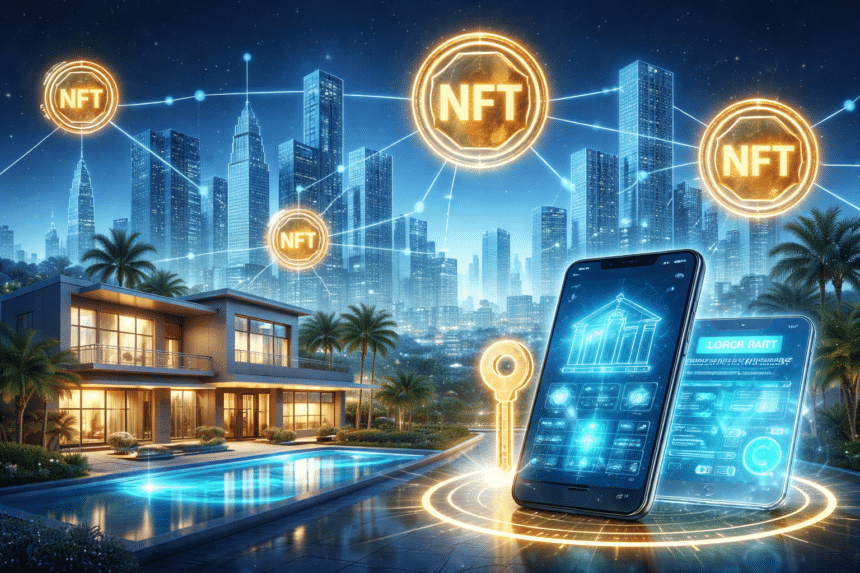

The real estate industry exists as one of the oldest and most document-intensive fields throughout the entire global economic system. Property ownership depends on maintained physical documents and existing government registration systems, completed legal authentication processes, and extended property transfer durations. Over the last few years, blockchain technology has started to influence how ownership is recorded and transferred. The most popular current development involves real estate and property ownership because of non-fungible tokens, which people refer to as NFTs.
NFTs first gained attention through digital art and collectibles. The first stage created both market uncertainty and price fluctuations because it introduced a groundbreaking concept. Ownership can be represented digitally on a blockchain in a way that is transparent, verifiable, and difficult to alter. Real estate developers, governments and financial institutions have started testing the technology to determine its potential to enhance actual property ownership operations.
Understanding NFTs and Why Real Estate Is Paying Attention
What NFTs Really Represent Beyond Digital Art
NFTs are digital records that use blockchain technology to show ownership of unique assets. NFTs exist as unique tokens that cannot be exchanged for other tokens because they represent distinct digital assets. Each token includes a unique code that establishes its connection to a particular asset or entitlement. In real estate, that asset is not the building itself but the legal claim or ownership record connected to the property.
The value of NFTs comes from the blockchain ledger behind them. The system maintains ownership records that show the complete history of ownership and document the time of each entry while making it hard to alter information without getting approval from the entire network. This system establishes one permanent record that functions independently of any single governing body or centralized information system. The feature has become important in property markets where record errors and fraud still happen frequently.
NFTs enable the operation of smart contracts. These automated contracts execute predefined actions when their established conditions have been fulfilled. The system enables automatic execution of ownership transfers and payment processing and revenue distribution as soon as all legal obligations have been fulfilled in the real estate industry.
Why Real Estate Is a Natural Fit for NFT Technology
Real estate transactions require multiple parties to complete extensive verification procedures which result in significant operational expenses. The sales process for properties gets delayed because of the requirements for title searches, escrow services, and legal documentation. Record errors create disputes that can continue for multiple years.
NFTs provide a digital framework that enables straightforward ownership verification. The use of NFTs to represent property titles enables immediate tracking of ownership changes. The system still requires legal procedures, but it decreases the need for manual record verification and stops multiple records from being created.
People show interest in the system because it provides access throughout the world. Traditional real estate investment often requires large capital and a local legal presence. Through NFT based ownership models investors can now buy and sell smaller portions of property rights which creates new methods for property investment.
Current State of NFTs in Real Estate Markets
Global NFT Real Estate Activity and Market Size
The current stage of NFT adoption in real estate shows measurable progress yet remains in its initial stages. 2024 and 2025 industry reports estimate that tokenized real world assets which include property reached total on chain value of several billion dollars. The real estate market shows increasing growth in this sector especially through its commercial property and luxury asset segment.
The United States together with the Middle East and certain European countries and selected Asian regions shows the highest level of market activity. The United Arab Emirates and Singapore government authorities have initiated blockchain land registry testing projects. The programs evaluate digital ownership records while maintaining their connection to traditional systems.
Real estate developers have started testing property sales through NFT connections. The projects use traditional legal documents which they combine with blockchain records to meet existing legal requirements.
Real World Examples of NFT Based Property Transactions
Since 2022, multiple property transactions linked to NFTs have been finished. The NFT functions as a digital asset that verifies ownership rights which are defined through standard legal documentation. Blockchain technology serves as an extra confirmation method which does not function as a substitute for legal documents.
The market has witnessed transactions which involve NFT ownership deeds together with traditional real estate contracts for both luxury apartments and commercial properties. Digital methods enabled the ownership transfer process between two parties while they managed their regulatory requirements through standard methods. This hybrid system demonstrates current system boundaries while enabling users to accomplish practical tasks.
The land registry pilot programs aim to enhance transparency measures and combat fraudulent activities. Blockchain technology enables governments to track ownership history through permanent records which become essential in regions where physical documents have been destroyed or modified.
How NFTs Can Change Property Ownership Models
NFT Based Property Deeds and Title Records
Digital property deeds represent one of the most active NFT applications for real estate. The system uses blockchain technology to store ownership records because it does not depend on centralized database systems. Each NFT represents a specific property and contains metadata linked to legal documentation.
The NFT changes ownership when its current owner sends it to a different wallet address. The system establishes a public archive which documents all transactions. The ledger controls all system changes because unauthorized users and fraudulent activities need detectable verification.
The current legal system maintains authority over all judicial matters through its complete control over law enforcement operations. Courts and governments still determine legal ownership. The blockchain records provide solid proof which helps to settle disputes about missing or ambiguous documents.
Fractional Ownership Through Real Estate NFTs
Fractional ownership enables multiple people to own parts of a property through divided ownership. NFTs make this easier by representing each fraction as a digital token. Investors can buy, sell, or transfer these fractions without selling the entire property. The investment model reduces the required capital for real estate investment activities.
Smaller investors gain exposure to rental income or property appreciation without purchasing full properties. Developers achieve better funding results through expanded financing alternatives. Fractional NFTs are often combined with revenue sharing smart contracts. The system automatically distributes rental income and profits to users according to their token ownership, which enhances transparency and decreases the need for administrative tasks.
NFTs and the Future of Real Estate Transactions
Faster Property Sales Using Smart Contracts
Smart contracts need to handle multiple sections of property transactions through their automation capabilities. The system will execute payment release and ownership transfer and compliance checks when all required conditions receive fulfillment. The system decreases dependence on both intermediaries and manual approval processes.
Property deals will take between multiple weeks and several months to reach their settlement dates. Blockchain-based systems enable work processes to achieve significant time reductions. Digital coordination enhances operational efficiency even though legal checks require time to complete.
The system uses automation to decrease the likelihood of human mistakes. The system executes conditions according to their coded instructions which helps prevent disputes that arise from misunderstandings or delayed actions.
Cost Reduction and Transparency in Property Deals
Real estate transactions require payment for legal fees which include broker commissions and escrow services and administrative expenses. NFTs provide a partial solution to duplication and efficiency problems although they do not completely eliminate these issues. The system enables straightforward ownership history verification. Buyers and regulators can verify previous transactions without requesting documents from multiple sources. The system establishes trust through its transparent operations which also decrease the likelihood of fraudulent activity.
At larger operations cost savings become more apparent. The highest advantages will occur for large developers and institutional investors who conduct more transactions.
Legal and Regulatory Challenges Facing NFT Real Estate
Property Laws vs Blockchain Ownership Records
The primary obstacle for NFT property ownership exists because the legal system has not yet approved it. Property laws which exist today were established before blockchain technology became available. Government registries and courts continue to determine legal ownership whereas blockchain records lack this power.
Digital ownership exists in two forms which lack proper legal enforcement mechanisms. Only legal agreements that local authorities accept can grant property rights through an NFT.
NFTs exist as additional record documents until the legal system changes. Most legal systems grant them a supportive function which lacks executive power.
Regulatory Developments and Government Pilots
The governments are developing rules to control the use of tokenized physical assets through their current studies. The sandbox programs enable testing of blockchain-based property record systems which operate under established regulatory boundaries. Some jurisdictions have updated land registry systems to include blockchain layers. The systems protect data accuracy while allowing government entities to maintain their legal control over information.
Security, Risks, and Limitations of NFTs in Property Ownership
Smart Contract Risks and Technical Failures
The reliability of smart contracts depends on the accuracy of their programming code. The presence of bugs and vulnerabilities results in the incorrect transfer of assets and the permanent lockout of funds. Real estate transactions face major financial risks because any mistakes will result in significant monetary losses. Blockchain networks require their supporting infrastructure for proper operation. The system experiences operational problems when there are network outages or network congestion or protocol changes. The system needs both secure design methods and established legal backup procedures to handle these potential dangers.
The emergence of security audits and insurance products has occurred yet organizations still need to address their remaining exposure to risk.
Market Volatility and Speculation Concerns
NFT markets showed extreme price swings during their initial adoption period. The real estate NFT market provides a more stable foundation but still attracts speculative activity. Market sentiment causes token prices to move independently from actual property worth. The process of valuing assets combined with financing requires assessment of uncertain digital market conditions. Lenders practice caution when they need to assess the value of assets that depend on unpredictable digital asset markets.
The implementation of stable systems together with controlled trading environments will establish the essential protection against market speculation.
Final Thoughts
NFTs have progressed from their experimental phase to become functional infrastructure used in real estate. The current investigation process has moved away from its original purpose to examine three specific areas which include efficient operations and transparent processes and the maintenance of complete records.
The real estate industry shows no signs of adoption because of its complicated legal system and potential dangers. The existing progress advances through both regulatory partnerships and implementation in actual environments.
The future of NFTs in property ownership lies in integration, not disruption. The blockchain-based ownership records can transform the most vital asset class in the world when they work together with existing legal frameworks and institutional procedures.
Frequently Asked Questions
What does an NFT represent in real estate ownership
You have received training on information which existed until the month of October in the year 2023. The real estate industry uses NFTs to create digital assets which authenticate property rights and ownership rights. The NFT functions as a verified blockchain record which validates existing legal documents instead of replacing actual ownership rights.
Are NFTs legally recognized as property deeds
Most countries do not yet recognize NFTs as official property deeds. Government land registries and courts continue to determine legal ownership. NFTs currently function as supporting records which do not serve as legal alternatives.
How can NFTs reduce real estate transaction time
The integration of NFTs with smart contracts enables automatic execution of both ownership transfers and payment terms. The system decreases the need for manual work which would normally need multiple parties to join forces in order to complete legal verification tasks.
Summary
NFTs are starting to establish themselves as actual assets within the real estate market. Digital art speculation has developed into a stage which studies practical applications that include property records and ownership verification systems and fractional investment methods. The real estate industry struggles with permanent challenges which include paperwork problems and fraud and expensive transaction fees and lengthy settlement periods. The industry is currently testing blockchain-based NFTs as a solution to some existing challenges.
People now use their adoption system which requires them to proceed through their adoption steps. Most NFT-based real estate projects operate alongside traditional legal systems rather than replacing them. Through pilot programs and smart city initiatives and regulated testing environments, governments and developers and financial organizations conduct their experimental work. These efforts focus on improving transparency and efficiency while maintaining legal compliance.
The organization faces major obstacles. Property laws still depend on centralized registries which creates a need for smart contract risk evaluation. The combination of market instability with regulatory unpredictability prevents companies from growing their business activities. The long-term patterns indicate that NFTs will develop into a vital digital component which enables property owners to establish ownership rights and manage their land.