




This article was first published on The Bit Journal.
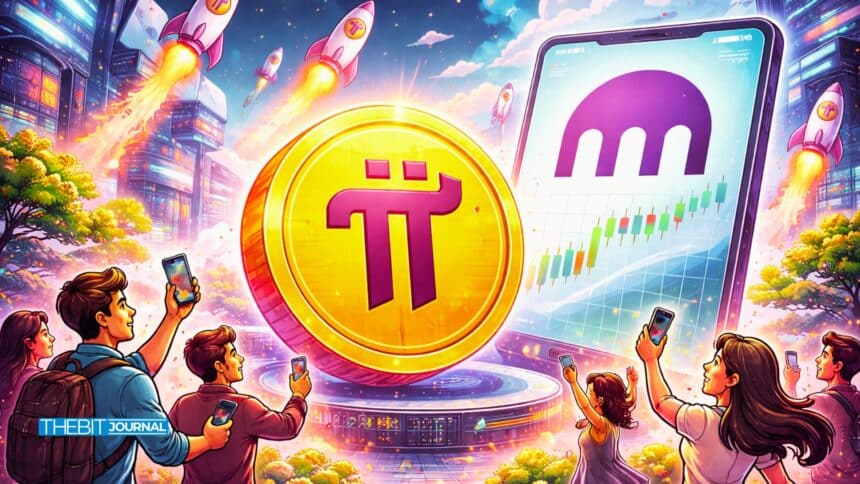
Pi Network is stepping into the spotlight again. After years of debate and delays, the project now faces a major turning point that could reshape its reputation across the crypto market. The upcoming Pi Network Kraken listing has sparked fresh excitement among supporters while reopening long-standing questions about the project’s long-term viability.
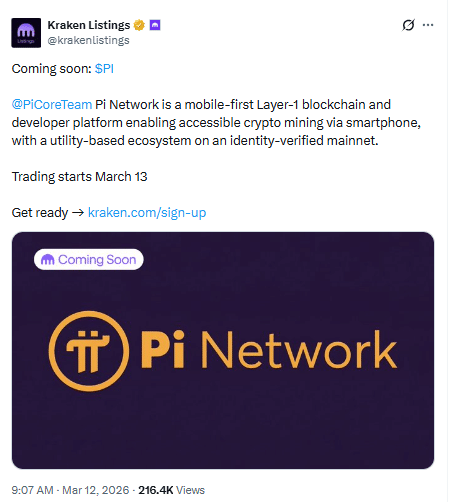
According to the source, the San Francisco-based exchange will begin trading Pi Network’s native token on March 13, 2026. The announcement encouraged users to sign up on the platform ahead of the launch. However, the exchange did not disclose trading pairs or the exact launch time. Even so, the Pi Network Kraken listing marks the first appearance of the token on a top-tier global exchange.
A Historic Exchange Debut for Pi Network
The Pi Network Kraken listing marks a major milestone for a project that spent years growing outside mainstream exchanges. Launched in 2019, Pi Network introduced a simple but bold concept: allowing users to mine cryptocurrency directly from their smartphones.
This mobile mining approach helped the network expand quickly, attracting more than 50 million users, known as “Pioneers.” Unlike traditional mining systems that require costly hardware, Pi Network focuses on accessibility and wider participation.
The blockchain runs on an identity-verified mainnet, designed to reduce fake accounts and bots while supporting a growing ecosystem of apps, payment tools, and digital services.
However, progress was not always smooth. The project faced years of delays before finally launching its open mainnet in early 2025. During that period, Pi Network trading remained mostly limited to smaller exchanges and decentralized platforms, restricting liquidity and broader market exposure.
Pi Network Kraken Listing Arrives Amid Key Network Upgrades
The Pi Network Kraken listing comes at a strategic moment for the project. Just before the exchange debut, the network required node operators to complete a mandatory upgrade to version 20.2 by March 12, 2026, aimed at strengthening stability and preparing the ecosystem for further growth.
The timing is also symbolic. The listing lands only a day before Pi Day on March 14, a date closely tied to the mathematical constant π and often used by the community for major announcements. Analysts note that exchange listings around key ecosystem milestones tend to attract stronger market attention and trading activity.
Price Reality and the Controversial Global Consensus Value
Despite rising excitement, market performance remains a sensitive topic for Pi Network supporters. Verified data shows the token currently trading near $0.22, far below its all-time high of $2.98 recorded in February 2025. This drop of roughly 92 percent has intensified debate across the community.
One of the most controversial ideas surrounding Pi Network is the Global Consensus Value, or GCV. Some community members claim that one Pi coin should eventually reach $314,159, a symbolic number inspired by the digits of π.
Supporters argue that the network’s massive user base could eventually support high valuations if real utility expands across payments and decentralized finance.
Critics strongly disagree. Many analysts insist that cryptocurrency prices emerge from open market supply and demand rather than community declarations. The Pi Network Kraken listing may test whether market forces align with these ambitious expectations.
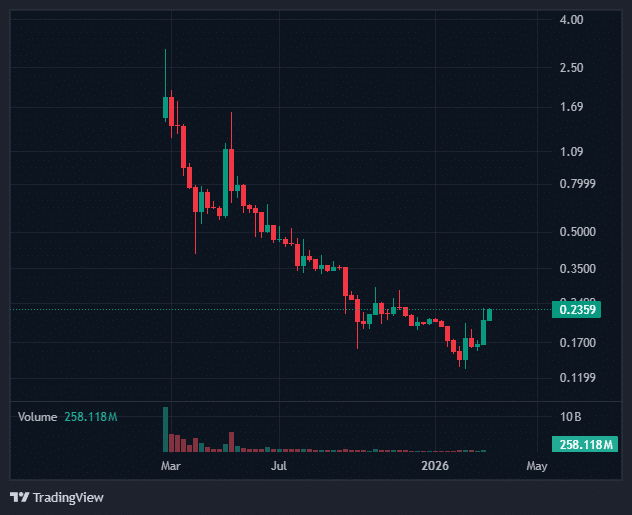
Skepticism Persists Despite the Pi Network Kraken Listing
Despite the Pi Network Kraken listing, skepticism still surrounds the project. Critics argue that years of delays and unclear roadmaps have raised concerns about transparency and execution.
Some analysts even describe the network as resembling a pyramid-style system, pointing to its referral-based growth model that rewards users for inviting others. Others question the app’s advertising-driven revenue model, claiming it generated income before strong blockchain utility emerged.
Supporters strongly reject these claims. They say Pi Network’s mobile mining approach opens the door to digital assets for people in emerging markets who lack access to costly mining equipment. Still, the Pi Network Kraken listing will place the project under real market scrutiny, where investor confidence will ultimately decide its future.
Conclusion
The Pi Network Kraken listing can be seen as its trip yet of all time.In the end, after ten years of debate, Pi Network is stepping onto a top-tier exchange where independent market demand will determine its future.
Supporters feel that a world-wide community of accessibility and mobile participation may already have been created. Critics sound a note of warning, saying hype alone cannot lastingly support value.
But the trading bell has sounded now, and one thing is being made clear. Whether Pi Network will develop into the corpus of a lasting blockchain ecosystem or remain a rather inexplicable experiments in cryptocurrencies, that awaits the verdict inside market confines.
Glossary of Key Terms
Kraken Exchange: A major U.S.-based cryptocurrency exchange known for regulated trading and global liquidity.
Pi Day: A symbolic annual event on March 14 celebrated by the Pi Network community.
Global Consensus Value (GCV): A community-driven proposal suggesting a symbolic long-term value for Pi coins.
Mainnet: The operational blockchain network where real transactions and tokens are recorded.
FAQs About Pi Network Kraken Listing
What is the Pi Network Kraken listing?
The Pi Network Kraken listing refers to the announcement that Kraken will begin spot trading of Pi Network’s native token on March 13, 2026.
Why is the Pi Network Kraken listing important?
It represents the first listing of Pi Network on a major global exchange, potentially improving liquidity and market visibility.
What is the current Pi Network price?
According to CoinMarketCap data, Pi Network currently trades near $0.22, far below its $2.98 all-time high.
Could the Pi Network Kraken listing affect the price?
Exchange listings often increase trading activity, but they can also trigger volatility depending on investor sentiment.
Sources / References