







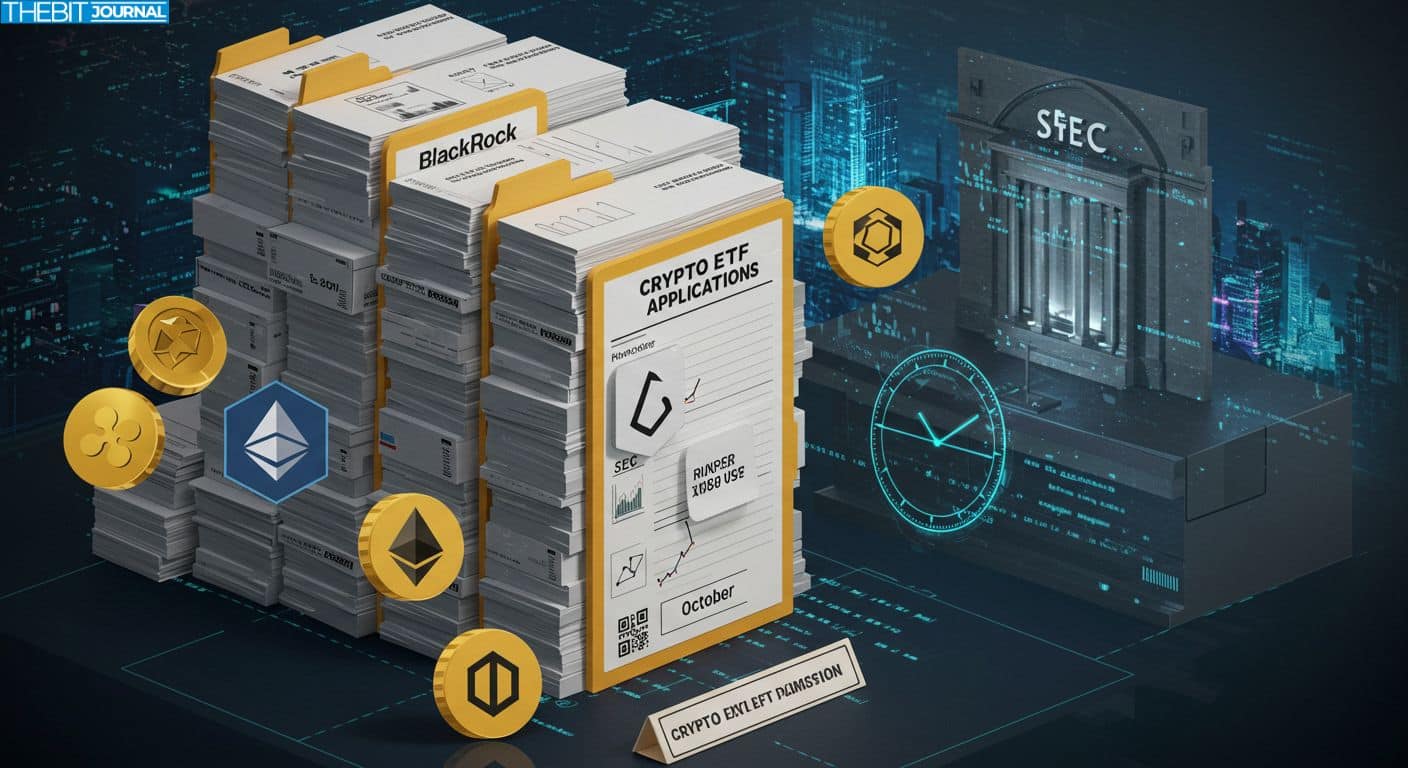
According to the latest reports, the U.S. Securities and Exchange Commission has delayed decisions on three big exchange-traded fund applications tied to staking and altcoins. Just recently, the SEC put off BlackRock’s Ethereum staking ETF and Franklin Templeton’s spot XRP and Solana ETFs.
With over 90 filings pending, these SEC crypto ETF delays push many applications into an expected batch decision window in October, adding both time and uncertainty for issuers and investors alike.
What the SEC Postponements Mean
The postponements include BlackRock’s staking proposal for Ethereum and spot ETFs from Franklin Templeton for XRP and Solana. The SEC is moving towards a generic framework that will allow eligible token-based ETFs to avoid the traditional Form 19b-4 process.
Under this approach, qualifying assets will use Form S-1 registration and have a fixed review period with metrics like market cap, trading volume and liquidity as the thresholds.
Also read: What SEC Crypto ETF Delays Mean for Traders in 2025
Progress on Generic ETF Listing Standards
Regulators and exchanges are working to define the criteria so crypto-asset ETFs can meet standardized listing rules. The generic listing framework being discussed will allow certain assets to be listed without separate rule-change processes.
This is expected to reduce delays, increase predictability and bring many pending applications closer to decisions.
Filing Backlog and Market Implications
There are over 90 crypto ETFs pending with the SEC including Solana, XRP, Litecoin, altcoin staking products and others. The delay of big filings shows regulatory caution but also the evolving dialogue between issuers and the SEC.
With deadlines piling up through October, many expect approvals to come in batches rather than individually.
Analysts and stakeholders
Bloomberg ETF analyst James Seyffart, among others, has said many of the filings will hit their deadlines in October and will be approved in batches.
Just recently, Eric Balchunas said the upcoming launch of a Dogecoin ETF (ticker DOJE) under the 40 Act structure will kick off a “meme coin ETF era” which will help build momentum for the pending staking and altcoin applications.
Also read: XRP ETF Delay: What SEC’s October Decision Means for Crypto Investors

Conclusion
Based on the latest research, the SEC crypto ETF delays are a sign of the agency’s caution and modernization. By putting off decisions on Ethereum staking, Solana and XRP ETFs and a generic listing framework, the SEC is creating more predictable and clearer paths for future approvals.
This will reduce friction and clarity for issuers and institutional investors. But with over 90 filings and deadlines coming up, the next batch will be big.
For in-depth analysis and the latest trends in the crypto space, our platform offers expert content regularly.
Summary
The SEC has put on hold key ETF decisions including BlackRock’s Ethereum staking proposal and Franklin Templeton’s Solana and XRP spot ETFs, while it works on a generic framework for token-based ETFs. This could shorten timelines and simplify filings, but for now many are in limbo. With over 90 filings pending, October has become the month to watch for regulatory outcomes.
Glossary
SEC crypto ETF delays – The U.S. Securities and Exchange Commission’s postponement of decisions on crypto ETFs, staking, or altcoins.
Generic listing framework – Proposed rules allowing certain crypto assets to meet standard criteria for ETF listing without separate rule-change filings.
Form 19b-4 – The SEC rule-change process for exchanges to list new securities under traditional mechanisms.
Form S-1 – The registration statement form used by companies or funds to register new securities with the SEC.
Spot ETF – A fund that holds the underlying asset directly rather than derivatives or futures contracts.
FAQs for SEC Crypto ETF Delays
What was delayed by the SEC?
The SEC delayed decisions on three ETF applications: BlackRock’s Ethereum staking proposal and Franklin Templeton’s spot ETFs for Solana and XRP.
What is the generic listing framework?
It’s meant to standardize qualification rules so issuers of token-based ETFs can meet certain criteria and avoid custom rule-change filings and speed up the process.
How many ETFs are pending?
There are over 90 crypto ETF filings in various stages.
When will approvals be seen?
Many have deadlines or expected windows in October 2025 so October is the month to watch.
Does this only affect big assets?
While big assets are involved, the generic standards and filing delays impact many altcoin and staking-based ETF proposals.