











Two-factor authentication for Crypto is no longer optional. Criminals target accounts every day. They use phishing, SIM swaps, and malware. A strong second factor stops many attacks cold.
This guide shows what works and why. It explains each method in simple terms. It maps security choices to real risks. It also covers rules that shape security programs. The goal is clear. Help every crypto user lock down accounts today.
What Is Two Factor Authentication For Crypto?
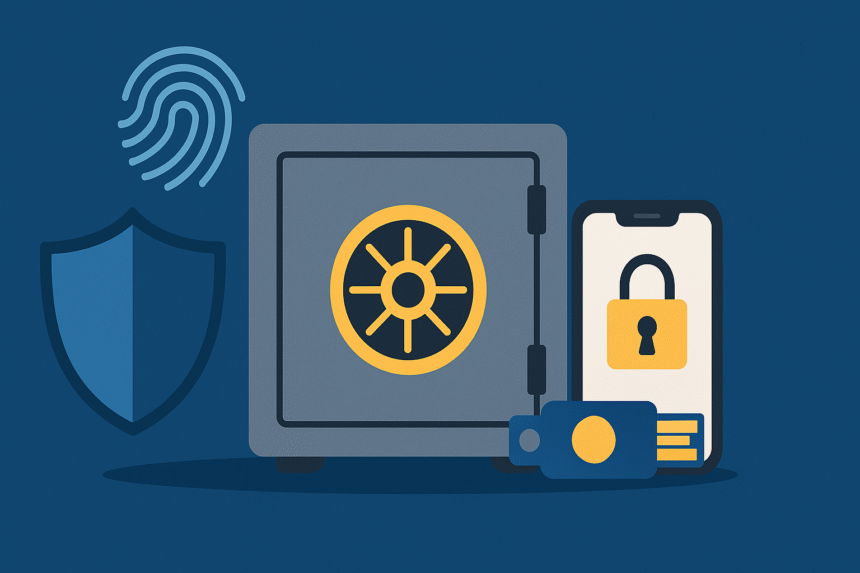
Two-factor authentication for crypto adds a second check at login. The first factor is something the user knows. A password. The second factor is something the user has or is. A code, a key, or a biometric.
This extra step blocks most takeovers. A thief may steal a password. The thief still fails without the second factor. Crypto accounts hold money and keys. That makes them prime targets. Strong 2FA protects funds and identity.
Why Crypto Needs Stronger 2FA Than Other Apps
Crypto accounts can move value in seconds. A single mistake can empty a wallet. Reversals do not exist on-chain. Attackers focus on the weakest link. They often go after the user. They try to trick carriers, reset numbers, or bypass codes. They send fake screens to capture tokens.
Better 2FA closes these holes. It reduces the chance of a clean hit. It also limits the blast radius if one device gets lost.
Types Of 2FA: From Weak To Strong
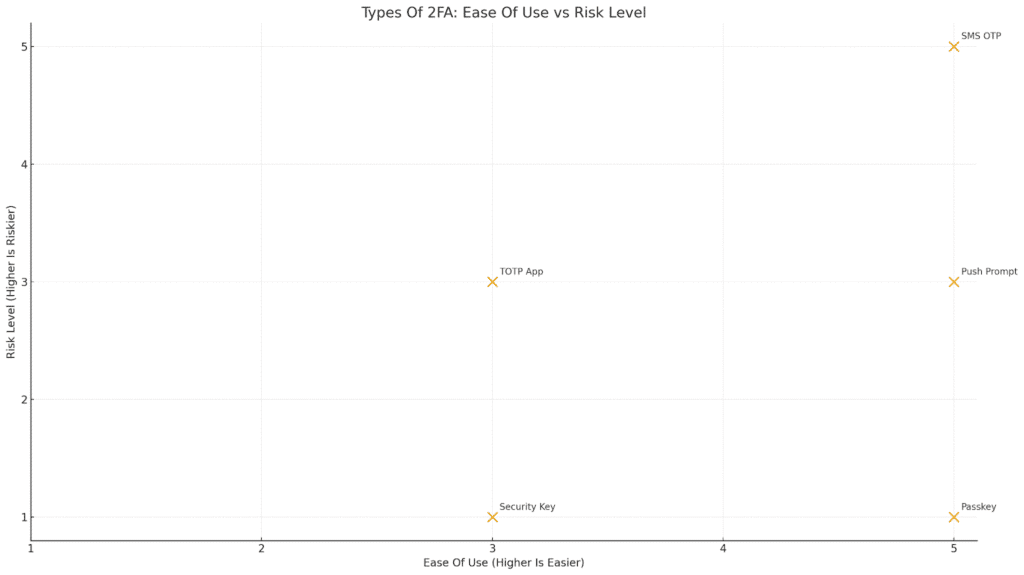
Not all 2FA is equal. Some options are easy to break. Others stand up to phishing and relay attacks.
SMS One-Time Passcodes
A code arrives by text. It is simple to use. It is also risky. SIM swaps let thieves hijack the phone number. Carriers can be tricked. Signals can be intercepted.
NIST now classifies SMS and voice OTP as restricted at high assurance. Programs that still use it must add extra safeguards.
Authenticator App Codes (TOTP)
Apps like Google Authenticator and Authy generate rotating codes. They work offline. They avoid carrier risks. They still fall to phishing and prompt bombing if the user enters a code on a fake site. TOTP is stronger than SMS. Yet it is not phishing-resistant.
Push Prompts
Some apps send a push to approve sign-in. This can reduce typing. It can also train users to click Approve without thinking. Number matching and context help, but social tricks still work. CISA warns against using phishing-resistant methods where possible.
Security Keys And Passkeys (FIDO2/WebAuthn)
Security keys and passkeys use public key cryptography. They prove their presence on the right site. They do not share secrets that phishers can reuse. They are phishing-resistant by design.
Passkeys live on phones, laptops, or hardware keys. They can sync across devices or stay device-bound. They are fast, simple, and secure against fake pages.
Quick Comparison Table
| Method | Phishing Resistant | SIM Swap Risk | Ease Of Use | Best For | Risk Level |
| SMS OTP | No | High | Easy | Legacy accounts only | High |
| TOTP App | No | Low | Moderate | Exchanges and wallets | Medium |
| Push Prompt | Partial | Low | Easy | Apps with number matching | Medium |
| Security Key (FIDO2) | Yes | None | Moderate | High-value accounts | Low |
| Passkey (WebAuthn) | Yes | None | Easy | Everyone, daily use | Low |
How To Set Up 2FA For Your Crypto Accounts
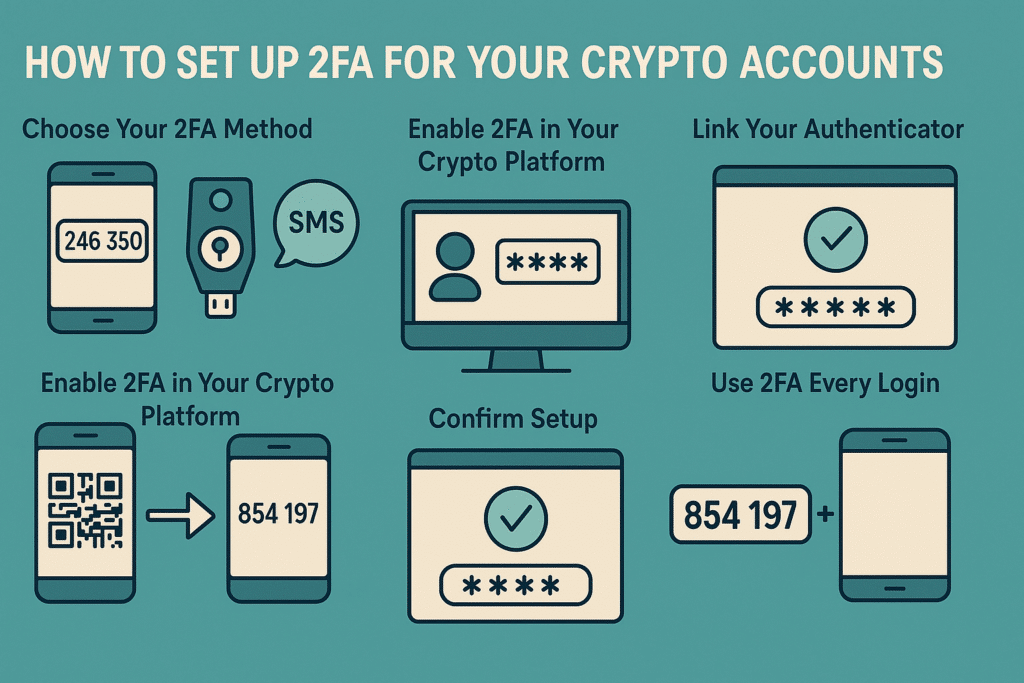
Securing your crypto wallets and exchange logins with two-factor authentication for crypto is one of the simplest and most effective defenses against hacks. Here is a step-by-step guide on how to set it up.
1. Choose Your 2FA Method
- Authenticator Apps (recommended): Google Authenticator, Authy, or Microsoft Authenticator. These generate rotating 6-digit codes offline.
- Hardware Keys: Devices like YubiKey or Ledger Nano with FIDO2 support. Strongest option but requires hardware.
- SMS 2FA: Easy but weakest since SIM swap attacks are common. Only use if no other option is available.
2. Enable 2FA in Your Crypto Platform
- Log in to your exchange account or wallet app (for example, Binance, Coinbase, Metamask, or KuCoin).
- Go to Security Settings and look for “Enable 2FA” or “Two Factor Authentication.”
- Pick your method: app, SMS, or hardware.
3. Link Your Authenticator
- If using an app:
- Scan the QR code shown on the exchange with Google Authenticator or Authy.
- The app will now generate a 6-digit code every 30 seconds.
- If using a hardware key:
- Plug in or tap the key when prompted.
- Confirm registration on the platform.
4. Confirm Setup
- Enter the generated 2FA code from the app or hardware key to confirm.
- Save your backup codes in a secure place that is not your phone.
5. Use 2FA for Every Login
- From now on, every login or withdrawal requires both:
- Your password
- Your 2FA code or hardware tap
Pro Tips
- Always use app-based or hardware 2FA instead of SMS.
- Store backup codes in an offline password manager or a physical copy.
- Never share your codes. Even support teams will not ask for them.
- Pair 2FA with anti-phishing settings. Many exchanges let you set a phrase that must appear in official emails.
How Attackers Bypass Weak 2FA
Attackers do not need to break math. They attack people and processes.
- SIM swap. A thief convinces a carrier to port a number. The thief receives SMS 2FA codes. The account falls in minutes.
- Phishing and malware. Fake pages and OTP bots relay TOTP codes in real time. Stealers grab session tokens.
- Prompt fatigue. Endless push prompts wear users down. Approval follows out of habit.
Phishing-resistant 2FA removes most of these paths. Keys and passkeys check the website origin. They do not share reusable codes.
Security And Regulatory Context With Real-World Stats
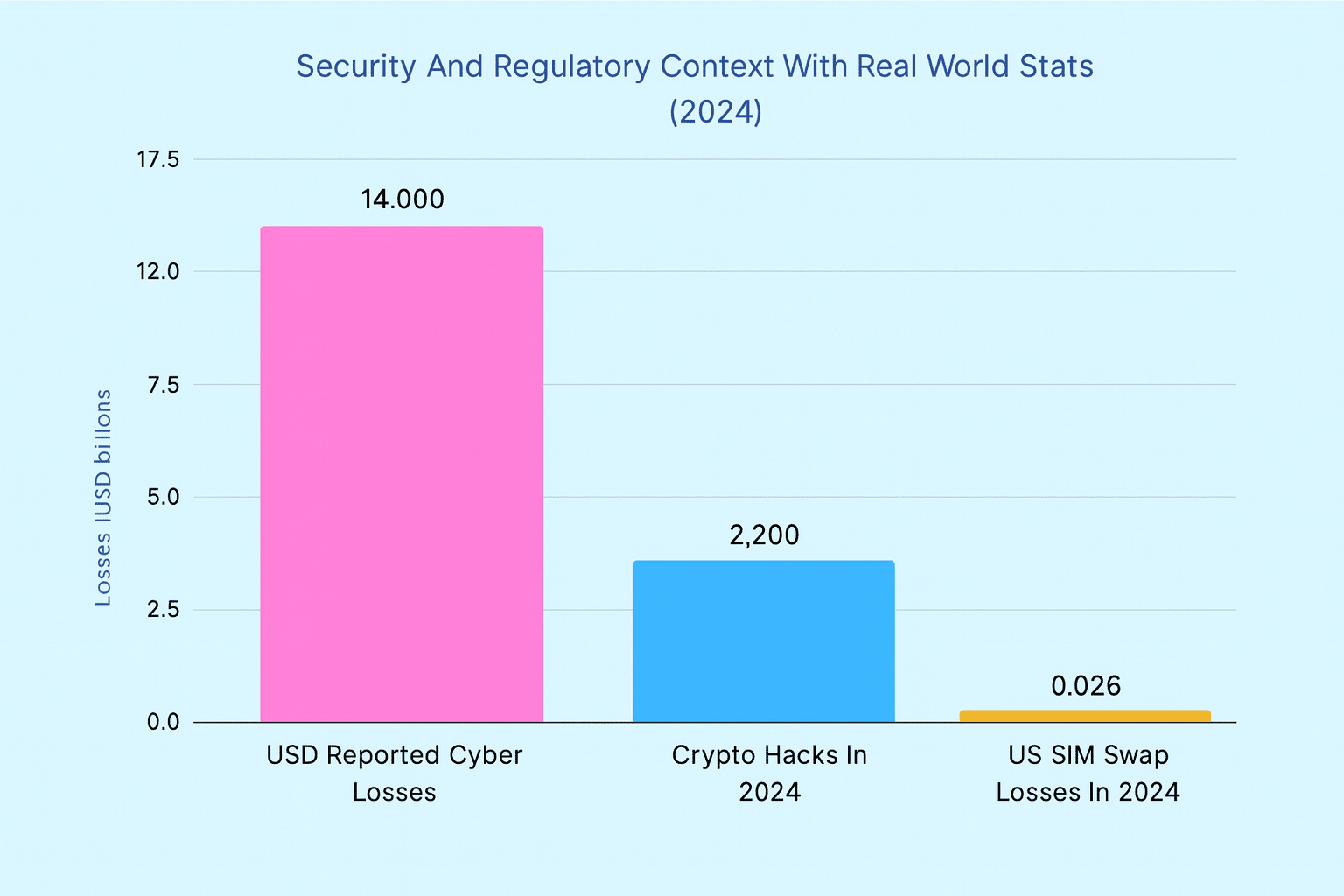
Crypto crime and cyber fraud keep rising. That raises the bar for account security.
- The FBI’s IC3 logged more than 16 billion in reported cyber losses in 2024. That was up 33 percent year over year.
- Reuters reported 2.2 billion dollars stolen in crypto hacks in 2024. Many attacks involved stolen keys and access paths.
- Chainalysis and others noted that North Korea-linked groups stole about 1.3 billion dollars via crypto hacks in 2024.
- SIM swap losses in the U.S. topped 26 million dollars in 2024, according to FBI IC3 data cited in 2025 summaries. SIM swaps bypass SMS 2FA.
Regulators also expect stronger controls.
- NIST’s new SP 800-63B Revision 4 places SMS and PSTN OTP in a restricted category at higher assurance levels. Programs must mitigate known risks if they still use them.
- CISA urges adoption of phishing-resistant MFA, such as FIDO2 security keys and PIV-like solutions.
- The SEC’s cybersecurity rules demand timely disclosure of material incidents and clear risk management practices for public companies. That pressure drives stronger authentication for customer accounts as well.
- In the EU, MiCA sets rules for crypto-asset service providers. Firms must have sound governance and controls across the stack. Strong authentication supports those obligations.
Choosing The Right 2FA For Crypto Exchanges
Exchanges face targeted attacks and social engineering. The right setup blends strength and scale.
- Default to passkeys. Make passkeys the primary sign-in option. They are fast, cross-platform, and phishing-resistant. Use device-bound options for staff with high-risk roles.
- Offer hardware keys. Support USB-C and NFC keys for users who want extra assurance. Enforce at least two keys for staff. Store them in separate places.
- Keep TOTP for legacy users. Allow TOTP as a fallback. Pair with risk checks and device binding. Warn about phishing.
- Retire SMS for high-risk flows. If SMS must exist, restrict it to low-risk actions. Add extra verification for SIM change events. NIST’s restricted status is a clear signal.
- Protect resets. Account recovery is a common attack path. Require passkeys or keys for resets. Add cooldowns and out-of-band checks.
- Monitor signals. Look for a new device, a new location, or an unusual time. Step up to a phishing-resistant factor when risk spikes.
Choosing The Right 2FA For Self-Custody Wallets
- Wallets often ship with seed phrases and device PINs. Add strong 2FA on linked services and cloud backups.
- Secure the wallet app. Use passcode, biometric, and device encryption. Treat the phone as a hardware token.
- Secure cloud sync and backups. If the wallet stores encrypted data in the cloud, it requires a phishing-resistant factor to unlock the key. Encourage passkeys.
- Guard support channels. Attackers impersonate users to drain wallets. Train staff to verify with phishing-resistant 2FA before any sensitive action.
- Use hardware where it counts. For cold storage, combine hardware wallets with security keys for account access and policy management. Keep keys in separate custody.
Step-By-Step: Upgrade From SMS To Passkeys
A move from SMS to passkeys takes planning. Here is a simple path.
- Add passkeys. Enable WebAuthn on web and mobile. Support platform passkeys and cross-device sync.
- Nudge users. Show a short setup card after login. Explain that passkeys stop phishing and SIM swaps. Keep the flow simple.
- Set policy. Make passkeys the default. Keep TOTP as a fallback. Limit SMS to low-risk actions.
- Harden resets. Require a passkey or hardware key to change factors or devices.
- Add staff controls. Enforce two hardware keys, plus a platform passkey. Use admin approval for factor changes.
- Measure. Track adoption, blocked phishing attempts, and help desk load. Expect fewer lockouts and stronger security.
Beyond Login: When To Prompt For 2FA
Good 2FA is about smart prompts, not constant friction.
- High-value actions. Withdrawals, API key creation, and device trust.
- Profile changes. Email address, phone number, password, or factor changes.
- Risk spikes. New country, fresh browser, or strange time.
- Session recovery. Token refresh failures or suspicious sessions.
Use phishing-resistant prompts for these events. Keep a short grace period for normal use to avoid prompt fatigue.
Common Myths About 2FA
Myth 1: SMS is good enough
Not true for crypto. SIM swaps and number porting break SMS. NIST now restricts it at higher assurance.
Myth 2: Hardware keys are hard.
Modern keys support tap-to-auth on phones and USB-C on laptops. Passkeys reduce friction even more.
Myth 3: Phishing resistance is overkill.
Phishing and relay kits are cheap. They bypass TOTP in real time. Keys and passkeys stop them by design.
Myth 4: 2FA slows growth.
Clear UX and smart prompts keep sign-in fast. Fraud costs and support tickets drop when 2FA gets stronger.
Incident Lessons From 2024
Crypto hacks spiked in 2024. Many cases involved stolen keys and weak access paths. A single phished session can drain funds if controls are loose. Reuters and others tracked billions in losses.
Nation-state actors also targeted exchanges. North Korea-linked groups stole over a billion dollars. They often phish staff or abuse vendor access. Strong 2FA with keys and passkeys limits these routes.
Consumer fraud also rose. IC3 saw record cyber losses. Seniors faced steep harm. Better 2FA and education reduce these losses.
Program Checklist For Exchanges And Wallet Providers
- Make passkeys the default 2FA for all users.
- Support hardware keys for power users and staff.
- Keep TOTP only as a backup with added risk checks.
- Retire SMS for high-risk actions.
- Lock down account recovery with phishing-resistant checks.
- Use admin approval and two keys for internal roles.
- Detect risk and step up to keys or passkeys.
- Train support teams to avoid social engineering.
- Test incident playbooks and measure adoption.
Practical Tips For Everyday Users
- Turn on Two-Factor Authentication for Crypto on every account.
- Prefer passkeys or hardware keys.
- If a site only offers codes, choose an authenticator app.
- Avoid SMS whenever possible.
- Do not share codes on calls or chats.
- Bookmark real exchange URLs. Avoid links in email.
- Keep at least two factors enrolled. Store backups safely.
- Update phones and laptops. Patch removes known holes.
The Business Case
Stronger 2FA cuts fraud refunds, chargebacks, and support costs. It also reduces breach risk that triggers SEC disclosures for public firms. Investors watch those filings. Poor controls can hurt brand and price.
In the EU, MiCA pushes firms to raise the security floor. Better 2FA supports those duties. It also helps win licenses and trust across member states. Security that users like tends to stick. Passkeys offer that mix of safety and speed.
Conclusion
Two-Factor Authentication for Crypto is the front line. Attackers target users, devices, and carriers. SMS falls first. TOTP helps, but it still leaks to phishers. Passkeys and security keys stop most real-world attacks.
Regulators expect clear controls and honest reports. Users expect safety with less hassle. Strong 2FA delivers both. Start with passkeys. Keep hardware keys for high-value accounts. Reduce SMS to a last resort. Protect resets. Watch risk. Do these steps and sleep better at night.
.
FAQs About Two-Factor Authentication for Crypto
What is the best form of Two-Factor Authentication for Crypto?
Passkeys or hardware security keys. These methods are phishing-resistant and block SIM swap risks.
Should users keep SMS 2FA enabled?
Use SMS only as a last resort. Prefer passkeys or an authenticator app. NIST now restricts SMS for high assurance use.
Are authenticator apps safe enough?
They are safer than SMS. They still fall to phishing if a user types a code on a fake site.
How do passkeys work on multiple devices?
They can sync across devices or live on a hardware key. The private key never leaves the device.
Do regulations require strong 2FA?
Rules vary. In the U.S., public companies must manage and disclose cyber risks. Strong 2FA supports that duty. In the EU, MiCA sets security expectations for providers.
Glossary
- 2FA: Two-Factor Authentication. A login check with two factors.
- TOTP: Time-based One-Time Password. App codes that rotate.
- SMS OTP: A one-time code sent by text message.
- FIDO2: An open standard that enables phishing-resistant sign-in.
- Passkey: A FIDO credential stored on a device that replaces passwords.
- Phishing Resistant: A method that blocks fake sites from stealing login secrets.
- SIM Swap: A carrier change that moves a phone number to a new SIM.
- WebAuthn: The web API that powers passkey sign-in.
- Authenticator App: An app that generates TOTP codes.
- Risk-Based Authentication: A system that prompts for stronger checks when risk rises
Summary
Two-Factor Authentication for Crypto protects accounts against common attacks. The strongest options are passkeys and FIDO2 security keys. These methods are phishing-resistant and immune to SIM swaps. TOTP apps are better than SMS, but still leak to phishers. SMS OTP now holds a restricted status under NIST guidance at higher assurance levels. CISA urges phishing-resistant MFA. In 2024, reported cyber losses hit 16 billion dollars in the U.S., while crypto hacks reached about 2.2 billion dollars, with nation-state groups stealing over 1.3 billion dollars. The SEC requires public firms to disclose material cyber incidents and governance. MiCA sets controls for EU providers. For users and firms, the plan is clear. Make passkeys the default, keep hardware keys for high-value roles, limit SMS, and lock down account recovery.