





Crypto brings open networks and open risk. Each year, criminals target exchanges, bridges, and hot wallets. Losses add up fast. In 2024 alone, hackers stole about $2.2 billion from crypto platforms, across 303 incidents. Many attacks came from stolen keys and weak operational controls. Hardware wallets push back by taking keys offline and out of reach.
This guide explains how hardware wallets reduce attack surface. It shows what they do, where they fail, and how to use them well. It also scans the rules in major markets so readers know what changes next. The goal is simple. Help readers protect private keys, avoid scams, and keep control.
What A Hardware Wallet Does
A hardware wallet stores private keys on a small, purpose-built device. It signs a transaction inside the device. It never exposes the raw private key to a phone or laptop. The signed transaction then travels to the network. The key stays offline the whole time.
Most hardware wallets include:
- A secure element or similar chip that protects secrets.
- A simple screen to verify addresses and amounts.
- A pin, passphrase, or both, to unlock signing.
- A seed phrase for recovery.
If a laptop gets malware, the device still blocks key theft. Malware can ask for a bad transaction, but the screen lets users confirm the details before signing.
Why Hardware Wallets Matter In 2025
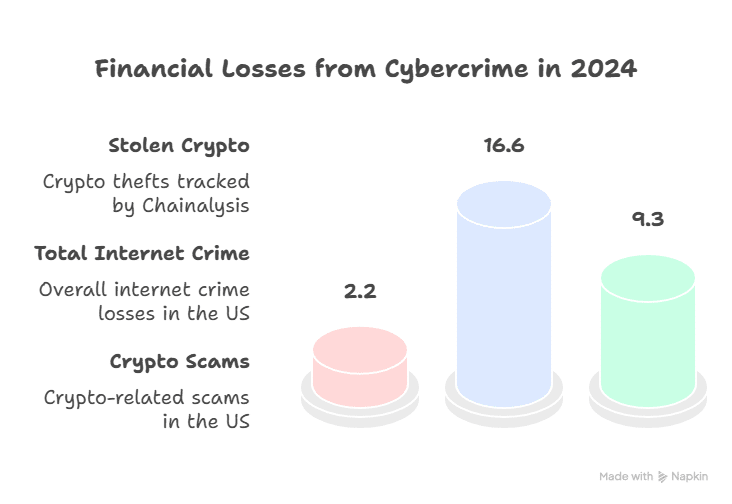
Attackers go where keys live. Centralized platforms and always-online software wallets present easy targets. Chainalysis tracked $2.2 billion in stolen crypto in 2024, with high-profile hits at DMM Bitcoin and WazirX. Losses soared as markets rallied. More price action tends to draw more crime.
In the United States, total internet crime losses reached $16.6 billion in 2024, with $9.3 billion tied to crypto scams. These numbers show a clear trend. Users need to harden custody, not chase returns at any cost. Hardware wallets set a higher bar.
How Hardware Wallets Work: The Core Flow
Key Generation
The device creates entropy and derives a seed phrase. The seed phrase is the root. From it, wallets derive many accounts and addresses. The seed phrase never needs to touch a network if users handle it right. Ledger and other vendors stress seed hygiene, because many losses come from poor storage rather than broken chips.
Transaction Signing
When a user sends funds, the app builds an unsigned transaction. It passes it to the device over USB, Bluetooth, or QR code. The device shows the details on its screen. The user approves on-device. The device signs internally and returns a signature. The app broadcasts it. The key never leaves the device.
Recovery
If the device breaks or gets lost, the seed phrase restores the wallet on a new device. That makes the paper backup the real single point of failure. Treat it like cash or jewels. Store it in two safe locations. Avoid digital photos or cloud copies.
Hardware Wallets Vs Other Wallet Types
| Wallet Type | Where Keys Live | Connectivity | Typical Use | Main Risks |
| Hardware wallet | Secure chip on device | Offline for keys, online for signed tx | Long-term hold, large balances | Seed loss, fake firmware, wrong address |
| Mobile/software wallet | Phone or desktop | Online | Daily spend, small balances | Malware, clipboard hijack, phishing |
| Custodial wallet (exchange) | Company controlled | Online | Trading, quick access | Platform hack, insolvency, account freeze |
| Paper wallet | Printed seed/private key | Offline | Archival | Physical loss, user error |
Hardware wallets offer strong isolation. They also add a small friction step. That friction saves money when it blocks a bad click.
Security Model: What Hardware Wallets Stop
Online Threats
- Malware that reads files or memory
- Phishing that tricks users into revealing a seed
- Browser plug-in attacks
- Clipboard swaps that change the destination address
Because private keys never touch the computer’s memory, malware has little to steal. The on-device screen also catches many address swaps.
Supply-Chain And Firmware Risks
No tool is perfect. In 2023 and 2024, users debated vendor features like seed backup services and firmware updates that add complexity. These features can improve recovery but also expand the trust surface. Security comes from clear consent, open review, and strong device checks. Users should verify firmware from the vendor and disable extras they do not need.
Social Engineering
Criminals target people, not chips. They pose as support staff. They ask for seed phrases. They run long-con scams with fake jobs or relationships. The FBI warns about tailored scam scripts and North Korean IT workers who infiltrate teams. A device cannot fix trust problems. Education does.
Real-World Losses: What The Numbers Show
| Incident | Date | Vector | Reported Loss |
| DMM Bitcoin exchange | May 2024 | Compromised keys, unauthorized withdrawals | ~$305M |
| WazirX exchange | Jul 2024 | Compromised keys | ~$235M |
| Global tally 2024 | Full year | 303 hacks across platforms | ~$2.2B |
Most large losses come from hot wallets or centralized custody with exposed keys. This pattern matches years of data and recent reports. Moving keys to hardware wallets sets a harder target.
Set Up A Hardware Wallet The Right Way
Buy From The Source
Buy new devices from the official store or an authorized seller. Check for tamper evidence and serial checks. Avoid “pre-installed” seed phrases at all costs. If a slip of paper ships with a seed, treat it as a scam.
Initialize Offline
Generate the seed on the device. Confirm each word on the device screen. Do not type the seed into a computer or phone. Never take a photo. Write it on paper or metal.
Use A Passphrase
Many wallets let users add a passphrase to the seed. This creates a hidden account that only unlocks with that extra word. Choose a passphrase that is long and unique. Store it apart from the seed.
Verify Before You Sign
Always match the address and amount on the device screen. Do not trust the computer’s screen alone. If something looks off, cancel. Slow is smooth, smooth is safe.
Keep Firmware Current
Update firmware only from the vendor app or site. Read release notes first. Then verify the device shows the expected version.
Split Your Risk
Use more than one device for large holdings. Keep a daily-spend wallet with a small balance on a phone. Keep savings on a hardware wallet stored in a safe place. For higher stakes, consider multisig with two or three devices.
Multisig And Shamir: Extra Layers For Bigger Stakes
A single device can fail. A single sheet of paper can burn. Multisig spreads crypto risk across two or more devices. A common setup is 2-of-3. Any two devices can sign. One can sit in a bank box. One can sit at home. One can sit with a trusted third party. Attackers now need to steal two independent keys.
Some devices also support Shamir backups. This splits one seed into several shares. A user may need two of three shares to recover. This removes a single point of failure, but it adds setup steps. Users should drill recovery at least once with small funds.
Usability: Where People Trip Up
Seed Storage
Many people lose funds by losing the seed. The fix is boring. Write the seed clearly. Store two copies in two safe places. Check legibility once per year.
Address Confusion
Token standards and chains vary. Send only to a correct address on a matching chain. Verify on the device screen. When in doubt, send a tiny test first.
Recovery Drills
Recovery feels scary. That is why it matters. Practice a dry run with a spare device and a tiny balance. Confirm that the process works.
Security And Regulatory Context
Crime And Consumer Harm
- Chainalysis tracked $2.2 billion stolen in 2024, across 303 hacks. Large cases hit centralized platforms with compromised keys.
- The FBI reported $16.6 billion in internet crime losses in 2024. Americans reported $9.3 billion tied to crypto scams. Seniors suffered the most loss.
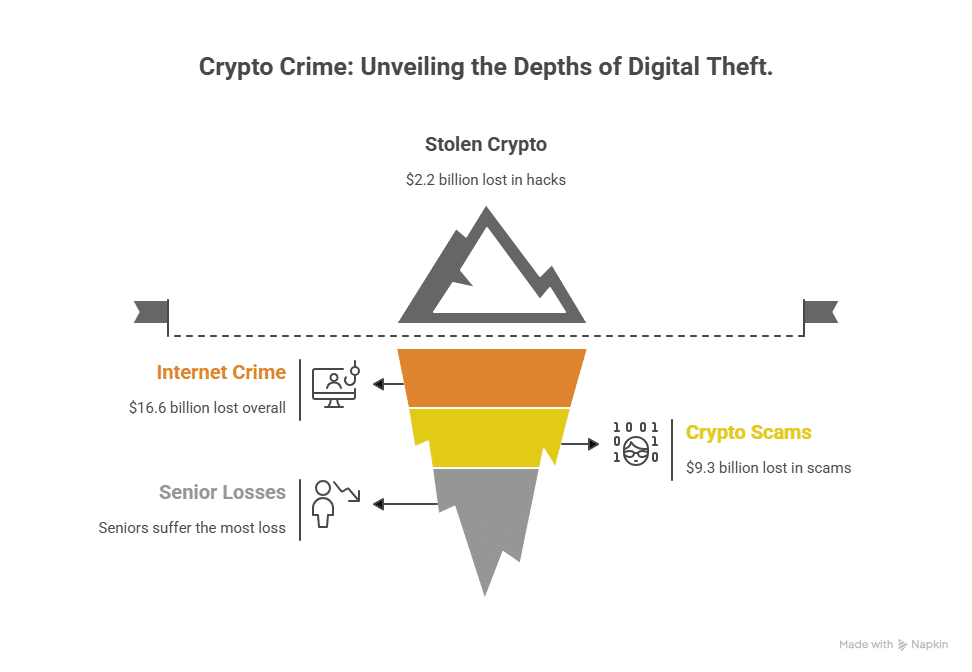
These figures point to a simple truth. Online keys draw attackers. Users need stronger custody habits.
EU: MiCA Comes Online
The EU’s Markets in Crypto-Assets Regulation (MiCA) took effect in phases. Stablecoin rules started on June 30, 2024. Rules for other tokens and service providers started on December 30, 2024. National regulators and ESMA continue to refine guidance through 2025. MiCA sets clear duties for custodial providers, while self-custody tools fall outside many of those duties. Users should still follow strong AML rules when moving funds.
MiCA does not ban hardware wallets. It focuses on firms that hold client assets or provide regulated services. Still, the related EU AML rules and the Travel Rule affect transfers between hosted and self-hosted wallets. Some providers flag extra checks for such transfers.
Practical Takeaway
- Self-custody with hardware wallets remains a strong choice for security.
- Users should understand that exchange withdrawals may face AML checks in the EU.
- Keep records of transfers to prove source of funds when needed.
Cost, Choice, And Fit
Hardware wallets come in many shapes. Some use USB. Some scan QR codes. Some add Bluetooth. Some run open firmware. Some use secure elements with closed code. There is no single “best” choice. Fit depends on threat model and comfort.
Questions to ask:
- Does the device show full transaction details on its own screen?
- Does it support the chains and tokens in use?
- Is the firmware open, audited, or both?
- Does it work well with the user’s computer and phone?
- Does the vendor provide clear docs and routine updates?
Common Myths
- Hardware wallets are only for whales: Not true. Anyone who holds more than a coffee’s worth can benefit. The device cost is less than most losses from one bad click.
- A hardware wallet makes me hack-proof: No tool stops scams or fake websites. Users must read screens and refuse to share seeds.
- Self-custody is illegal: Not in the EU or US. Rules target custodial firms and bad actors, not personal wallets. Keep records and follow tax rules.
Step-By-Step Quick Start
- Buy a new device from the vendor.
- Unbox and check seals.
- Initialize and write the seed.
- Add a passphrase if supported.
- Install the vendor app from the official site.
- Update firmware.
- Create a receive address.
- Send a small test from an exchange.
- Verify on the device screen and confirm receipt.
- Move the rest only after the test works.
When A Hardware Wallet May Not Fit
- Very small balances used daily
- Users who refuse any backup process
- Users who cannot keep a seed safe
In those cases, a reputable software wallet with strong device hygiene is still better than leaving funds on a random site.
Threats And Matching Defenses
| Threat | What It Looks Like | Defense With Hardware Wallet |
| Phishing site | Fake dApp or exchange asks to “import seed” | Never share seed. Verify URLs. Device never asks for seed outside setup. |
| Address swap | Malware changes destination address | Approve only after checking the device screen. |
| Remote access trojan | Hacker controls laptop | Transaction still needs device approval. Keep pin and passphrase strong. |
| Exchange breach | Platform loses hot wallet keys | Hold long-term funds in self-custody. |
| Lost device | Theft or damage | Recover with seed. Use passphrase for plausible deniability. |
Best Practices Checklist
- Two copies of the seed, in two locations
- Optional passphrase, stored apart from the seed
- Test recovery with small funds
- Firmware up to date, verified on device
- Multisig for large balances
- Use the device screen as the single source of truth
Conclusion
Hardware wallets stand out as a proven defense against the rising wave of crypto theft. By keeping private keys offline and requiring on-device approvals, they block most malware, phishing, and exchange-level breaches. In 2024 alone, $2.2 billion was stolen across 303 incidents of loss, highlighting the need for stronger self-custody.
But devices alone aren’t enough. Security depends on habits: buying from trusted vendors, protecting seed phrases like cash, verifying every transaction, and practicing recovery. For higher stakes, multisig and Shamir backups add resilience. Hardware wallets may not stop scams, but they provide essential, practical protection for long-term crypto holders.
FAQs About Hardware Wallets
What is a hardware wallet?
A small device that stores private keys offline and signs transactions on-device. The key never leaves the device.
Are hardware wallets safe?
They reduce many online threats. They still need careful seed storage and updates.
What happens if the device breaks?
Use the seed phrase to restore on a new device. Keep two safe backups.
Can a hardware wallet get hacked?
Not by normal malware on a computer. Attacks focus on users and weak setups. Always verify on the device screen.
Do regulations ban self-custody?
No. EU MiCA targets service providers. Users can self-custody but should follow AML and tax rules.
Glossary
- Hardware Wallet: A device that holds private keys offline and signs transactions.
- Seed Phrase: A list of words that recover all keys and accounts.
- Private Key: A secret used to sign transactions and prove ownership.
- Public Address: The receiving identifier for a wallet on a chain.
- Secure Element: A chip that stores secrets and resists tampering.
- Multisig: A setup that needs two or more keys to approve a transaction.
- Passphrase: An extra word that creates a hidden account from the same seed.
- Travel Rule: Regulatory rule that sends originator and beneficiary data with transfers between providers.
- CASP: A crypto asset service provider regulated under MiCA. (ESMA)
- Self-Hosted Wallet: A wallet where the user controls keys, not a company.
Summary
Hardware wallets help people secure crypto by keeping private keys offline and signing transactions on-device. Most large losses come from compromised hot keys at exchanges or software wallets. In 2024, hackers stole about $2.2 billion across 303 incidents, which underlines the need for strong custody. A hardware wallet blocks malware from reading keys and makes users verify details on a trusted screen. Good setup matters: buy from the source, write the seed by hand, add a passphrase, verify every transaction on the device, and test recovery. For larger holdings, use multisig or Shamir. EU MiCA rules now apply across the bloc and focus on custodial firms, not personal self-custody, though AML rules still affect transfers. With steady habits and simple checklists, hardware wallets offer a practical, higher-security path for long-term crypto storage.