



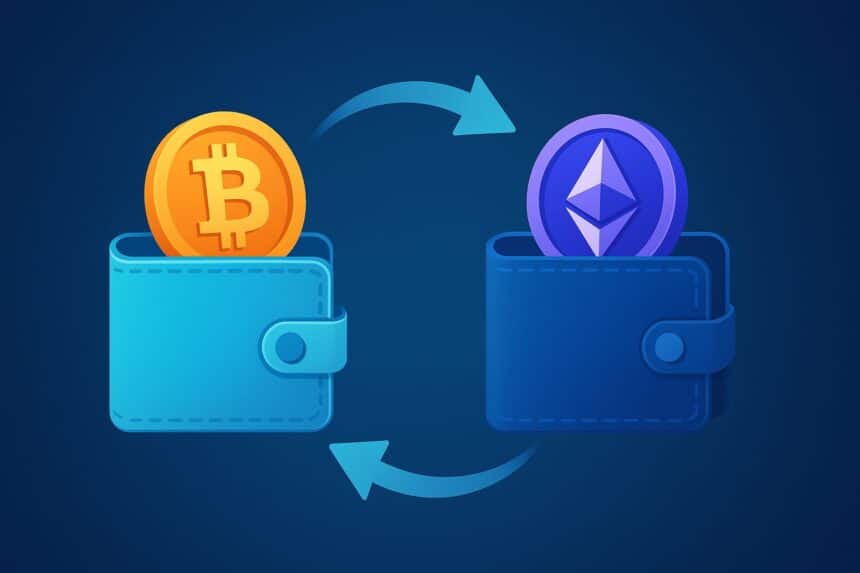

Information on the cryptocurrency world rests on freedom, pace and dominance. Yet one of the most common tasks, how to transfer funds between crypto wallets still confuses many new users. Slipups will run up into cash.
This guide breaks down the process into simple terms. It will discuss what constitutes a crypto wallet, the process of transfers and security measures that each user ought to be aware of. Comparisons, field strategies and tips and industry research insights will be available to the readers.
What Is a Crypto Wallet?
A digital store of a crypto wallet stores a set of keys. These keys open access to the blockchain cryptocurrency.
- Hot wallets: Wallets on the internet due to their association with the internet. They are quick and easy to hack.
- Cold wallets: Wallets that are offline including hardware devices. But they are more secure but not convenient.
They are both technologies that can enable their user to send and receive digital assets. Knowledge of a wallet type is important prior to transfer.
Why Transfer Funds Between Crypto Wallets?
There are a number of reasons why a person might want to transfer coins or tokens between wallets:
- To move assets that are in an exchange to a personal wallet to be safe.
- To interact on holdings between wallets.
- To transfer to a hardware wallet as a long term storage.
- In order to pay or gift crypto.
Each situation should be taken with caution so that you do not send the coins to the wrong wallet.
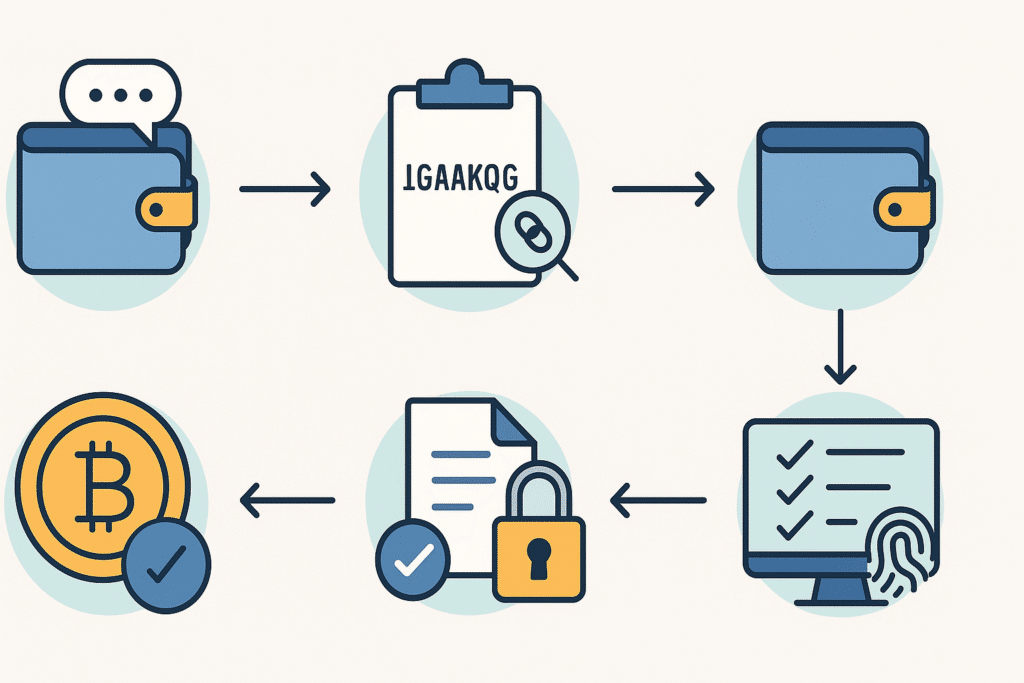
Step-by-Step: How to Transfer Funds Between Crypto Wallets
Step 1: Choose the Right Wallets
Decide whether the transfer is from hot to cold, between exchanges, or wallet to wallet. The process is similar, but the fees and risks vary.
Step 2: Copy the Recipient Wallet Address
Every wallet has a unique address. Copy this carefully. Never type it by hand. Use QR codes if possible.
Step 3: Select the Network
Many assets can move on different blockchains. For example, USDT can transfer on Ethereum or Tron. Choosing the wrong network means the funds may be lost.
Step 4: Enter the Amount
Check the balance before sending. Some wallets show estimated fees, which affect the total.
Step 5: Confirm the Details
Always double-check the address and network. Mistakes cannot be reversed.
Step 6: Authorize the Transaction
This often requires entering a password, using a hardware device, or scanning with biometrics.
Step 7: Track the Transaction
Block explorers show confirmations. Transfers can take seconds or minutes, depending on network congestion.
Key Risks and Mistakes to Avoid
- Sending to the wrong address.
- Choosing the wrong blockchain network.
- Underestimating transaction fees.
- Falling for phishing scams.
A common rule: test with a small transfer before moving larger sums.
Comparison: Hot Wallets vs. Cold Wallets for Transfers
| Feature | Hot Wallets (Online) | Cold Wallets (Offline) |
| Speed | Fast | Slower setup |
| Security | More vulnerable to hacks | Strong protection |
| Ease of Use | Beginner friendly | Requires technical setup |
| Best Use Case | Small, daily transactions | Large, long-term holdings |
Security and Regulation Context
The largest concern is security. Chainalysis stated that the crypto thefts surpassed more than one point seven billion dollars in 2023 primarily through wallet hacks and scams.
Regulators are listening. The U.S. Securities and Exchange Commission (SEC) remains cautious of such frauds to investors. Other errors, like erroneous addresses, have also been found to cause loss of millions each year by MIT researchers.
Users can lower risks by following best practices:
- Use two-factor authentication.
- Keep private keys offline.
- Avoid copying addresses from untrusted sources.
Advanced Tips for Transferring Funds Between Crypto Wallets
- Batch Transfers: Some wallets allow sending to multiple addresses at once. This saves on fees.
- Replace-By-Fee (RBF): Bitcoin users can speed up slow transactions by increasing the fee.
- Cross-Chain Bridges: Some services allow moving assets across blockchains. Use only trusted providers.
- Memo Tags: For certain coins like XRP or BNB, an extra memo or tag is required. Forgetting this may cause lost funds.
Conclusion
Moving cryptocurrency should not be a stressful thing. Any person can transfer funds between crypto wallets without risk of loss by following the correct procedures. The trick is to re-examine all the details, to use safe wallets, and be aware of frauds.
The future of digital money is based on trust. Any transfer helps to create that confidence when done carefully.
Frequently Asked Questions For Transfer Funds Between Crypto Wallets Safely
How long does it take to transfer funds between crypto wallets?
It depends on the blockchain. Bitcoin can take 10 minutes. Ethereum is often under a minute. Some networks are near instant.
Can I cancel a crypto transaction after sending?
No. Blockchain transfers are final. Always check details before sending.
What happens if I use the wrong network?
Funds may be lost forever. Only experts with special tools can sometimes recover them.
Are wallet-to-wallet transfers taxable?
In the U.S., moving crypto between your own wallets is not taxable. But selling or exchanging assets may be.
Do I need to pay a fee every time I transfer funds between crypto wallets?
Yes. Every transaction requires a network fee. The cost depends on blockchain activity.
Which is safer for transfers, hot or cold wallets?
Cold wallets are safer for storage, but most transfers start in a hot wallet. Use both depending on the purpose.
What is the safest way to store my wallet address?
Use a password manager or scan QR codes. Never write it in plain text on public devices.
Glossary of Key Terms
- Blockchain: A public digital ledger for recording transactions.
- Private Key: A secret code that proves ownership of crypto.
- Public Key: The visible wallet address used to receive funds.
- Transaction Fee: A small cost paid to process transactions.
- Confirmation: Network validation that a transfer is complete.
- Gas Fee: Payment for transactions on Ethereum.
- Seed Phrase: Backup words that recover a wallet.
- Bridge: A tool to move assets across blockchains.
- Smart Contract: Code on a blockchain that automates rules.
- Memo Tag: Extra identifier used in some transfers.
Summary
In this guide, the reader will learn how it is possible to safely and effectively transfer funds between crypto wallets. It addresses the types of wallets, transfer procedure, security hints and mistakes to avoid. Hot vs cold wallets: advantages and disadvantages. Real-life statistics demonstrate why the safety of transfers is important. The readers will know how to prevent the wrong network or a missed memo tag. The main lesson here is that with proper planning and detailed orientation, the loss can be avoided and every transfer can be made without a hitch.