







The USDsui stablecoin has officially gone live on the Sui blockchain, establishing the network’s first native digital dollar and its latest effort to firm up gain in decentralized finance. Confirmed on 4th March, the launch introduces a dollar-pegged asset made for payments, trading activity and liquidity throughout the Sui ecosystem.
The USDsui stablecoin is issued via Bridge, a digital payments infrastructure company owned by Stripe. The token operates on Bridge’s Open Issuance platform that allows for regulated deployment of stablecoins across blockchain networks.
The USDsui stablecoin is described by developers as a digital dollar designed for “scalable finance and global payments,” putting it forward as a settlement asset for decentralized application and financial activity on the network.
The Sui Ecosystem Native Dollar
USDsui is the first dollar-pegged asset issued on the Sui blockchain. It therefore becomes fully integrated with the network’s wallets, decentralized exchanges, and DeFi applications.
The stablecoin, which went live on the Ethereum mainnet on March 4, is backed by 100% of its reserves stored in traditional financial instruments like bonds and liquid assets.
Unlike third-party stablecoins created on other blockchains, USDsui is a native stablecoin built within the Sui system. This model allows developers to construct financial solutions that use a stable settlement asset without the need for external liquidity providers.
The launch also shows the importance of Bridge’s Open Issuance infrastructure. Via this framework, compliant stablecoins can be issued in many blockchain environments but provide regulatory oversight and control of operations.
The native digital dollar will serve as an introductory layer for Sui developers to build lending protocols, decentralized exchanges and payment services.

A Stablecoin Model That Redirects Yield to the Network
The use of the USDsui stablecoin and how it interacts with its reserves’ generated revenue is one particular aspect that has gained some credence.
Stablecoins usually hold collateral in the form of U.S. Treasury bills and short-term bonds. These assets do generate yield, which most issuers retain as profit. Another model is used for the USDsui stablecoin.
According to reports on the launch, yield produced from the reserves supporting USDsui stablecoin will be channeled back into the Sui ecosystem. The treasury can further be used to either buy back the SUI tokens or subsidize DeFi liquidity pools.
This design creates a feedback loop. This ultimately means that as the supply of USDsui grows, reserve assets will grow and generate additional yield to drive activity on the network.
Demand for Stablecoins is Already Strong on the Network
Data from early 2026 data reveals the network processed more than $111 billion in stablecoin transfers just during January, showing strong demand for dollar-labeled assets on the ecosystem.
Until now, much of that activity has been dependent on external stablecoins, which draw into other networks. A native digital dollar means that Sui has even greater control over its internal liquidity and finances.
Stablecoins are widely used for trading pairs, lending collateral, and payments in decentralized finance. Hence, a native token like USDsui stablecoin can serve as the support for a lot of on-chain activity.
The token is also said to be intended for future transactions when it comes to global payments and cross-border transfer, making its usage go beyond solely DeFi use cases as claimed by developers.
Launch Comes Amid Changing Stablecoin Regulation.
Developments surrounding the proposed CLARITY Act; which would provide more clarity for digital asset markets, have been on the minds of market observers.
Expectations for progress on the bill have risen to around 70 percent as policymakers discuss regulatory frameworks for the industry; and reports indicate that negotiations are underway to finalize its contents.
Clearer rules might encourage additional institutional participation in blockchain finance, analysts have said. In that kind of situation, networks providing compliant financial infrastructure would do well.
For Sui, the launch of USDsui aligns with this expected regulation by instituting its digital dollar for institutional payments and financial services.
Liquidity Pressure and Market Conditions Surrounding the Launch
Data shows a valuable decline in Sui network liquidity since Q4 of 2025. Liquidities throughout the network have declined by almost 40 percent, or about $400 million worth of liquidity leaving the ecosystem, according to estimates.
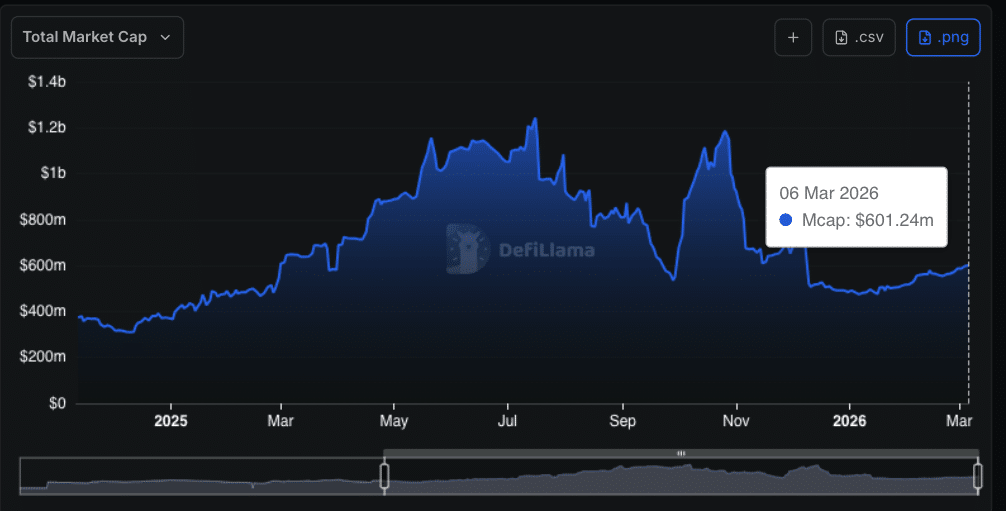
This has created pressure on stablecoin supply in the network itself and left Sui among the lower ranks of L1’s by stablecoin liquidity.
At the same time, the SUI token has experienced heavy price pressure. The asset is down roughly 30 percent quarterly, according to reports, a continuation of the previous losses that started in 2025.
The USDsui stablecoin launch is seen as a way to rebuild liquidity and encourage activity between the decentralized finance protocols on Sui.
Conclusion
Launched via Stripe-owned Bridge and developed on the Open Issuance platform, USDsui stablecoin aims to facilitate payments but also decentralized trading and financial applications on the network.
What makes USDsui different from other stablecoins is the reinvestment of reserve yield back into the ecosystem via token buybacks and DeFi liquidity incentives. This approach ties stablecoin growth directly to the economic structure of the network.
The launch of USDsui stablecoin creates an opportunity for Sui to capture a greater share of the liquidity and financial activity; that passes through decentralized markets.
Glossary
Stablecoin: A type of cryptocurrency that aims to keep its value pegged usually to a fiat currency such as the U.S. dollar.
Sui Network: A Layer-1 blockchain designed to power high-performance decentralized apps and financial services.
DeFi (Decentralized Finance): On-chain financial services like trading; lending, and payments carried out via blockchain networks without the use of classical intermediaries
Token Buyback: A process where a project buys back its own tokens from the market; usually with treasury funds or revenue.
Liquidity: Assets that are present in a market or network; enabling it to transact more effectively.
Frequently Asked Questions About USDsui Stablecoin
What is the USDsui stablecoin?
Launched on the Sui blockchain; USDsui is a dollar-pegged stablecoin that caters to payment, trading and decentralized finance (DeFi) services.
Who issues USDsui?
The stablecoin is issued by Bridge, a digital payments infrastructure company owned by Stripe.
What is the purpose of USDsui?
USDsui serves as a stable digital dollar for transactions, lending and trading in financial applications within the Sui ecosystem.
Why is USDsui good for the Sui network?
Yield earned on the stablecoin’s reserve assets might be used to buy back SUI tokens and incentivize DeFi liquidity.
References