
The crypto market moves at lightning speed. New tokens launch every week, each one claiming to be the next big innovation. For students, analysts, and everyday investors, it can be hard to separate substance from hype. This is where artificial intelligence steps in. Using ChatGPT to research coins has become a game-changer, helping users decode whitepapers, analyze tokenomics, and spot risks with clarity.
Why Using ChatGPT to Research Coins Matters
Traditional research can be overwhelming. Whitepapers are long and packed with technical language. Tokenomic charts are dense and confusing. For many, this complexity creates a barrier. By using ChatGPT to research coins, that barrier breaks down.
A recent feature highlighted how AI tools can simplify crypto documents and reveal key takeaways without the jargon. This makes research not just faster but more accessible. Whether it’s a new blockchain student or a seasoned financial analyst, AI allows everyone to better understand what a project really offers.
Breaking Down Whitepapers and Tokenomics
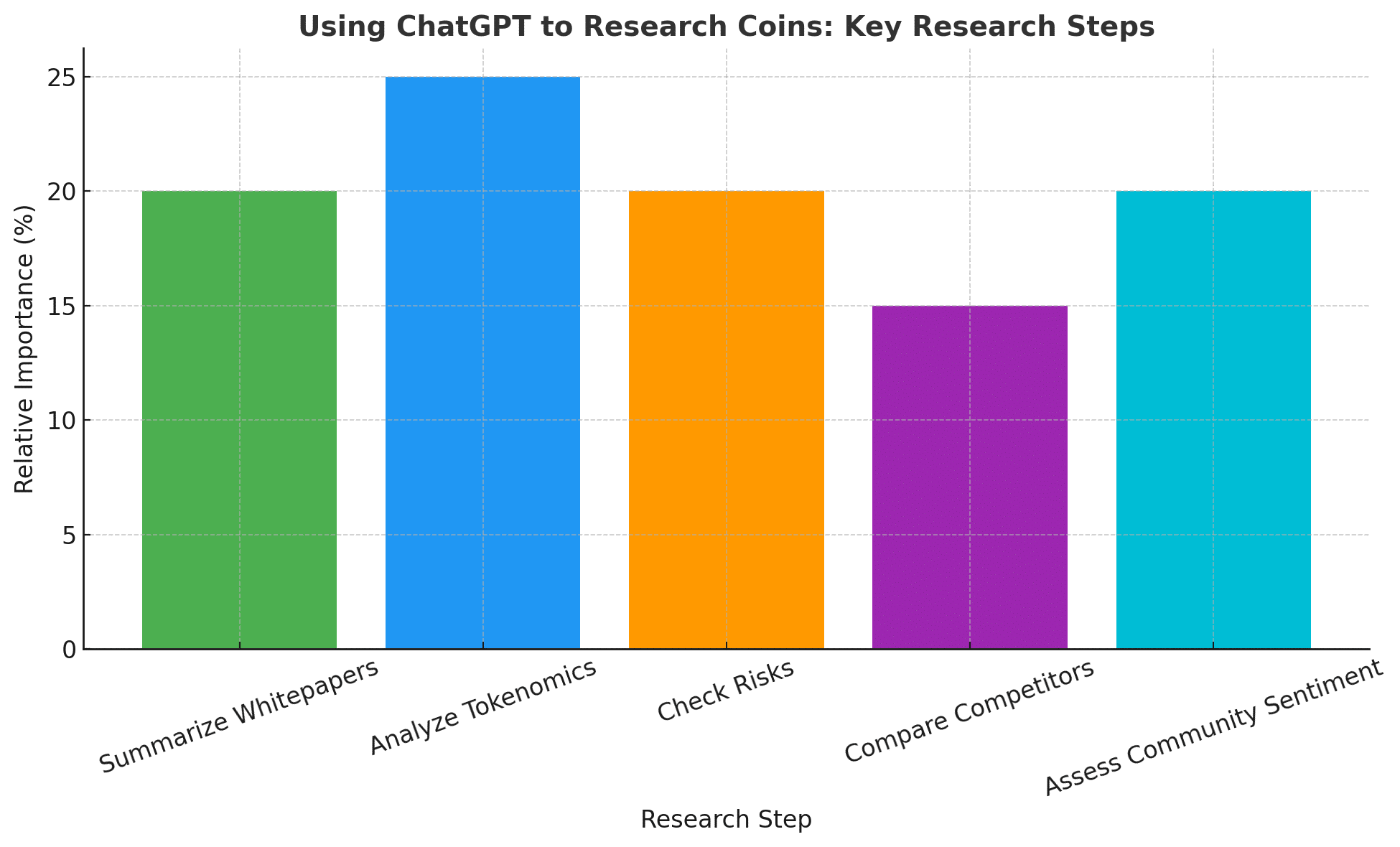
Every serious crypto project begins with a whitepaper. Inside are details about the technology, goals, and the token’s economic structure. Yet, most readers struggle to grasp all of it. Using ChatGPT to research coins helps summarize complex ideas and turn them into clear insights.
Take tokenomics as an example. Some projects limit supply to create scarcity, while others issue new tokens over time to reward participation. ChatGPT can explain how each model impacts long-term value. Reports from Messari show that projects with fair distribution tend to retain active communities longer than those dominated by a few wallets (Messari). With AI assistance, this knowledge becomes easier to digest.
Utility, Demand, and Real Adoption
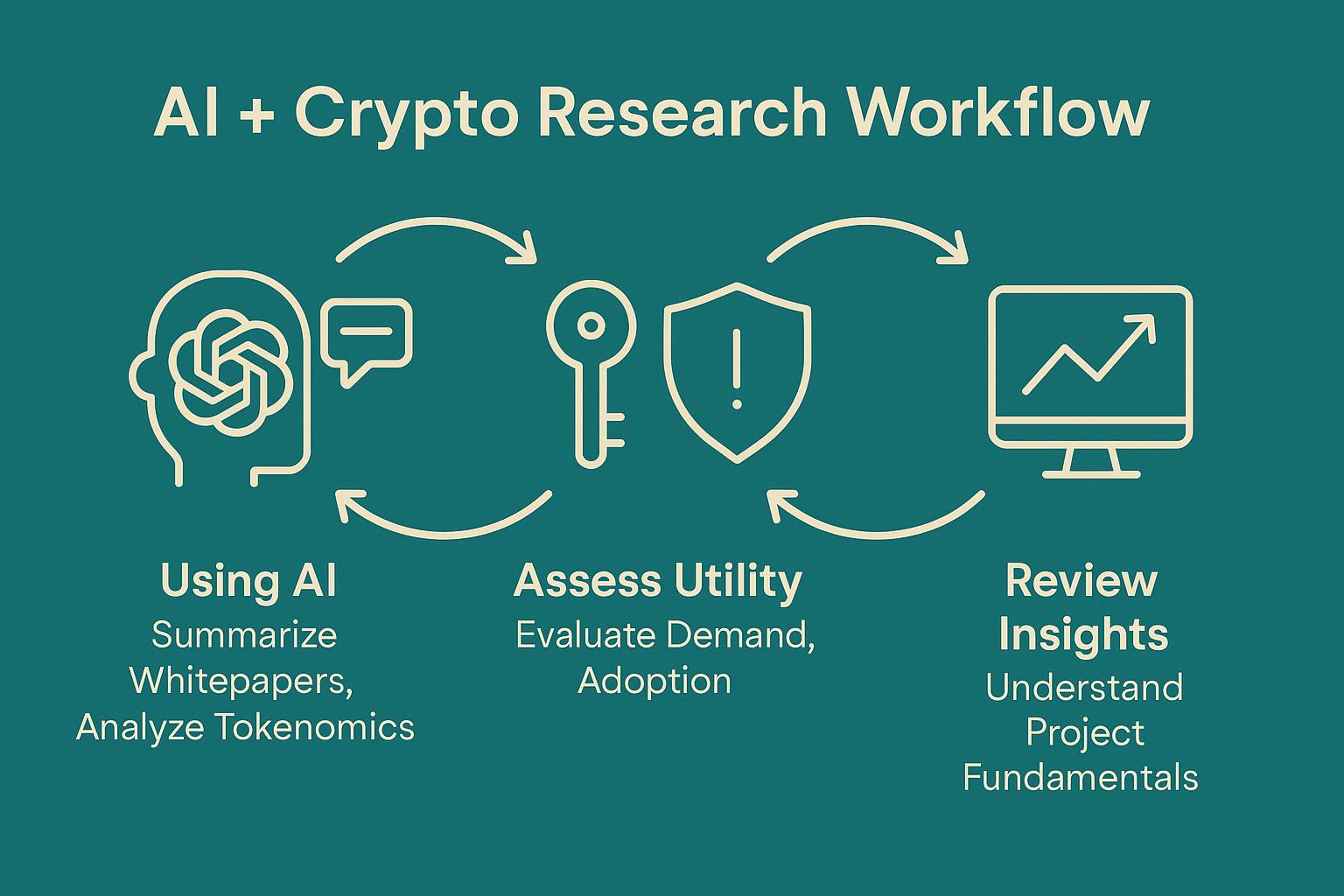
Price action is not the only metric that matters. The real question is whether a token serves a purpose. Utility comes first: Can it be used for payments, governance, or securing a network? Demand follows: Are people and institutions actually willing to use it?
The data shows that tokens with strong real-world applications see higher adoption and less volatility over time. Using ChatGPT to research coins helps highlight these use cases. It can also compare projects within the same category, pointing out who is leading and who is falling behind.
On platforms like X, analysts often discuss Solana’s price potential, citing its speed and developer ecosystem. ChatGPT can summarize such debates, providing a window into community sentiment. This combination of technical fundamentals and public narrative is critical in crypto research.
Spotting Red Flags and Knowing AI’s Limits
History shows how many projects collapse due to weak foundations or outright scams. Using ChatGPT to research coins can help identify vague promises, unclear roadmaps, or unrealistic goals. It can flag inconsistencies in token supply or governance claims.
Still, AI is not foolproof. A report warned that relying only on ChatGPT may expose investors to incomplete or outdated data. The best approach is hybrid: combine ChatGPT with blockchain explorers, audited smart contracts, and official disclosures. This way, AI provides guidance, while independent verification provides security.
Regulation and Transparency in Focus
Regulators now demand greater transparency. The EU’s MiCA framework requires projects to publish tokenomics clearly. FATF guidelines call for stronger oversight of token operations. Using ChatGPT to research coins can simplify these disclosures, translating legal or technical documents into plain language.
Experts emphasize that clear tokenomics and verified audits are not optional—they are essential for investor trust. According to an MIT study, sustainable crypto systems must align user incentives with regulatory expectations. AI tools help unpack these requirements so both developers and investors can understand them better.
The Role of Communities and Market Psychology
Numbers explain supply and demand, but communities create the story. Narratives around scarcity, decentralization, or innovation often shape adoption. Using ChatGPT to research coins can help track how communities discuss projects on social platforms and forums.
For example, Solana’s growth story is not just about transactions per second—it is about the excitement among developers building on it and traders backing it. AI can capture both, showing how psychology and fundamentals intersect in crypto markets.
Conclusion: AI as a Research Partner, Not a Replacement
Crypto research is demanding. Using ChatGPT to research coins makes the process easier, faster, and more inclusive. But AI should be seen as a partner, not a replacement. It can simplify tokenomics, highlight risks, and reveal community sentiment. The final responsibility still rests with investors to verify and cross-check.
By combining AI tools with credible sources, blockchain data, and regulatory awareness, students and professionals alike can make better decisions. ChatGPT is not a crystal ball—but it is a powerful compass in the complex world of digital assets.
“This article is for informational purposes only and does not constitute financial advice. Readers should conduct their own research before making any investment decisions.”
Glossary of Key Terms
Tokenomics: The study of a token’s supply, distribution, and incentives.
Whitepaper: A document explaining a project’s technology and goals.
Utility: The real function of a token in its ecosystem.
Scarcity: Limited supply designed to maintain or boost value.
Governance: Decision-making power given to token holders.
MiCA Regulation: European rules requiring crypto projects to disclose token details.
Frequently Asked Questions about using ChatGPT to research coins
1. What does using ChatGPT to research coins mean?
It means applying AI to break down crypto projects into clear, simple insights.
2. Can ChatGPT replace full research?
No. It helps simplify and guide but must be paired with verified data.
3. How does AI explain tokenomics?
It clarifies supply, distribution, and incentive structures in plain language.
4. Is using ChatGPT to research coins safe?
Yes, as long as investors also cross-check with blockchain explorers and official filings.
5. Can AI detect scams?
It can highlight warning signs but cannot guarantee safety.
6. Why does regulation matter in tokenomics?
It enforces transparency, builds trust, and supports wider adoption.