



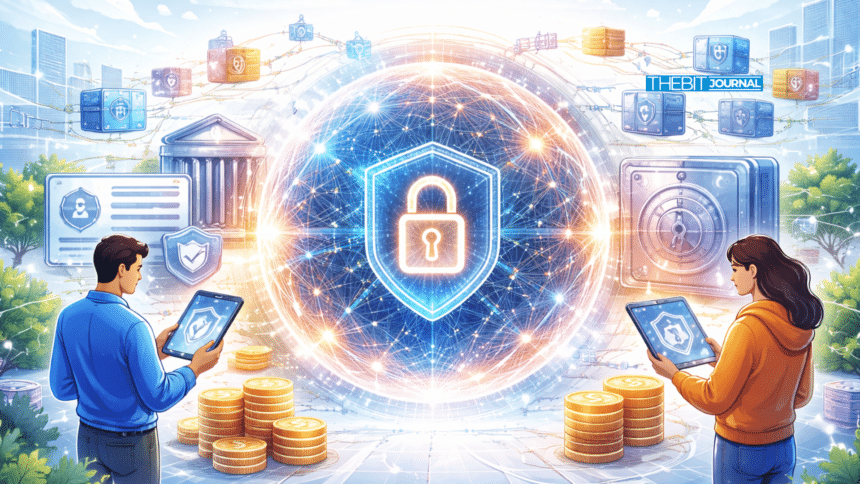

The privacy problem hidden inside public ledgers
Public blockchains were built for shared truth as anyone can inspect the ledger and confirm that balances follow the rules. That openness helps with trust, yet it also creates an uncomfortable side effect: activity becomes easy to map.
Wallets are pseudonymous, not invisible as address reuse, timing, and counterparties can reveal patterns that look a lot like identity. A person can receive income on-chain and lose privacy. A business can pay suppliers and broadcast strategy. Even if names never appear, the map of behavior can get personal fast.
This tension is why Zero-Knowledge Proofs have moved from theory into mainstream crypto design. They make it possible to keep a network verifiable while hiding details that do not need to be public.
Zero-Knowledge Proofs explained without the fog
The goal is simple to state: prove a statement is true while revealing nothing beyond that truth. A zero-knowledge proof has three properties and that are: Completeness means a truthful prover can convince an honest verifier. Soundness means a liar cannot convince the verifier except with a tiny chance. Zero-knowledge means the verifier learns nothing more than the fact that the statement holds, which is commonly expressed through the idea that a transcript can be simulated without the secret.
A practical comparison is a credential check as a gatekeeper needs proof that someone is over a legal age. The gatekeeper does not need the full ID record. A proof that answers only the relevant question is enough.
Statement, witness, proof: the mental model
The statement is what must be proven, such as “this transaction batch follows the rules.” The witness is the private data that makes the statement true, such as secret keys, amounts, or hidden notes. The proof is the compact artifact that convinces the verifier.
Blockchains favor proofs that are cheap to verify, even when producing them is heavier. Verification is a shared workload across the network, so cheap checks matter.
Why non-interactive proofs fit blockchains
Classic protocols can be interactive, with back-and-forth messages. Blockchains prefer non-interactive designs, where one proof can be checked later by anyone.
That preference explains why zk-SNARKs became widely used in crypto. The “succinct” and “non-interactive” parts of the acronym match on-chain constraints.
Privacy for blockchain users, explained
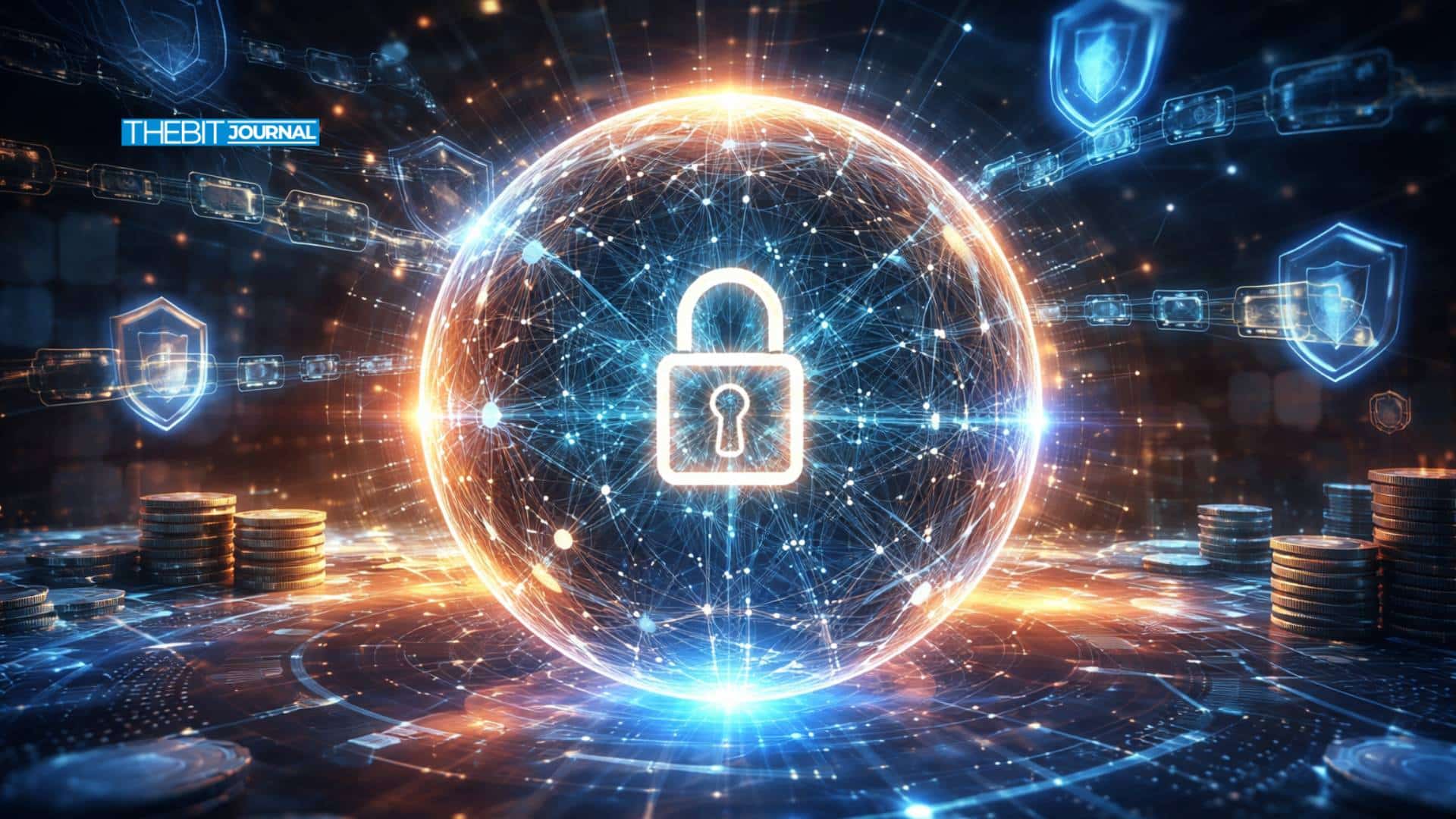
A public chain can verify rules without reading the hidden inputs as that is the core idea, and it unlocks privacy without breaking auditability.
This is where Zero-Knowledge Proofs step in, offering privacy that still lets the chain enforce rules.
In a private payment system, the rules can enforce that funds exist, double-spends do not happen, and totals balance, while hiding sender, receiver, and amount. The chain verifies the proof and accepts the update.
In identity and compliance designs, the rules can encode checks like “this wallet holds a valid credential” or “this transfer does not violate a policy,” while keeping personal data sealed. Recent institutional research discusses privacy-preserving compliance where proofs can embed checks such as threshold rules and membership tests without disclosing raw records. hat is why Zero-Knowledge Proofs are best understood as a verification tool first. Privacy is the benefit. Verifiability is the foundation.
Where the technology shows up in crypto today
Private transfers and shielded transaction details
Privacy-focused protocols use Zero-Knowledge Proofs to confirm validity while shielding details, and some support both transparent and shielded modes.
The real-world value is selective disclosure. A user might want privacy from the public, yet still need to prove to an auditor that a payment followed specific constraints.
ZK rollups and validity proofs on Ethereum
ZK rollups execute transactions off-chain, bundle them, then post data plus a validity proof to a smart contract on the base layer. Ethereum’s documentation describes how validity proofs let the chain finalize state updates without re-executing every transaction.
Teams emphasize that verification on Ethereum is efficient, which is why throughput can rise. Validity proofs also avoid the dispute window used by optimistic designs, although real withdrawal timing still depends on the rollup’s architecture.
zkEVMs: proving EVM-style execution
A zkEVM aims to prove EVM computation with validity proofs, so smart contracts can run with familiar semantics while inheriting the security of on-chain verification. Many explanations describe the same loop: execute off-chain, generate a proof of correct execution, and verify it on-chain.
Proof of reserves and solvency proofs that reveal less
Proof of reserves aims to show that an exchange holds assets to cover deposits, but naive approaches can leak information and can miss liabilities if the model is incomplete.
ZK-based approaches have been explored to reduce what must be revealed, including designs that aim to prove assets exceed liabilities without publishing every user balance. Industry and academic work discuss zero-knowledge methods as part of solvency frameworks, with guarantees that depend on implementation details.
SNARKs, STARKs, and why the tradeoffs matter
zk-SNARKs are designed to be small and quick to verify, which helps when verification costs gas. Many SNARK systems have relied on a trusted setup, a parameter-generation ceremony that must be conducted securely. If the setup is compromised, soundness can be at risk, which is why teams document ceremonies and audits.
zk-STARKs are often described as “transparent” because they can avoid trusted setup and commonly rely on hash functions. They can have larger proofs and different cost curves depending on what is being proven. Comparative research highlights practical tradeoffs in proof generation and verification, which is why there is no universal winner.
The key indicators to watch in ZK-heavy projects
A project built on Zero-Knowledge Proofs lives or dies by assumptions and execution.
If trusted setup exists, the ceremony design, auditing history, and parameter management are part of the risk profile. If trusted setup does not exist, proof sizes and verification costs can become the bottleneck, especially on a base layer where fees are high.
Decentralization is another tell. Some systems depend on a small set of provers or a centralized sequencer. If only one party can generate proofs at scale, liveness and censorship resistance can suffer even if the math is solid.
Performance should be discussed with metrics. Proof generation time affects finality and user experience. Data availability design affects how safely users can exit. A team that publishes benchmarks and speaks plainly about bottlenecks tends to inspire more confidence over time.
What is new heading into 2026
Ethereum’s ecosystem documentation continues to position ZK rollups as a scaling approach secured by validity proofs.
Institutional research is also pushing harder on privacy-preserving identity, compliance proofs, and reserve verification, treating these as realistic building blocks for finance rather than distant experiments.
Meanwhile, the research community keeps tightening efficiency and usability, with events explicitly focused on practical proof systems and blockchain privacy.
Limits and caveats
Zero-knowledge systems are hard to build and harder to audit. Bugs in circuits or incorrect assumptions can turn a strong theory into weak practice. Privacy also has social and regulatory tension, which is why selective disclosure and policy proofs matter. In the end, Zero-Knowledge Proofs are not a marketing checkbox. They are infrastructure, and infrastructure needs disciplined engineering.
Conclusion
Crypto is trying to satisfy two instincts at once: transparency that makes shared ledgers trustworthy, and privacy that makes them usable in ordinary life. Zero-Knowledge Proofs bridge that gap by letting networks verify correctness and policy compliance while hiding data that does not need to be public. They already power private transfers, rollup scaling, zkEVM efforts, and emerging transparency tools like solvency proofs.
As adoption grows, the projects that earn long-term trust will be the ones that publish assumptions, measure performance honestly, and design privacy features for real-world constraints. In practice, Zero-Knowledge Proofs will continue to spread wherever crypto needs proof without exposure.
Frequently Asked Questions (FAQs)
Are Zero-Knowledge Proofs the same as encryption?
Encryption hides content unless a key is provided. A zero-knowledge proof proves a claim about data without revealing the data itself, such as proving validity or membership.
Do Zero-Knowledge Proofs automatically make a blockchain private?
Privacy depends on what is published. A system can hide amounts and addresses, but metadata such as timing can still leak patterns, and optional privacy features only help when users choose them.
Why do some systems use trusted setup?
Some proof systems require public parameters generated in advance. If that process is compromised, it can create risk, which is why ceremonies, audits, and clear documentation matter.
Can proof of reserves use Zero-Knowledge Proofs meaningfully?
ZK methods can help prove coverage or solvency without exposing every customer balance, but a full solvency picture can still require careful liability modeling and, in some cases, off-chain attestations.
Glossary of key terms
Completeness
The property that an honest prover can convince an honest verifier when the statement is true.
Soundness
The property that a dishonest prover should not be able to convince the verifier of a false statement except with small probability.
Witness
The private input that makes a statement true, such as a secret key, hidden balances, or encrypted transaction details.
Validity proof
A proof used by ZK rollups to show that an off-chain state transition is correct, allowing a base layer to accept the update without re-executing everything.
Trusted setup
A parameter-generation process used by some proof systems. If compromised, it can weaken security, which is why projects document ceremonies and mitigations.
References