





DeFi staking turns idle crypto into a steady stream of rewards. It looks simple. It still needs care. This guide explains how DeFi staking works, who it fits, and how to start with a plan. It also covers key risks, laws, and security checks. The goal is clear steps and plain talk.
DeFi staking rewards come from work done by validators. The protocol pays tokens to those who help secure the network. Returns change with demand, fees, and the share of coins that are staked. Some methods keep full control of keys. Others trade control for ease. The right choice depends on risk tolerance, skill, and time.
Readers will also see why DeFi staking matters now. Spot Ether ETFs in the United States went live in July 2024, yet those funds do not stake their ether. That choice can affect supply and yield on-chain. It also shapes strategy for long-term holders.
What is DeFi staking?
DeFi staking means locking tokens in a proof-of-stake network. Validators run the software that checks blocks and keeps the chain in sync. The network issues rewards in the native token. Rewards flow to validators and to those who delegate or pool with them.
DeFi staking is not yield farming. Yield farming pays incentives for lending, liquidity, or other activity. DeFi staking pays for network security. The source of yield is different. Risk is different, too.
The market offers several paths. Solo staking gives full control and the highest responsibility. Pooled staking and staking-as-a-service lower the bar to entry. Liquid staking gives a receipt token that stays liquid. Exchange staking keeps setup simple but adds custodial and regulatory risk.
Why DeFi staking matters today
Spot Ether ETFs began trading on July 23, 2024. Issuers state in filings and public sites that these ETFs do not stake their ether. That means a large pool of ETH can sit un-staked inside funds. On-chain stakers may see more share of fees while ETF holders get price exposure only. The choice also reduces operational risk for funds under current rules.
Restaking grew fast in 2024 and 2025. EigenLayer drew billions in deposits and at points crossed the ten billion mark. Industry data and reports through 2025 show peaks that some trackers place in the tens of billions. This shift lets staked ETH secure new services for extra yield. It also adds new risks that need fresh risk checks.
Security risk also rose. Chainalysis reports show thieves stole about 2.2 billion dollars across 2024. Mid-2025 losses already passed 2.17 billion dollars due to several large hacks, including the ByBit case that law enforcement linked to North Korea. These facts show why smart contract and platform risk deserve attention in any staking plan.
DeFi also spread across chains. For example, Solana DeFi hit a record high TVL in September 2025. Activity and liquidity on more than one chain now influence staking yield and risk.
How DeFi staking works
A validator locks a minimum stake and runs a node. The node signs messages, proposes blocks, and follows strict rules. If it breaks the rules, the protocol can slash the stake.
The protocol pays rewards in the native token. Rewards depend on total stake, fees, and honest work. More total stake can mean lower rewards per unit. High network use can lift rewards through fees.
Delegators and pooled stakers pick a validator or a pool. The pool operator runs the hardware and software. The pool takes a fee from rewards. Liquid staking protocols mint a token that reflects a share of staked assets and rewards. That token can move into other DeFi apps.
A person can stake from a wallet, an exchange, or through a custodian. Each path changes control, liquidity, and risk. The safest path for keys often needs the most effort.
The Main Ways to Stake
Solo staking
Solo staking fits a person who wants full control and can manage hardware and updates. It needs technical skill and time. It also needs a larger minimum in native tokens for some chains.
Pooled staking
A staking pool lets a small holder join others. The pool operator runs validators. The pool takes a small fee. Control of keys varies. Some pools keep user keys non-custodial. Others hold them.
Liquid staking
Liquid staking issues a liquid staking token, or LST. The LST tracks the staked deposit and rewards. It stays liquid in DeFi. That adds flexibility. It also adds smart contract and depeg risk.
Exchange staking
An exchange handles the work. It sets the terms and controls the keys. Some U.S. exchanges paused or changed staking for U.S. users after SEC actions. This path is easy. It carries platform, legal, and custody risk.
DeFi Staking Options at a Glance
| Method | Min Capital | Control of Keys | Liquidity | Typical Fees | Fits Best | Main Risks |
| Solo staking | High on some chains | Full | Low until exit | Low protocol fee | Advanced users | Slashing, setup errors |
| Pooled staking | Low to medium | Varies | Medium | Pool fee | Beginners to mid-level | Operator risk |
| Liquid staking | Low | Smart contracts hold | High via LST | Protocol fee | DeFi users | Smart contract, LST depeg |
| Exchange staking | Very low | Custodian | Medium | Platform fee | Convenience seekers | Custody, legal, platform failure |
| Restaking add-on | Same as above | Varies | Medium | Extra fee stack | Yield seekers with skill | New slashing vectors, AVS risk |
Notes: Yields and fees change by chain and protocol. Use current docs before any decision.
How to Start DeFi Staking in 10 Clear Steps
- Pick a chain and token. Choose a large, well known network for a first run.
- Choose a staking method. Solo for control, pool for ease, liquid staking for flexibility, or exchange for convenience.
- Set the wallet plan. Use a hardware wallet for long term funds. Keep seed phrases offline.
- Screen providers. Review audits, docs, team bios, uptime charts, and fee schedules.
- Check geofencing and terms. Confirm that the service supports the user’s country and KYC rules.
- Estimate rewards and costs. Model gas fees, pool fees, and likely APR under base and bear cases.
- Start small. Test with a small amount. Confirm rewards start to accrue.
- Set alerts. Subscribe to protocol status feeds and security posts.
- Record everything. Track deposits, rewards, and gas for taxes.
- Revisit monthly. Check reward rates, any slashing reports, and changes to terms.

Earn smarter, not riskier
Compound with care. Restake rewards on a set cadence. Avoid over-trading to save gas.
Use liquid staking with intent. An LST can enter lending or liquidity pools. That adds yield. It also stacks risk. Limit leverage. Spread across providers.
Watch validator health. For delegated staking, pick operators with clean slashing history and high uptime. Rotate away from operators who show warning signs.
Avoid complex loops. Self-referential loops can look safe during calm markets. They can unwind fast during stress.
Crypto Hacking Trends: Volatility, Shifts, and Long-Term Signals
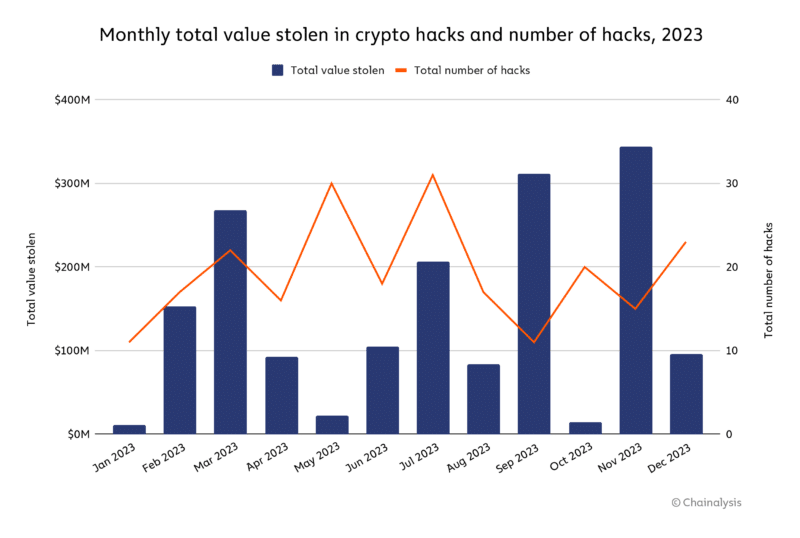
In 2023, crypto hacks became more frequent but less lucrative on average. The monthly data shows sharp volatility, with July recording the highest number of incidents (33 hacks), yet March and November standing out in terms of value stolen due to major exploits like Euler Finance and Mixin Network. This suggests that while hackers are targeting more protocols, the average payoff per attack has dropped, signaling both stronger defenses and smaller-scale operations.
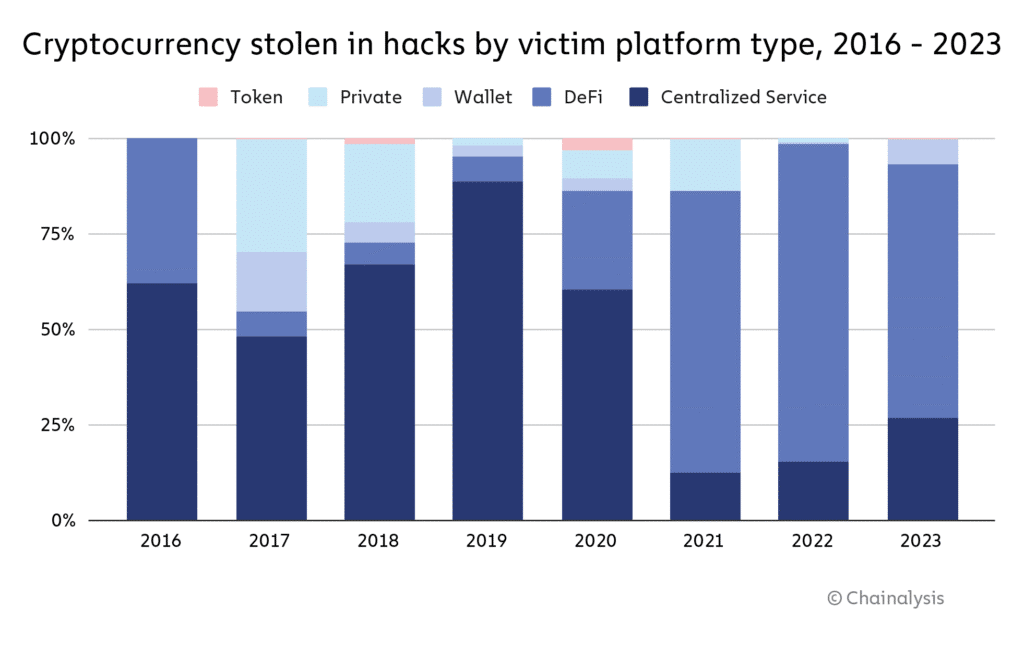
Looking at victim platforms, the landscape also shifted significantly. DeFi protocols — the main drivers of record-breaking thefts in 2021 and 2022 — saw stolen funds fall by nearly two-thirds in 2023. Centralized services and other platforms, however, regained prominence as targets, indicating that attackers are diversifying their strategies. This pivot highlights the maturing security measures within DeFi, from improved audits to faster community responses, which are starting to blunt the scale of successful exploits.
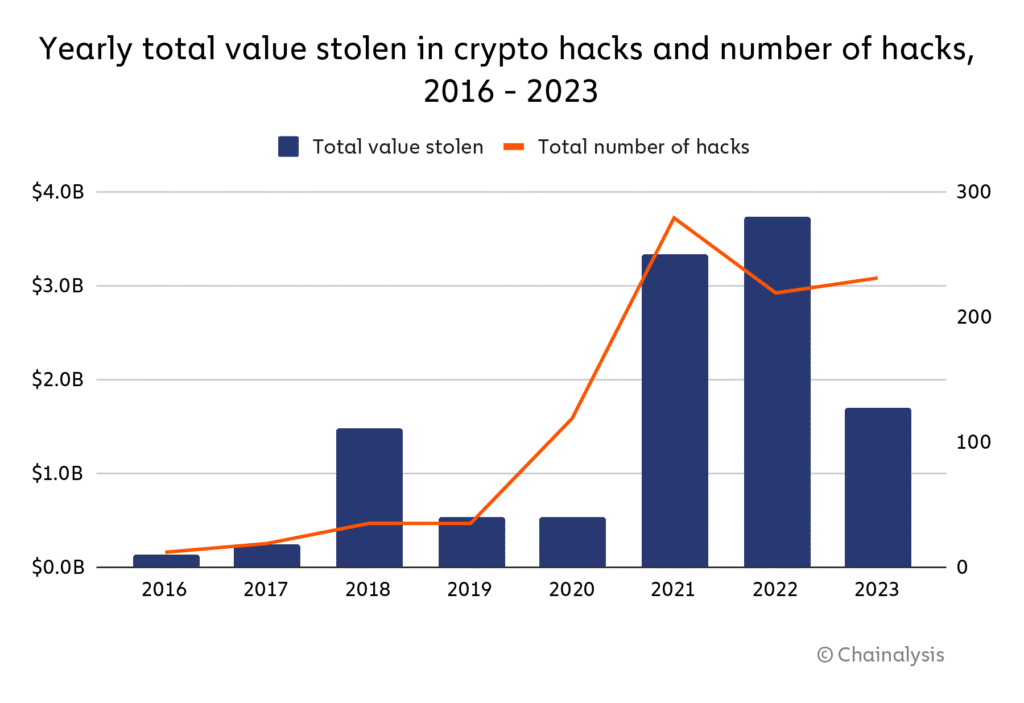
From a long-term perspective, the broader trend between 2016 and 2023 shows a rise-and-fall cycle. Hacks ballooned in value during the explosive growth of DeFi, peaking in 2021 and 2022 with billions stolen. Yet, 2023 marked a turning point: although the number of hacks stayed high, the total value stolen fell sharply by 54%. This drop underscores an important shift in the crypto security landscape — the industry is not eliminating hacks, but it is gradually reducing their overall financial impact.
Risk Checklist for Any Staking Plan
1. Smart contract risk
Choose audited code and mature protocols.
2. Slashing risk
Use operators with strong uptime and safety-first setups.
3. Liquidity risk
Plan exit times and withdrawal queues.
4. Custody risk:
Prefer self-custody or trusted independent custodians.
5. Price risk
Staked assets can fall in value.
6. LST depeg risk
Track LST market depth and price anchors.
7. Platform risk
Centralized services can fail or face legal actions.
8. Regulatory risk
Watch policy moves that affect pooled products and staking services.
9. Operational risk
Keep backups, rotate keys, and test recovery.
How to Judge a Staking Provider
- Track record: Choose providers with long uptime, minimal incidents, and transparent postmortems.
- Fees and splits: Don’t just chase the lowest fees—pay for proven reliability and service.
- Validator spread: Steer clear of providers overly concentrated on a single client or cloud.
- Transparency: Favor providers with public addresses, dashboards, and real-time status updates.
- Audits and reviews: Look for third-party audits and active fixes on reported issues.
Exit options: Understand how to unwind positions and how long withdrawals will take.
Taxes and reporting in the United States
Tax rules matter. The IRS ruled in 2023 that staking rewards count as income when a taxpayer gains control over the new tokens. That means the fair market value at that time can be taxable for cash-method taxpayers. Later sales can also trigger capital gains or losses. Keep detailed records of dates, amounts, and prices. Review current IRS pages and talk with a tax professional for the full picture.
Common Mistakes to Avoid:
- Chasing the top APR. High posted yields often mean higher risk or incentives that can change.
- Ignoring withdrawal terms. Some exits take days or weeks.
- Overlooking smart contract risk. Audits help but do not remove risk.
- Using one provider only. Spread across methods and operators.
- Skipping security basics. Hardware wallets, clean machines, and off-line backups save funds.
A Sample First Setup
An investor with a long time frame picks a large-cap PoS chain. The investor chooses liquid staking for flexibility and keeps the LST in a simple wallet. Rewards auto-compound in the token. The investor avoids leverage and avoids stacking too many protocols at once. The investor checks provider status feeds and sets a calendar reminder to review fees and yields each month. The investor logs all deposits, rewards, and exits for taxes.
This setup keeps control high, keeps friction low, and uses simple rules to cut risk.
Conclusion
DeFi staking can serve as a simple path to passive crypto income. It only works well with a plan. The plan should match method to skill, spread risk, and follow clear rules on security and exits. The market keeps moving. ETFs, restaking, and new chains all shape supply, demand, and yield. With steady checks and careful provider choices, DeFi staking can earn while funds support the network.
In addition, monitoring gas costs, setting alerts for slashing risks, and diversifying across chains can maximize resilience. Over time, compounding rewards and reinvestment can turn small allocations into meaningful streams of income, even through volatile cycles.
Frequently Asked Questions For DeFi Staking
What is DeFi staking in one sentence?
It is the act of locking tokens to help secure a proof of stake network in return for rewards.
Is liquid staking safe?
Liquid staking can be safe on mature protocols, but it adds smart contract and LST depeg risk, so spread positions and check audits.
Can an exchange stop staking for U.S. users?
Yes. For example, Kraken ended its U.S. staking program after an SEC action. This shows why platform and legal risk matter.
Do Ether ETFs stake their ETH?
No. Issuers removed staking from filings and the funds launched without staking features in July 2024.
How risky are hacks today?
Risk is real. Chainalysis reported about 2.2 billion dollars stolen in 2024 and more than 2.17 billion dollars in the first half of 2025. Use that as a cue to double down on security.
Glossary
- DeFi staking: Locking tokens to secure a network for rewards.
- Validator: A node that proposes and attests to blocks on a PoS chain.
- Delegation: Assigning stake to an operator who runs validators.
- Slashing: A penalty that burns part of a stake for bad behavior or faults.
- Liquid staking: Staking that issues a liquid token that reflects the deposit and rewards.
- LST: A liquid staking token, such as stETH or rETH.
- APR vs APY: APR is simple annual rate. APY compounds through the year.
- Restaking: Using staked assets or LSTs to secure extra services for extra yield.
- TVL: Total value locked, a measure of assets inside DeFi protocols.
- AVS: Actively validated service in a restaking system.
Summary
This guide breaks down DeFi staking in clear terms. It explains how staking pays rewards for securing proof of stake networks and compares solo, pooled, liquid staking, and exchange options. A table shows who each method fits, typical fees, and key risks. The guide links current events to staking returns. Ether ETFs launched in July 2024 and do not stake their ETH, which can shift on-chain yields. Restaking grew fast in 2025, while hacks rose, making security checks vital. U.S. readers should note that the IRS says staking rewards are income when received. The piece closes with a step-by-step plan, a risk checklist, and tips to earn smarter without stacking too much risk.