






This article was first published on The Bit Journal.
Prices for crypto assets are known for the booms and busts they regularly experience, but history has shown that things that have seemed dead can return with a vengeance.
These top crypto comeback stories have shaken the very core of crypto, ranging from coins to platforms and exchanges that went through collapse and bounced back stronger.
From Bitcoin surviving countless crypto winter crashes to Ethereum emerging from the brink of a fatal hack, these are the stories that reshaped cryptocurrency in 2025.
Bitcoin’s Relentless Resurrection
Bitcoin has endured a series of “crypto winter” slumps, but each time it bounced back stronger. It peaked at nearly $20,000 in late 2017 before a swan dive during the 2018-2020 bear market, with plenty of people declaring it dead.
By the end of 2020, the meme “Bitcoin is dead” had been asserted hundreds of times. The reversal started after the 2020 halving and then returned with a COVID-era surge in 2021, its price at $69,000.
Even when the 2021-2022 bear market, followed by the FTX crash, pushed Bitcoin below $15,000, market watchers knew that recovery was coming.
Most crucially, U.S. approval of spot Bitcoin ETFs in January 2024, rewrote the narrative. Institutional flows poured in and by the middle of 2025, Bitcoin had become part of gold and stock portfolios. It eclipsed old records, briefly topping $126,000 in in Q4 2025, and broke into mainstream finance.
As sources describe it, the Bitcoin return was the point at which Bitcoin, the world’s first decentralized competitor to central bank fiat was deemed ‘too big to be contained.
Crash: Prices had collapsed, mining contracted and the media said it was dead.
Catalyst: 2024 halving and spot ETF approvals of SEC.
Impact: Bitcoin is now treated like a macro asset (in pensions/Treasuries), completely mainstream on Wall Street.
Ethereum’s Phoenix Rise
The Ethereum story started with a near fatal blow. The 2016 DAO hack led to the blockchain splitting between ETH and Ethereum Classic, putting the project’s future at risk.
Some wondered whether the “crypto world computer” was dead. Ethereum’s multilevel recovery was led by technical upgrades. The Merge in September 2022 was the transitioning of Ethereum to proof-of-stake, which enhanced security and sustainability.
Later upgrades such as Dencun and EIP-4844 in 2024 rapidly reduced transaction bytes, allowing Layer-2 scaling solutions to explode.
Additionally, the U.S. regulators gave spot ETH ETFs the go-ahead in 2024, to legitimize Ethereum as an institutional asset.
As at December 2025, 80-90% of ETH transactions are actually processed off-chain, with Ethereum serving as the building block of decentralized finance.
Crisis: 2016 DAO hack and chain split.
Catalyst: Merge to PoS, scale improvements (proto dank-charding) and ETFs.
Impact: Ethereum became the dominant smart-contract platform again, winning DeFi and tokenization.
Solana’s Remarkable Revival
Once touted as the “Ethereum killer,” Solana did poorly between 2021 and 22. Networking outages, jammed blocks and the fall of FTX all but destroyed its reputability.
Solana kept buckling under load and was quickly renamed by critics as “just killed”. Its crypto comeback story was aided by engineering fixes and a rising tide of retail demand.
From 2024 to late 2025, Solana’s uptime was flawless, and a new validator client (Firedancer) vastly improved reliability. Solana has also carved out a space as the epicenter of meme coin mania and tokenized assets, with billions in volume now moving seamlessly on the network without incident.
Now, Solana’s DEX volume consistently rivals that of Ethereum. The network has graduated into giving institution-driven utility ( tokenized stocks and bonds through Backed Finance). Late 2025 has also seen massive Solana ETF approval, followed by appreciable inflows into the network.
Crisis: Major outages and FTX disaster eroded confidence.
Catalyst: Technical overhaul (Firedancer), Retail integrations, new projects, Solana ETF filings and approval.
Impact: Solana reasserted itself (SOL hit new highs) as a high-speed DeFi/NFT center of gravity with real-world use cases growing.
Binance’s Regulatory Redemption
In 2023, Binance hit a low with a $4.3billion settlement in over compliance failures. Founder Changpeng “CZ” Zhao pleaded guilty to one US charge, and stepped down.
Recently, however, CZ was granted a full and unconditional presidential pardon by U.S. President Donald Trump. This also boosted the sentiment on BNB.
Some observers wondered whether the firm might topple. Instead, the exchange reorganized under new management and doubled down on compliance.
Spot and derivatives trading volumes in the platform have rebounded even as some businesses, though, shifted to rivals. $BNB (Binance’s token) also reached an all time high in early Q4, this year.
As of early December 2025; Binance has secured the Abu Dhabi Global Market (ADGM) Regulatory License. The approval allows Binance to operate its global platform under the ADGM framework; making it the first global exchange to secure such a license. Regulated activities are expected to begin on January 5, 2026.
In short, Binance not only weathered legal tempests; it grew more powerful.
Crisis: U.S. enforcement actions in 2023, CZ resigns, doubts over Binance’s future.
Catalyst: Reorganization, renewed compliance, CZ’s 2025 pardon, global adoption and licensing.
Impact: Binance has been able to win back its market share
XRP’s Legal Vindication
Ripple’s XRP token was almost destroyed by years of lawsuit with the S.E.C. After a 2017 boom in the price of cryptocurrencies, big exchanges delisted XRP as litigation dragged on and effectively froze the coin’s U.S.-traded liquidity.
In July 2023 however, a U.S. judge found that Ripple’s programmatic sales of XRP were not unregistered securities. That paved the way for exchanges like Coinbase and Kraken to relist XRP.
It was not until 2025 that the matter was finally resolved, with civil penalties but no continuing restrictions. Now that the legal fog was gone, XRP’s resurgence and adoption as global payment option, rapid growth in RWA tokenization via XRPL as well as series of XRP ETF filings began in earnest.
This recovery wasn’t based on memes but legitimacy. Banks began running with Ripple’s tech and traders made use of its dollar-pegged stablecoin, RLUSD.
Adding to this, this cleared dog gingered several institutions to file for XRP ETFs and with the new generic listing system came an influx of XRP ETF approvals, followed by huge inflows.
Today, XRP is once again a top crypto asset, demonstrating that legal clarity can revitalize a written-off token.
Crisis: SEC complaint (2018-2023). The lawsuit from the SEC in 2018 classified XRP as unregistered, which led to its delisting.
Catalyst: 2023 Court ruling and regulatory changes, Spot ETF Approvals and Launch.
Impact: XRP got relisted, with the market cap going through the roof, adoption for cross-border payments and even ETFs.
Dogecoin’s Meme-Fueled Surge
Dogecoin (DOGE) started as a joke in 2013, but outperformed many other cryptocurrencies to emerge as one of the industry’s biggest stories.
It famously leapt 15,000% in 2021 after a flood of viral hype then crashed more than 90%. The twist came in late 2024 when President Trump won the election and crypto buying went broad as his administration was seemingly associated with crypto.
Elon Musk’s renewed attention further stoked Dogecoin’s enthusiasm.
In 2024, Dogecoin gained about 250%, more than Bitcoin and Ethereum and XRP. It even recorded a 52-week high at the time.
The U.S. Securities and Exchange Commission (SEC) approved the first spot Dogecoin ETFs following the passage of the GENIUS Act, with products launching on exchanges like CBOE, Nasdaq, and NYSE Arca in late 2025. This has opened the door for increased institutional participation and added credibility to the meme token.
Additionally, reports show that The city of Buenos Aires, Argentina, now officially accepts Dogecoin for tax payments as part of a collaboration to integrate cryptocurrency into daily transactions. Major retailers like Tesla, AMC, and Newegg also continue to accept DOGE for transactions.
Crisis: After 2021 hype, Dogecoin crashed below $0.10 by 2023, and some questioned its value.
Catalyst: 2024 U.S. politics and social media happenings (Trump election indications, Musk endorsements), ETF launch and approvals.
Impact: Dogecoin is again in investors’ sights showing how social momentum can give a coin another life.
Exchanges and Platforms Rebuild
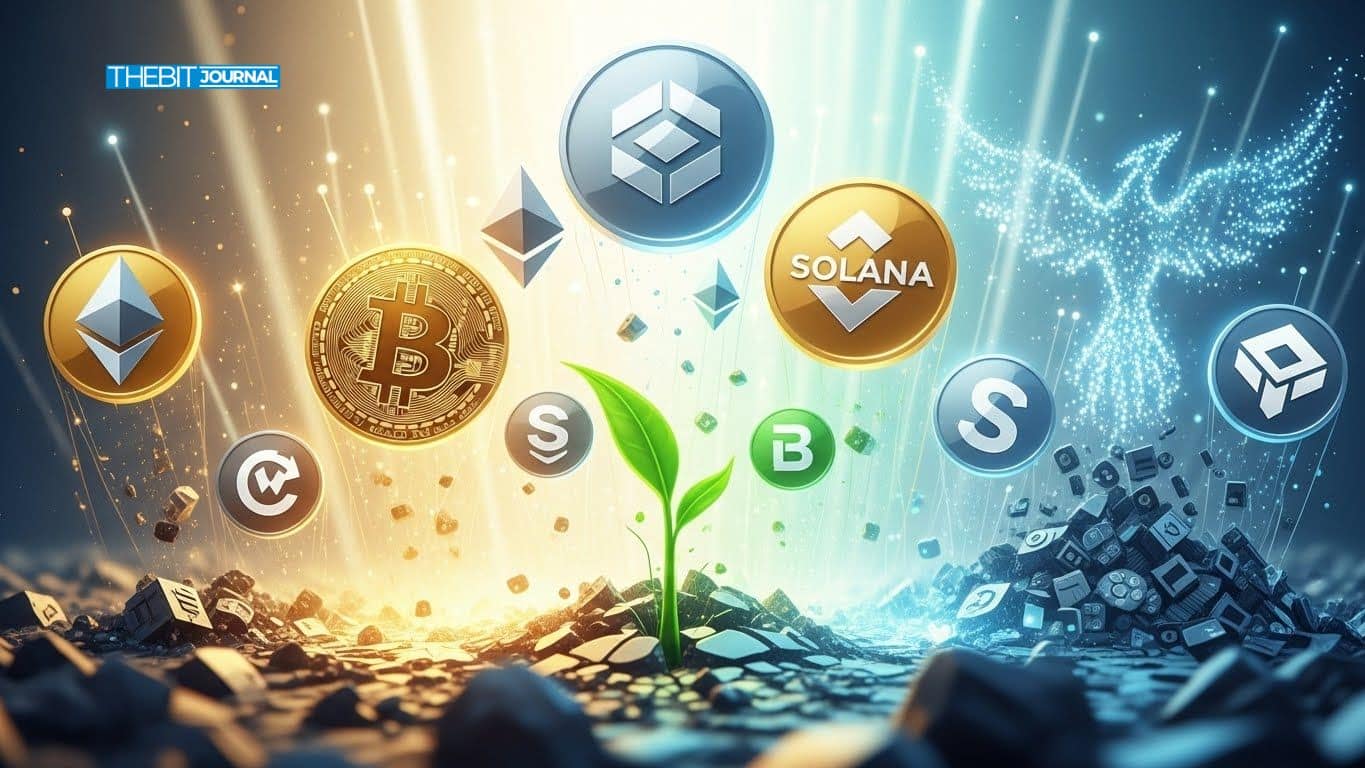
Outside of this, the crypto platforms also made comebacks. After high-profile failures like FTX, established exchanges even thrived. Coinbase, for instance, survived security breaches and bear markets to become the first US crypto firm on Nasdaq and continued extending services.
Kraken and other exchanges also beefed up compliance to withstand regulatory scrutiny.
Decentralized platforms (like Uniswap), meanwhile, bounced back from front-end hacks by tightening security.
These recoveries, though not related to price, brought back market infrastructure. The rise of institutional custody (Coinbase partnerships and stablecoin services) and the further growth of decentralized finance show how platforms managed to bounce back with more regulation, more trust.
Stablecoins and Regulation Mature
Another comeback is the return of confidence in stablecoins and crypto regulation. Tether (USDT) and USDC briefly stumbled (regulatory fines, reserve concerns), but bounced back to remain top liquidity tools.
The total stablecoin market cap hit around $300 billion by 2025, with leaders like Tether (USDT) and Circle’s (USDC). Experts say the market has the potential to expand into a $500 billion to $750 billion business in years ahead.
Federal legislation in the form of the GENIUS Act (Guiding and Establishing National Innovation for U.S. Stablecoins Act) drove through in July 2025 providing a clear regulatory structure which demands 1 reserve backing and stringent audit commitments, raising institutional confidence.
The big giants of traditional finance such as JPMorgan Chase, BNY Mellon and Mastercard have begun to directly integrate stablecoins into their payment and clearing systems via pilot programs and custody services.
Taken together, as regulators are maturing, rejected crypto products of the past reemerge under more transparent oversights, a quiet but powerful advance that potentially could enable further adoption for crypto.
Experts Analysis: Patterns in Crypto Comebacks
These comeback stories all share a number of common themes. Dogged determination and innovation can often lead to recoveries.
As sources note, the strongest recoveries in crypto’s history reveal something more profound than mere price action; they reveal the ability of the ecosystem to adapt and transform itself. Regulatory changes are a recurring trigger.
U.S. ETF approvals flipped Bitcoin’s story and court rulings reignited XRP. Major upgrades turned Ethereum and Solana around.
In all those specifics, how much network effects and brand momentum mattered was a common denominator.
Expert analysts see value in these lessons, that these resurgences and crypto comebacks are tied to optimism over regulation
Conclusion
Insights into crypto comeback stories demonstrate that the cryptocurrency arena is far from dead, rather, it’s stronger than ever.
These legendary rebounds are proof that even devastating setbacks could still pave the way for recovery as long as optimism stays strong.
These stories demonstrate innovation, clear regulations and how a solid community can turn crashes into peaks.
As crypto matures, every comeback redefines expectations and reminds observers that nothing in this market stays down for long.
Glossary
Blockchain: A decentralized ledger that holds the records of transactions securely online. Most cryptocurrencies run on blockchains.
Smart Contract: A contract with the terms of agreement directly written in code on a blockchain. Ethereum was the breakthrough platform for smart contracts, which made DeFi and NFTs possible.
Halving: This is when the reward for mining new blocks is reduced by half. This tamps down supply inflation and in the past has led to price rallies.
Spot ETF (Exchange-Traded Fund): A regulated investment fund that directly owns an asset such as Bitcoin or Ethereum; enabling conventional investors to purchase the digital currency; without having to trade on a crypto exchange.
DeFi (Decentralized Finance): Financial services like lending, trading, etc.; developed on blockchain networks and without traditional financial institutions. Ethereum’s DeFi ecosystem expanded following scaling solutions.
Stablecoin: A digital currency that is pegged to another stable asset (United States dollar) in an effort to minimize price volatility. Examples include USDT and USDC. The stronger stablecoins regained trust through transparency and regulation.
Frequently Asked Questions About Crypto Comebacks
What constitutes a crypto comeback story?
A crypto comeback story refers to a digital asset or platform that was left for dead, perhaps even after a major crash, but came back from the brink and gained value or prominence again. Examples would be Bitcoin’s resurgence after big crashes and XRP’s ascent despite legal troubles.
How did Bitcoin recover from its 2018-2020 crash?
Bitcoin’s narrative shifted with the 2018-2020 bear market; but so did the story of Bitcoin. After crashing in 2018-20; the April 2024 halving and U.S. approval of spot Bitcoin ETFs brought a new paradigm. Institutional money flowed; driving up the price of Bitcoin to fresh all-time highs by 2025.
What triggered XRP’s comeback?
XRP’s resurgence was fueled by legal clarity. In 2023, a U.S. court ruled most XRP sales were not illegal securities, and exchanges which had delisted it can now relist the token. It eliminated long-held uncertainty and spiked the price, as well as entered new institutional interest.
Why did the price of Solana and Ethereum bounce back?
For Solana, fixes to software and new projects fixed its outage issue, bringing confidence back into the fold. Ethereum’s recovery was fuelled by big upgrades and ETFs validation for the big investors
References