

The AI stock selloff may help the Federal Reserve’s inflation fight, while the same risk-off forces have also pressured crypto. BMO Capital Markets senior economist Jennifer Lee said on Bloomberg This Weekend on November 1 that slower data-center investment could ease demand pressures, according to BeInCrypto.
That’s an economic assessment, not a change in Fed policy. Any inflation relief from slower construction may take time to emerge.
- Lee said reduced AI infrastructure spending could cool construction demand and ease inflation pressure.
- The S&P 500 fell 1.8% on October 30, its worst session since June, while the Nasdaq Composite lost 2.9%, according to the Associated Press.
- The Fed held its benchmark rate at 3.75% to 4% on October 28. Two officials favored a quarter-point increase, Axios reported.
- At 14:13 UTC on November 2, Bitcoin traded at $77,821, down 0.1% over 24 hours. Ether was $2,286.43, up 0.9%, according to CoinGecko.
- Investors will watch the US payroll report and earnings from Apple, AMD and Qualcomm, which BeInCrypto said would test whether the cooldown holds.
AI stock selloff timeline
- September 1, 2026: Axios reported that US data-center construction spending reached an annual pace above $75 billion in July, nearly 60% higher than a year earlier.
- October 26: BitMine chairman Tom Lee linked crypto’s decline partly to risk-off pressure affecting AI stocks. He said Ether was 13% below its recent peak while semiconductor ETF SOXX was down 20% over that period.
- October 28: The Fed held rates at 3.75% to 4%. Axios reported that Lisa Cook and Cleveland Fed President Beth Hammack favored a quarter-point increase.
- October 30: The S&P 500 fell 1.8% to 7,580.07, the Nasdaq Composite dropped 2.9% to 25,437.00 and the Dow lost 1.1% to 51,770.31, according to the Associated Press.
- November 1 and 2: Lee made her comments on Bloomberg This Weekend, as reported by BeInCrypto on November 2. The latest available snapshot showed mixed crypto prices.
Why the AI stock selloff matters for inflation
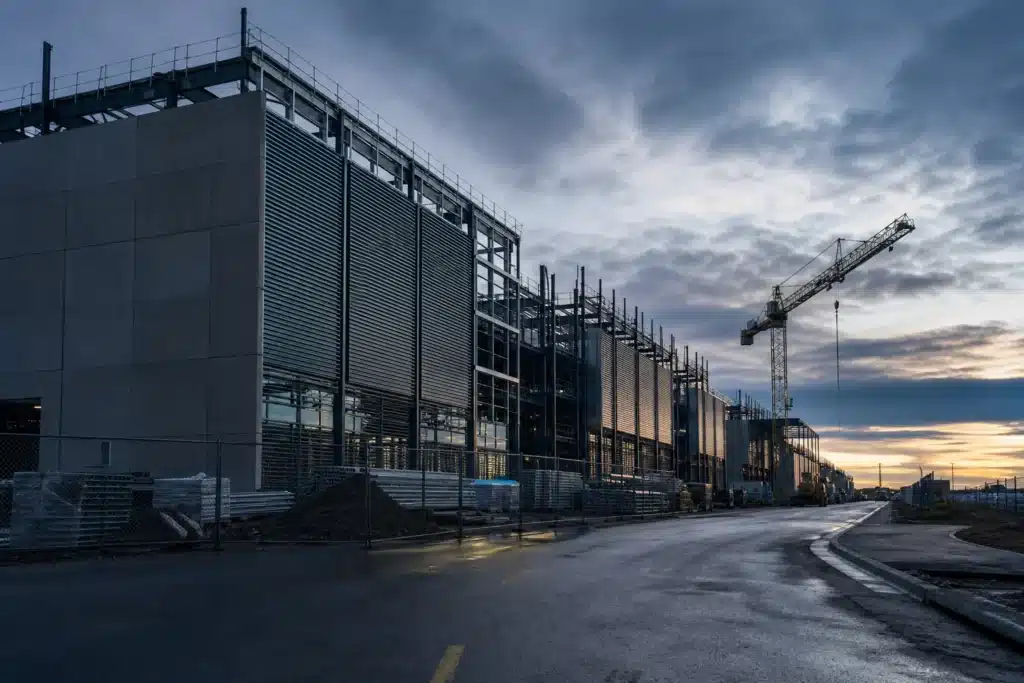
Data-center construction draws on financing, energy, land, skilled workers and materials. Lee’s argument, reported by BeInCrypto, is that hyperscalers’ borrowing and construction demand can contribute to higher interest rates and compete for scarce resources. Slower projects could ease some of that pressure.
Research supports the possibility, but doesn’t show that AI construction is driving inflation by itself. A September 1 Federal Reserve research post estimated that data-center expansion could add 0.04 to 0.13 percentage points to US annual PCE inflation in 2030 under plausible assumptions. The authors called the estimate tentative, and the research addressed the electricity component of inflation. Read the Federal Reserve research post.
Chicago Fed President Austan Goolsbee also said in September, according to Axios, that data-center construction could add to aggregate demand and inflation. He cautioned that higher rates can weigh on business investment, construction, housing and durable-goods purchases. The scale and timing of any inflation relief remain uncertain.
The AI stock selloff also reflects questions about whether technology companies’ spending will generate enough profit and productivity. The Associated Press reported that Amazon had spent $94.8 billion on property and equipment, primarily related to AI, and reported $42.4 billion in free-cash-flow outflow over the prior 12 months. Investors are scrutinizing returns as well as the technology’s promise.

Reactions across stocks, rates and crypto
Lee’s potential inflation relief comes with a market trade-off. Falling technology shares can quickly reduce appetite for riskier assets. If lower borrowing costs follow and persist, bonds and cash would offer smaller returns, which could make assets such as Bitcoin and Ether relatively more attractive. A stock decline alone does not establish that lower rates will follow.
The Fed’s October decision was a hold, not a rate cut. The central bank said it needed more information to judge the appropriate policy stance, Axios reported, while two officials favored a hike. BeInCrypto said Lee described Chair Kevin Warsh’s press conference as fairly hawkish and a December tightening as highly likely in her view.
Crypto’s response has been uneven. At 14:13 UTC on November 2, Bitcoin was down 2.91% over seven days and Ether was down 1.49%, despite Ether’s 0.9% 24-hour gain. The Crypto Fear & Greed Index was 37, classified as Fear, on November 2, according to Alternative.me. These snapshots describe recent market conditions, not reliable forecasts.
Tom Lee’s comparison, reported in BitMine’s October 26 release, points to shared selling pressure across crypto and semiconductor stocks. Similar performance over a short period does not establish that the markets will keep moving together.

What to watch next
Watch whether the payroll report and earnings from major companies provide evidence about whether the cooldown holds. BeInCrypto named the payroll report and results from Apple, AMD and Qualcomm as events to watch this week. Softer spending could support Lee’s disinflation argument; continued investment or firm inflation readings would weaken it.
The AI stock selloff alone won’t determine the Fed’s next move. Energy prices, fiscal conditions and inflation data also matter, and officials have said they want more information. For crypto, equity risk aversion can hit prices quickly, while any benefit from easier rates depends on policy expectations and yields changing over time.
FAQ
Can an AI stock selloff reduce inflation?
It could ease some pressure if it leads to less data-center construction, borrowing and demand for energy, workers and materials. The effect is uncertain and wouldn’t remove other sources of inflation.
Did the Fed cut rates after the AI stock selloff?
No. The Fed held its benchmark rate at 3.75% to 4% on October 28, 2026. Two officials dissented in favor of a quarter-point increase, according to Axios.
Why can crypto fall when technology stocks decline?
Investors may reduce exposure to riskier assets across markets at the same time. Lower rates could later support demand, but that effect is uncertain and crypto prices can change sharply.
Sources
- Data Center Boom Expected to Raise Electricity Component of PCE Inflation (www.frbsf.org)
- AI Stocks Finally Help the Fed Fight Inflation, by Falling (BeInCrypto)
- Wall Street drops to its worst day since June after the sell-off for tech stocks deepens (apnews.com)
This article is for informational purposes only and does not constitute financial or investment advice. Cryptocurrencies are highly volatile; always do your own research before investing.