




Blockchain is no longer only about cryptocurrencies. Now businesses use blockchain for data, contracts, and daily operations. But blockchain alone is not enough for big companies. They also need cloud systems and strong APIs to make things work faster and smoothly.
When blockchain connects with cloud platforms like Amazon Web Services, Microsoft Azure, or Google Cloud, it becomes more powerful. And when enterprise APIs are added, the whole system becomes easy to access, share, and manage.
This mix of blockchain, cloud, and APIs is now one of the hottest trends in enterprise technology. The rest of this blog will explain in simple words what blockchain cloud integration means, how enterprise APIs fit in, and why this combo is important for future business.

What is Blockchain Cloud Integration?
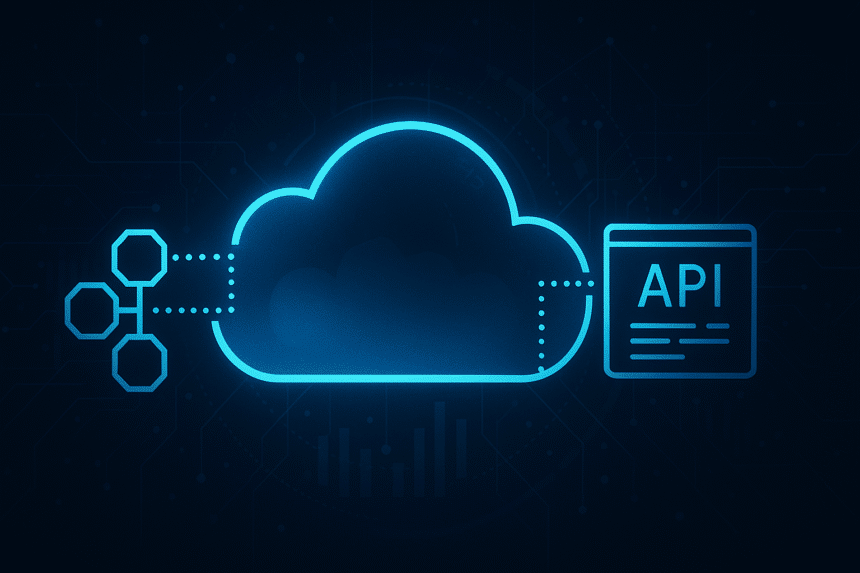
Blockchain cloud integration means joining blockchain technology with cloud computing platforms. Instead of running blockchain only on local servers, companies use cloud services to scale it up and make it accessible from anywhere.
For example, a bank may use blockchain to track money transfers. But storing all data on its own servers may cost too much. With cloud integration, the bank puts blockchain nodes on Amazon AWS or Microsoft Azure. This way it gets more storage, faster processing, and global reach.
Cloud also gives flexibility. A business can start small with blockchain on the cloud and then expand without buying new machines. This saves money and keeps systems modern.
Put simply, blockchain cloud integration refers to the idea of combining the powerful attributes of blockchain, such as security and trust with the broad capabilities of cloud, such as storage, speed, and straightforward scaling.
Understanding Enterprise APIs in Simple Words
Application Programming Interface is known as API. It resembles a digital bridge that interrelates two systems such that they can speak to one another. Enterprise APIs are simply business-oriented API.
Think of it like this. A traveling application would like to display live weather conditions. It has no weather system of its own. Rather, it makes a weather API that provides the information in seconds.
Similarly, business APIs bridge blockchain and legacy applications such as ERP, HR, or payment applications. This renders blockchain applicable without the need to transform everything in the business.
APIs also help developers save time. They don’t have to write new code for every connection. They just call the API and get the result. In short, enterprise APIs are the pipes that let blockchain data flow into daily business tools.
Why Blockchain Needs Cloud and APIs Together
Blockchain is strong but it can be slow if used alone. Cloud gives the extra power to make it run smoothly. Cloud services provide storage, speed, and tools that blockchain does not have on its own.
APIs add another layer. They make blockchain data easy to share with other apps. Blockchain would be a closed box with no one able to open it without APIs. In APIs, the data is released and received by business apps, dashboards, or even mobile apps.
So blockchain, cloud, and APIs are a trinity of the puzzle. Scale is provided by the cloud, connections are provided by APIs, and trust is provided by blockchain. The combination of these will assist companies to utilize blockchain not only with coins but also with actual business requirements, such as supply chain, payments, and records.
Key Benefits of Blockchain Cloud Integration
When blockchain is combined with cloud and APIs, companies see clear benefits. Some of the biggest ones are:
Faster Development
Developers do not need to build everything from scratch. Cloud integration gives ready tools, and APIs give ready connections. Projects that once took months can be done in weeks.
Lower Costs for IT
Running big servers only for blockchain can cost too much. Cloud lets companies pay only for what they use. Over time, this saves a lot of money.
Easier Data Access
With APIs, blockchain data can be pulled into company apps in real time. This means managers and staff see the latest info without waiting for reports.
Strong Security
Blockchain is already secure with its chain design. Cloud providers add extra layers like encryption and backup. Together, the system becomes safe from hacks and data loss.
Common Use Cases for Enterprise APIs with Blockchain
Blockchain and APIs are not only theory. They are already used in many fields. Here are some simple examples.
Finance and Banking
Banks use APIs to connect blockchain with payment apps. This makes transactions faster and reduces costs compared to old systems.
Supply Chain Management
Companies track goods from factory to store using blockchain. APIs connect the tracking system to apps that suppliers and retailers already use. Everyone sees the same trusted data.
Healthcare
Hospitals need to share medical records safely. Blockchain stores the records and APIs connect them with hospital apps. This way only the right doctors can see the info.
Government and Identity
Some governments test digital IDs on blockchain. APIs link these IDs with services like tax portals or voting systems. This makes identity checks faster and safer.
Blockchain Cloud vs Traditional Cloud
| Feature | Blockchain Cloud Integration | Traditional Cloud |
| Security | Very strong and tamper proof | Good but can be hacked |
| Transparency | Records visible and traceable | Logs are limited |
| Cost | Lower long term costs | Can rise high over time |
| Speed | Real time with APIs | Depends on server load |
Challenges in Blockchain Cloud Integration
Even with many benefits, blockchain cloud integration is not always easy. Companies face some big problems when they start.
Data Privacy Rules
Different countries have strict data privacy laws. For example, in Europe there is GDPR. Blockchain keeps data forever, but privacy rules say some data must be deleted. This makes a big conflict.
High Initial Setup Cost
Cloud integration is cheaper than local servers in the long run. But at the start, setting up blockchain nodes, cloud systems, and APIs can cost a lot of money. Many small firms delay the move because of this.
Skills Gap in Workforce
Not every company has workers who understand blockchain, cloud integration, and APIs together. Hiring experts is expensive, and training staff takes time. This slows down adoption.
| Challenge | Possible Fix |
| Privacy issues | Use private blockchain and strict access rules |
| Setup cost | Cloud pay-as-you-go model reduces early load |
| Skills gap | Train staff slowly or hire external experts |
Enterprise APIs for Blockchain Adoption
Enterprise APIs are the hidden key for making blockchain useful in big companies. Without APIs, blockchain would stay as a separate tool, not connected to the company systems.
APIs help connect blockchain with ERP (Enterprise Resource Planning), CRM (Customer Relationship Management), and HR (Human Resources) software. These are the daily tools used in most businesses. By linking them, blockchain becomes part of daily work, not just an experiment.
For example, a retailer can use blockchain for product tracking. The API then connects the blockchain data to the ERP system. Managers see stock levels in real time.
APIs also reduce complexity for developers. They don’t have to design new bridges each time. They just call the API, and it works like a plug-in. This makes blockchain adoption faster and smoother.
Examples of Enterprise APIs in Blockchain Projects
| Industry | API Use Case | Example Project |
| Banking | Payment clearing | Ripple API |
| Supply Chain | Product tracking | IBM Food Trust APIs |
| Healthcare | Patient record sharing | Guardtime APIs |
Cloud Providers and Blockchain Services
Today the biggest cloud companies also provide blockchain services. They know that more businesses want to use blockchain without building it from scratch. Cloud integration makes it easier to test and grow blockchain projects.
AWS Blockchain Integration
Amazon Web Services gives a service called Amazon Managed Blockchain. It lets companies set up blockchain networks without installing everything on their own machines. Many finance and supply chain firms use it because it scales fast.
Microsoft Azure Blockchain Services
Azure once had its Blockchain Workbench. While some parts changed, Microsoft still supports blockchain tools in its cloud. It helps businesses test smart contracts and connect blockchain apps with old systems.
Google Cloud Blockchain Solutions
Google Cloud integration has Blockchain Node Engine. It helps Web3 developers run nodes without worrying about servers. Many new crypto projects and NFT apps use this for speed.
Cloud Providers and Their Blockchain Features
| Provider | Blockchain Services | Popular Use Case |
| AWS | Amazon Managed Blockchain | Finance, supply chain |
| Azure | Azure Blockchain Workbench | Enterprise apps |
| Google Cloud | Blockchain Node Engine | Web3, NFT, crypto apps |
The Future of Blockchain Cloud Integration and APIs
The future looks big for blockchain, cloud integration, and APIs. Many experts say the mix will be standard for most large companies. A few clear directions are already showing.
AI with Blockchain APIs
Blockchain API is beginning to interface with artificial intelligence. This implies that smart contracts can soon be made to make decisions with the help of AI, such as detecting fraud or predicting prices.
More Industries Moving to Hybrid Cloud Integration
Some firms keep sensitive data in private servers but use the cloud for the rest. This hybrid model will become normal. Blockchain fits in well because it can split private and public data easily.
Governments Testing Blockchain in Cloud
Not only private firms, even governments are trying blockchain on cloud integration. Some test digital currencies, while others use it for land records or ID checks. APIs link these systems with citizen apps.
This shows that blockchain cloud integration is not only a passing trend. It is a direction where the whole digital world is moving.
Frequently Asked Questions
What is blockchain cloud integration in simple words?
Blockchain cloud integration means running blockchain on cloud integration platforms like AWS or Azure instead of only on local servers. Cloud gives storage and speed, and blockchain adds security. This mix helps businesses grow faster and cheaper compared to using only one system.
How do enterprise APIs work with blockchain?
Enterprise APIs act like digital bridges. They connect blockchain with company apps like ERP, CRM, or payment systems. Without APIs, blockchain data would stay locked. With APIs, the data moves into daily tools, so managers, staff, and apps can use blockchain results in real time.
Why is blockchain on cloud better than on local servers?
Running blockchain on local servers costs more and is harder to scale. Cloud makes it easy to expand or reduce resources anytime. It also gives global access and backups. This way, businesses can focus on using blockchain, not managing heavy servers.
Glossary
Blockchain: A digital ledger system where data is stored in blocks and linked in a chain. Once added, data cannot be changed.
Cloud Integration: Connecting software or data with cloud platforms like AWS, Azure, or Google Cloud for easier storage and access.
API (Application Programming Interface): A digital bridge that lets two systems or apps share data and work together.
Enterprise System: Business software like ERP, CRM, or HR tools that companies use daily.
Smart Contract: A digital contract stored on blockchain that runs automatically when certain rules are met.
Summary
Blockchain cloud integration and enterprise APIs are changing how businesses work. Blockchain gives trust and security, but alone it can be heavy and slow. Cloud integration adds power, storage, and flexibility. APIs bring the connections that make blockchain data flow into everyday business apps.
The mix gives many benefits. Companies get faster development, lower costs, and stronger security. Real use cases are already visible in finance, supply chains, healthcare, and even governments. At the same time, challenges like privacy rules, setup costs, and skill gaps still need to be solved.
Cloud providers like AWS, Microsoft Azure, and Google Cloud integration are already offering blockchain services. They make it easier for firms to start projects without building everything from zero. The future will bring AI-powered APIs, hybrid cloud adoption, and more government use.
The direction is clear. Blockchain, cloud, and APIs together will be part of daily enterprise systems in the coming years.