




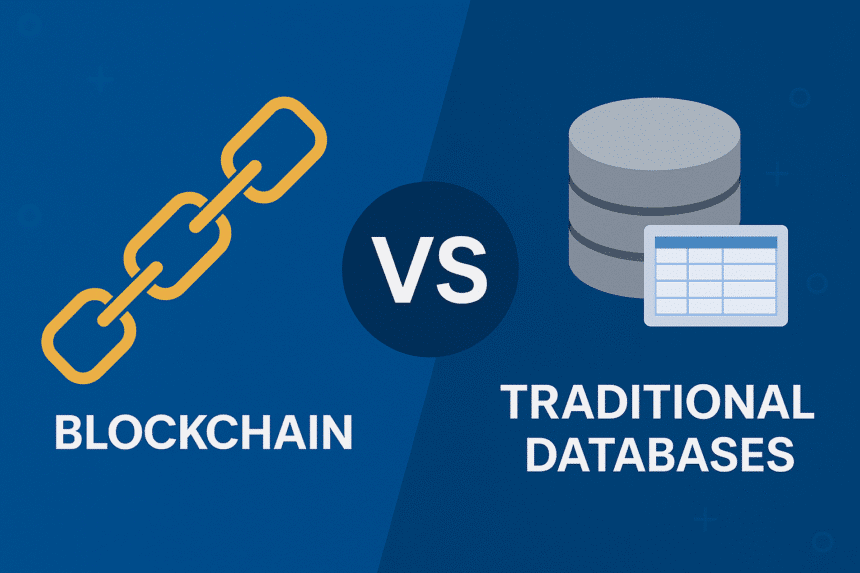

More recently, the conversation between blockchain vs traditional databases has grown not just out of technology circles but into boardrooms, policy circles, and scholarly studies. As the world gets more decentralized, firms rebuild infrastructure around information, making it not a possibility but a requirement to understand the necessary distinctions between the systems.
Whereas both traditional databases and blockchains keep and administer information, they do so in fundamentally opposed manners. These distinctions not only extend to the handling of information but also to how transparency, trust, and control diffuse among users and systems.
This article explains the ins and outs of every system, delving into their strengths, weaknesses, and optimal applications. Whether you’re a developer of blockchain, financial analyst, or interested student, this guide gives you the exhaustive rundown of what makes these technologies unique.
What Is a Traditional Database?
A classical database, say, MySQL, PostgreSQL, or Oracle, is a centralized store used for storing, fetching, and processing the information efficiently. Such databases were the standard for enterprise software, financial apps, and web apps for decades.
Traditional database data is typically organized into tables with columns and rows. The access is managed by a central administrator, with the ability to update, delete, or permit access to the information. The majority of databases include CRUD functionality: Create, Read, Update, Delete and client-server architecture.
According to IBM, more than 80% of Fortune 500 companies continue to rely on classical relational databases to run essential operations. The reasons for their predominance largely lie with speed, scale, and maturity.
What Is a Blockchain Database?
Blockchain database is an open, distributed ledger technology, recording the transactions sequentially within the blocks. Each block is cryptographically connected to the prior block, making an unalterable chain of information.
Unlike conventional databases, blockchains cannot be altered after the occurrence of events. Each record is time-stamped and authenticated by consensus methods like Proof of Work (PoW) or Proof of Stake (PoS). Such a structure achieves transparency and faith without the presence of a central agency.
Blockchain technology supports cryptocurrencies such as Ethereum and Bitcoin but is employed for supply chains, identity, property, and even ballot systems. Blockchain has been viewed by 83% of executives as a main business innovation, as reported by Deloitte in 2024.
Blockchain vs Traditional Databases: Design Structure and Architecture
Centralized vs. Decentralized Control
Classical databases are under centralized control. Permission and integrity of the data is controlled by a single entity—usually an IT department or databases administrator.
Comparatively, blockchain databases run on decentralized consensus. The information is not controlled by a centralized body, but rather validated and recorded on a distributed network by the users.
This decentralization eliminates the requirement for third parties and the possibility of insider manipulation or tampering with the information.
Data Mutability: Mutable vs Immutable
Traditional databases allow users to modify or delete existing data. This flexibility supports business logic but introduces potential vulnerabilities.
Blockchain ledgers cannot be edited. After a block is confirmed, it cannot be modified without modifying every block after it, for which majority consensus would be needed among the nodes. The immutability gives blockchains an element of auditability, so blockchains are applicable for regulation purposes and for keeping records.
Speed and Performance
When it comes to high-speed transaction processing, traditional databases outperform blockchain networks. For example, Visa’s centralized database handles over 24,000 transactions per second (TPS), while Ethereum processes around 15–30 TPS.
Blockchain databases sacrifice speed for transparency and security. The validation process, which involves consensus algorithms, naturally slows down transaction throughput.
However, technologies such as Layer 2 solutions together with sharding aim to bridge this performance gap.
Key Differences Between Blockchain and Traditional Databases
| Feature | Traditional Database | Blockchain Database |
| Control | Centralized — managed by one authority | Decentralized — managed by a distributed network |
| Data Mutability | Mutable — data can be updated or deleted | Immutable — past records cannot be altered |
| Transaction Speed | High (thousands of TPS possible) | Lower (varies, e.g., Bitcoin ~7 TPS, Ethereum ~15–30) |
| Security | Relies on central security measures like firewalls | Secured via cryptographic hashing and consensus |
| Transparency | Limited to authorized users | Public or permissioned visibility, depending on setup |
| Cost Efficiency | Cost-effective for large-scale, high-speed ops | Potentially higher cost due to consensus mechanisms |
| Best Use Cases | ERP, CMS, e-commerce, analytics | Supply chain, DeFi, asset tracking, voting systems |
Transparency, Trust, and Security Compared
Permission Models
Traditional databases typically operate in permissioned environments, restricting access based on user roles. Blockchain systems can be permissioned or permissionless.
Public blockchains (e.g., Bitcoin) are open to everyone, whereas private or consortium blockchains (e.g., Hyperledger) do not allow access except for approved participants.
This versatility enables the blockchain technology to serve an enormous scope of enterprise applications without making even the slightest compromise on security or trust.
Cryptographic Security
Blockchain significantly relies on the use of cryptography to keep the information it transfers intact. Each block contains the prior block’s hash, a timestamp, along with some transaction details.
This connection by the hash renders tampering virtually impossible without consensus on the network. Firewalling and encryption are used to secure information within normal systems, but insiders can always breach them.
Use Cases: Where Each Shines
When to Use a Traditional Database?
Traditional databases are ideal for applications involving high-speed data access, flexible querying, and centralized control. Such include:
- E-commerce sites
- Enterprise resource planning (ERP) systems
- Content management systems
- Live analytics dashboards
Their mature toolkits, optimized indexes, and established frameworks make them the default for most enterprise apps.
When to Use a Blockchain Database?
Blockchain thrives when veracity, transparency, and immutability take priority. Some examples include:
- Supply chain management (e.g., IBM Food Trust)
- Cross-border payments
- Tokenized asset management
- Election security systems
- Decentralized finance (DeFi) protocols
For instance, Everledger uses blockchain to track the provenance of diamonds, ensuring authenticity and ethical sourcing.
Consensus Mechanisms: A Game-Changer
Conventional databases authenticate changes through centralized authorization. A properly authorized end-user can write to the database directly.
But blockchains require network consensus prior to validating and recording changes.
Proof of Work (PoW)
Used by Bitcoin, PoW involves the solving of complicated puzzles to validate transactions. It is safe but energy-intensive.
Proof of Stake (PoS)
Employed by Ethereum 2.0, PoS picks the validators by the volume of cryptocurrency they “stake” as collateral. It is more energy-efficient than PoW.
These mechanisms replace the need for trust in a central party, marking a fundamental shift in how data trust is engineered.
Regulatory and Compliance Implications
With increasing popularity of the technology underlying blockchains, even the regulating authorities have shown interest.
It has offered advice on how to apply the technology of the blockchain to the release of digital assets, prioritizing transparency as well as regulation.
At the same time, GDPR presents a challenge to blockchain, specifically the “right to be forgotten,” with the immutability of blockchain being incompatible with it.
Legacy databases can be modified and deleted, with existing compliance standards more aligned with this approach.
Integration Potential and Hybrid Solutions
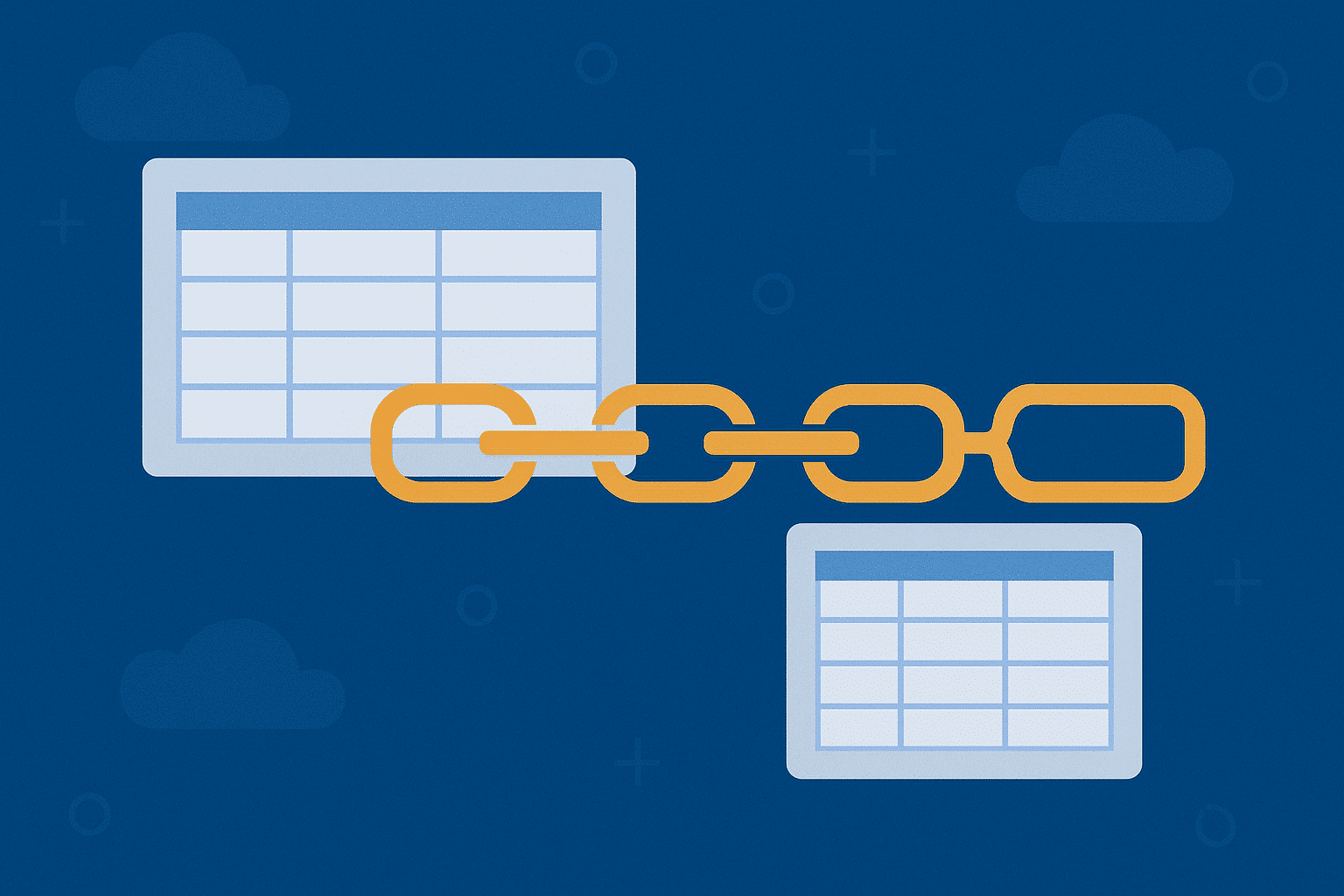
Most companies today are considering hybrid solutions, blending the auditability of blockchains with the performance of traditional databases.
For instance, a financial institution would employ a traditional database for processing on a real-time but would utilize a blockchain for maintaining records of settlements.
It attains scalability, speed, and integrity simultaneously with this multi-level architecture.
By 2026, more than 50% of enterprise blockchain projects will coexist with traditional systems, not supplant them, says Gartner.
Conclusion: Blockchain vs Traditonal Databases: Which Wins?
There is no clear victory for blockchain over traditional databases, but rather the right tool for the right purpose.
Blockchain technology presents a paradigm shift to how trust, transparency, and decentralization are built but, to date, traditional databases cannot be beat on performance, efficiency, and ease of use for most business applications.
Choosing between them depends on your goals. Need auditable records and trustless transactions? Blockchain fits. Need speed, cost-efficiency, and dynamic querying? Stick with traditional databases.
And as both technologies continue to mature, the future likely resides not in competition—but convergence.
Glossary of Key Terms:
- Blockchain: Distributed ledger of cryptographically linked blocks.
- Traditional Database: Centralized storage and retrieval system for structured information.
- Consensus Mechanism: The process followed by blockchains to verify transactions.
- Immutable: Cannot be modified or varied after being recorded.
- PoW (Proof of Work): A consensus mechanism based on computational effort.
- PoS (Proof of Stake): It is a consensus mechanism based on cryptocurrency staking.
- Permissioned Blockchain: A closed blockchain with access restrictions.
- Public Blockchain: Decentralised network on which anyone can participate.
- Hash: The electronic fingerprint of information.
- CRUD: Create, Read, Update, Delete operations on conventional database
Frequently Asked Questions (FAQs)
1. Are traditional databases replaceable by blockchain?
It’s not entirely. Blockchain is suited for certain applications where transparency and trust are needed but not the speed and flexibility of classical databases.
2. Is Blockchain More Secure Than a Database?
It depends. Blockchain has better data integrity with the help of cryptographic links and decentralization but still remains exposed to bugs in smart contracts.
3. Why is the blockchain slower than traditional databases?
Blockchain transactions involve consensus and validation procedures, adding latency when compared to centralized systems.
4. What if someone hacks the blockchain?
While blockchains are secure, there can be vulnerabilities within the smart contracts or via 51% attacks on smaller networks.
5. What is the comparison between storing data on blockchain and databases?
Blockchain stores data in linked blocks with hashes. Traditional databases store data in tables with rows and columns.
6. Are blockchain databases scalable?
It is scalable, but solutions for scalably improving performance do exist, such as Layer 2 networks and sharding.
7. Is blockchain GDPR-compliant?
It doesn’t entirely. Blockchain’s immutability opposes GDPR right to erasure, although there could be solutions via hybrid schemes.
Summary for Blog
This blog discusses the functional and technical differences between the traditional database and the blockchain. It juxtaposes architecture, mutability, performance, and usage with an indication of when both systems do best. The paper, aimed at developers of the blockchain, analysts, and students of finance, features professional information expressed in simple language, along with practical demonstrations and citations. The comparison concludes with the finding that while traditional databases and the blockchain serve disparate functions, the future of enterprise systems will likely be characterized by the integration of both–hybrid systems.