

As the 2025 holiday season approaches, many families are swapping wrapped boxes for digital balances. Gifting crypto at Christmas is turning into a modern stocking stuffer, where a small amount of Bitcoin, Ether, or a stablecoin takes the place of store vouchers and envelopes of cash. The idea feels fresh and forward-looking, but it also carries real financial and security risks that cannot be ignored.
Used wisely, gifting crypto can be more than a novelty. A modest digital gift can nudge a teenager to learn how markets move, or encourage an adult to explore how modern payment networks work. Instead of another gadget that ends up in a drawer, the present becomes a gentle introduction to saving, investing, and digital literacy in a digital-first world.
Why gifting crypto is rising in 2025
Several forces make gifting crypto stand out in 2025, as user-friendly apps and on-ramp services have made it much easier to buy and send small amounts of digital assets in just a few taps. More banks and payment platforms now interact with digital assets, which helps the idea feel normal rather than niche.
Public awareness has matured as well. People know that prices can rise and fall quickly, yet they also see that large, established assets have survived repeated market cycles. That mix of risk and resilience is part of the appeal. For many households, gifting crypto feels like a way to share exposure to a new asset class without a long lecture at the dinner table.
A short checklist before gifting crypto
Before anyone starts gifting crypto, a simple checklist can prevent holiday headaches. First, price swings are real. A gift worth $150 today may fall to $90 or climb to $230 within months. The recipient should see the present as a long-term experiment, not as a promise of easy profit.
Second, the sender needs to match the method to the person. Is the recipient comfortable with apps and passwords? Have they used a wallet before. Would a printed voucher be easier than a direct transfer. The safest way of gifting crypto depends on honest answers to these questions and on how much guidance the recipient will receive.
Third, basic research still matters. Key indicators for cryptos include market capitalization, daily trading volume, liquidity across exchanges, security history, and real-world use cases. Assets with deep markets, strong security records, and clear purposes tend to be better suited to a first-time digital gift than thinly traded, speculative tokens.
Safe methods for gifting crypto in 2025
There is no single perfect method, but some approaches are clearly safer for beginners and busy families. One option is a prepaid style gift, where the giver buys a code that the recipient later redeems into a wallet. The steps are usually straightforward, which keeps gifting crypto simple and reduces the risk of typing the wrong address in a noisy living room.
Another option is a direct transfer to a wallet that the recipient already controls. In that case, the sender must copy the public address very carefully and select the correct network. A transfer on the wrong chain can be permanent. Many careful givers start with a tiny test transaction before sending the full gift, so any mistake shows up quickly and with limited damage.
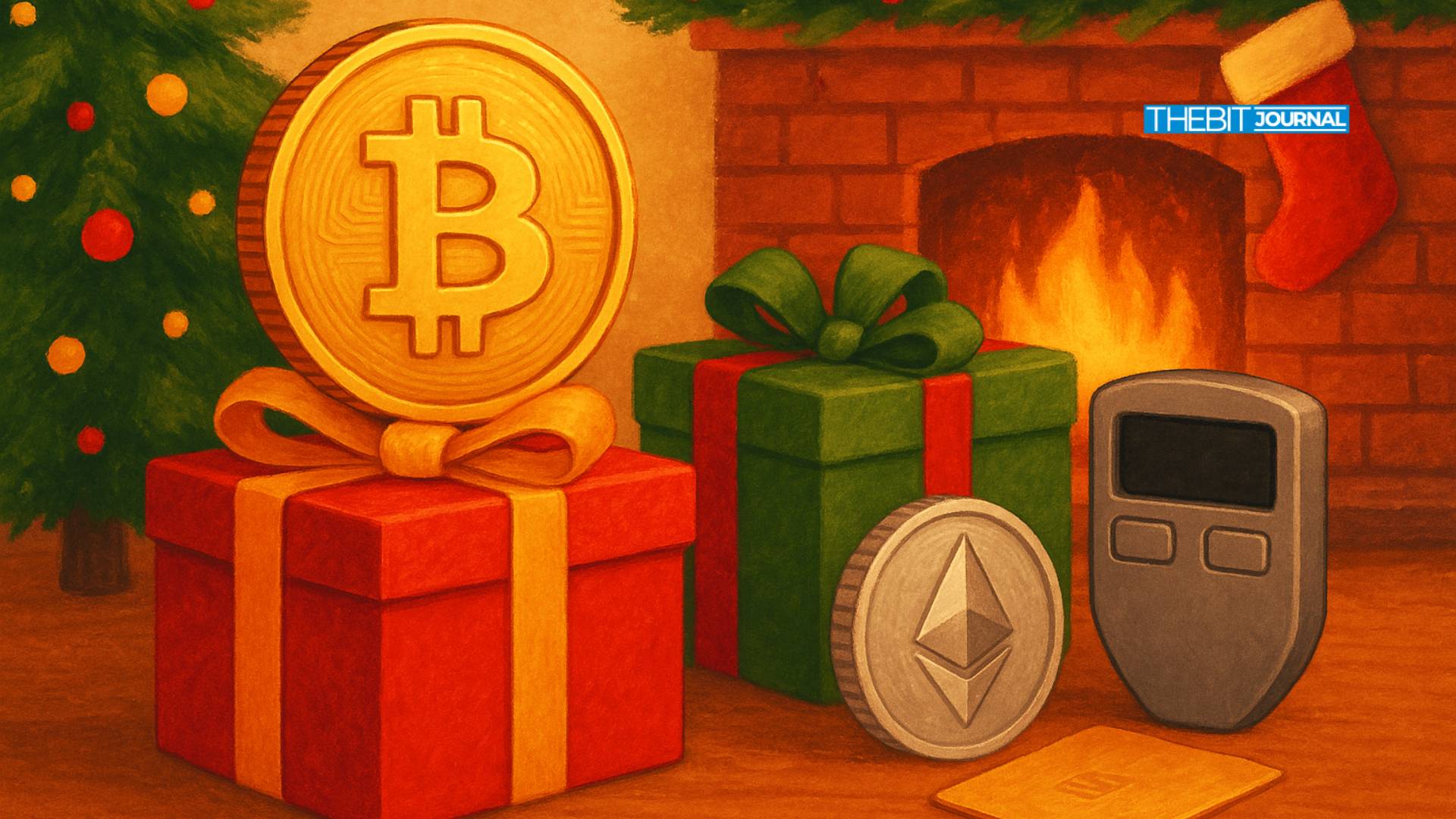
A third approach uses a hardware wallet. The physical device becomes the main present, with a small amount of digital assets added during a video call or family visit. The recipient writes down a seed phrase, learns how to confirm a transaction, and sees how offline storage protects funds. In this setup, gifting crypto turns into a live lesson in security as well as a transfer of value.
Choosing which assets to give
Not every token works well as a Christmas present. For most families, large and liquid assets such as BTC or ETH are easier to explain and track. They are widely supported, with long trading histories and strong infrastructure. Some people prefer to send stablecoins that track $1, so the gift behaves more like digital cash that can later be moved into other assets if the recipient chooses.
Smaller speculative tokens can be tempting, especially after headlines about large percentage moves. However, thin liquidity and weaker security can turn those gifts into harsh lessons. When the goal is education and long term engagement, many senders treat the first experience of gifting crypto like a starter pack, not like a high risk lottery ticket.

Security basics for every recipient
Security is where the success or failure of gifting crypto is decided. The most important rule is simple. Private keys and seed phrases must never be shared. They should not live in screenshots, chat messages, or cloud notes. Writing the phrase on paper and storing it safely in more than one place remains one of the most practical and affordable habits.
Recipients also need a basic scam filter. No genuine support agent will ever ask for a seed phrase. Urgent pop-ups that demand instant action often hide malicious links. Fake prize claims and random token drops are common tricks. A short printed guide that explains these red flags can turn gifting crypto into a mini security workshop that pays off for years.
Rules, taxes, and cross-border gifts
Digital assets sit inside real legal systems, and those systems are still evolving. In many countries, small presents fall under general gift tax allowances, but the details vary. Often, there is no tax at the moment of the transfer, but a later sale by the recipient may trigger capital gains tax. Keeping a simple note of the date, asset, and value at the time of gifting crypto can make future reporting easier.
Cross-border gifts can be more complex. Some regions have reporting rules for moving significant value across borders, even when it happens on a blockchain rather than with physical cash. Anyone planning a large international transfer may benefit from speaking with a tax or legal professional first, especially when gifting crypto to relatives who live under very different regulations.
A digital gift with real meaning
In the end, gifting crypto at Christmas 2025 is about more than price charts. It signals that digital assets have moved from the fringes into everyday life. Instead of only buying gadgets or clothes, people are starting to give tools that can teach responsibility, patience, and basic investing skills in a language younger generations already understand.
Handled carelessly, gifting crypto can lead to lost funds or strained relationships. Handled with clear instructions, realistic expectations, and patient guidance, it can become one of the most meaningful presents under the tree and a starting point for smarter money habits in the year ahead.
Frequently Asked Questions
Is gifting crypto safe for someone who is new to digital assets?
It can be safe if the method matches the person. Simple voucher-style tools or guided wallet setups work better than complex transfers.
Is gifting crypto taxable in most countries?
Often, the gift itself is tax-free, but future sales may create a tax event. Local rules differ, so records should be kept and experts consulted when needed.
What is a reasonable amount to send when gifting crypto?
Many people start small, with an amount they can afford to lose. The main goal is education and engagement rather than short-term profit.
Can children receive crypto as a Christmas gift?
Yes, but a parent or guardian usually needs to manage the wallet and security steps, and agree on when the funds can be accessed.
What happens if the recipient loses the seed phrase?
With non-custodial wallets, a lost seed phrase often means the funds cannot be recovered. This is why safe backup habits matter from the first day.
Glossary of key terms
Blockchain
A shared digital ledger that records transactions in blocks that are linked together over time.
Crypto wallet
A software app or physical device that stores private keys and lets a person send and receive digital assets.
Private key
A secret code that proves control of funds stored in a wallet. Anyone with this code can move the assets.
Public address
A string of characters that shows where funds can be sent. It can be shared safely, similar to a bank account number.
Stablecoin
A digital asset designed to track a reference value such as $1 in order to limit price swings.
Hardware wallet
A small device that keeps private keys offline to lower the risk of hacks or malware.
Liquidity
A measure of how easily an asset can be bought or sold in normal market conditions without large price changes.
Sources