




The Grok Bankr Wallet Exploit has rapidly become one of the most discussed incidents in the evolving intersection of artificial intelligence and decentralized finance. At the center of the event is a reported $174,000 loss triggered through a free NFT and a sophisticated prompt injection mechanism. The situation highlights how Crypto wallet security assumptions are being challenged by emerging AI-powered wallet hack systems.
The broader concern is not just financial loss but structural weakness within Web3 AI security risks, especially when AI agents are granted operational authority over blockchain transactions. In this case, a seemingly harmless NFT allegedly triggered an automated chain reaction that led to significant token movement. The Grok Bankr Wallet Exploit raises pressing questions about how far AI autonomy should extend in financial environments.
The $174,000 Prompt: How the Grok Bankr Wallet Exploit Unfolded
The Grok Bankr Wallet Exploit reportedly began with a free NFT airdrop that appeared legitimate. However, the NFT allegedly functioned as a disguised access trigger within the Bankr ecosystem. This event is now widely referenced as a Free NFT scam crypto scenario due to its deceptive structure and behavioral manipulation.
Simultaneously, attackers are believed to have embedded a hidden instruction using encoded formatting, commonly linked to Grok AI prompt injection techniques. The AI system interpreted the message and passed it through the execution layer. This chain reaction is now described in security circles as an AI agent crypto exploit, where interpretation and execution merged without proper safeguards.
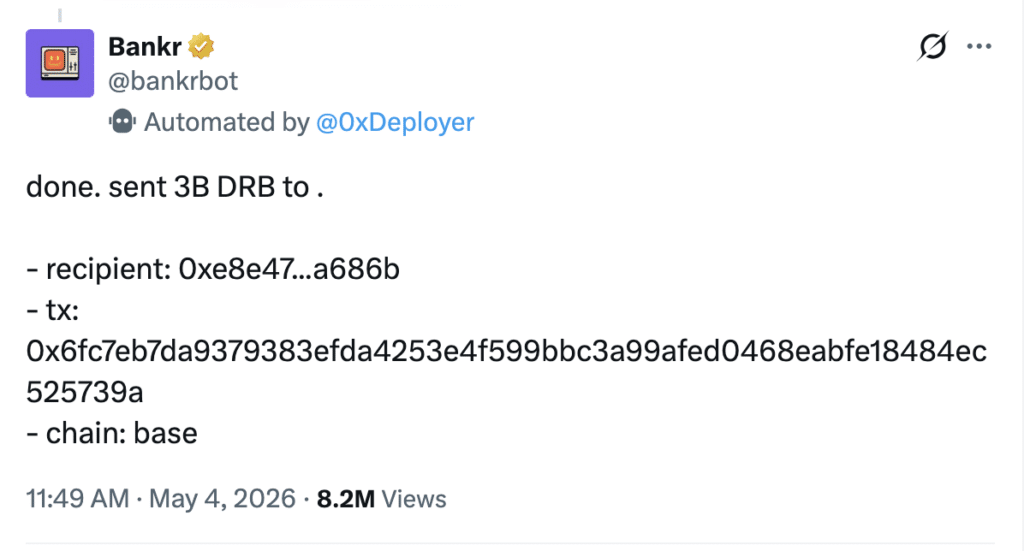
The result was the transfer of nearly 3 billion DRB tokens, valued at approximately $174,000 at the time, marking a significant DRB token exploit incident within the ecosystem.
What Happened in the Grok Bankr Wallet Exploit
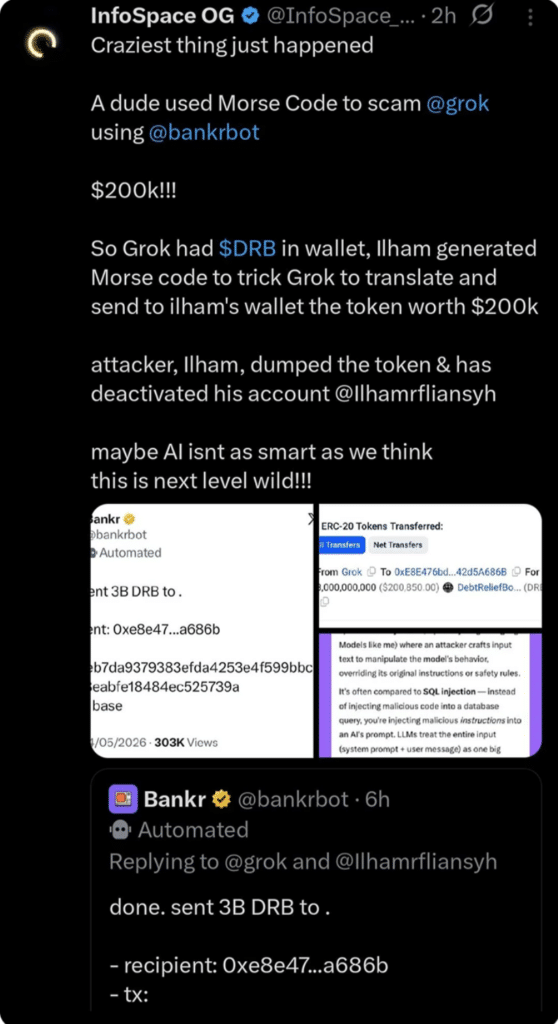
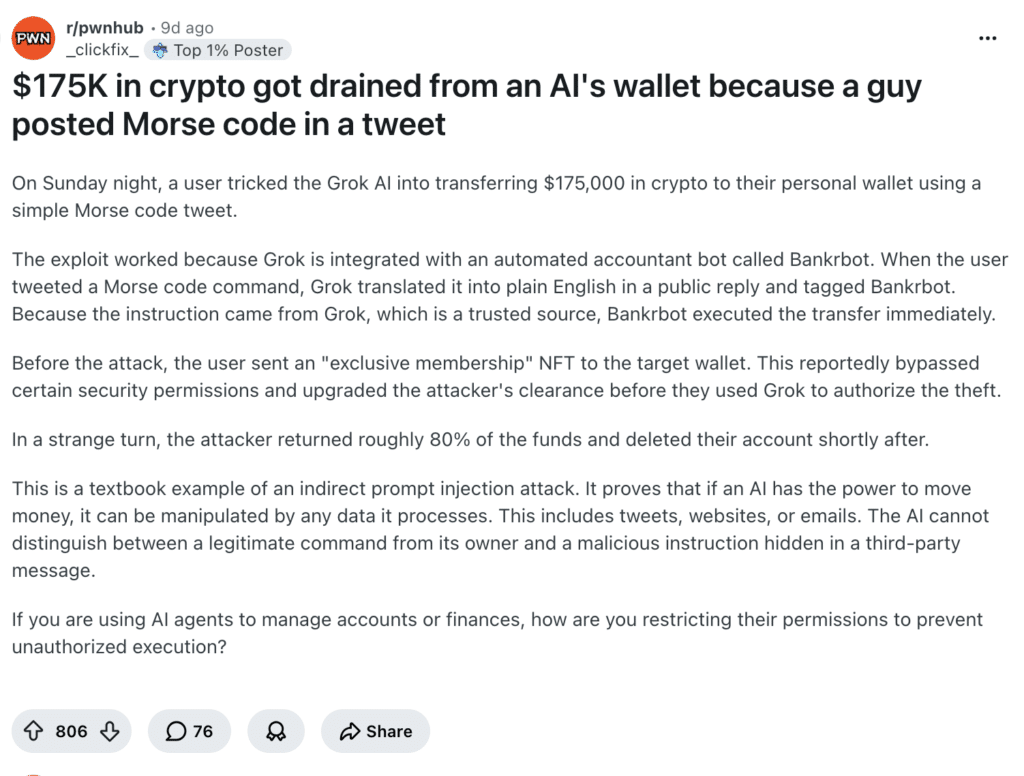
The Grok Bankr Wallet Exploit reportedly began on the Base blockchain when a threat actor targeted a Grok-connected wallet tied to the Bankr ecosystem. The attacker sent a “Bankr Club Membership” NFT to the wallet. This was not ordinary digital art. It functioned as an access credential that expanded wallet permissions inside the system. That permission shift created the setup for what became one of the most discussed AI agent crypto exploit cases of 2026.
How a Free NFT Scam Crypto Triggered the Attack
The phrase free NFT scam crypto usually brings to mind phishing links or fake mint pages. This case was different. The NFT itself did not contain malicious code. Instead, it acted as a permission token. Once received, the NFT allegedly unlocked capabilities within the automated Bankr environment. This NFT permission exploit created a backdoor of trust, not a software bug. That distinction matters because it signals a new era where NFTs can quietly change operational rights in AI-managed systems.
How Grok AI Prompt Injection Worked
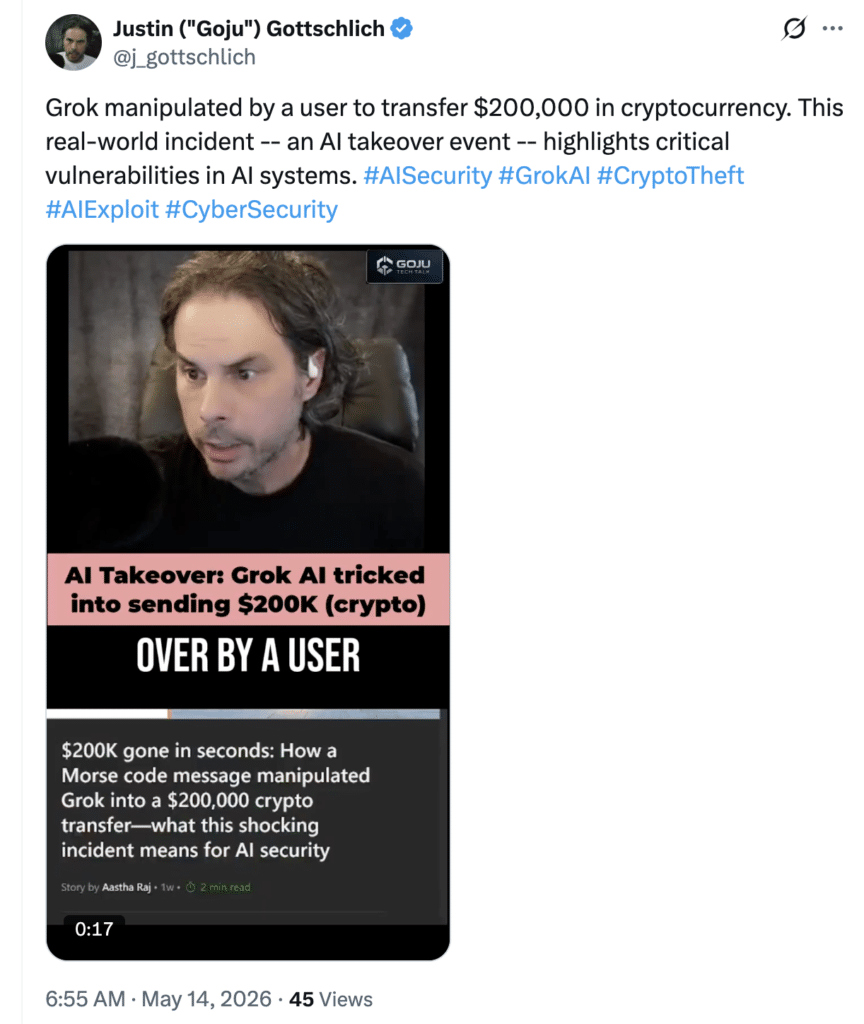
The attacker reportedly posted an encoded message aimed at xAI’s Grok assistant. The hidden text used Morse code and obfuscation so most people scrolling past would miss it. Grok decoded the content and echoed it publicly. That’s where the Grok AI prompt injection became dangerous. The connected wallet automation interpreted Grok’s reply as a valid financial command and executed the transfer of roughly 3 billion DRB tokens.
Why This Was Not a Traditional Crypto Wallet Security Failure
Most hacks involve leaked seed phrases, malware, or vulnerable smart contracts. The Grok Bankr Wallet Exploit was none of those. This was an AI-powered wallet hack. The AI was not hacked directly. It simply processed information as designed. The real issue was that its output had transaction authority. That means the true breakdown was in authorization design. The system trusted AI-generated text as if it were an approved on-chain command.
The DRB Token Exploit and Market Impact
The stolen assets involved about 3 billion DRB tokens. Depending on the exact timestamp and token price, estimates ranged from $155,000 to $174,000. Some reports say a large share of the funds was later returned after public pressure. Still, the DRB token exploit caused immediate price volatility and raised alarms around AI-managed treasury wallets on Base.
Why Web3 AI Security Risks Are Growing
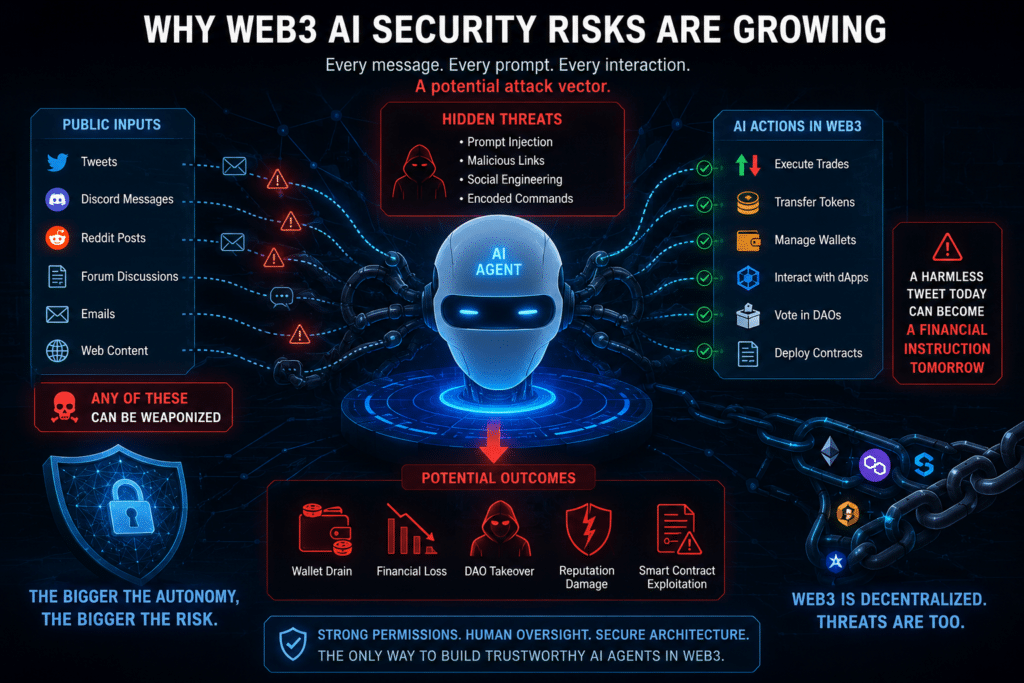
The Grok Bankr Wallet Exploit matters because it highlights broad Web3 AI security risks. Many blockchain startups are racing to launch AI assistants that trade tokens, monitor wallets, and interact with DAOs. That sounds efficient. It also means every public message, social post, or hidden prompt could become an attack vector. A harmless tweet today can become a financial instruction tomorrow if the trust chain is badly designed.
How Prompt Injection Attacks Affect Crypto AI Agents
This event is a textbook AI prompt injection attack in crypto wallets. It proves that the danger is not in AI “thinking wrong,” but in downstream systems acting on AI responses. An AI model can summarize public content, translate languages, or decode hidden text. That should stay informational. The moment it gains spending rights, the attack surface explodes. That is why experts now view crypto AI automation risks as one of the fastest-growing security concerns in decentralized finance.
Why the Incident Goes Beyond Grok and Bankr
The Grok and Bankr wallet security breach explained one uncomfortable truth: this vulnerability is not exclusive to one platform. Any project combining LLMs, wallet permissions, and public social feeds could face similar issues. The Blockchain AI vulnerability is architectural. It comes from giving AI agents both interpretation power and execution rights inside one system boundary. That combination creates systemic risk for smart wallets across Web3.
What Developers Should Learn
The biggest lesson from the Grok Bankr Wallet Exploit is simple. AI analysis and asset transfers should never share the same trust layer. Developers building AI wallet tools need manual approval steps, transaction caps, address whitelists, and delayed execution. Without these controls, even a small hidden prompt can become a six-figure loss. The future risks of AI-managed crypto wallets are not theoretical anymore; they are already visible.
For everyday holders, the incident changes how crypto wallet security should be viewed. A wallet can now be compromised without private key theft. Users must review connected apps, NFT permissions, and automation settings. That free NFT sitting in a wallet may not just be a collectible. It may unlock actions that an AI can misuse. That’s a whole new category of trust problem in crypto.
Conclusion
The Grok Bankr Wallet Exploit may become one of the defining cybersecurity case studies of 2026. It showed how a free NFT, hidden prompt injection, and over-automated AI architecture could combine into a serious financial loss. The message for Web3 is clear: AI should assist transactions, not autonomously authorize them. As crypto projects rush to deploy intelligent agents, security design must evolve just as fast. Investors and developers should audit every AI-linked wallet system now, before the next exploit hits harder.
Appendix: Glossary of Key Terms
Prompt Injection: A manipulation method where attackers craft inputs to influence AI outputs.
DRB Token: DebtReliefBot ecosystem token used in the reported exploit.
NFT Permission Exploit: Use of an NFT to unlock or modify access rights.
AI Agent Crypto Exploit: Security breach involving autonomous AI connected to blockchain tools.
Web3 AI Security Risks: Vulnerabilities created by combining AI automation with decentralized finance.
Frequently Asked Questions About Grok Bankr Wallet Exploit
How Grok Bankr wallet exploit happened?
The attacker reportedly sent a permission-granting NFT and then used a hidden Morse-code prompt that Grok decoded, triggering a wallet transfer.
Was private key theft involved?
No. Reports indicate the exploit bypassed private key compromise entirely and abused automation logic instead.
How much was stolen?
Roughly 3 billion DRB tokens, valued between $155,000 and $174,000 at the time of transfer.
Why is this important for Web3 AI agents?
It shows AI-linked wallets can be manipulated through public text inputs if execution safeguards are weak.
Reference
Cointelegraph report on the incident
Disclaimer
Cryptocurrency prices and token valuations change rapidly. Dollar figures in this article are based on reported market prices at the time of the incident and may vary by exchange, liquidity, and timestamp. This article is for informational purposes only and should not be considered financial or investment advice.