




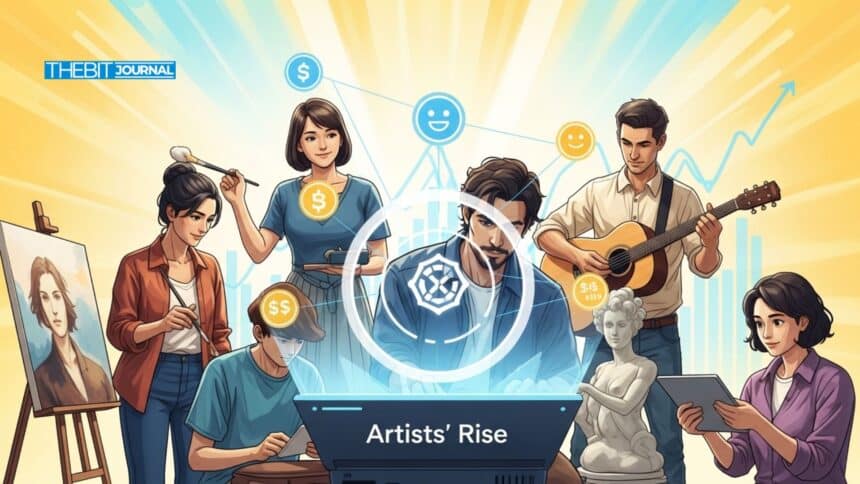

Digital artists, especially those working in the NFT space, often see their primary sources of income disappear during finance or crypto bear markets. New data reveals NFT sale revenue nosedived 37% in 2025, wiping out millions for artists.
As a result, community-driven initiatives are resorting to decentralized crowdfunding. This means artists getting funded directly with the help of blockchain tools like smart contracts and crypto payments, bypassing centralized platforms.
Artists Face Huge Struggles in a Crypto Downturn
The NFT and art market has seen volatility. In 2025, NFT creators were minting more artwork than buyers could absorb. Total NFT income fell to roughly $5.63 billion (down 37% year on year) as ground costs tanked.
NFT sales are the primary living wage for many independent artists. When the market went cold, it took away income for aspiring artists. In fact, liquidity dries up in downturns and artists are often left invisible.
Traditional crowdfunding and patronage can go so far, but also fall short. Payment solutions like Patreon or Kickstarter take their (5-10%) fees and tend to favor the more popular creators.
These platforms might not offer steady support when crypto investors lose interest. In a downturn, the odds are against new and fringe artists.
Due to this, decentralized alternatives are coming up. The pitch is that by eliminating middlemen; artists receive more dependable income and exposure when they need it most.
What Is Decentralized Crowdfunding?
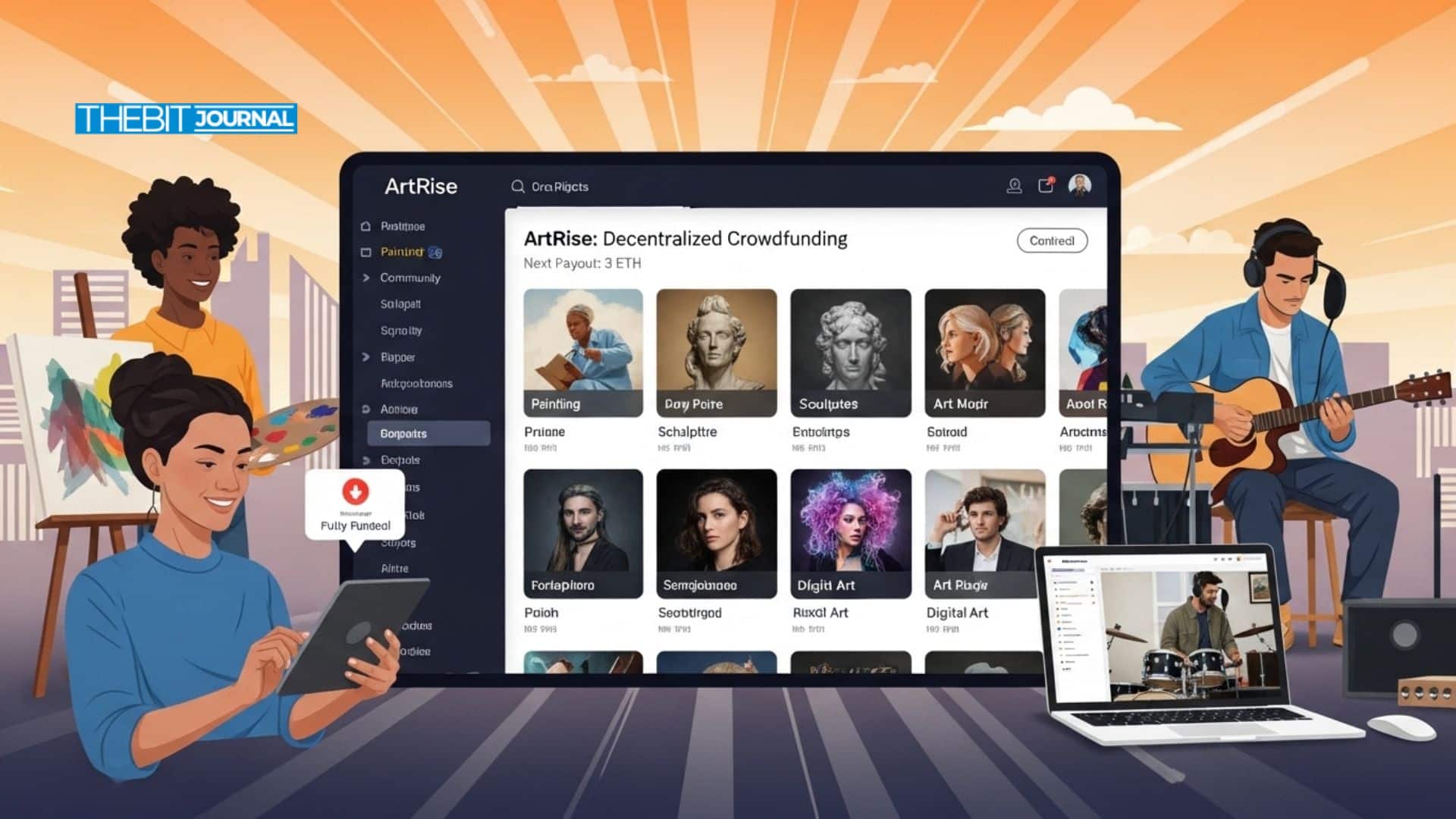
In decentralized crowdfunding; blockchain technology allows funders (also referred to as collectors) and creators (or artists) to connect directly with no central intermediary. Instead of pledging money through a platform; supporters will send cryptocurrency (such as Ethereum) directly to artists’ wallets or to an on-chain community-governed fund.
Smart contracts can also help to automate the process (e.g. give money when certain conditions are met) and ensure trust and transparency.
Every donation or purchase gets publicly recorded on the blockchain. Making visible how much money an artist is receiving builds trust and accountability.
Anyone, anywhere in the world can participate and artists don’t require the favor of a centralized gatekeeper.
Simply put, decentralized crowdfunding strips crowdfunding to its essentials which are capital, trust and consistency.
Case Study: Weekly ETH for NFT Artworks
A prominent example demonstrates what this model looks like in real time. In January 2026, a group of collectors created Weekly ETH Pledge to support upcoming artists.
Led by collectors Batsoupyum and curator Lanett Bennett Grant, the commitment pledges 1 ETH each week to buy art from upcoming artists on Ethereum.
Importantly, they made it clear that they would not be flipping these arts for profit i.e., the ETH goes directly to the artists. They also tell the story of each artist and piece, to amplify visibility.
This decentralized effort of payments and ownership are on-chain and public. It quickly inspired others to come together. Famous collectors matched the pledge and gave more. Even galleries and NFT marketplaces like Foundation volunteered to feature the artists, all at no charge.
None of this needed approval or payment to a central authority. As the organizers put it, “No middlemen, just steady, visible and tangible support when artists need it most.”
New artists are funded and highlighted every week, so there is a constant stream of support. This consistency and continuity is essential during downturns because ongoing support allows artists to plan and keep creating.
Decentralized vs. Traditional Crowdfunding for Artists
| Feature | Traditional Crowdfunding | Decentralized Crowdfunding |
| Fees | Often 5-10% platform fee | No platform fees (only blockchain gas fees) |
| Gatekeepers | Platform curators moderate content | Permissionless; any artist can participate |
| Payment Flow | Held by platform until disbursed | On-chain, directly to artist’s wallet |
| Visibility | Algorithmic or featured campaigns | Public on-chain; shared via social/crypto communities |
| Funding Consistency | Campaign-based (one-offs) | Ongoing (e.g., weekly pledges) |
| Example Platforms | Kickstarter, Patreon, GoFundMe | NFT pledges (e.g., Weekly ETH initiative) |
| Response in Downturn | Often decline (fewer backers) | Can increase (community steps up) |
This comparison shows how decentralized models address pain points for artists, especially in lean times.
How Do Artists and Collectors Make It Work?
Decentralized crowdfunding is still in its early days; but some patterns have already come up.
Smart Contracts and DAOs: Certain groups function as decentralized autonomous organizations (DAOs) to oversee art funding. A smart contract can accept pooled money and dispense it to creators according to clear; public rules. For example; a DAO could allow token holders to vote on which artists to support. This eliminates any one patron and distributes the decision-making power across supporters.
Crypto Grants and Scholarships: Sometimes crypto platforms and DAOs sponsor art programs. A grant pool could be set aside for artists on an NFT marketplace, with winners selected by community vote.
Crowdfunding Tokenized Art: Some projects send out tokens to art venture backers. For instance, purchasing a token for a stake in a future album or exhibition. Upon completion, backers could receive exclusive content or a share of revenue. These models (such as security token offerings) are in their infancy, but they fit the premise of funding art by communities.
Integrating Social Media and Web3: The gap between social media and crowdfunding is closing. Web3 likes or tips can be small but consistent support for artists. Platforms such as Rally or Roll are exploring token economies for creators. When an artist’s followers hold a DAO token, they’re basically funding each other.
Though the market hype for NFTs has been cooling down, there is still an audience for art and creative tokens.
Regulatory and Practical Considerations
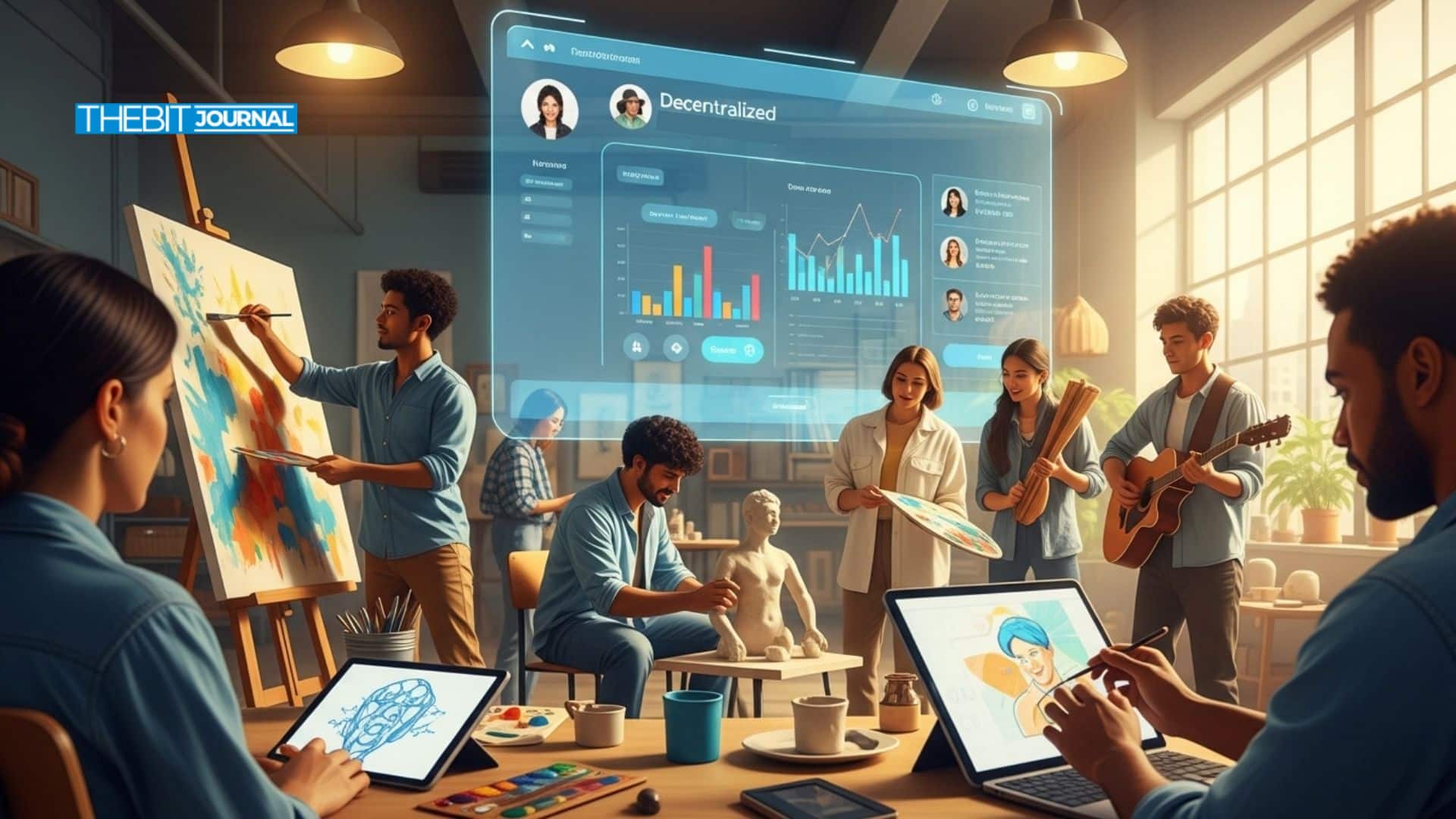
Decentralized crowdfunding is in a complicated legal gray area. Some considerations include:
Securities laws: Any decentralized campaign that promises backers future profits or fractional ownership may set off securities regulation. Platforms that offer profit-sharing or investment returns must ensure they comply.
Taxes: Artists must pay tax on crypto they receive. Artists are required to track the fair value (USD) of all onchain donations at the time they receive them. However, things get tricky with lots of small donations. Some states also impose gift taxes, although most personal transfers of crypto to support art would likely fall below gift tax thresholds.
Intellectual Property: Decentralized or not, authors must still grant their usage rights accordingly. So, if supporting an artist on-chain means holding rights, then this has to be clear.
For artists and patrons thinking about using decentralized crowdfunding tools, best practices are: use reputable wallets, have any agreements made verbally written down too, and potentially build in smart contracts that lock terms.
Interacting with established crypto art communities (NFT marketplaces or DAOs); may also assist with vetting backers and ensuring transparency.
Conclusion
Decentralized crowdfunding can serve as a vital lifeline for artists during times of market distress. The trustless nature of that ledger allows artists to be directly supported and potentially credited by their collector communities using blockchain.
This model eliminates expensive intermediaries and marketing gatekeepers, providing a reliable source of funding when traditional markets are lacking.
For instance, initiatives like the weekly 1ETH pledge show how a handful of dedicated backers held up a network effect of backing, mutual pledges and shared visibility.
In bear markets when NFT sales tank, decentralized crowdfunding protects artists, enabling them to earn income and attention.
While decentralized models don’t appear to be the solution for every artist, they provide an alternative to other crowdfunding methods by emphasizing community conviction instead of hype.
Glossary
Decentralized Crowdfunding: A mechanism for raising money (in this case, for art) within the blockchain without a central platform; through crypto transfers or via smart contracts.
NFT (non-fungible token): a type of digital asset on a blockchain that can represent art, collectibles or other content. NFTs are frequently sold to fund artists.
Smart Contract: It is a self-executing code residing on blockchain which executes when certain conditions are met.
Onchain/Offchain: “Onchain” means registered on the blockchain (public, transparent) “Offchain” means normal platforms or channels
Bear Market: A market characterized by falling prices.
Frequently Asked Questions About Decentralized Crowdfunding
What is decentralized funding for artists?
It’s a method for artists to raise funds through the blockchain. Backers transmit cryptocurrency (like ETH) onchain directly to the artist or a community fund. No conventional platforms; no intermediaries.
How does decentralized funding support artists in a downturn?
During bear markets; artist sales plummets. Decentralized crowdfunding provides a steady Support Channel by helping artists recoup costs and remain in the public eye.
Are there any fees or risks?
Decentralized crowdfunding usually just has blockchain transaction (gas) fees which are small. Risks include the volatility of cryptocurrency prices and also artists having to pay taxes on cryptocurrency income.
Can anyone join decentralized crowdfunding?
Yes; anyone with a crypto wallet, can join as an artist or a supporter.
What is the difference between decentralized crowdfunding and NFTs and crypto art?
While the idea of blockchain is present in both, decentralized crowdfunding relates specifically to funding with it. It frequently intersects with NFTs (because NFT sales are a means to fund artists), but crowdfunding moves beyond merely selling collectible tokens and instead focuses on direct patronage.
References
Disclaimer: This content is for informational purposes only and does not represent financial advice. Crypto markets are volatile and the artist income unstable. Note that you should always do your own research before engaging in any cryptocurrency crowdfunding or token-finance projects.